
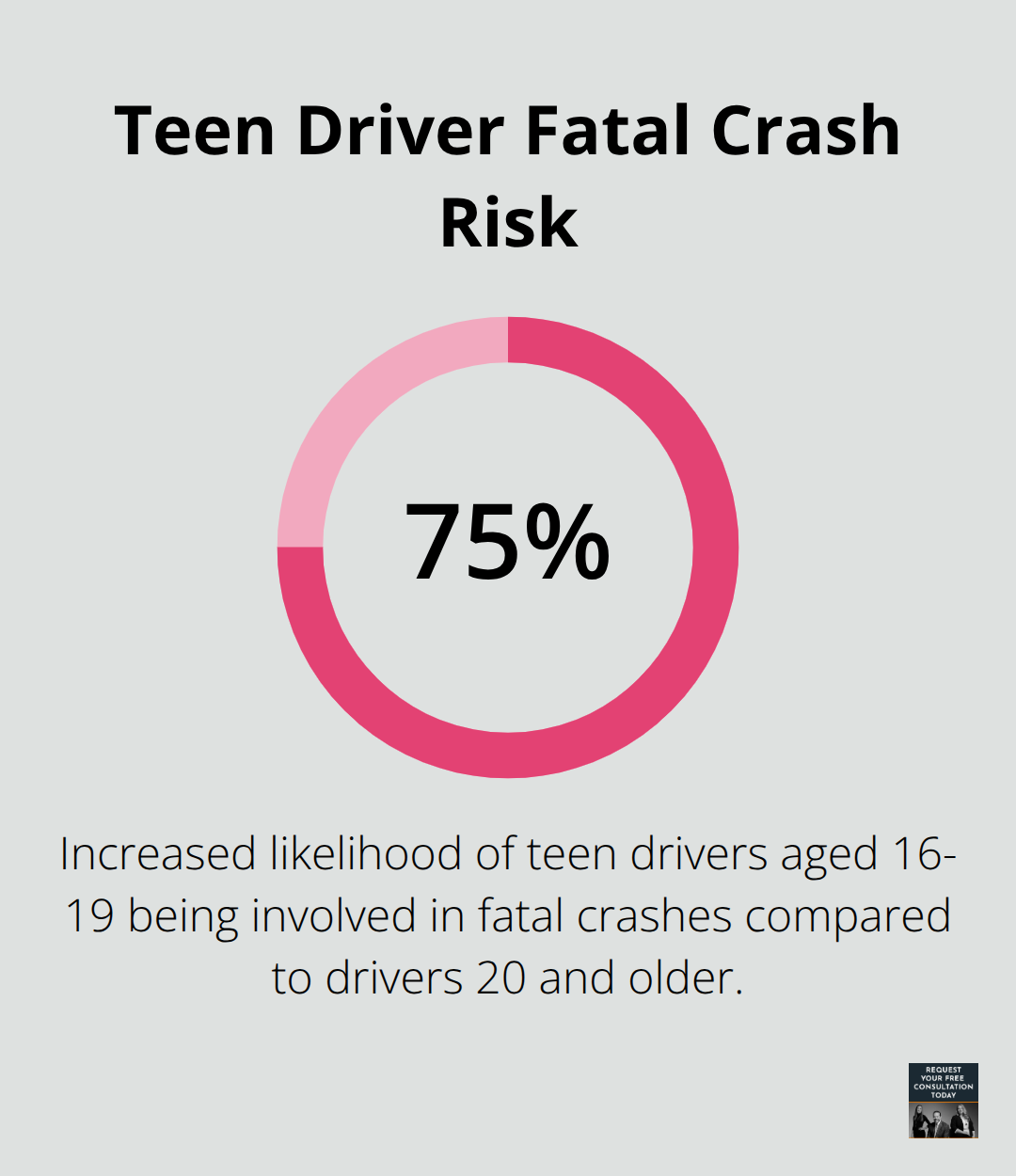
Teen drivers face significantly higher crash rates than any other age group. The National Highway Traffic Safety Administration reports that 16-19 year olds are nearly three times more likely to be in a fatal crash than drivers aged 20 and older.
Understanding the causes of teenage car accidents helps families take preventive action. We at Schaar & Silva LLP see these cases regularly in Santa Cruz County and know how devastating they can be for families.
What Drives Teen Crash Rates So High
Inexperience Creates Dangerous Gaps in Decision-Making
New drivers lack the automatic responses that develop through years of practice. The Centers for Disease Control found that 16-year-olds have crash rates 1.5 times higher than 18-19-year-olds, which shows how quickly experience matters. Teen drivers aged 16-19 are three times more likely to be involved in fatal crashes than drivers aged 20 and older. They underestimate dangerous situations like wet roads or construction zones that experienced drivers navigate safely.
Phone Use Behind the Wheel Multiplies Risk
Text messages while drivers operate vehicles increase crash likelihood by 23 percent according to National Highway Traffic Safety Administration data. Nearly 40 percent of high school students admitted they texted while they drove in the past month. Teen drivers check social media, respond to messages, and take photos while they drive at rates far above adult drivers. Eating while driving increases the odds of a near-miss or crash by 39%, showing how any distraction multiplies risk for inexperienced drivers.
Speed and Aggression Lead to Fatal Outcomes
About 35 percent of male teen drivers and 18 percent of female teen drivers in fatal crashes were at excessive speeds at impact. Teens speed more frequently than older drivers and leave shorter distances between vehicles. They run red lights, make illegal turns, and engage in street races that adult drivers avoid. The combination of speed and inexperience creates scenarios where teens cannot recover from mistakes that might be minor incidents for experienced drivers.
These individual risk factors become even more dangerous when combined with social pressures and environmental conditions that teens face daily.
Why Social Factors Drive Teen Crashes Higher
Passengers Turn Safe Drivers Into Risk-Takers
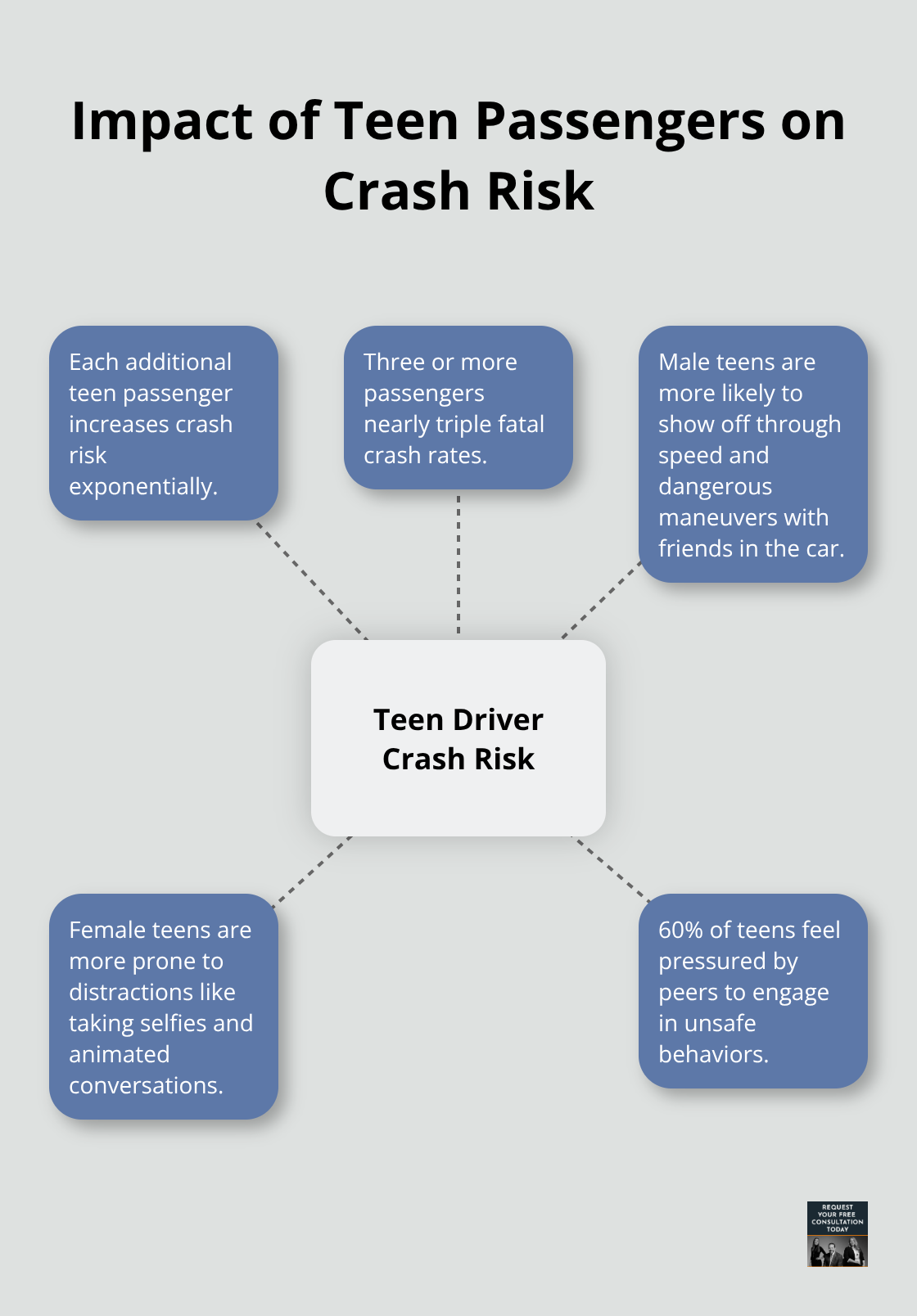
The Insurance Institute for Highway Safety found that teen drivers with peer passengers engage in risky behaviors they would never attempt alone. Each additional teen passenger increases crash risk exponentially, with three or more passengers nearly tripling fatal crash rates. Male teens show off through speed, races, and dangerous maneuvers when friends sit in the car. Female teens take more selfies, play louder music, and engage in animated conversations that pull attention from the road.
Interacting with passengers, especially for younger drivers, is a major source of distraction according to AAA Foundation research. The National Safety Council reports that 60 percent of teens feel pressured by peers to engage in unsafe behaviors. Parents who restrict passenger privileges during the first year see 40 percent fewer accidents among their teens.
Alcohol and Drug Use Creates Deadly Combinations
Twenty-nine percent of teen drivers killed in crashes in 2020 had alcohol in their systems (according to Centers for Disease Control data). The problem extends beyond alcohol to marijuana and prescription drugs. About 13 percent of high school students admitted to driving after marijuana use in the previous month.
Teen drivers who combine alcohol with marijuana face dramatically higher crash rates than those who use either substance alone. Weekend nights between 9 PM and 6 AM account for 44 percent of teen crash deaths, when substance use peaks. The fatal crash rate jumps to three times that of adult drivers during these high-risk hours.
Nighttime Hours Amplify Every Risk Factor
Darkness transforms routine drives into high-stakes situations for inexperienced drivers. Teen crash rates at night reach three times those of adult drivers aged 30-59. Poor visibility, fatigue, and reduced traffic enforcement create perfect conditions for accidents. Many teens drive tired after school activities or part-time jobs, which impairs reaction times as much as alcohol consumption.
These social and environmental pressures make prevention strategies absolutely vital for teen driver safety.
How Can Families Prevent Teen Crashes
Graduated Licensing Works When States Implement It Properly
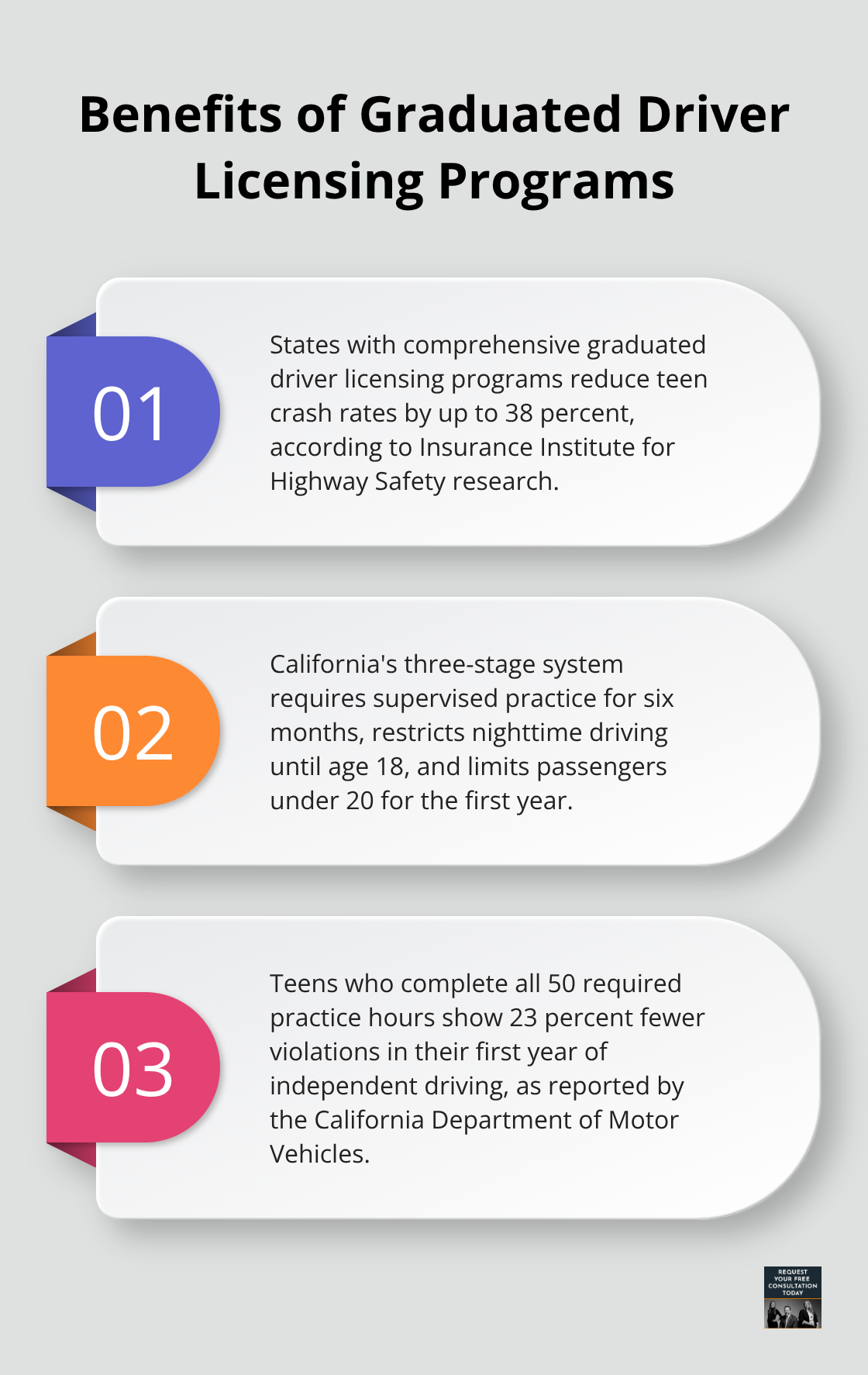
States with comprehensive graduated driver licensing programs reduce teen crash rates by up to 38 percent according to Insurance Institute for Highway Safety research. California’s three-stage system requires supervised practice for six months, restricts nighttime driving until age 18, and limits passengers under 20 for the first year. These restrictions work because they target the highest-risk situations teens face.
Parents must actively enforce these rules even when teens resist. The California Department of Motor Vehicles reports that teens who complete all 50 required practice hours show 23 percent fewer violations in their first year of independent driving. The system only succeeds when families follow through with supervision requirements.
Parents Control More Safety Factors Than They Realize
Parents who set clear driving rules reduce risky behaviors by 40 percent among teens. Families should establish non-negotiable rules about phone use, passenger limits, and curfews with immediate consequences for violations. The National Safety Council found that teens whose parents regularly discuss driving dangers engage in 35 percent fewer risky behaviors.
Vehicle access should depend on compliance with family driving agreements. Parents who track their teen’s driving through insurance company apps or built-in vehicle systems see dramatic improvements in speed compliance and harsh braking events. Active parental involvement makes the difference between safe and dangerous teen drivers.
Technology Solutions Deliver Measurable Results
Smartphone apps that block texting while driving reduce teen crash rates by 25 percent (according to recent AAA Foundation studies). Apps like DriveMode and LifeSaver automatically activate when vehicles reach 10 mph and send parents alerts when teens attempt to override safety features. Many insurance companies offer discounts up to 30 percent for families who use monitoring technology.
Modern vehicles with automatic emergency braking and lane departure warnings help inexperienced drivers avoid crashes that would otherwise result in serious injuries. These technological aids work best when combined with consistent parental oversight and clear consequences for unsafe driving behaviors.
Professional Support After Teen Accidents
Teen accidents often result in complex legal and insurance issues that families struggle to handle alone. Medical bills pile up quickly, and insurance companies may not offer fair settlements for property damage or injuries. Professional legal guidance helps families navigate these challenges while they focus on recovery and healing.
Final Thoughts
Teen car accidents happen because inexperience, distraction, and poor judgment create deadly combinations on the road. Teens crash three times more often than adult drivers because they haven’t developed the automatic responses that come from years of practice. Cell phone use, speed, peer pressure, and nighttime drives turn routine trips into dangerous situations.
Parents can prevent many accidents through active involvement, clear rules, and smart technology use. Families who monitor their teen’s habits and set firm boundaries see major drops in risky behaviors. States with strong licensing programs cut teen crashes by up to 38 percent (showing that structured approaches work).
When accidents happen, families in Santa Cruz County face complex legal and insurance challenges they can’t handle alone. Schaar & Silva LLP helps families deal with medical bills, property damage claims, and legal issues while they focus on recovery. We understand how the causes of teenage car accidents affect entire families and provide the legal support needed during these difficult times.
