
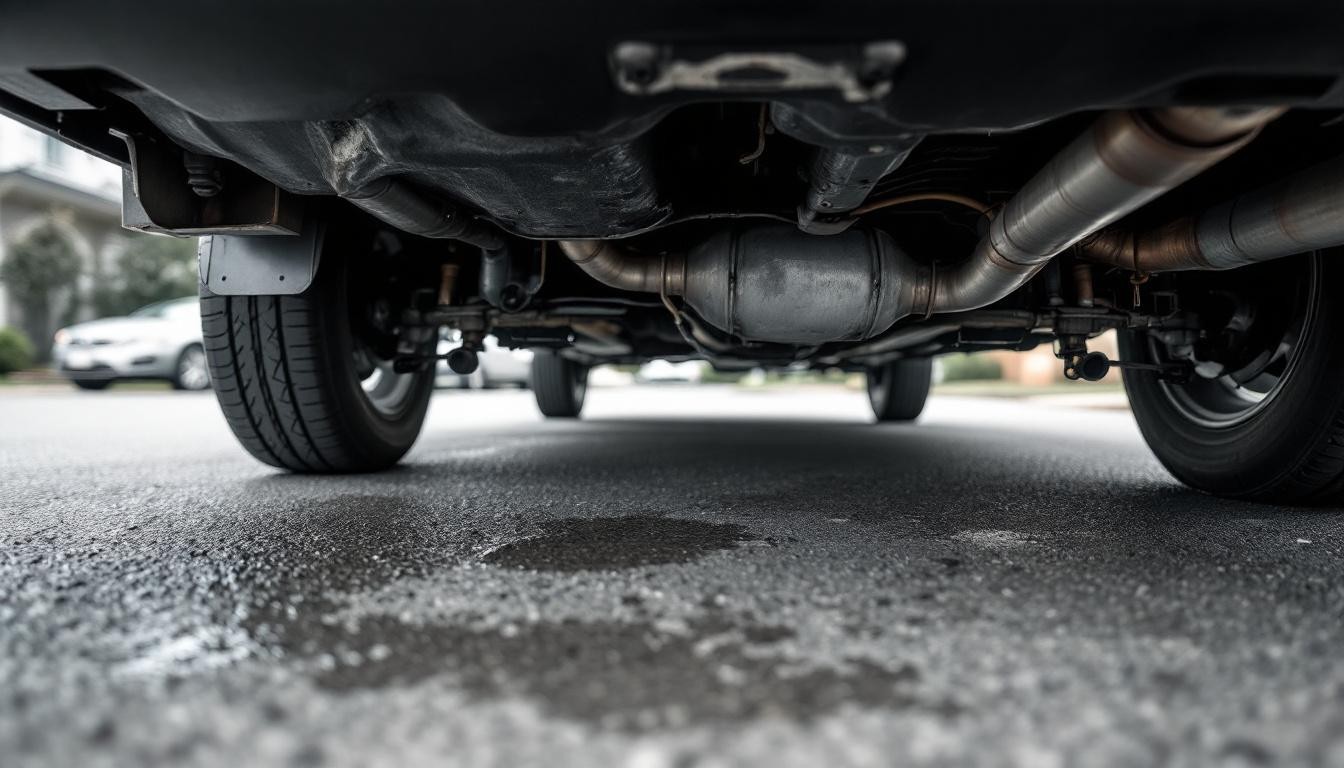
After a car accident, most people focus on visible damage. But undercarriage damage to your vehicle often slips through the cracks during initial inspections and insurance claims.
At Schaar & Silva LLP, we’ve seen countless cases where hidden undercarriage damage surfaces weeks or months after settlement, leaving accident victims with expensive repairs they thought were covered. This article shows you how to spot what inspectors miss and protect your claim from the start.
What Happens to Your Vehicle’s Undercarriage in an Accident
Impact Forces Travel Beyond Visible Damage
Undercarriage damage represents the hidden problem that catches most accident victims off guard. When your vehicle gets hit, especially from behind, the impact travels through far more than just the bumper and trunk. The undercarriage houses your transmission, suspension components, exhaust system, and frame-all of which can shift or break from forces you cannot see.
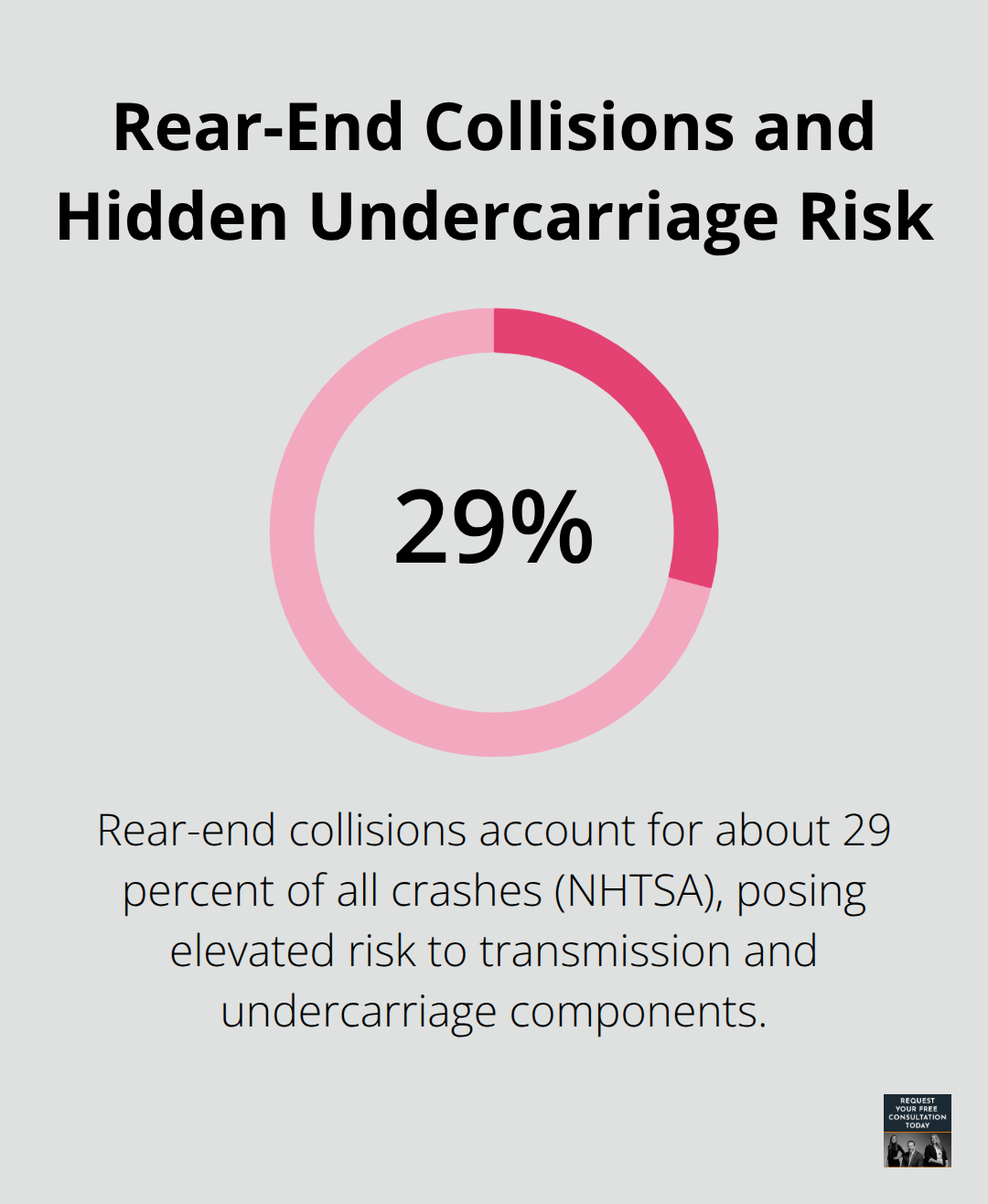
Rear-end collisions account for about 29 percent of all crashes annually according to the National Highway Traffic Safety Administration, and these impacts pose particular danger to undercarriage integrity because transmission components sit near the rear of your vehicle. Even a minor hit can misplace or damage these systems.
Why Damage Doesn’t Show Up Right Away
Undercarriage damage intensifies because it does not announce itself immediately. A vehicle might drive fine for weeks before transmission fluid leaks appear, or before the suspension starts to fail, or before frame misalignment cascades into steering problems that make the wheel pull to one side or create vibrations you cannot ignore. Hidden damage in these areas extends to exhaust and drivetrain components, affecting how your vehicle performs and what warning lights appear on your dashboard. A check engine light appearing after a collision signals issues with engine or transmission systems and warrants immediate diagnostics, but many accident victims ignore it or assume it bears no connection to the crash.
Frame Misalignment Creates Cascading Problems
Frame misalignment proves particularly insidious because it does not cause obvious symptoms at first. Instead, it cascades into suspension problems and undercarriage damage that compounds over time. If you notice your ride quality declining after an accident-the drive feels less smooth than before-or if you bottom out over speed bumps you previously handled fine, these signs point to hidden suspension or undercarriage damage. The undercarriage stays out of sight until secondary symptoms force you to get repairs, and by then, your insurance settlement is already closed and you pay out of pocket.
Initial Inspections Miss What Matters Most
The reason undercarriage damage gets missed so often comes down to how initial inspections happen. Insurance adjusters typically examine what sits visible at the accident scene (dents, broken lights, bent bumpers) but rarely get underneath to inspect the frame, suspension, or transmission housing. This limited approach leaves significant damage undetected and uncompensated.
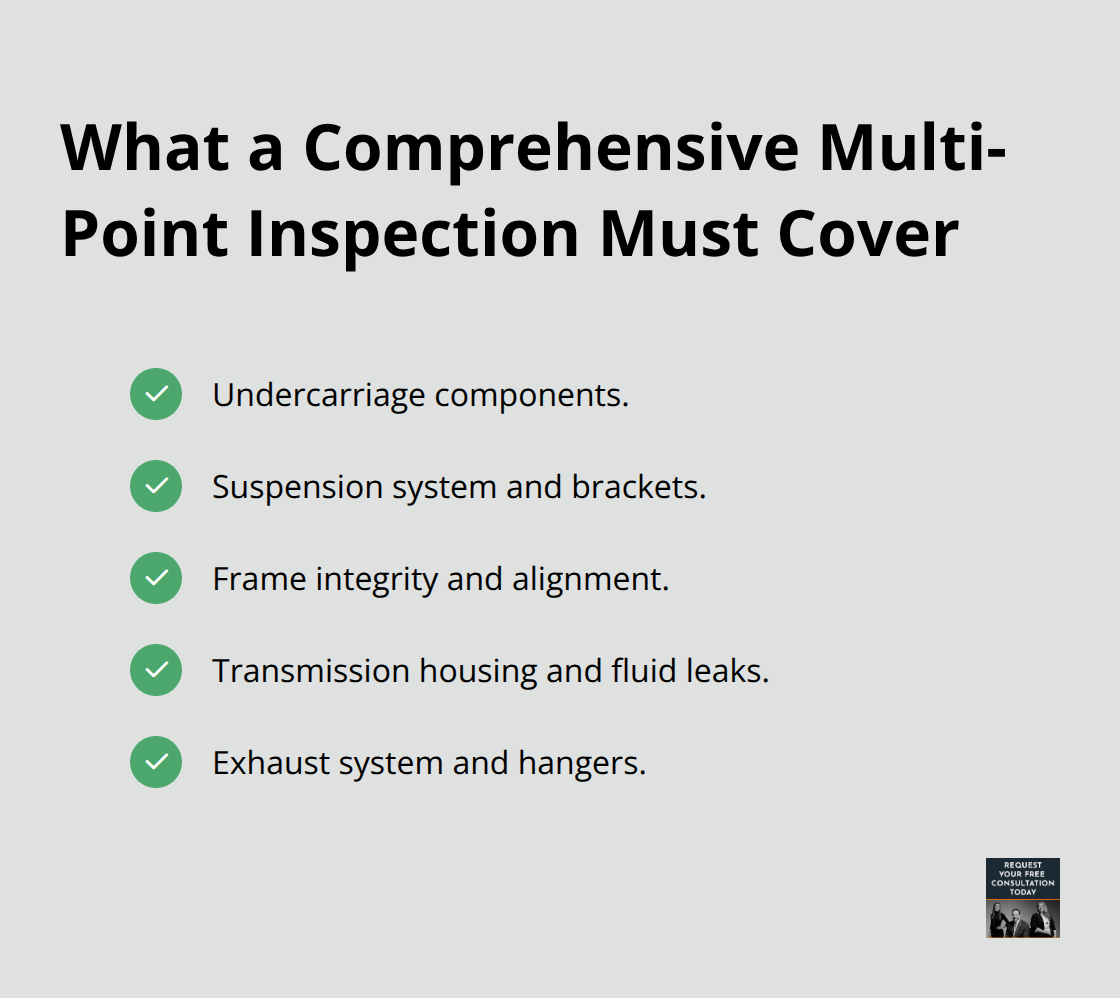
When you work with a property damage claim, insist on a comprehensive multi-point inspection that covers the undercarriage, suspension, frame, transmission, and exhaust-not just surface damage. This thorough assessment prevents gaps in coverage and protects you from bearing repair costs that should fall to your insurer. Understanding what happens beneath your vehicle after impact sets the stage for recognizing the warning signs that demand immediate action.
Why Inspectors Stop Looking Too Soon
Time and Budget Constraints Drive Rushed Inspections
Insurance adjusters work under time and budget constraints that push them toward speed rather than thoroughness. After an accident, an adjuster typically arrives at the scene or inspects your vehicle in a shop parking lot, spending 30 to 60 minutes examining what sits above ground. They photograph dents, broken lights, and bent metal, then calculate repair costs based on visible damage alone. The undercarriage never gets a proper look because it requires lifting the vehicle on a rack, removing components, and spending time adjusters simply do not allocate.
Why the Undercarriage Stays Hidden
This approach works fine for surface-level cosmetic damage, but it fails when transmission housings, suspension brackets, or the frame itself shift from impact forces. The adjuster closes the claim, issues a settlement check, and moves to the next case. You drive away thinking your vehicle is fully covered, unaware that suspension components are cracked or transmission fluid is leaking onto the road.
When Problems Surface After Settlement
The settlement gets finalized before undercarriage problems surface, which is precisely when insurance companies want claims closed. Transmission fluid leaks take weeks to become noticeable. Suspension degradation shows up gradually as your ride quality declines or your vehicle bottoms out over speed bumps. Frame misalignment manifests through steering problems, door latch issues, or a check engine light that appears days or weeks after the crash.
California’s Written Estimate Requirement Protects You
California requires a written estimate before repairs under the Automotive Repair Act, so when you finally take your vehicle to a shop and they uncover hidden damage, you have a documented record of what the insurance company missed. That written estimate becomes your evidence that the initial inspection was inadequate. At that point, your settlement is already closed and fighting to reopen it becomes expensive and time-consuming. The shop that completed the original estimate can provide objective documentation showing the extent of damage and workmanship quality, which strengthens your argument that undercarriage problems existed from the moment of impact.
The Cost Falls on You Without Comprehensive Initial Inspection
Without that comprehensive initial inspection, you absorb costs that should have been covered, and the insurance company avoids paying for damage they never bothered to look for. This is where getting a multi-point inspection immediately after your accident-one that covers the undercarriage, suspension, frame, transmission, and exhaust-becomes your strongest defense against gaps in coverage and unexpected repair bills down the road.
Securing a Full Damage Assessment Before Settlement
Get an Independent Inspection Before Accepting Settlement
An independent inspection of your vehicle’s undercarriage immediately after your accident separates a claim that covers actual damage from one that leaves you thousands of dollars short. Insurance adjusters have no financial incentive to look beyond the surface, so you must take control of the assessment yourself. Contact a reputable auto body shop in your area and request a comprehensive multi-point inspection that specifically examines the frame, suspension, transmission housing, exhaust system, and undercarriage components. This inspection must happen before you accept any settlement offer, not after. The shop will lift your vehicle on a rack and inspect areas the insurance adjuster never touched, documenting transmission fluid color and condition, suspension bracket integrity, frame alignment, and any signs of impact damage to hidden systems. Request that they provide this assessment in writing with photographs and detailed notes about what they find. This written report becomes your evidence if undercarriage problems emerge later and you need to reopen your claim or challenge an insurer’s denial.
Build a Paper Trail That Protects Your Claim
Documentation protects your claim far more than verbal conversations ever will. After your accident, photograph every angle of damage-front, rear, sides, and underneath if you can safely access those areas. Shoot videos of your vehicle being driven to capture any new noises, vibrations, or handling changes that develop in the days following impact. Keep all receipts, repair estimates, and communications with insurance adjusters and body shops organized in one folder, whether digital or physical.
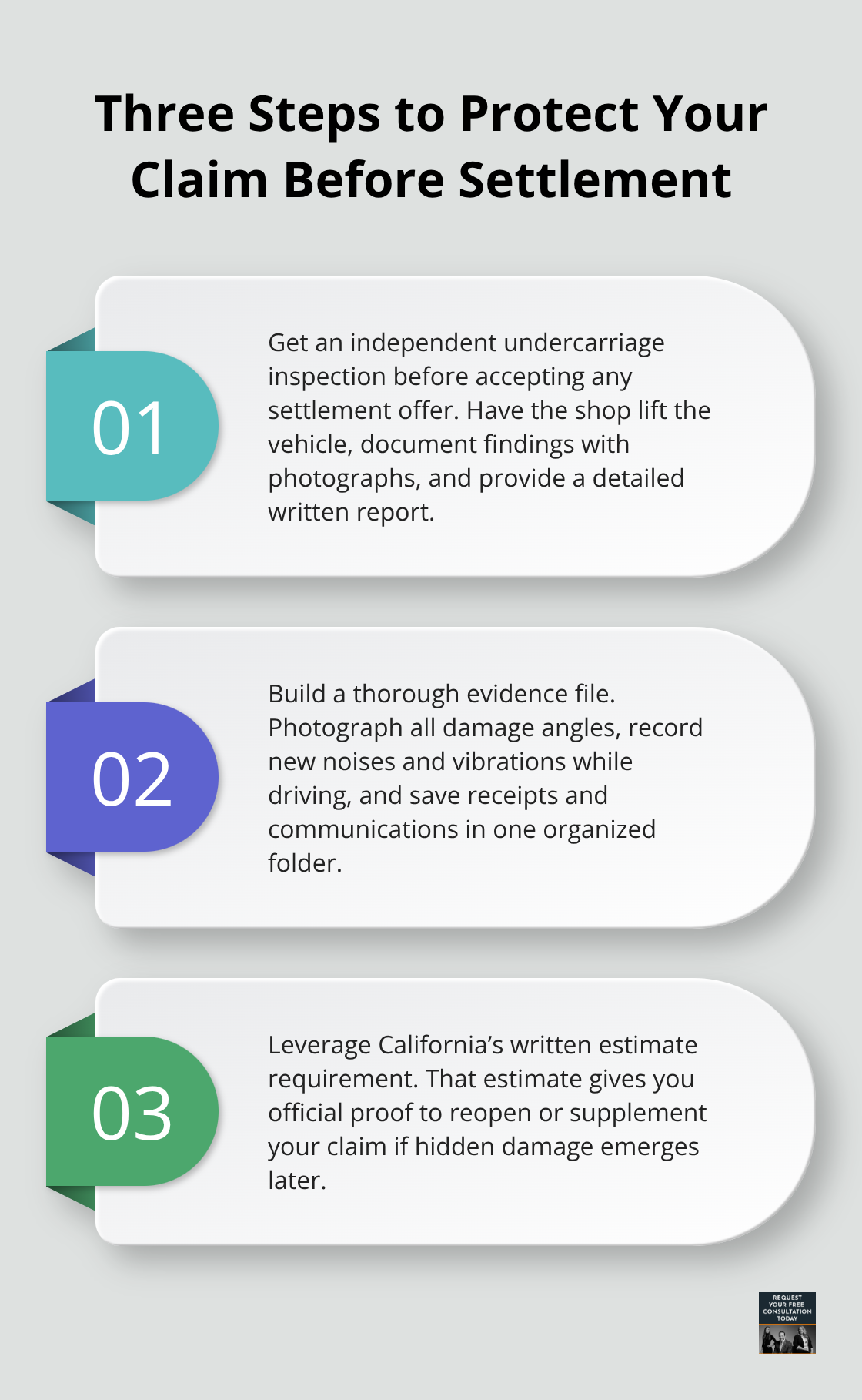
When the shop completes their comprehensive inspection and finds hidden transmission damage, suspension problems, or frame misalignment, that written estimate becomes the foundation for reopening your claim or filing a supplemental claim.
Use California’s Written Estimate Requirement as Your Weapon
California’s Automotive Repair Act requires shops to provide written estimates before work begins, which means you have an official document showing exactly what damage the initial insurance inspection overlooked. If your insurer refuses to cover the additional damage, this documentation gives you the objective evidence needed to escalate the claim, file a complaint with the California Bureau of Automotive Repair, or pursue legal action. The difference between winning and losing a dispute over hidden damage often comes down to whether you have a paper trail proving the damage existed from the moment of impact. That written estimate, combined with photographs and video documentation, creates an undeniable record that forces insurers to address what they missed during their initial assessment.
Final Thoughts
Undercarriage damage to your vehicle demands action the moment your accident happens, not weeks later when transmission fluid leaks or suspension problems force you into expensive repairs. Insurance adjusters miss what sits beneath the surface, settlements close before hidden damage surfaces, and you end up paying thousands out of pocket for repairs that should have been covered from day one. This outcome is preventable if you take control of the assessment process yourself.
Request a comprehensive multi-point inspection before accepting any settlement offer, photograph and document everything, and keep written estimates and communications organized. California’s requirement for written repair estimates provides your evidence that initial inspections were incomplete, and this documentation transforms your claim from one vulnerable to gaps in coverage into one backed by objective proof that forces insurers to address what they overlooked. These actions protect you far more effectively than verbal conversations ever will.
At Schaar & Silva LLP, we help accident victims in Santa Cruz County, Sacramento, and Oakland identify all damage categories, including the hidden undercarriage damage vehicle problems that adjusters routinely miss. If you’ve settled a claim and later discovered undercarriage damage, or if you’re facing pushback from an insurer over hidden problems, contact us to discuss your situation. You don’t have to accept incomplete repairs or inadequate settlements when documentation and persistence can recover what you’re owed.
