

A car crash face injury can change your life in seconds. Beyond the visible wounds, you’re facing medical bills, recovery time, and difficult decisions about your future.
At Schaar & Silva LLP, we’ve helped countless people in Santa Cruz County navigate this exact situation. This guide walks you through the immediate steps, treatment options, and legal path forward to get the compensation you deserve.
What To Do in the First Hours After a Facial Injury
The first few hours after a car crash involving facial injuries are critical for both your health and your legal claim. Get to an emergency room or urgent care facility immediately, even if the injury seems minor. Facial injuries can involve hidden damage to bone structure, nerves, or soft tissue that won’t be apparent without professional evaluation. The American College of Surgeons reports that delayed treatment of facial fractures can lead to permanent disfigurement and functional problems, so speed matters here.
Document Your Injuries Thoroughly
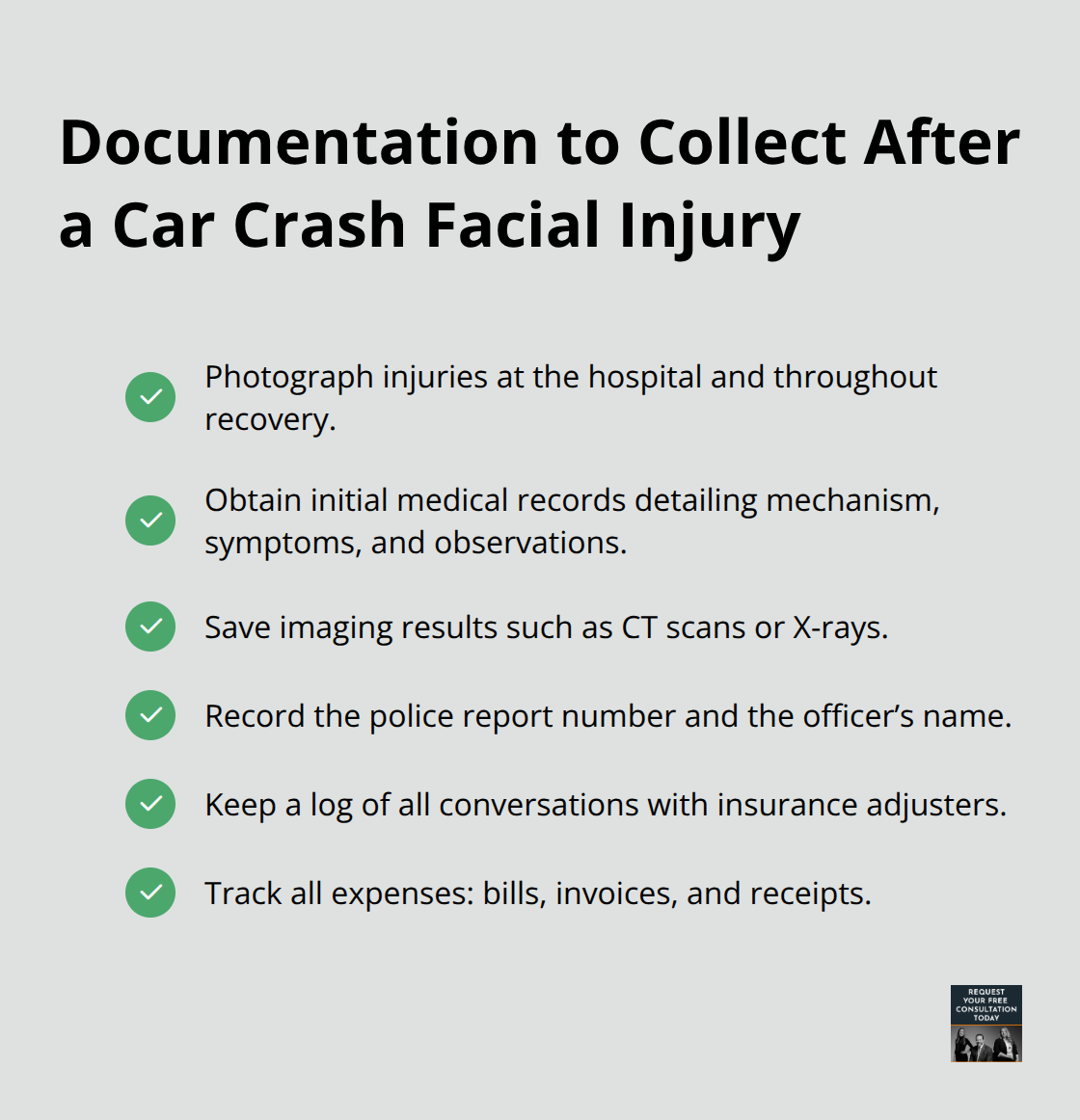
Take photos of your injuries at the hospital before any treatment begins, then again during your recovery over the next few weeks. These images become essential evidence for your claim because they show the actual extent of your suffering. Medical records from your initial visit should document everything: the mechanism of injury, your symptoms, the doctor’s observations, and any imaging results like CT scans or X-rays. Request copies immediately and keep them organized in a dedicated folder (physical or digital) that you can access quickly when needed.
File Your Police Report
Contact the Santa Cruz County Sheriff’s Office or your local police department to file an accident report. This report creates an official record of what happened and often includes witness statements. Get the case number and officer’s name for your records. Within ten days of the accident, report the claim to your insurance company and the at-fault driver’s insurer. Provide them with the police report number and your medical documentation. Insurance companies track these reports, and delays can complicate your claim later.
Communicate with Insurance Adjusters Strategically
The California Department of Insurance notes that prompt reporting strengthens your position when negotiating settlements. Keep detailed notes of every conversation with insurance adjusters, including dates, times, and what was discussed (these records protect you later). Insurance adjusters often contact injured people quickly, hoping to settle before medical costs mount, so having your medical records ready helps you avoid accepting inadequate offers.
Your next step involves understanding the different types of facial injuries and how medical professionals treat each one.
Facial Injuries Require Different Treatment Approaches
Types of Facial Injuries and Their Healing Timelines
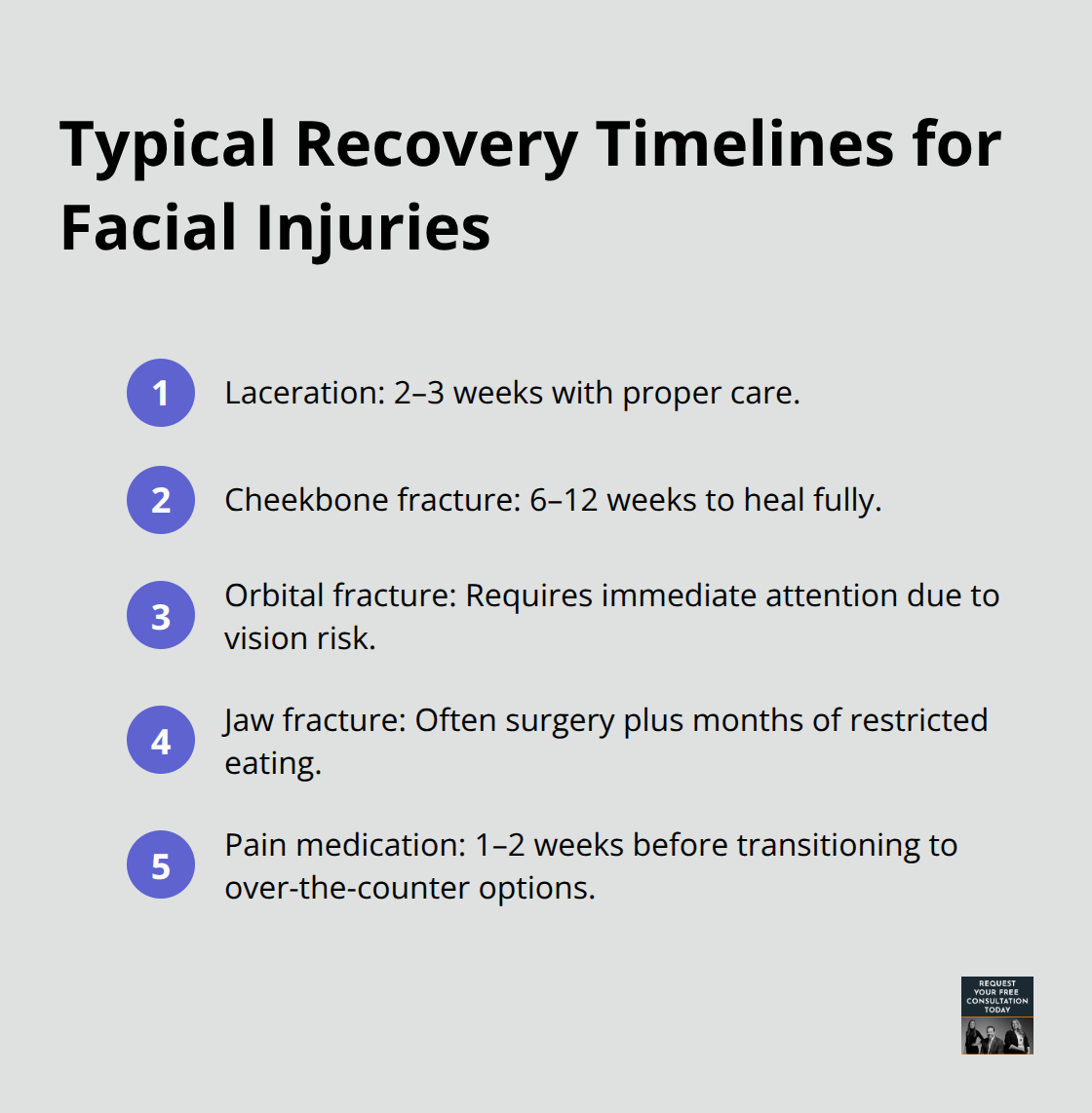
Facial injuries from car crashes range from lacerations and bruises to fractures of the cheekbones, jaw, or eye sockets. The type of injury you sustained determines your recovery timeline and treatment path. A simple laceration heals within two to three weeks with proper wound care, while a fractured cheekbone takes six to twelve weeks to heal fully, according to the American Academy of Otolaryngology. Orbital fractures around the eye socket demand immediate attention because they can affect vision permanently if treated incorrectly. Jaw fractures often require surgical intervention and months of restricted eating, since your jaw needs immobilization during healing.
Getting the Right Diagnosis
The emergency room physician must order imaging studies like CT scans to identify fractures that X-rays might miss. Santa Cruz County hospitals have trauma centers equipped to handle these assessments, and you should insist on imaging even if the initial examination seems straightforward. A proper diagnosis from the start prevents complications that develop when fractures heal in misaligned positions.
Treatment Options Based on Your Injury Type
Your medical team will recommend specific treatments based on your injury type. Minor lacerations need cleaning and stitching to prevent infection and minimize scarring, while deeper wounds might require plastic surgery consultation to improve cosmetic outcomes. Fractures sometimes heal without surgery if they’re stable, but many facial fractures need surgical repair to restore proper alignment and function.
Managing Pain and Following Your Recovery Plan
Pain management during recovery typically involves prescription medications for the first one to two weeks, then transitioning to over-the-counter options as healing progresses. Follow your doctor’s instructions precisely because rushing recovery or skipping follow-up appointments can result in permanent complications like chronic pain, facial asymmetry, or breathing difficulties. Physical therapy becomes important for jaw injuries, helping restore normal function and range of motion.
Documentation That Supports Your Claim
Keep detailed records of all treatment visits, medications prescribed, and any restrictions on your activities. This documentation directly supports your compensation claim when you work with a personal injury attorney. Your medical records become the foundation for proving the extent of your injuries and the costs associated with your recovery, which leads directly to understanding what compensation you can pursue.
Getting Fair Compensation for Your Injuries
Documenting Your Medical Expenses
Start collecting all medical documentation before insurance companies pressure you into settlement discussions. Your hospital bills, surgeon’s invoices, physical therapy receipts, and prescription costs form the foundation of your claim amount. The National Highway Traffic Safety Administration reports that facial injury treatment costs average between $15,000 and $75,000 depending on fracture severity and whether surgical reconstruction is needed. California law allows you to recover not just past medical expenses but also future treatment costs if your injury requires ongoing care. Create a spreadsheet listing every expense with dates and amounts, then submit these records to the at-fault driver’s insurance company within 30 days of your accident. Insurance adjusters often undervalue initial settlement offers by 40 to 60 percent according to the American Association for Justice, so your detailed documentation gives you leverage during negotiations.

Understanding Your Compensation Rights in California
Your rights to compensation extend far beyond medical bills in California. You can pursue damages for lost wages if your injury prevents you from working, pain and suffering that reflects your actual recovery experience, and permanent scarring or disfigurement if the injury affects your appearance long-term. California Civil Code Section 1668 prohibits you from accepting less than what your case is actually worth, meaning you have legal protection against settling too quickly. The at-fault driver’s insurance company must cover all reasonable costs related to your injury (medical treatment, lost income, and ongoing care needs).
How a Personal Injury Attorney Strengthens Your Claim
A personal injury attorney from Schaar & Silva LLP handles all communication with insurance companies, preventing you from accidentally saying something that weakens your position. We connect you with medical lien services that can pay your treatment providers now while your case resolves, removing the financial pressure that forces people into bad settlements. Our team knows Santa Cruz County courts and local insurance practices, which means we understand exactly how adjusters evaluate facial injury claims in your area.
Final Thoughts
Your recovery from a car crash face injury takes time, but your financial recovery doesn’t have to. The steps you take in the first days after your accident directly impact both your health outcomes and your ability to receive fair compensation. Medical attention comes first, always, because facial injuries can hide serious complications that emerge weeks later.
The legal side of your claim moves faster when you act promptly. Insurance companies count on injured people to delay, forget details, or accept inadequate offers out of desperation. Your medical records, photos, expense documentation, and police report create an undeniable record of what happened and what you deserve (California law protects your right to full compensation, but only if you pursue it strategically).
Contact Schaar & Silva LLP for a consultation about your case. There’s no cost to discuss what happened, and our team can immediately explain what your claim is worth and what compensation you can realistically pursue. The sooner you reach out, the sooner we can start protecting your rights and your recovery.
