

A truck accident can leave you facing massive medical bills while you recover from injuries. Medical liens offer a way to get the care you need without paying out of pocket right away.
At Schaar & Silva LLP, we help accident victims navigate truck accident lien services so they understand how these arrangements work and what to expect. This guide walks you through the process and shows you how medical liens can protect your recovery.
What Medical Liens Actually Are
A medical lien is a legal claim that a healthcare provider places on your truck accident settlement to recover payment for treatment they’ve already given you. When you’re injured in a truck crash and need immediate care, hospitals and doctors often agree to treat you now and get paid later from your settlement or judgment. This arrangement lets you access urgent surgery, imaging, therapy, and ongoing treatment without draining your savings or going into personal debt while your case moves forward. The provider files notice with the liable party’s insurance company and sometimes the court, creating a formal claim against your future recovery. Under California’s Hospital Lien Act, hospitals must send certified mail notice to the defendant and their insurer within specific timeframes, or the lien can be invalidated. That notice requirement matters because procedural defects give you negotiating leverage to reduce what the provider can ultimately claim.
How Liens Reduce Your Final Check
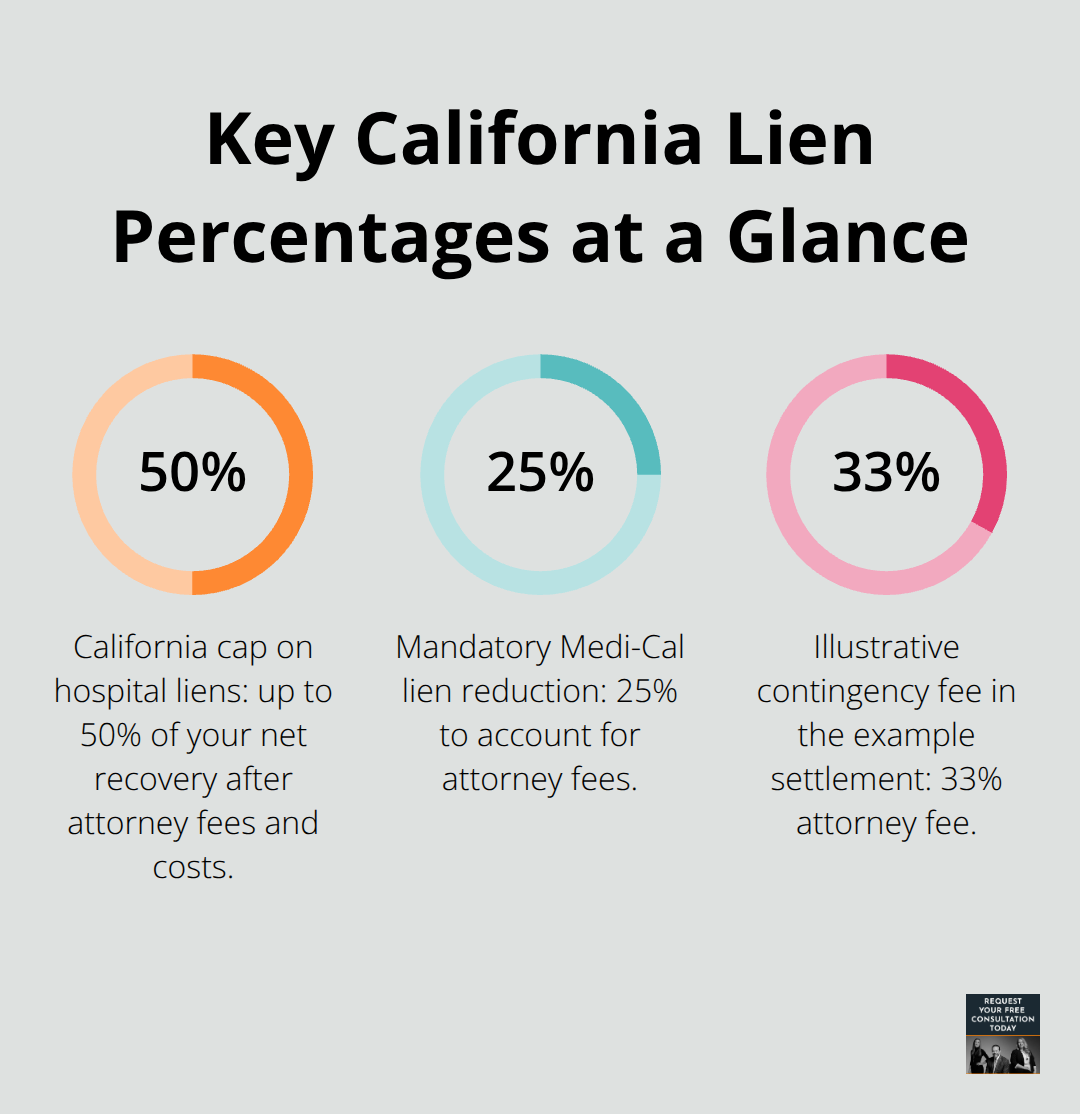
Here’s the practical reality: when your case settles, the lien amount comes directly out of your recovery before you see a penny. If you settle for $325,000 with $85,000 in medical liens and $28,000 in insurance subrogation, plus a 33 percent attorney fee, your net take-home drops significantly. California law caps hospital liens at 50 percent of your net recovery after attorney fees and costs are deducted, and Medi-Cal liens face a mandatory 25 percent reduction to account for your lawyer’s fees. Private insurance subrogation is reduced under the Common Fund Doctrine, requiring insurers to share in litigation costs proportionally. The Howell v. Hamilton Meats framework lets you challenge inflated medical bills and negotiate providers down toward market value rather than their billed rates. Many providers will accept cash-out offers of 40 to 60 percent of the original bill to close the file quickly instead of waiting months for dispute resolution.
Itemized bills from every treating provider reveal billing errors and inflated charges before they lock in as liens. An attorney can pursue these reductions far more effectively than you can on your own, and timing matters because once settlement funds are distributed, reductions become nearly impossible.
When Liens Get Resolved
Liens typically resolve when your case reaches maximum medical improvement and settlement is finalized. Most truck accident cases take 6 to 18 months to settle, depending on injury severity, liability disputes, and insurance company responsiveness. During this period, your medical providers continue to treat you under the lien agreement, and the lien amount grows with each bill. Once you reach settlement, your attorney coordinates with all lien holders to calculate reductions, verify notice compliance, and allocate funds proportionally if claims exceed available money.
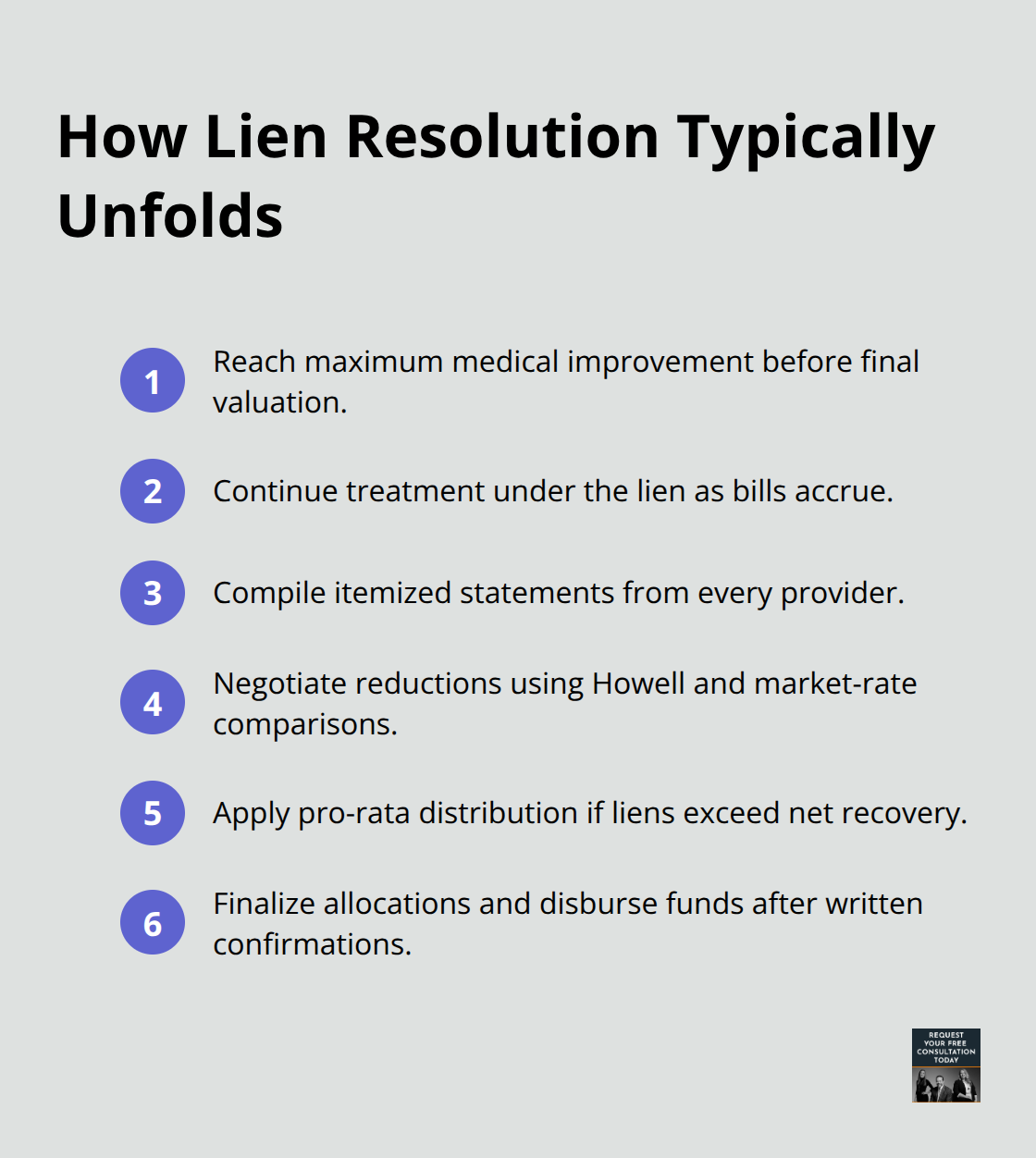
If total liens exceed your net recovery, California requires pro-rata distribution so each provider receives a proportional share rather than first claims consuming the entire settlement. Government liens like Medi-Cal follow stricter rules, applying the Ahlborn limitation so Medi-Cal only recovers from the portion of your settlement that represents past medical expenses, not pain and suffering or lost wages. Challenge liens before settlement is finalized because once checks are cut and funds distributed, negotiating reductions becomes far harder. This is why working with a lawyer who understands lien strategy from day one protects far more of your recovery than handling it alone after settlement arrives.
Understanding how liens attach to your settlement is only half the battle. The real challenge emerges when you face multiple providers, complex billing disputes, and the pressure to accept early settlement offers that don’t account for your full recovery potential.
Why Medical Liens Let You Heal Without Financial Stress
Access Treatment Without Draining Your Savings
Medical liens remove the impossible choice between getting immediate treatment and protecting your bank account. When you’re injured in a truck accident, waiting weeks or months to pay medical bills out of pocket isn’t realistic for most people. Hospitals and doctors understand this, which is why they agree to treat you under a lien arrangement. The Insurance Research Council found that claimants with legal representation recover about 3.5 times more than those handling claims alone, partly because attorneys connect injured people with lien-friendly providers from day one. Medical providers who routinely accept liens ensure you receive the MRI, surgery, physical therapy, and imaging you need without depleting savings or running up credit card debt. This matters enormously because gaps in treatment hurt your case value. Insurers scrutinize delays between injury and first medical visit, using them to argue your injuries weren’t serious. Immediate, consistent treatment strengthens your claim and prevents the insurer from downplaying what happened to you.
Protect Your Financial Stability During Recovery
The financial breathing room a lien provides is substantial. If your settlement takes 12 to 18 months, you could accumulate $40,000 to $80,000 in medical bills depending on injury severity. Paying that out of pocket forces impossible decisions: skip follow-up care, borrow money at high interest, or tap retirement accounts and face tax penalties. A medical lien shifts that burden to the settlement itself, where it belongs. Providers accept reduced payments through negotiation because they know the alternative is chasing an injured person with no current income. The Howell v. Hamilton Meats standard allows you to challenge inflated charges and bring providers down toward market value. Many accept cash-out settlements of 40 to 60 percent of the billed amount to close the file quickly rather than litigate. That negotiation protects your net recovery directly.
Strengthen Your Medical Record and Claim Value
When you’re not stressed about unpaid medical bills or creditor calls, you focus on actual healing instead of financial survival. Physical therapy progresses better when you show up consistently without anxiety about cost. Mental health treatment becomes possible when it’s not competing with your mortgage payment. This isn’t soft recovery language-it’s measurable. Consistent treatment produces better medical records, stronger damage claims, and ultimately larger settlements because your injuries are thoroughly documented and properly managed. Providers who work with liens understand that injured people need flexibility, and that flexibility translates into the kind of complete medical documentation that insurers cannot dismiss or downplay.
The real challenge emerges when you face multiple providers, complex billing disputes, and the pressure to accept early settlement offers that don’t account for your full recovery potential.
Common Challenges with Medical Liens
Inflated Bills Shrink Your Net Recovery
Medical lien disputes are where most accident victims lose money they should keep. A hospital bills $15,000 for an MRI that costs $2,400 to perform. Your insurer’s subrogation claim inflates costs by 40 percent above what Medicare actually paid. Three different providers file liens without proper notice, creating procedural defects you can leverage. You face $120,000 in total lien claims against a $200,000 settlement, and suddenly your net recovery shrinks to a fraction of what you expected.
The Howell v. Hamilton Meats standard exists precisely because providers routinely bill at rates far above market value, yet most injured people accept the inflated amounts without challenge. This is the core problem: you cannot negotiate what you do not understand, and most accident victims lack a framework for evaluating whether an $8,000 physical therapy bill reflects actual market rates or inflated charges.
Request itemized bills from every treating provider immediately after your accident. Cross-reference those bills against what Medicare or private insurers actually pay for identical services in your region. Many providers will accept 40 to 60 percent of their original bill as a cash-out settlement, which means the difference between knowing this fact and not knowing it is thousands of dollars in your pocket. An attorney can pursue Howell reductions far more effectively than you can negotiate alone because providers take legal counsel seriously in ways they do not take injured people’s phone calls seriously.
Subrogation Claims Reduce Your Settlement
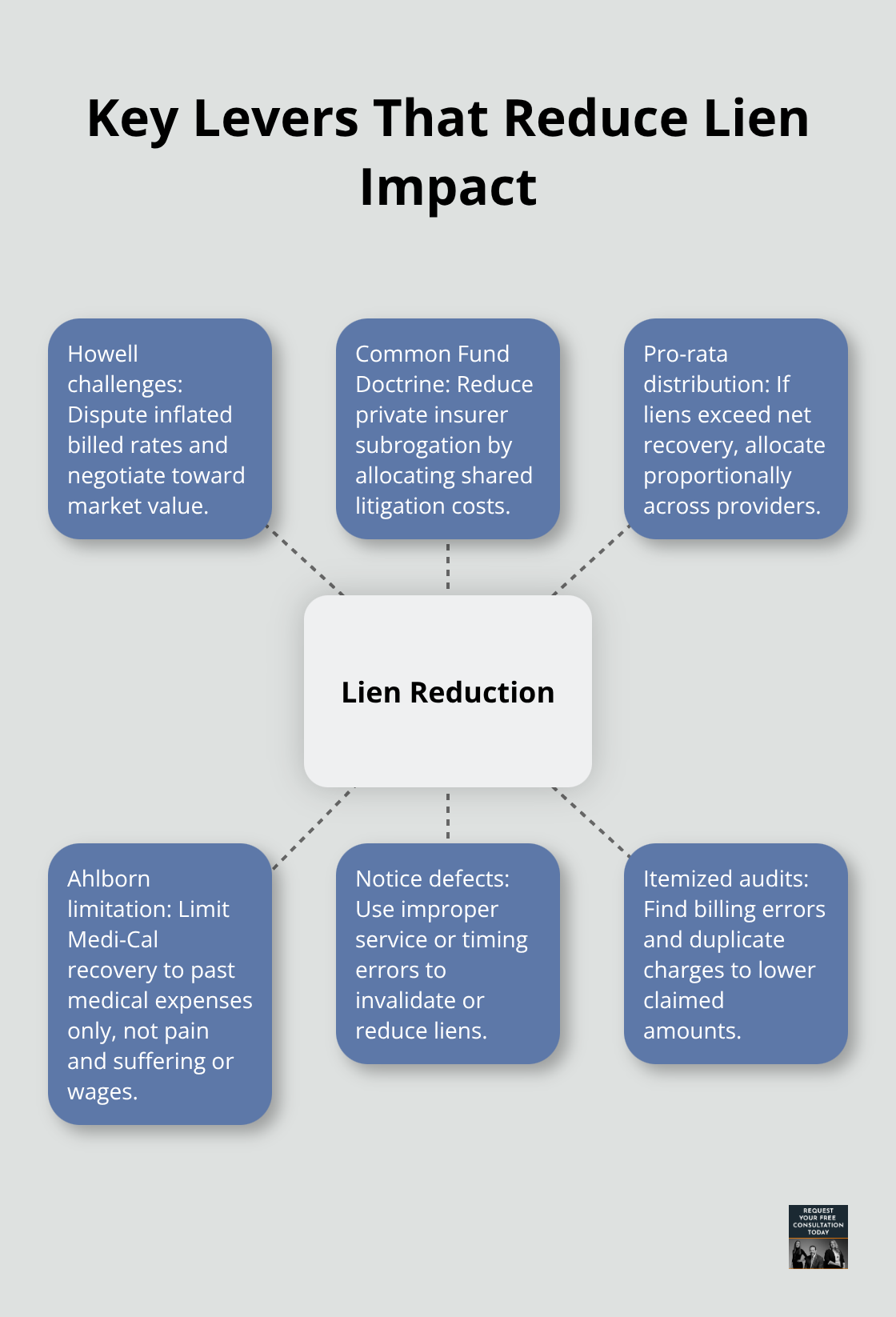
The Common Fund Doctrine requires private insurers to share litigation costs proportionally, reducing their subrogation claims. But this reduction only happens if someone calculates it correctly and asserts it during settlement negotiations. Many injured people never learn that this protection exists, so insurers collect full subrogation amounts they should have reduced. Your health insurance may have paid $30,000 in medical costs, but the insurer’s subrogation lien claims $42,000 to account for overhead and administrative costs. That $12,000 difference vanishes from your pocket unless an attorney identifies and challenges it.
Multiple Providers Create Cascading Complexity
You treated with the hospital emergency department, an orthopedic surgeon, an imaging center, a physical therapy clinic, and your primary care doctor. Each filed separate liens with different notice dates, different billing practices, and different willingness to negotiate. If total liens exceed your net recovery after attorney fees, California law requires pro-rata distribution, meaning each provider receives a proportional share rather than the first lien consuming everything. But pro-rata distribution only protects you if someone calculates it correctly and allocates funds accordingly.
Government liens like Medi-Cal add another layer because the Ahlborn limitation restricts Medi-Cal recovery to only the portion of settlement representing past medical expenses, not pain and suffering or lost wages. This distinction saves you thousands, but only if your attorney understands and applies it.
Procedural Defects Offer Negotiating Leverage
Challenge liens before settlement is finalized because once funds are distributed, reductions become nearly impossible to obtain. Track which liens are statutory, which are contractual subrogation claims, and which are consensual arrangements you made directly with providers. Maintain a complete lien paper trail including filing dates, notice methods, and copies of every notice sent.
Procedural defects like improper certified-mail service can invalidate liens entirely, giving you leverage to negotiate the remainder down toward market value. The timing window closes fast: identify defects and assert reductions during settlement negotiations, not after your attorney has already cut checks to lien holders. When you work with a firm that handles medical lien services, we help direct you to resources that identify these defects early and protect your recovery throughout the settlement process.
Final Thoughts
Medical liens solve a real problem: you need immediate treatment after a truck accident, but you lack cash to pay for it upfront. Liens let you access the surgery, imaging, and therapy your injuries require without bankrupting yourself while your case moves forward. The provider receives payment from your settlement instead of from your pocket, and you receive the care you need without delay.
The challenge emerges because medical liens also reduce your final settlement check, sometimes dramatically. Providers bill inflated amounts, insurers assert subrogation claims that exceed what they actually paid, and multiple liens can consume half or more of your recovery if left unchecked. The Howell v. Hamilton Meats standard, the Common Fund Doctrine, and California’s statutory caps protect you, but only if someone actively applies them during settlement negotiations. An attorney identifies inflated charges, challenges procedural defects in lien notices, applies the correct statutory reductions, and negotiates with providers to bring claims down toward market value. The Insurance Research Council found that claimants with legal representation recover about 3.5 times more than those handling claims alone, and much of that difference comes from proper lien management.
We at Schaar & Silva LLP help accident victims in Santa Cruz County, Sacramento, and Oakland navigate truck accident lien services so you understand exactly what you owe and what you keep. We connect you with lien-friendly providers from day one, track your medical bills for errors and inflated charges, and negotiate reductions before settlement is finalized. Contact us for a free consultation to discuss your medical liens and what your true recovery potential looks like after proper negotiation.
