
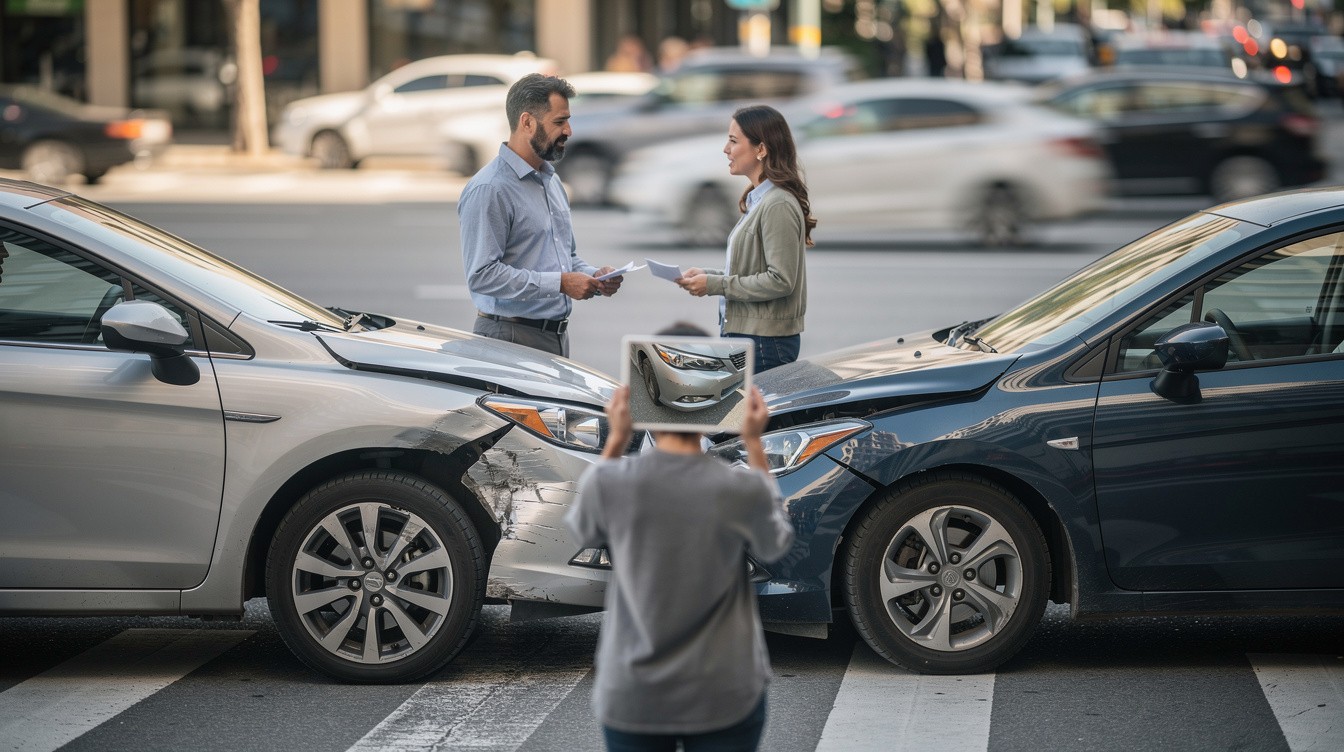
A car crash creates immediate chaos, but the legal questions that follow can be just as overwhelming. When someone else causes an accident, understanding third party liability becomes essential to protecting your rights and getting fair compensation.
At Schaar & Silva LLP, we help people in Santa Cruz County, Sacramento, and Oakland navigate these claims after serious crashes. This guide walks you through what third party liability means, how fault gets determined, and the concrete steps you need to take.
Who Is Responsible in a Third Party Liability Claim
Understanding Third Party Liability
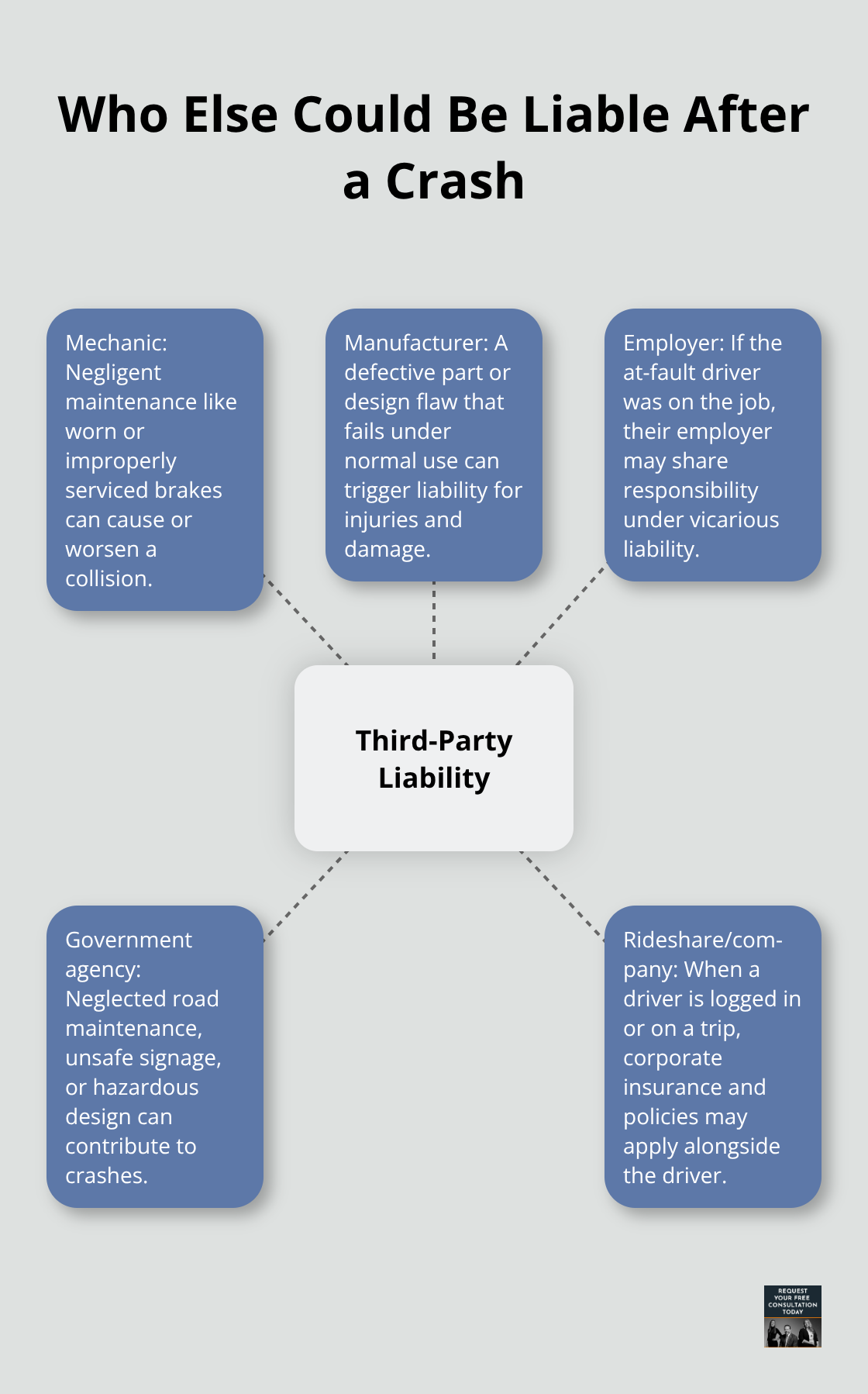
Third party liability means someone other than the two drivers involved in the crash bears legal responsibility for your losses. This person or organization could be a mechanic who failed to maintain brakes properly, a vehicle manufacturer whose defective part caused failure, an employer whose driver was working at the time of impact, or a government agency that neglected road maintenance. California law under Civil Code Section 1714 holds these parties accountable when their negligence contributes to your injury or property damage.
Why Third Party Claims Matter More Than Standard Claims
The distinction matters because you pursue compensation from the at-fault driver’s insurer in a standard accident, but with third party liability, you have additional defendants and potentially much higher insurance limits to tap into. A commercial truck driver who hits you while making deliveries exposes the trucking company’s insurance, which typically carries limits far exceeding the California minimum of $15,000 per person and $30,000 per accident. Rideshare crashes often involve third party liability because the company may be liable alongside the driver, opening access to corporate insurance policies with substantial coverage.
How to Identify Third Party Liability
Identifying third party liability requires investigation beyond the police report. Traffic camera footage from nearby businesses, intersection cameras, or traffic lights can reveal mechanical failures or road defects that caused the crash. Witness statements often uncover details about vehicle condition before impact or unsafe road conditions. A car accident attorney can review these materials systematically to spot liable parties you might otherwise miss.
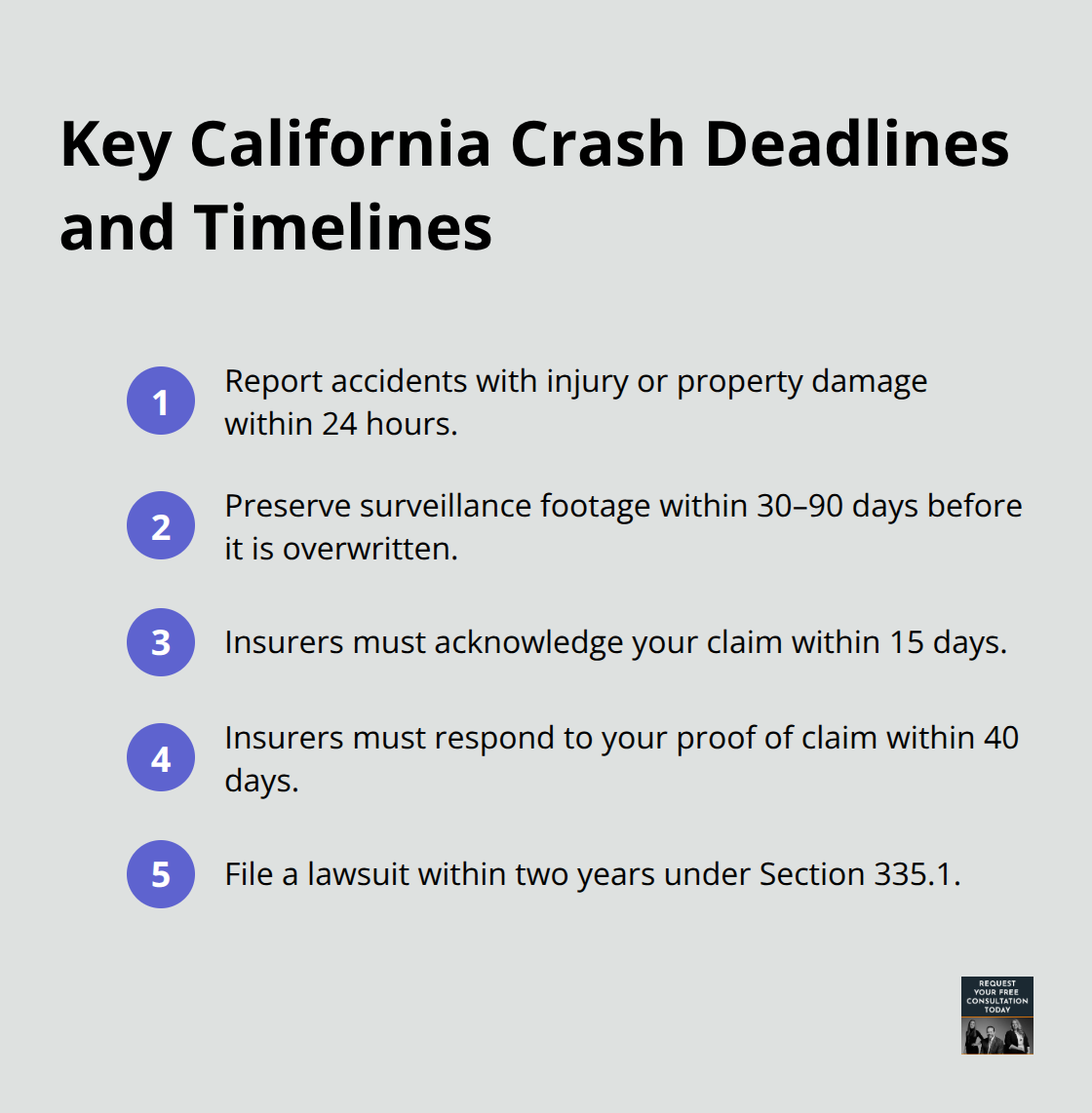
Multi-vehicle crashes frequently involve third parties because one vehicle’s mechanical failure or a government entity’s poor road maintenance can trigger the entire chain reaction. The deadline to pursue these claims in California is two years from the accident date under California Code of Civil Procedure Section 335.1, so you must act promptly to protect your ability to gather evidence while memories remain fresh and surveillance footage still exists.
Once you understand who bears responsibility, the next step involves establishing fault through concrete evidence and documentation.
How Fault Gets Established After a Crash
Police Reports and Their Limitations
Police reports form the foundation of fault determination, but they are not the final word on liability. When officers arrive at the scene, they document vehicle positions, damage patterns, skid marks, traffic signal conditions, and witness statements. However, police officers rarely investigate mechanical failures or third party negligence thoroughly. The California Highway Patrol report may conclude that Driver A failed to yield, but it won’t identify whether Driver A’s brakes were defective or whether the intersection had a documented history of poor visibility due to overgrown vegetation.
How Insurance Adjusters Assess Liability
Insurance adjusters use police reports as a starting point, but they also conduct their own investigations by reviewing medical records, obtaining repair estimates, analyzing phone records to establish distraction, and sometimes ordering accident reconstruction reports. The insurer’s goal is to minimize payout, which means they often interpret ambiguous evidence in their favor. If a witness statement suggests you may have been partially at fault, the adjuster will emphasize that detail in their liability assessment.
California’s Comparative Negligence Rule
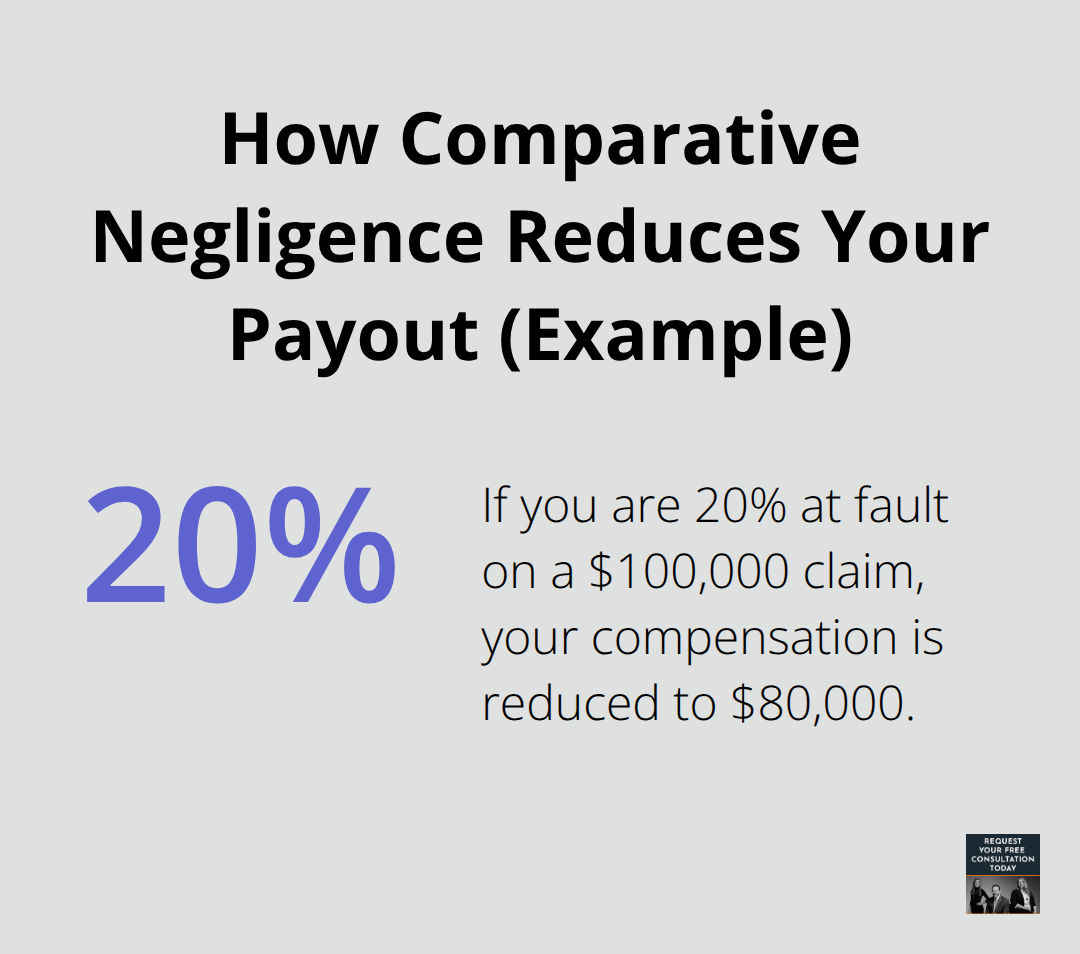
California’s pure comparative negligence law under Civil Code Section 1714 allows you to recover damages even if you bear partial fault, but your compensation is reduced by your percentage of responsibility. A $100,000 claim where you are found 20% at fault becomes $80,000. Insurance companies weaponize this rule by inflating your percentage of fault to shrink their payout. They use internal valuation tools like Colossus software that apply standardized multipliers (often 1.5 to 3 times medical expenses), which systematically undervalue pain and suffering compared to what juries award.
Evidence That Strengthens Your Position
Traffic camera footage, cell phone records showing the at-fault driver was texting, and expert testimony about vehicle defects or road maintenance failures strengthen your position significantly. Surveillance footage typically retains for 30 to 90 days, and witness memories fade rapidly. An attorney can issue preservation letters to businesses, government agencies, and manufacturers to prevent destruction of critical evidence (this step protects your ability to prove liability later).
Why Acting Quickly Matters
Without legal intervention, adjusters control the narrative and often succeed in shifting blame or minimizing liability through delay tactics and lowball settlement offers that you may feel pressured to accept during financial hardship. The evidence you gather in the weeks following your crash determines whether you recover full compensation or accept far less than you deserve. Once you understand how adjusters build their case against you, the next step involves taking concrete action to document your accident and communicate effectively with the at-fault driver’s insurance company.
Taking Action After Your Crash
Document the Accident Scene Immediately
The hours after a car accident determine whether you can prove third party liability later. Most people focus on their injuries and vehicle damage, but evidence disappears fast. Traffic camera footage typically retains for only 30 to 90 days before systems overwrite it. Witness memories fade within weeks.
Once this window closes, reconstructing what happened becomes exponentially harder and more expensive.
You need a documented record of the crash scene, vehicle condition, environmental factors, and statements from anyone who saw what happened. Photograph the accident location from multiple angles, including wide shots showing road conditions, traffic signals, lane markings, and any visible hazards like potholes or debris. Take close-up photos of vehicle damage patterns, which accident reconstruction experts use to determine impact angles and speeds. Capture the weather, lighting conditions, and time of day.
Get the names, phone numbers, and addresses of all witnesses before they leave the scene, and ask them specifically what they saw regarding road conditions, vehicle operation, or mechanical issues. Write down the other driver’s insurance information, policy number, and vehicle details immediately. Take photos of their driver’s license and registration. If police responded, obtain the report number and officer names.
Protect Yourself at the Scene
Do not admit fault or sign statements at the scene, and do not accept cash settlements from the other driver without verifying with your insurer first. These actions can undermine your claim significantly. California Vehicle Code Section 20008 requires you to report accidents involving injury or property damage within 24 hours, so contact your insurer promptly but carefully.
Communicate Strategically with the At-Fault Driver’s Insurance
Understand that adjusters are trained to minimize payouts. Avoid providing recorded statements without legal representation. Adjusters use recorded statements to lock you into specific language that they later weaponize against you. If they request a statement, tell them you will provide it through an attorney.
Do not accept their first settlement offer. Insurance companies deliberately offer lowball amounts early, counting on injured people to accept quickly while desperate for funds. Instead, gather all medical records, repair estimates, wage loss documentation, and receipts for accident-related expenses before engaging in settlement discussions. Request an itemized breakdown of how the adjuster calculated their offer, which forces them to justify undervalued damage assessments.
Preserve Evidence Before It Disappears
Send a preservation letter to the at-fault driver’s employer if they were working at the time of the crash, to the vehicle manufacturer if a mechanical defect contributed to the accident, and to any business with surveillance cameras near the crash location. California law requires these parties to preserve evidence, and written notice strengthens your legal position. This step prevents critical documentation from being destroyed or lost.
Know When to File a Lawsuit
The Fair Claims Settlement Practices Regulations require insurers to acknowledge your claim within 15 days and respond to your proof within 40 days, but many companies ignore these timelines hoping you will give up or accept less. When third party liability is clear and the insurer refuses reasonable settlement offers, filing a lawsuit becomes necessary to protect your right to full compensation within the two-year statute of limitations under California Code of Civil Procedure Section 335.1.
Final Thoughts on Third Party Liability
Third party liability claims demand more than filing paperwork and hoping for fair compensation. You need systematic documentation, strategic communication with insurers, and a clear understanding of California’s legal framework. The parties responsible for your crash may extend far beyond the driver who hit you, and identifying them requires investigation that insurance adjusters often skip.
The evidence you collect in the first weeks after your accident determines your recovery. Traffic camera footage disappears within months, witness memories fade, and mechanical defects require expert analysis before they vanish into repair shops. Without prompt action, you lose leverage in settlement negotiations and may miss the two-year deadline to file a lawsuit under California law.
Insurance companies count on injured people to accept lowball offers quickly. They use internal valuation tools that systematically undervalue pain and suffering, request recorded statements designed to lock you into language they later weaponize, and delay responses hoping you will give up. We at Schaar & Silva LLP help people in Santa Cruz County, Sacramento, and Oakland navigate third party liability claims after serious crashes, and contact us for a free consultation to discuss your case and understand your options for pursuing full compensation from all responsible parties.
