
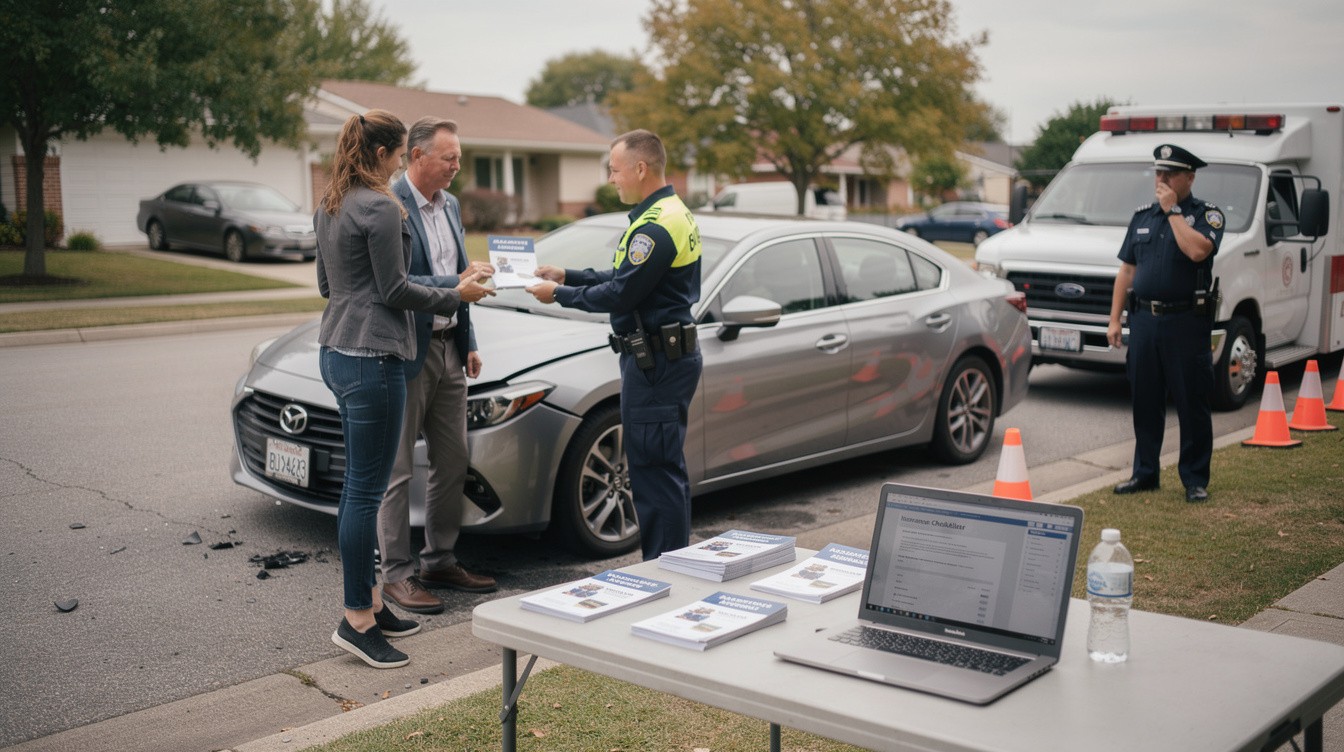
A car accident in Santa Cruz County disrupts your life in seconds. You’re suddenly facing medical bills, insurance paperwork, vehicle repairs, and decisions that feel overwhelming.
We at Schaar & Silva LLP created this guide to help you navigate Santa Cruz accident resources and take control of your recovery. You’ll find practical steps for the immediate aftermath, medical care options, and how to handle property damage claims.
What to Do Right After Your Accident
Move to Safety and Call for Help
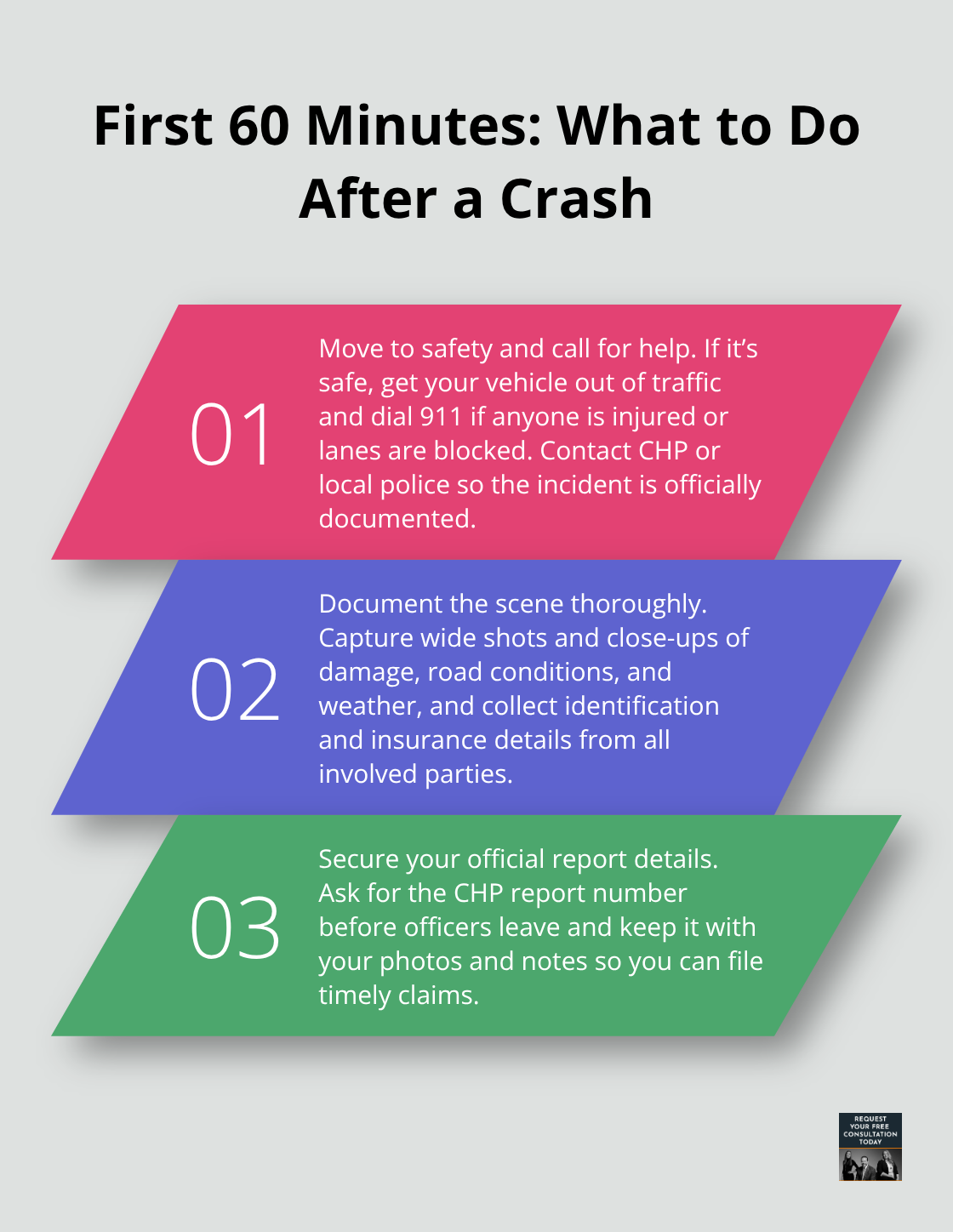
The first minutes after a crash determine how well you’ll recover your losses. Move your vehicle out of traffic if it’s safe to do so-staying in the roadway risks secondary crashes that compound injuries and liability questions. Call 911 if anyone is injured or if the crash blocks traffic. If there are no injuries and vehicles can move, get to a safe location quickly. Contact the California Highway Patrol or your local police department to report the accident. The CHP will document the scene officially, which matters for insurance claims and any future legal action.
Document Everything at the Scene
While waiting for police, take photos and videos of vehicle damage, road conditions, weather, and the accident scene from multiple angles. Photograph the other driver’s license, vehicle registration, and insurance card directly-don’t rely on handwritten notes. Get the names, phone numbers, and addresses of all drivers and passengers involved. Write down the other vehicle’s make, model, color, and license plate. Ask witnesses for their contact information and write a brief account of what happened while details are fresh (time of day, traffic conditions, weather, and the sequence of events).
Protect Yourself During Conversations
Never admit fault at the scene, even if you think the crash was your mistake. Stick to facts when speaking with the other driver and police. This approach protects your position with insurance companies and any potential legal proceedings that follow.
Obtain Your Official Crash Report
Request the CHP report number before officers leave; you’ll need this for insurance. If you don’t receive a report number at the scene, visit the nearest CHP office or use the Crash Portal to request your report online within days of the accident.
The sooner you gather complete information and file an official report, the stronger your position when handling medical bills, vehicle repairs, and insurance claims. With documentation in hand, you’re ready to address your medical care needs and understand what financial assistance options exist in Santa Cruz County.
Medical Care and Financial Assistance After Your Accident
Address Medical Bills Quickly
After a crash, medical bills arrive faster than you expect. Santa Cruz County residents face emergency room costs averaging $1,200 to $3,500 for accident-related visits, depending on injury severity. The real problem isn’t just the immediate medical expenses-it’s the gap between treatment and insurance settlement. Most accident victims need care now but won’t receive their settlement for months or longer.
Use Medical Liens to Defer Payment
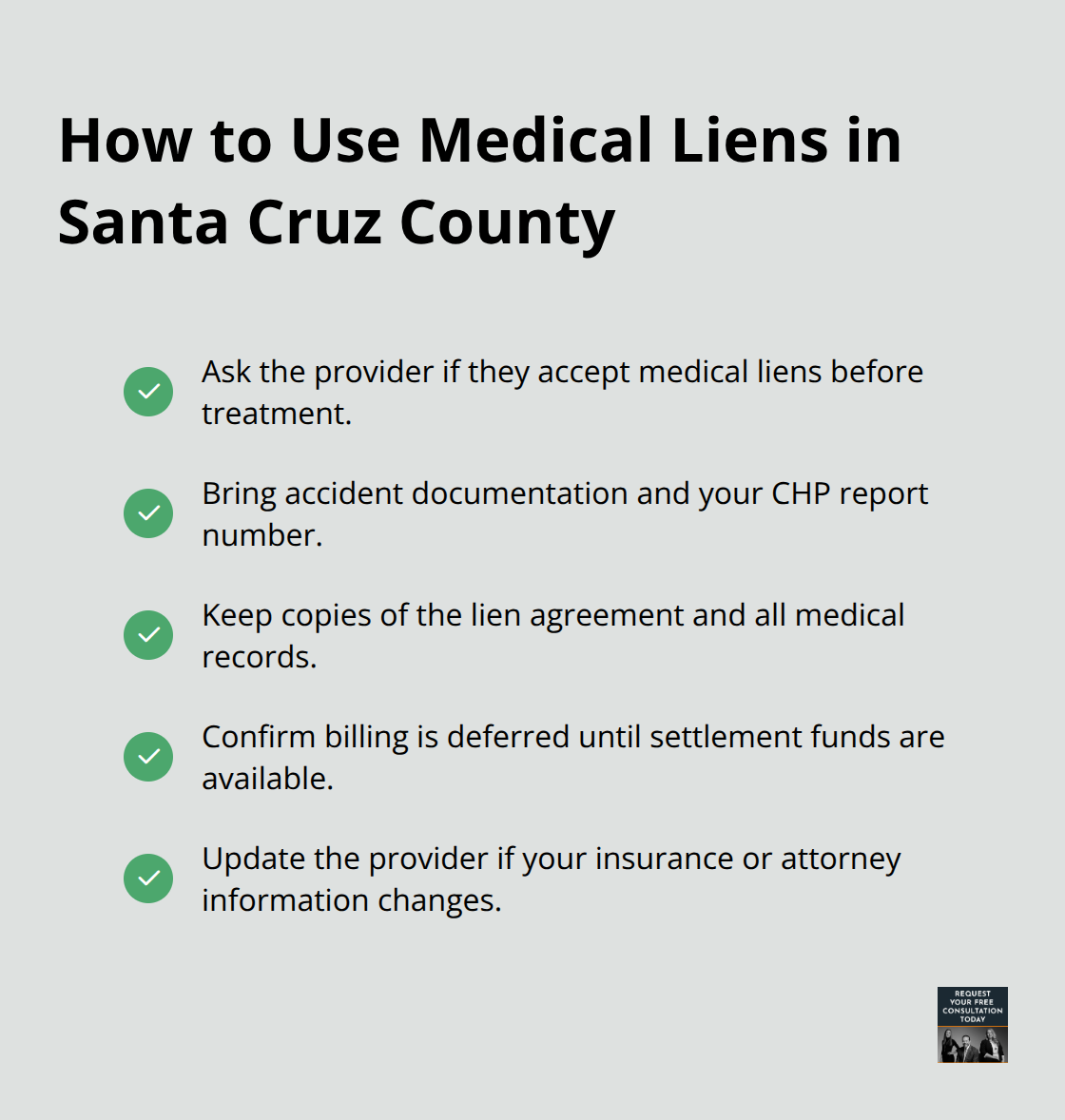
Medical lien services solve this problem by allowing healthcare providers to defer payment until your case settles. When you use a medical lien, your doctor or hospital agrees to wait for payment from your insurance claim or legal settlement rather than billing you directly. This approach keeps you from draining savings or accumulating debt while recovering.
Santa Cruz County has several hospitals and urgent care facilities that accept medical liens, including Watsonville Community Hospital and Dominican Hospital in Santa Cruz. Before selecting a provider, ask directly whether they work with medical lien arrangements. Insurance companies understand medical liens and factor them into settlement negotiations, so this isn’t an unusual or problematic approach.
File Your Insurance Claim Within the Deadline
Your insurance claim is the fastest path to covering medical costs and vehicle repairs. File your claim within 30 days of the accident-insurers set this deadline strictly, and missing it can reduce or eliminate your benefits. Provide your insurer with the official CHP report number, photos from the scene, and medical records documenting your injuries.
Evaluate Settlement Offers Carefully
Don’t accept the first settlement offer if it doesn’t cover all documented medical expenses and vehicle damage. Insurance adjusters often underestimate injury costs, particularly for soft tissue damage that develops days after the crash. If you believe the offer is unfair, we at Schaar & Silva LLP can review your claim and negotiate on your behalf (our team handles medical bill assistance and property damage evaluations, helping you understand whether your settlement reflects the true cost of your accident).
Request written explanations for any denied claims-insurers must justify their decisions. Keep copies of every document you submit and every response you receive. This documentation becomes critical if your case requires legal action or if disputes arise during the claims process. With your medical expenses addressed and insurance claims filed, you can now focus on assessing property damage and securing fair valuations for vehicle repairs.
Protecting Your Vehicle’s Value After a Crash
Document Damage Immediately After the Accident
Property damage documentation separates fair settlements from lowball offers. Take photos and videos of every visible damage point on your vehicle before it leaves the scene or gets towed. Photograph the overall vehicle position relative to other cars or road markers, then zoom in on dents, broken glass, paint damage, and undercarriage harm if accessible. Include wide shots showing the accident location and road conditions. This photographic record prevents disputes later when insurance adjusters question whether damage came from your accident or pre-existing conditions.
Get Professional Damage Assessments
If your vehicle is drivable, drive it to a repair shop within 24 hours for an official damage assessment. If it’s not drivable, request a tow to a shop you choose, not one your insurer mandates. Santa Cruz County has several reputable independent repair shops including Santa Cruz Auto Collision and Watsonville Auto Repair that provide detailed written estimates. These shops understand local market rates and won’t inflate costs, but they also won’t undervalue your vehicle to please insurance companies.
Obtain Multiple Repair Estimates
Get at least two written estimates from different shops. Insurance companies often use their preferred vendors who sometimes estimate lower repair costs to keep insurer relationships profitable. When you present multiple estimates showing similar damage assessments, insurers can’t easily justify paying less than the market rate for repairs in Santa Cruz County.
File Your Property Damage Claim and Challenge Low Offers
File your property damage claim with your insurer within 30 days, providing the CHP report number, all photographs, and both repair estimates. If your insurer’s estimate falls significantly below the repair shop estimates you received, request a written explanation and ask for a re-inspection by a third-party appraiser. California law allows you to dispute initial valuations, and insurers know this. Don’t accept vague language in settlement offers like “reasonable repairs” or “fair market value” without specific dollar amounts attached. Demand itemized breakdowns showing labor costs, parts pricing, and any additional damage discovered during repairs.
Verify Total Loss Valuations Against Market Rates
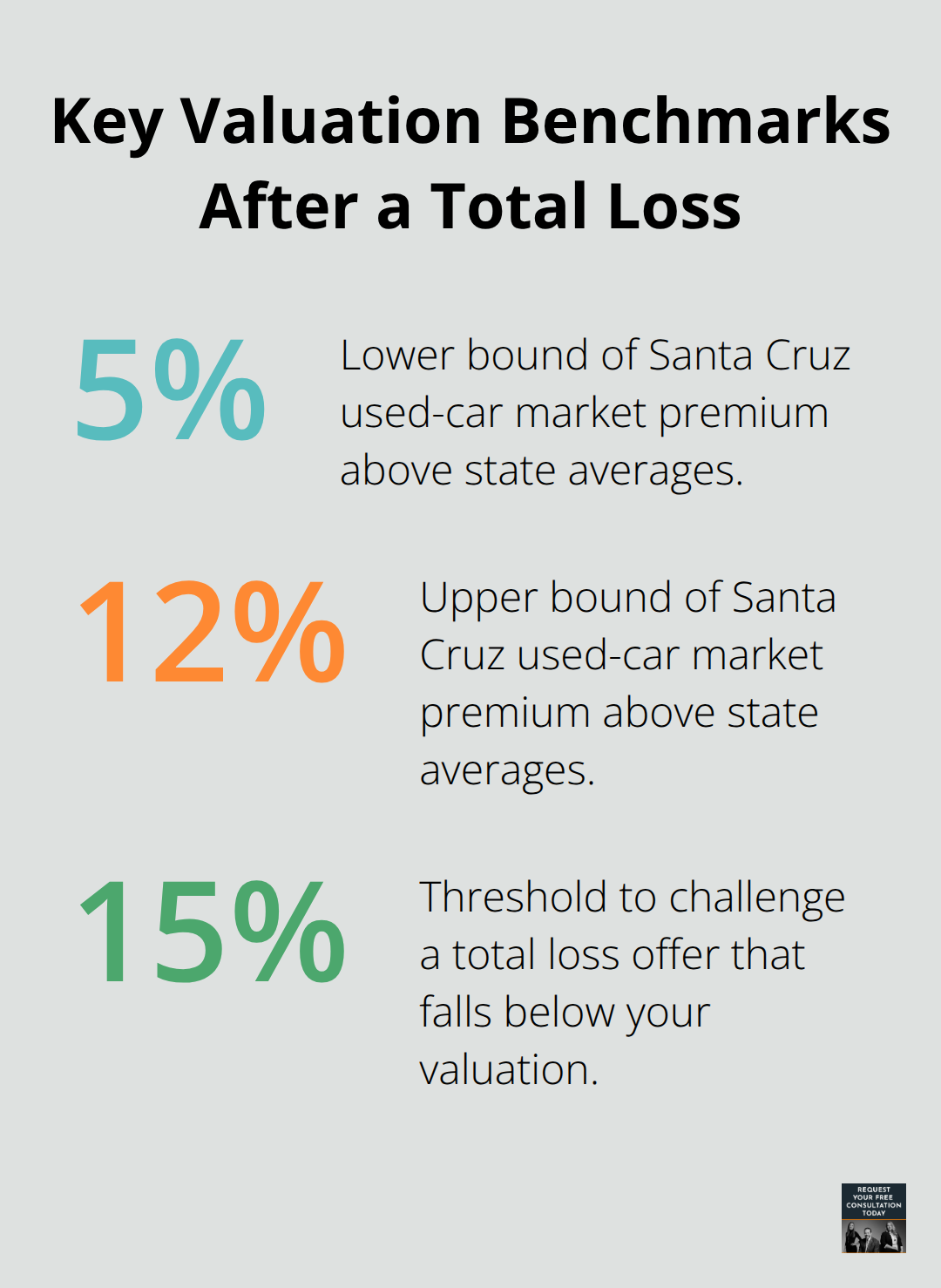
If your vehicle is declared a total loss, the insurer’s valuation must reflect the actual cash value before the accident. Check your vehicle’s pre-accident value using NADA Guides or Kelley Blue Book, accounting for mileage, condition, and local market factors. Santa Cruz’s used vehicle market typically runs 5 to 12 percent higher than state averages due to limited inventory and coastal location premiums. If the insurer’s total loss offer is 15 percent below your independent valuation, challenge it with documentation.
We at Schaar & Silva LLP assist in evaluating property damage claims and help you understand whether settlement offers reflect actual repair or replacement costs in Santa Cruz County’s market.
Final Thoughts
You’ve walked through the immediate steps after your accident, medical care options, and property damage claims. Santa Cruz accident resources exist to support your recovery, but knowing they’re available isn’t enough-you must act on them quickly. File your CHP report within days, submit insurance claims within 30 days, and gather documentation before details fade from memory, because delays weaken your position with insurers and complicate medical bill negotiations.
Recovery after a crash involves more than paperwork-medical expenses, vehicle repairs, and insurance disputes create real financial and emotional pressure. Santa Cruz County residents shouldn’t navigate this alone, which is why we at Schaar & Silva LLP help accident victims handle medical bill assistance through lien services, evaluate property damage claims to confirm fair valuations, and connect you with support when emotional trauma follows your accident. If you’re facing insurance disputes or believe your settlement offer is unfair, contact Schaar & Silva LLP to review your claim and negotiate on your behalf.
Moving forward means taking control of your recovery rather than accepting whatever insurers initially offer. You have rights under California law, and you have access to resources that work-start with the steps outlined in this guide, document everything, and reach out for legal support when you need it.
