
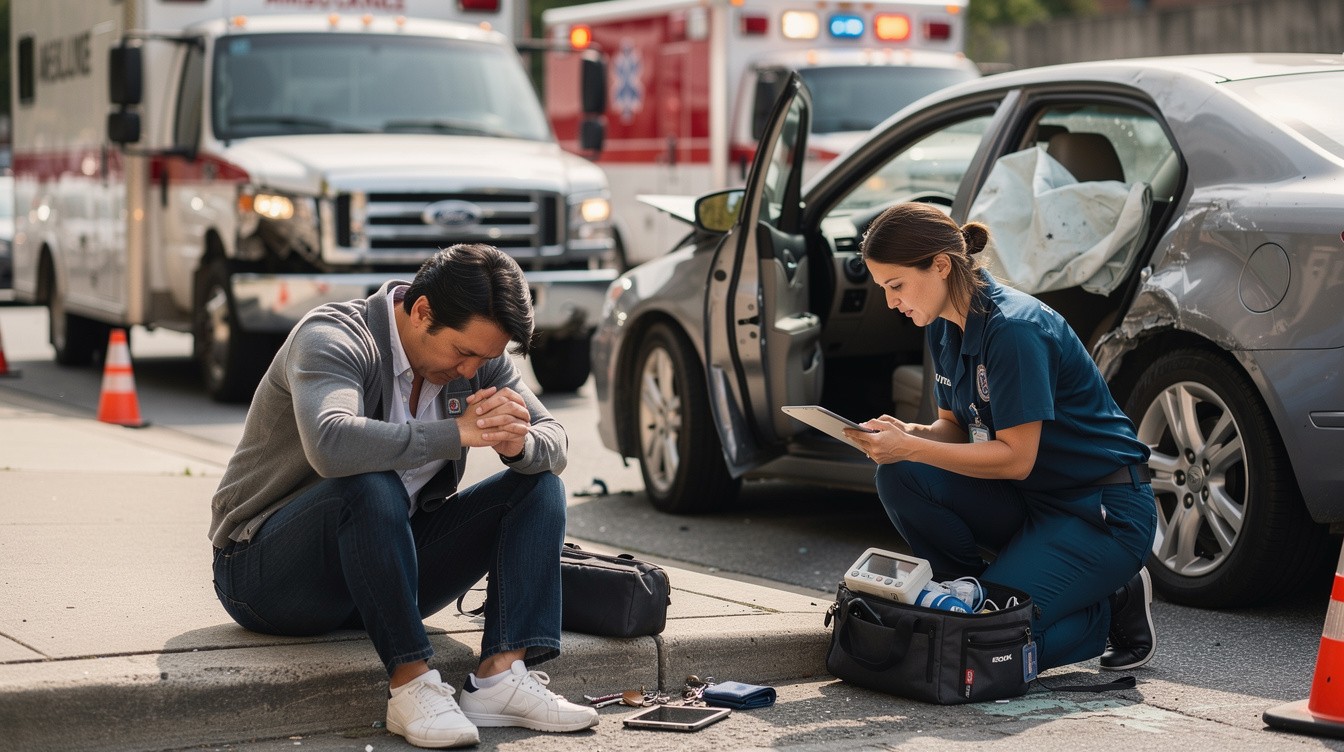
A car or truck crash changes more than just your vehicle. The psychological trauma Santa Cruz residents experience after an accident is real, and it deserves the same attention as physical injuries.
At Schaar & Silva LLP, we’ve seen firsthand how mental health struggles can derail recovery. This guide walks you through the emotional aftermath of a crash and connects you with the support available right here in Santa Cruz County.
What Happens to Your Mind After a Crash
Your Nervous System in Crisis
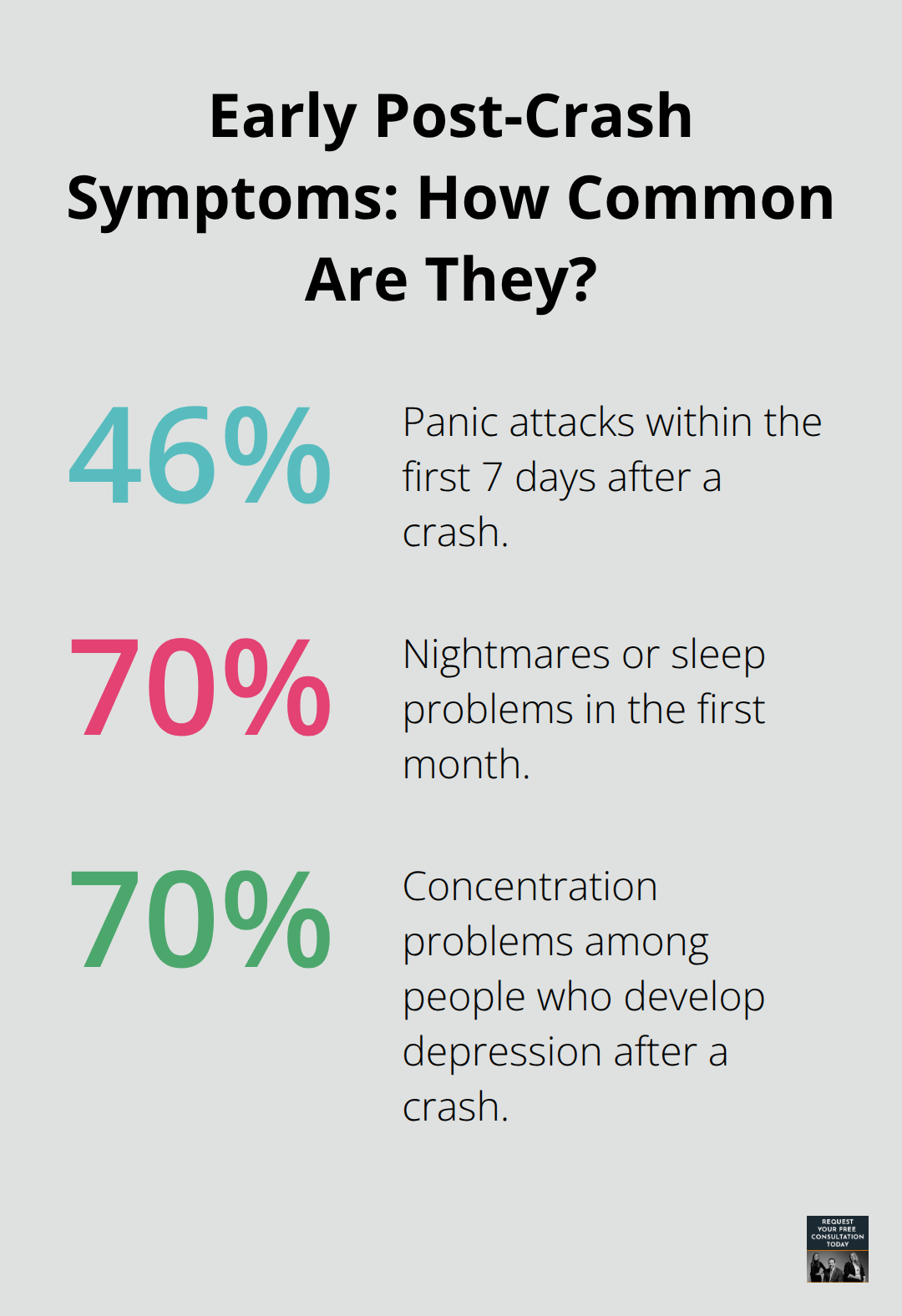
The first week after a crash is when your body’s stress response kicks in hardest. Your nervous system floods with adrenaline and cortisol-chemicals that helped you survive the impact but now keep you in high alert. Within seven days, about 46% of crash survivors experience panic attacks, according to the American Psychological Association. These aren’t signs of weakness; they’re your survival system doing exactly what it evolved to do. What matters is recognizing them for what they are and taking action.
Sleep and Concentration Collapse
Sleep becomes impossible for many people. In the first month after a crash, roughly 70% of survivors report nightmares or sleep problems. Your brain replays the collision while you’re trying to rest, and your body stays tense even when you’re lying down. Concentration disappears too. If you find yourself unable to focus at work or struggling to follow conversations, that’s a documented trauma response affecting roughly 70% of people who develop depression after a crash. These symptoms feel permanent when you’re in them, but they’re not. What matters right now is that you don’t wait months hoping they’ll fade on their own.
The Six-Month Turning Point
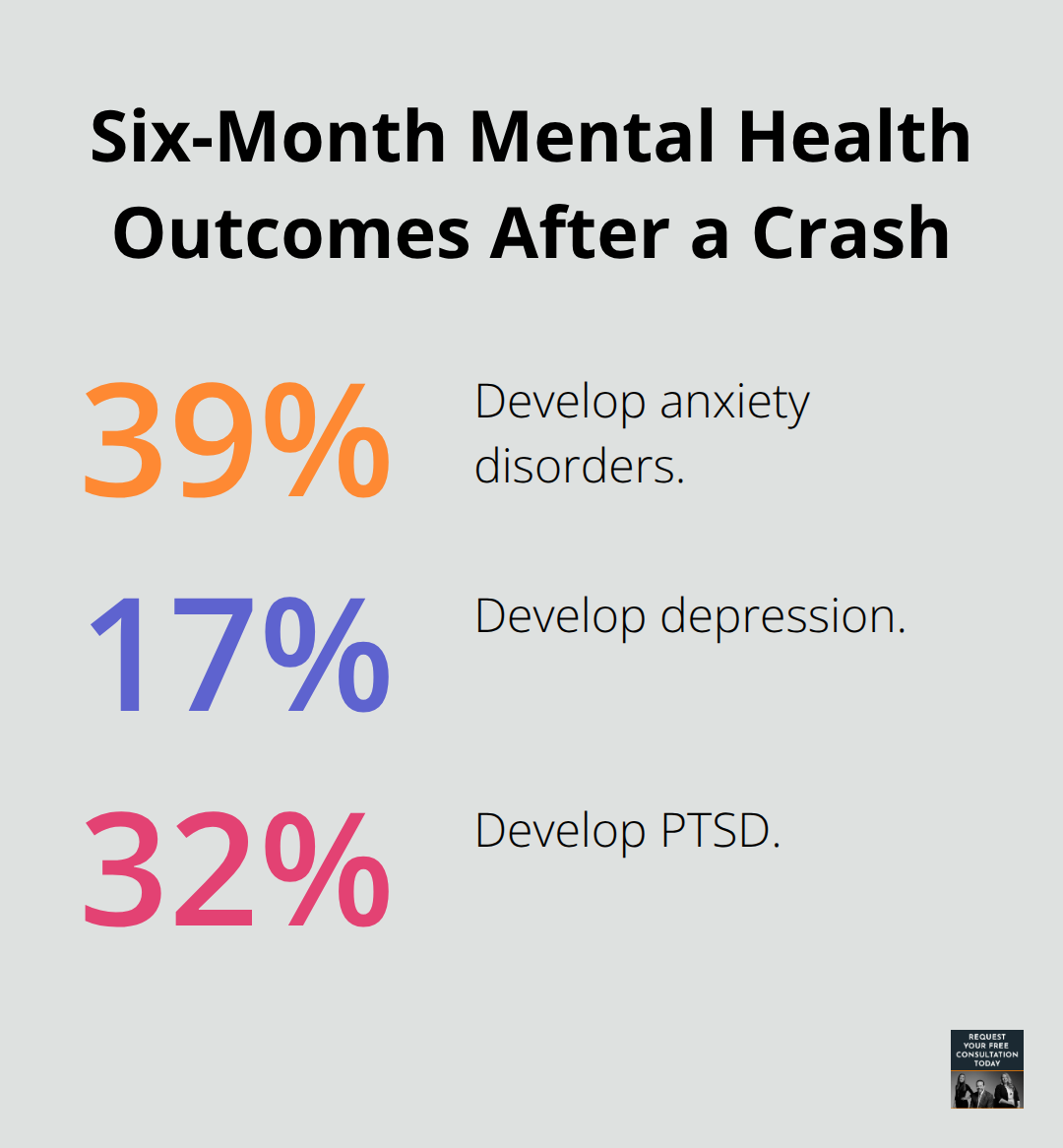
The real danger emerges at the six-month mark. Approximately 39.2% of crash survivors develop anxiety disorders, 17.4% develop depression, and 32.3% develop PTSD, with women facing roughly 2.5 times higher risk for PTSD than men (American Psychological Association and National Institute of Mental Health). Avoidance behaviors take root-about 39.2% of survivors start steering clear of driving routes or highways entirely.
You might find yourself unable to sit in a passenger seat without jumpiness, or taking elaborate detours to avoid the crash location. This is where untreated psychological injury becomes a trap.
Why Early Action Matters
Longer hospital stays correlate directly with worse outcomes. Research in the Journal of Clinical Medicine found that survivors hospitalized for more than seven days show significantly higher depression levels two months later. The physical pain compounds the mental injury. Early intervention within four to six weeks after a crash dramatically improves outcomes and helps prevent chronic emotional distress from taking hold. Starting therapy now-not in three months, but within weeks-changes your trajectory. At Schaar & Silva LLP, we connect you with mental health professionals in Santa Cruz County who understand accident trauma, so you can address both your psychological injury and your legal recovery at the same time.
Where to Find Mental Health Support in Santa Cruz County
Locating the Right Therapist in Santa Cruz
Santa Cruz County has more than 500 trauma and PTSD therapists listed on Psychology Today, yet finding the right one takes strategy. Start by filtering for credentials like LMFT, LCSW, PsyD, or PhD, then verify their license status with the California Board of Behavioral Sciences before scheduling. Therapists who work specifically with accident survivors understand the difference between general anxiety and post-crash trauma. Most Santa Cruz therapists charge around $175 per session, which falls within the national range of $100–$200 or more. About two-thirds offer both in-person and online sessions, which matters if driving feels impossible right now. Major insurers accepted locally include Aetna, Cigna, Anthem, UnitedHealthcare, Blue Shield, and Medi-Cal. Many plans cover six to twenty sessions per year with copays around $20–$50.
What to Expect in Your First Session
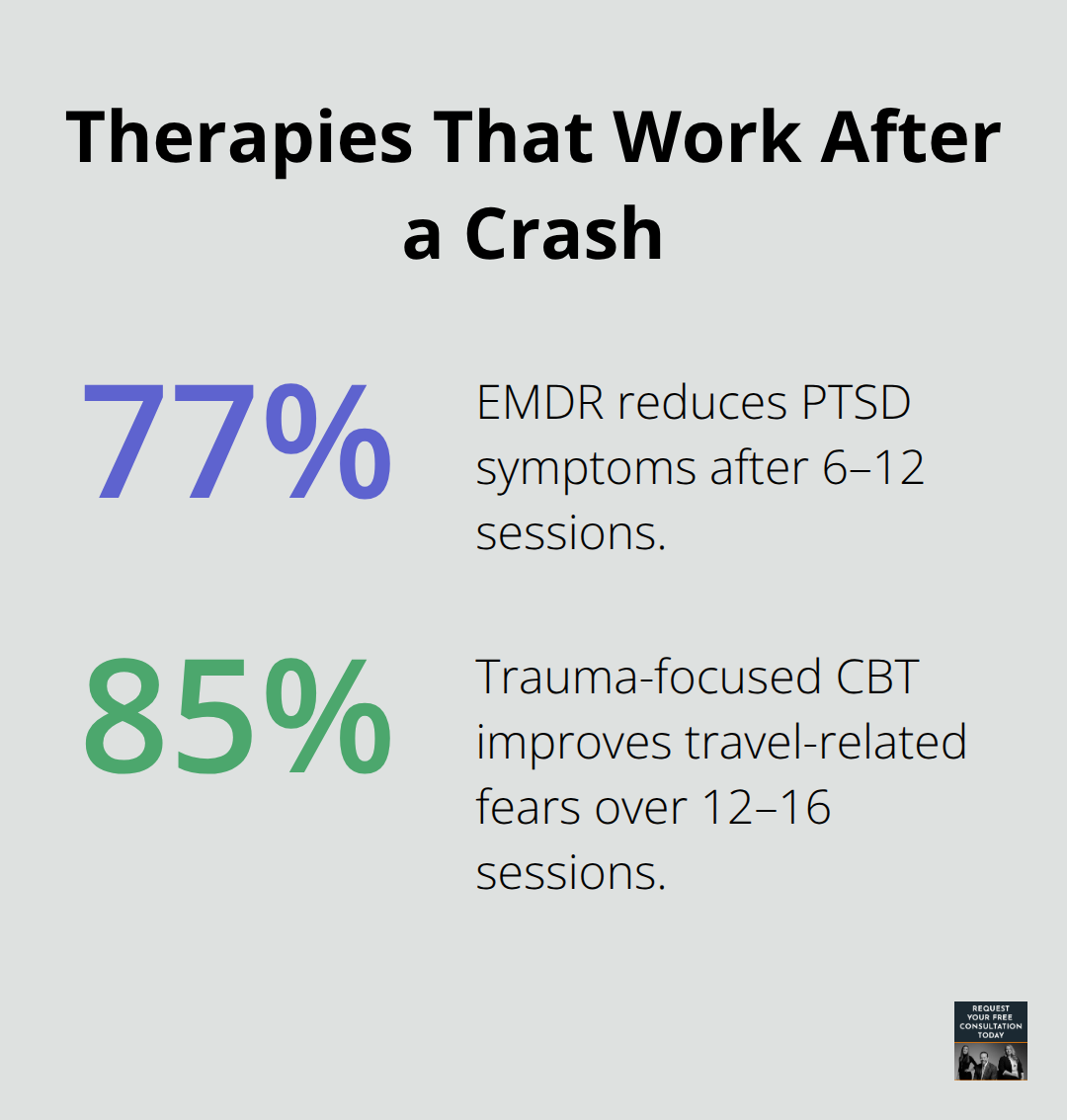
The first session typically includes a trauma assessment and a choice between EMDR or trauma-focused cognitive behavioral therapy. EMDR reduces PTSD symptoms in about 77 percent of accident survivors after six to twelve sessions according to the American Psychological Association. Trauma-focused CBT with gradual exposure yields roughly 85 percent improvement for travel-related fears over 12–16 sessions according to the Journal of Clinical Medicine.
Teletherapy works as well as in-person therapy when the therapeutic relationship is strong, making remote care a viable option if transportation anxiety is severe.
Crisis Support and Community Resources
Santa Cruz County Behavioral Health Division operates a 24-Hour Access Line at 831-454-4170 with locations at 1400 Emeline Avenue in Santa Cruz and 1430 Freedom Boulevard in Watsonville, offering sliding-scale fees based on income. The Mobile Crisis Response Team can respond to your location within hours if you face acute distress. For immediate crisis support, call 988 for the Suicide and Crisis Lifeline or 800-952-2335 for 24/7 access. Hearing-impaired individuals can dial 711. Survivor support groups exist through Mothers Against Drunk Driving chapters, Kaiser Permanente groups, UC Davis Hospice trauma programs, and the Brain Injury Association of California, with hospitals often hosting groups as well.
Connecting Treatment to Your Legal Recovery
Document every therapy session and related expense because treatment costs are recoverable as damages in a personal injury claim. Medical lien services can cover therapy bills during litigation, which means you access care without waiting for settlement. When you work with an attorney on your case, that legal team can coordinate with your mental health providers to ensure your treatment documentation strengthens both your recovery and your claim. This coordination matters because your therapy records become evidence of the psychological injury you sustained, and your progress demonstrates the real impact the crash had on your life. As you move forward with treatment, the next step involves building a concrete recovery plan that addresses both your immediate coping needs and your long-term healing goals.
How to Start Healing Right Now
Stabilize Your Nervous System in the First 48 Hours
The first 48 hours after a crash matter more than most people realize. Your nervous system floods with cortisol and adrenaline, and your instinct pushes you to act normal and move forward. That’s the wrong move. Instead, establish a non-negotiable daily routine immediately: wake and sleep at the same time each day, eat regular meals, and move your body for at least 20 minutes daily-walking counts and requires no special effort. This consistency signals safety to your nervous system and prevents the spiral into depression that affects roughly 70% of crash survivors who fail to stabilize their baseline habits. If intrusive thoughts or nightmares strike at night, a short daytime walk or a three-minute breathing exercise resets your nervous system before the next trigger arrives. The goal isn’t to feel fine; it’s to create structure that keeps you functional while your mind processes the trauma.
Schedule Therapy Within the First Week
Within the first week, schedule a therapy appointment as a non-negotiable health obligation, not something you’ll address eventually. Early intervention within four to six weeks after a crash, according to trauma research, dramatically prevents chronic emotional distress from taking permanent root. When you call Santa Cruz County Behavioral Health Division at 831-454-4170, be direct: tell them you were in a crash and need trauma-informed care. They connect you with sliding-scale therapy or refer you to private providers who understand accident-specific trauma. Most Santa Cruz therapists accept major insurers like Aetna, Cigna, Anthem, UnitedHealthcare, Blue Shield, and Medi-Cal, typically covering six to twenty sessions yearly with copays around $20 to $50.
Rebuild Your Relationship with Driving
Start as a passenger in a vehicle before attempting to drive again. Have someone you trust take you on short drives around quiet neighborhoods to acclimate without the pressure of controlling the vehicle. Only move to busier roads or highways after you feel genuinely comfortable in low-traffic environments. This gradual re-exposure works because it rewires your fear response through repeated safe experiences, not through avoidance.
Build a Concrete Recovery Plan with Your Therapist
Work with your therapist to set SMART goals: specific, measurable, achievable, relevant, and time-bound. An example might be driving a familiar highway with a trusted passenger within six weeks or achieving seven consecutive nights of six or more hours of sleep within two months. EMDR therapy reduces PTSD symptoms in approximately 77% of accident survivors after six to twelve sessions (American Psychological Association), while trauma-focused CBT yields roughly 85% improvement for travel-related fears over 12 to 16 sessions (Journal of Clinical Medicine). Between therapy sessions, commit to homework your therapist assigns-driving a controlled route, practicing grounding techniques like the 5-4-3-2-1 method, or maintaining a symptom journal that tracks anxiety frequency and sleep quality. This documentation serves double duty: it accelerates your healing by making patterns visible, and it creates evidence for your personal injury claim if you pursue compensation. If you see no meaningful progress after 8 to 12 sessions, change your approach or switch therapists rather than prolonging ineffective treatment.
Coordinate Mental Health with Medical Care
Coordinate your mental health treatment with your medical team-primary care doctors, pain specialists, chiropractors-because the mind-body connection in recovery is real. Persistent physical pain six to eight weeks after a crash strongly predicts greater depression severity about two months later (Journal of Clinical Medicine), so treating both simultaneously prevents one injury from amplifying the other. At Schaar & Silva LLP, we connect you with mental health professionals in Santa Cruz County who understand accident trauma, so you can address both your psychological injury and your legal recovery at the same time.
Final Thoughts
Your psychological trauma in Santa Cruz deserves the same attention as your physical injuries, and recovery requires professional support rather than willpower alone. Santa Cruz County Behavioral Health Division at 831-454-4170 offers sliding-scale therapy, Psychology Today’s directory connects you with trauma-trained therapists, and support groups through MADD and the Brain Injury Association of California link you with people who understand your experience. If crisis moments strike, call 988 or 800-952-2335 for immediate support.
Document every therapy session and expense because treatment costs become recoverable damages in a personal injury claim, and medical lien services cover your therapy bills during litigation so cost never blocks your access to care. The research confirms that people who act within weeks recover better than those who wait months, making your first step this week the most important decision you make. At Schaar & Silva LLP, we connect you with mental health professionals in Santa Cruz County while handling your legal case, so you focus on healing while we manage the complexity.
