
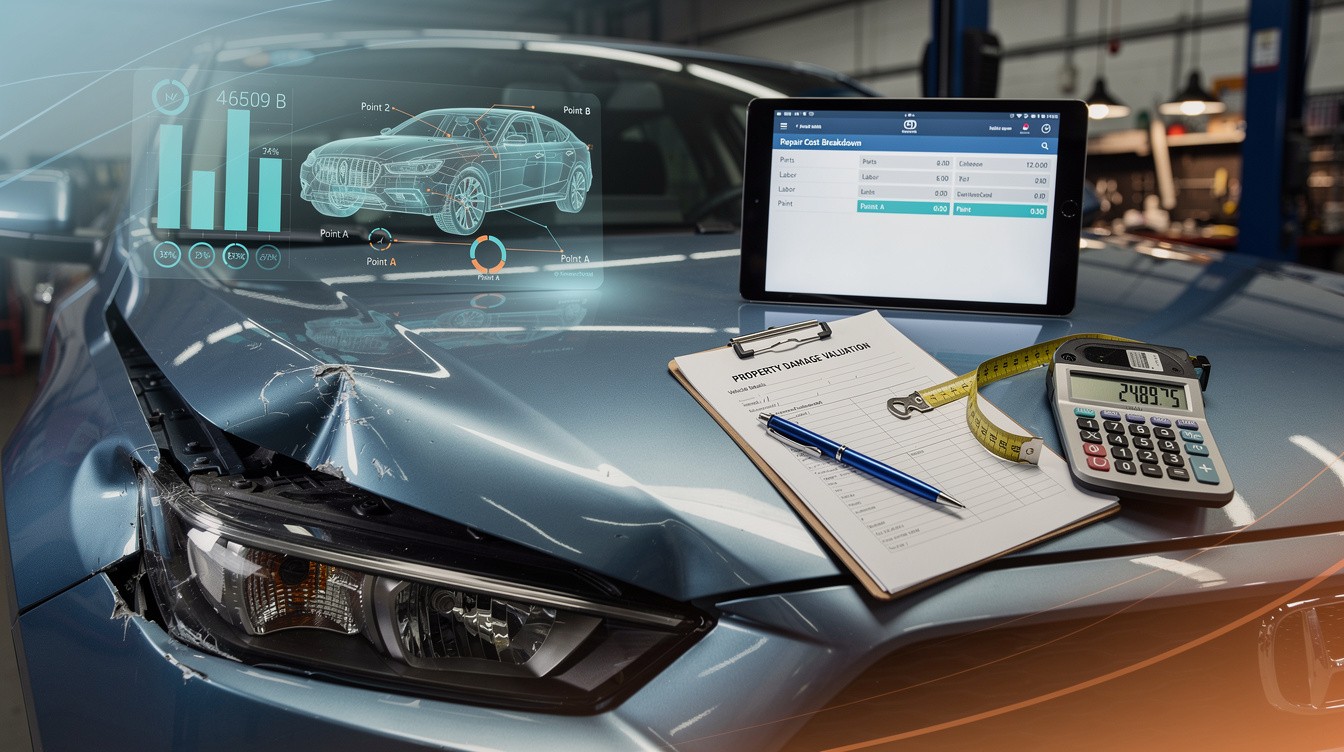
A collision can leave you with more than physical injuries-it leaves you with property damage that needs to be addressed. Insurance companies often undervalue claims, which means you could receive far less than your vehicle is actually worth.
We at Schaar & Silva LLP have seen countless people in Santa Cruz County, Sacramento, and Oakland accept settlement offers without understanding how property damage valuation actually works. This guide walks you through the process so you can protect your claim and get fair compensation.
How Insurance Companies Undervalue Your Vehicle
Automated Systems Miss Local Market Realities
Insurance companies use automated valuation systems that rely heavily on generic pricing databases rather than the actual condition of your vehicle or local market conditions. These systems pull comparable sales data from across broad regions, ignoring the fact that a vehicle worth $18,000 in Sacramento might be worth $16,500 in Oakland due to local demand and inventory levels. The adjuster assigned to your claim rarely inspects your vehicle thoroughly; instead, they photograph the damage, plug numbers into their software, and generate an estimate within hours. This speed prioritizes efficiency over accuracy, and the numbers that come back often reflect depreciation formulas that don’t account for meticulous maintenance or recent upgrades you’ve made.
How Vague Reporting Costs You Money
Common reporting mistakes amplify this problem significantly. Many people describe damage vaguely, saying things like the car was hit hard or there’s damage to the rear when they should document exactly which panels were affected, whether the frame was compromised, and what mechanical systems sustained harm. The California Department of Insurance reports that repair costs for typical collisions range from $2,500 to $7,500, but major accidents frequently exceed $15,000. If you accept the insurer’s first estimate without challenge, you leave thousands on the table.
Independent Estimates Reveal Hidden Discrepancies
Obtain independent repair estimates from two manufacturer-certified shops and compare them line-by-line against the insurer’s estimate. This comparison reveals discrepancies the adjuster hoped you wouldn’t notice. An independent appraisal becomes essential when the gap between your estimates and theirs is substantial because the appraisal clause in your California auto policy allows you to hire your own appraiser. If disagreement persists, you can invoke a binding umpire decision. This process costs roughly $300 to $600 but regularly yields thousands in additional compensation. The appraiser uses California-specific sales data and accounts for the vehicle’s pre-accident condition properly, which standard automated systems fail to do.
Why Professional Appraisals Matter
A professional appraiser reviews the insurer’s actual cash value calculation and explains whether the offer is reasonable or not. The appraiser examines your vehicle’s condition prior to the accident to avoid undervaluation from post-accident wear or damage. This documented second opinion provides a path to additional funds through a thorough total loss valuation. When the insurer’s report is accurate, the independent appraiser will confirm it; otherwise, they outline next steps for adjustment. Understanding how your vehicle’s true market value differs from what the insurance company offered positions you to negotiate effectively or pursue appraisal to maximize recovery.
How the Valuation Process Works
What Happens During a Professional Inspection
A certified appraiser arrives at your vehicle with a detailed checklist and measurement tools. Unlike the insurance company’s adjuster who spends 30 minutes photographing damage, an independent appraiser spends 90 minutes to two hours documenting every detail: panel alignment, paint depth, frame measurements, and the condition of mechanical systems. The appraiser takes photos from multiple angles, notes pre-accident wear patterns, and records any upgrades or premium features your vehicle had. This thoroughness matters because insurance companies often miss structural damage that only becomes visible during a comprehensive inspection.
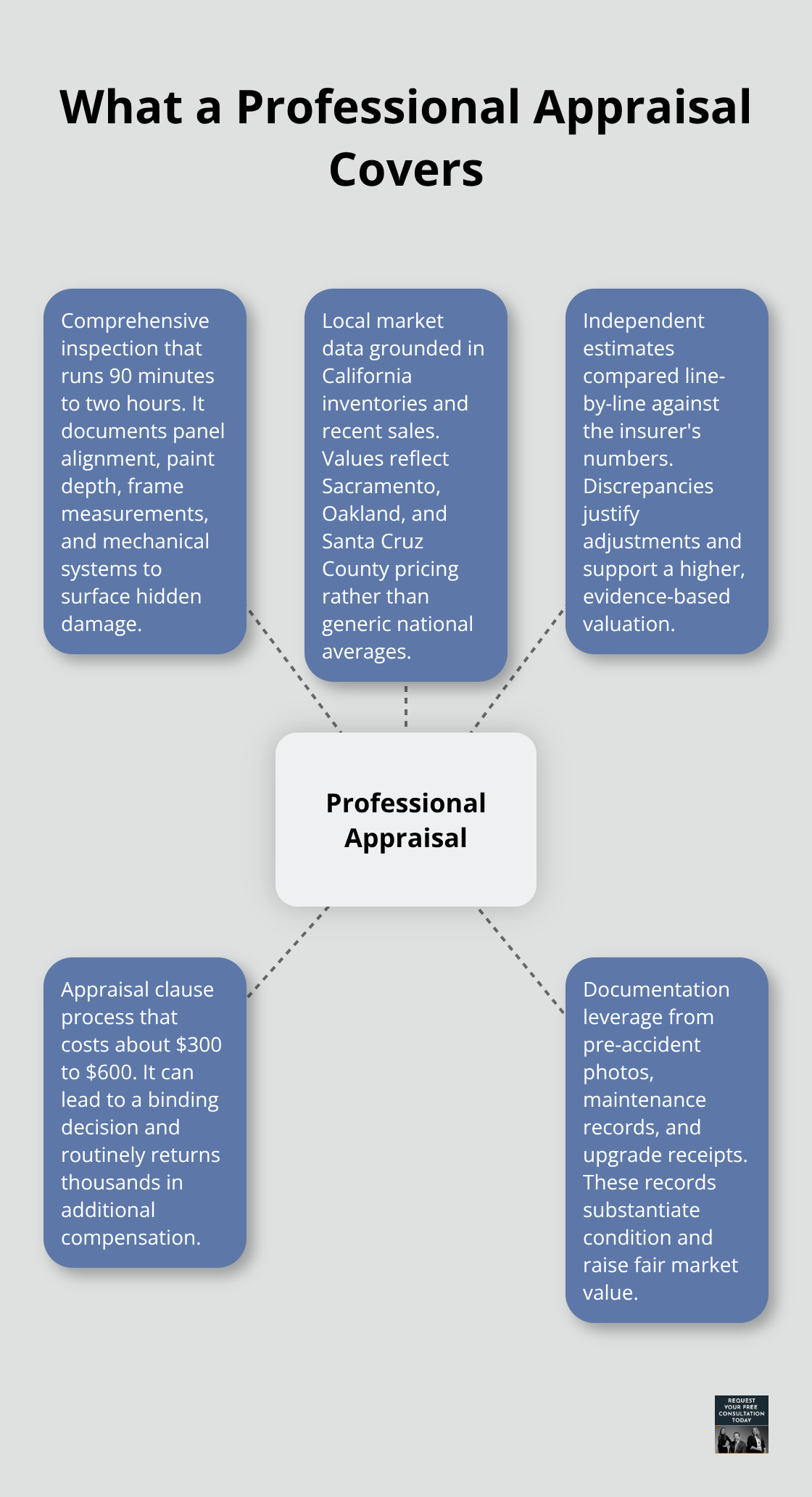
Once the physical inspection concludes, the appraiser pulls California-specific market data to establish fair market value, using actual dealer inventories and recent sales in your region rather than generic national databases. If your vehicle is in Sacramento, the appraiser uses Sacramento market data; if it’s in Oakland or Santa Cruz County, they use local comparables that reflect actual demand and pricing in those areas.
How Repair Costs Get Calculated Differently
Repair costs get calculated in two ways, and they rarely match. The insurance company uses their preferred repair shops and applies what they call standard labor rates, which often fall below what manufacturer-certified shops actually charge. When you obtain independent estimates from two certified shops, you’ll see line-item breakdowns that include parts costs, labor hours, and overhead. A door replacement might cost $800 in parts plus 4 hours of labor at $150 per hour, totaling $1,400, but the insurer’s estimate might show $1,100 because they use lower labor rates.
Negotiating with Adjusters and Invoking Appraisal Rights
Negotiating with adjusters requires presenting these independent estimates and demanding they justify any discrepancies. If the adjuster refuses to increase their offer after reviewing your estimates, invoke the appraisal clause in your policy, which costs $300 to $600 but has consistently returned thousands in additional compensation. The appraiser’s binding determination forces the insurer to accept the valuation or proceed to a neutral umpire, a step most insurers avoid because it costs them more and carries legal risk.
Understanding how appraisers calculate value and how they differ from insurance company methods positions you to challenge lowball offers. The next section covers how you can document your vehicle’s pre-accident condition to strengthen your valuation claim.
Building Your Case Before Settlement
Document Your Vehicle’s Maintenance History
The strongest property damage claims start with documentation that predates the accident. Before you file a claim, your vehicle’s condition matters enormously. If you have maintenance records showing regular oil changes, tire rotations, and repairs at certified shops, gather them now. These records prove that you maintained your vehicle well, which directly supports a higher valuation. Insurance companies often apply depreciation penalties to vehicles they assume were neglected, so your service history becomes proof against that assumption. Photograph your vehicle from multiple angles in good lighting before you accept any settlement offer. These photos establish the pre-accident condition and help an independent appraiser understand what the vehicle looked like before the collision damaged it.
Account for Upgrades and Recent Improvements
If your vehicle had recent upgrades like new tires, a rebuilt transmission, or premium audio equipment, document those with receipts. The California Department of Insurance guidance on actual cash value calculations shows that insurers must account for the vehicle’s condition prior to the accident, yet most automated systems ignore upgrades entirely. When you provide this documentation to an appraiser, it shifts the valuation conversation from what the insurance company’s database says to what your specific vehicle was actually worth.
Understand Fair Market Value Versus Repair Costs
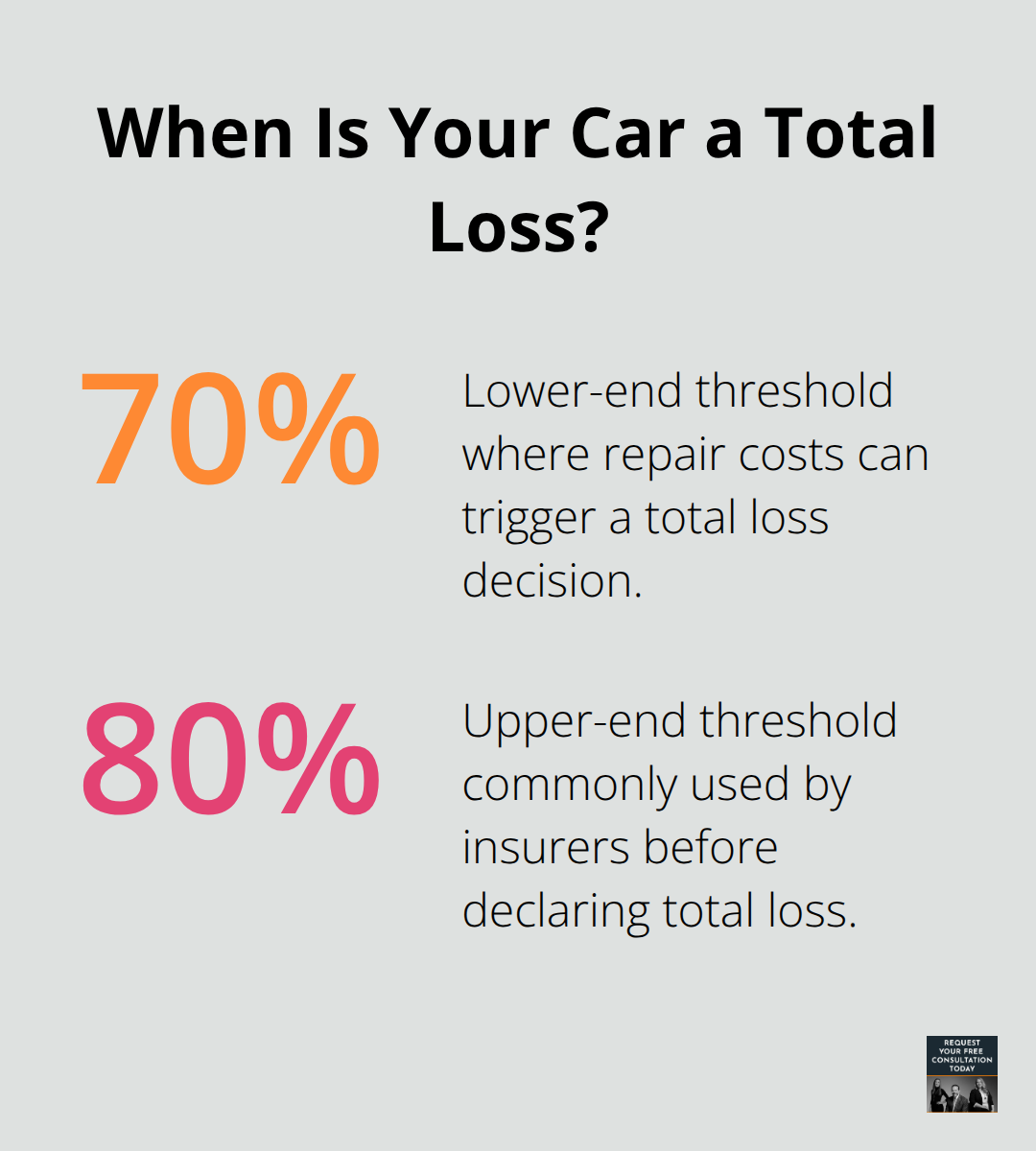
Fair market value and repair costs represent two entirely different numbers, and insurers count on confusion between them. Fair market value is what a buyer would pay for your vehicle in its pre-accident condition in your local market, while repair costs are simply what it costs to fix the damage. A vehicle worth $16,000 in the Sacramento market might cost $8,000 to repair after a collision, but the insurance company will only pay the repair cost or the fair market value, whichever is lower. This matters critically when your vehicle is totaled. If the repair cost exceeds 70 to 80 percent of fair market value, insurers declare the vehicle a total loss and pay you the fair market value minus your deductible and any salvage value.
Challenge Low Settlements with Evidence
Challenging a low settlement requires you to prove fair market value using California-specific data. Obtain two independent estimates from manufacturer-certified repair shops in your region, then request the insurer’s valuation worksheet showing how they calculated actual cash value. If their comparable vehicles have higher mileage, inferior trim levels, or missing features your vehicle had, that explains the discrepancy. Most people accept the first offer because they don’t realize they have negotiating power. The appraisal clause costs $300 to $600 and takes roughly two weeks, but it regularly yields settlements thousands of dollars higher than the initial offer. Challenge lowball offers immediately by presenting your independent estimates and requesting a detailed explanation for any gaps. If the adjuster refuses to increase their offer, invoke appraisal rights in writing, which forces a binding determination that protects your recovery.
Final Thoughts
Property damage valuation after a collision demands immediate action from you. File a police report if damage exceeds $750, then contact your insurer within 24 hours. California law requires insurers to acknowledge your claim within 15 days and make a decision within 40 days after you submit proof of loss.
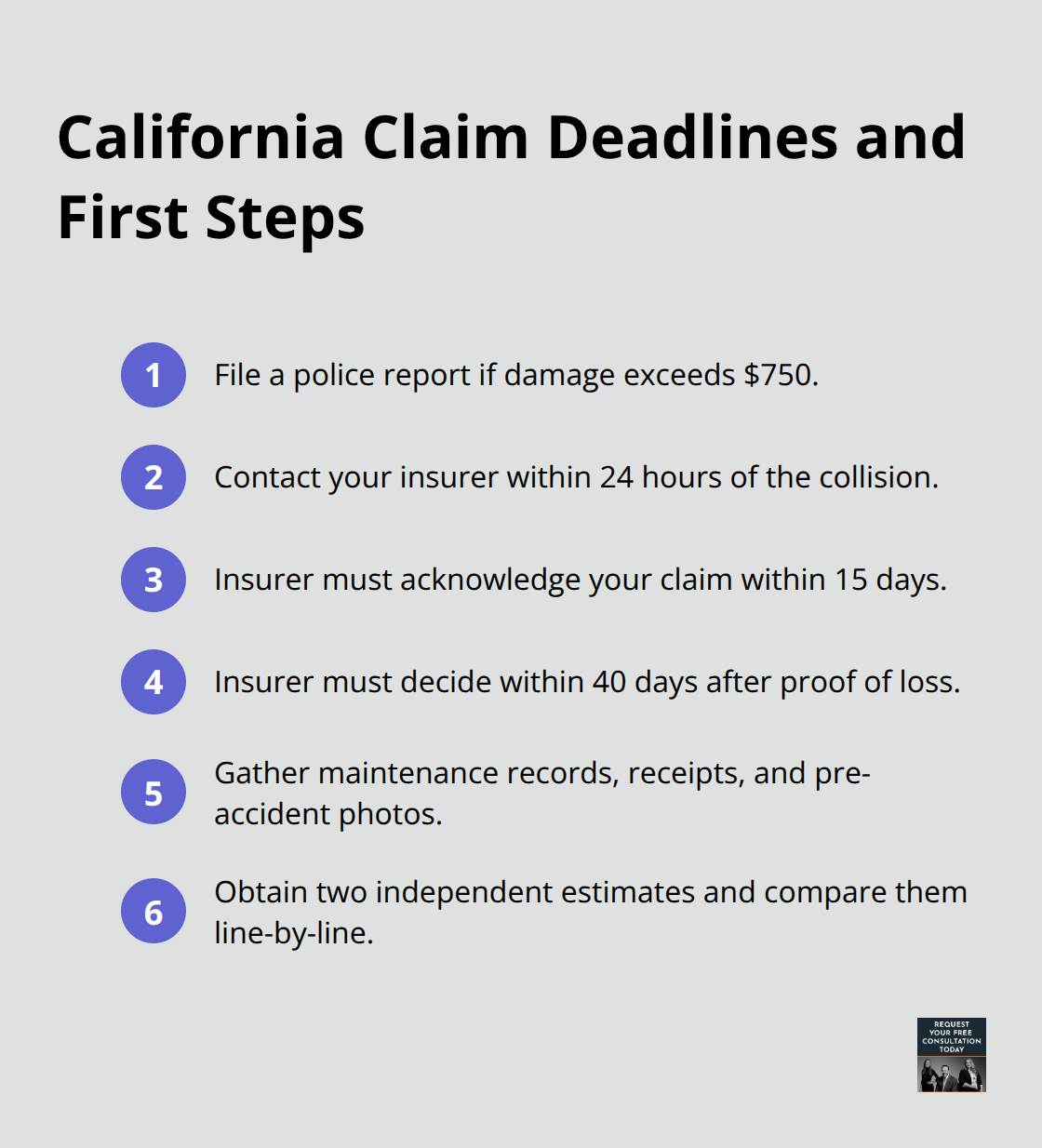
Gather maintenance records, service receipts, and photos of your vehicle’s pre-accident condition right away, obtain independent repair estimates from two manufacturer-certified shops in your area, and compare them line-by-line against the insurer’s estimate. Request the insurer’s valuation worksheet and demand written explanations for any discrepancies. If their offer seems substantially low, invoke the appraisal clause in your policy, which costs $300 to $600 but regularly yields thousands in additional compensation.
In Santa Cruz County, Sacramento, and Oakland, the California Department of Insurance provides guidance on collision coverage, comprehensive coverage, and your rights during the claims process. Your policy’s appraisal clause gives you the right to hire an independent appraiser when disagreement exists over loss value. A professional appraiser uses California-specific market data and accounts for your vehicle’s actual condition, upgrades, and maintenance history, which automated systems miss entirely.
We at Schaar & Silva LLP understand that property damage claims often accompany injuries and emotional trauma from accidents. Our team assists in evaluating the extent of property damage and helps you receive fair valuation for your loss. If the insurer’s valuation remains unreasonable after your efforts to challenge it, contact our office to discuss whether legal representation can recover more than the costs of pursuing your claim independently.
