

After a car accident, medical bills pile up fast. Healthcare providers often place liens on your settlement to guarantee payment, which can complicate your recovery process.
We at Schaar & Silva LLP help accident victims in Santa Cruz County, Sacramento, and Oakland understand medical lien services in California and navigate these obligations without losing money to unnecessary fees.
What Medical Liens Actually Are
Understanding Medical Liens in California
A medical lien is a legal claim that healthcare providers place on your personal injury settlement to guarantee they get paid for treating your accident injuries. When you receive medical care after an accident, hospitals, doctors, imaging centers, and other providers front the cost of your treatment. Instead of waiting months or years for you to settle your case, they place a lien against your future settlement. This lien gives them the right to collect payment directly from your settlement proceeds before you receive your money.
In California, medical liens come in two forms: subrogation liens tied to health insurance or public benefits like Medicare or Medicaid, and voluntary medical lien agreements you sign directly with providers. The difference matters because subrogation liens are governed by strict California Civil Procedure Section 3040, which limits what insurers can recover. Voluntary agreements give providers more flexibility in what they can demand, though they still operate within California law. When you sign a voluntary medical lien agreement, you authorize the provider to demand full reimbursement for their services from your settlement, potentially up to the total cost of all medical care they provided.
Why Healthcare Providers Use Medical Liens
Healthcare providers use medical liens because accident victims often cannot pay medical bills out of pocket while waiting for a settlement. A lien protects the provider’s financial interest and guarantees they get paid even if your case takes two or three years to resolve. Without liens, many providers would refuse to treat accident victims on credit, leaving you without access to necessary care.
How Medical Liens Reduce Your Settlement
In your auto accident claim, medical liens directly impact how much money you actually receive from your settlement. If your gross settlement is $100,000 but medical providers place liens totaling $35,000, you only take home $65,000 after lien deductions. California law does provide some protections for you through the Made Whole Doctrine, which requires that you receive full compensation for all your damages before any subrogation deductions reduce your settlement. However, this protection only applies to subrogation liens under health insurance or public benefits, not to voluntary agreements you sign.
Protections That Apply to Your Settlement
The Common Fund Doctrine also prevents insurers from profiting when they did not contribute to recovering your settlement money. These legal protections exist to balance the interests of healthcare providers with your right to fair compensation. Understanding these distinctions now helps you make informed decisions about which liens you accept and how to negotiate them down before accepting your settlement. The next section explains the medical lien services available to help you manage these obligations and protect your recovery.
Medical Lien Services That Protect Your Settlement
How Hospitals and Clinics Manage Their Own Liens
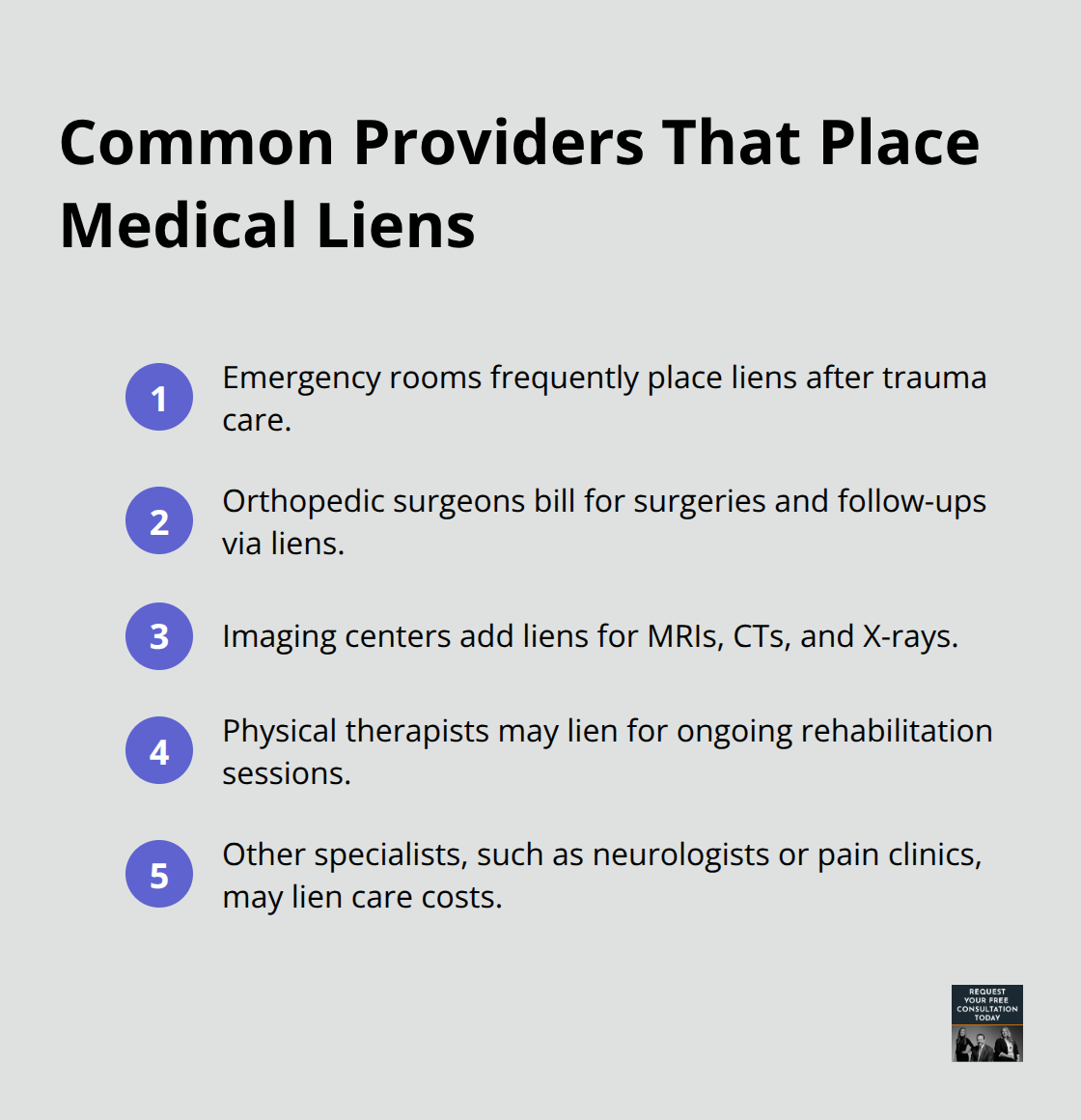
Hospitals and clinics typically manage their own liens in-house, placing the lien and collecting directly from your settlement. This approach works fine if you have only one or two providers, but accident victims often receive treatment from emergency rooms, orthopedic surgeons, imaging centers, physical therapists, and other medical professionals-each placing their own lien. Managing five or six separate liens on your own creates confusion about payment priority, lien amounts, and which providers will negotiate reductions.
Third-Party Lien Management Companies
Third-party medical lien management companies handle this complexity by serving as intermediaries between you, your attorney, and healthcare providers. These companies track all your medical liens, communicate with providers about settlement amounts, negotiate reductions where possible, and coordinate payments once your case settles. They typically charge a percentage of the medical bills they manage, usually between 8 and 15 percent, but this fee often saves you more money than you pay because skilled lien managers negotiate aggressively with providers.
Why Lien Managers Reduce What You Owe
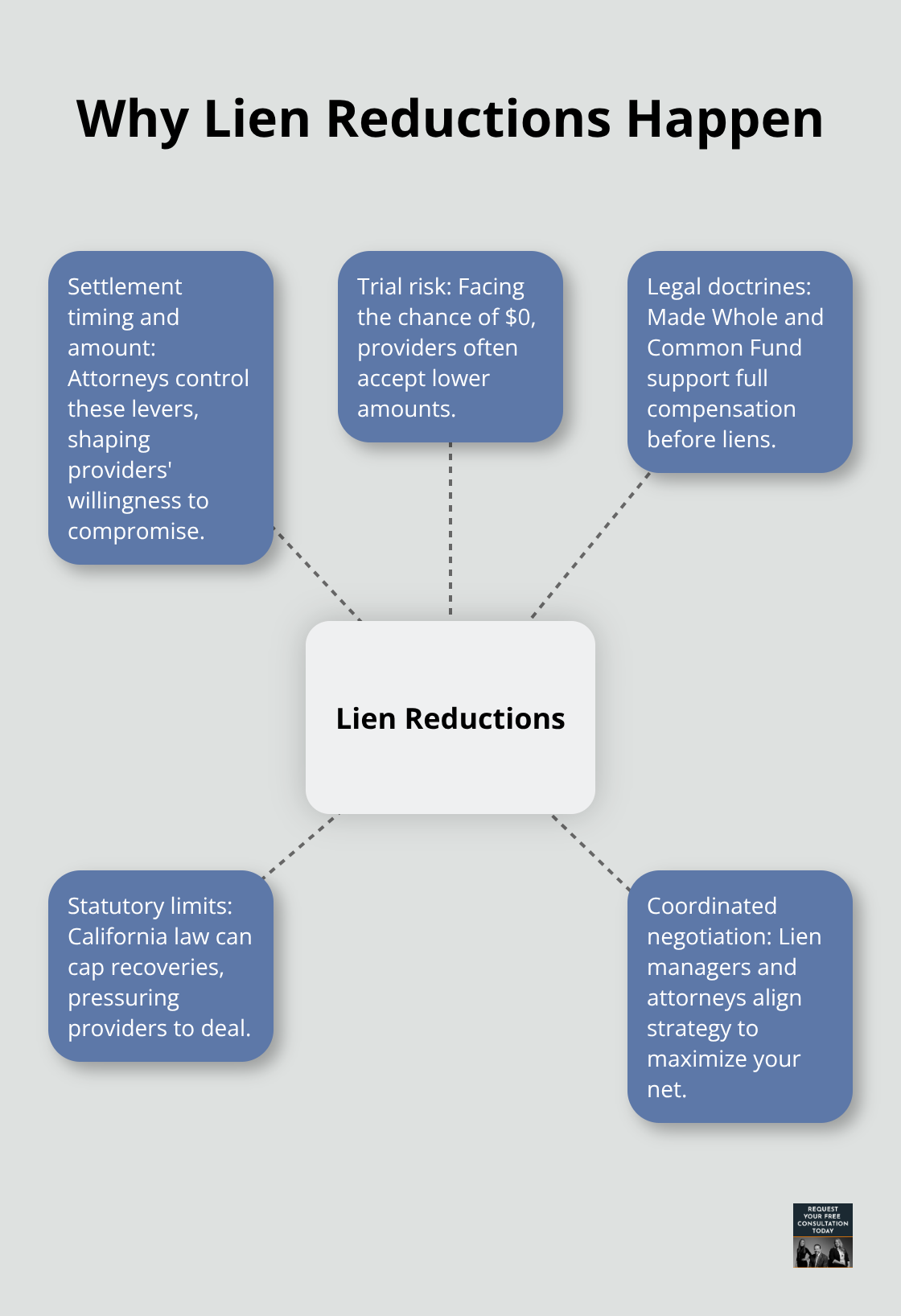
Lien reductions depend on settlement timing and amount-factors your attorney controls. A skilled lien manager knows that if your case heads to trial, providers may accept lower settlements to avoid the risk of receiving nothing. Lien managers also apply California’s legal protections (the Made Whole Doctrine and Common Fund Doctrine) to argue that you deserve full compensation before liens reduce your settlement. When providers understand that California law limits their recovery, they often accept negotiated amounts rather than fight for the full bill.
How We Connect You with Lien Services
We at Schaar & Silva LLP direct accident victims in Santa Cruz County to established medical lien services that have proven track records with local hospitals and providers. Our team can help in directing you to medical lien services that facilitate the payment of your bills until your case is resolved. When you work with a lien management company alongside our legal team, you benefit from two layers of protection: the lien manager negotiates aggressively on the medical side while we handle settlement strategy on the legal side. This coordination matters because lien reductions often depend on factors your attorney controls. A good lien manager won’t let you accept a settlement without first confirming that lien deductions won’t leave you with inadequate compensation for your actual damages and ongoing recovery needs. Understanding how multiple liens stack up on your settlement is only half the battle-the real challenge emerges when you have to manage those liens while still recovering from your injuries.
How to Stop Medical Liens From Eating Your Settlement
Track Every Lien in One Place
After your accident, medical providers send their liens to your attorney’s office, and tracking them becomes a full-time job. You receive bills from the emergency room, orthopedic surgeon, imaging center, and physical therapist-each one placing a separate lien on your settlement. Without a clear system, you lose track of which providers agreed to reduce their amounts, which liens are being negotiated, and how much money will actually reach your pocket.
The first step is gathering every single medical bill and lien notice in one place. Create a spreadsheet with the provider name, date of service, original bill amount, lien amount claimed, and the status of any negotiations. This simple tool prevents liens from slipping through the cracks and helps you spot patterns in which providers negotiate reductions.
Understand Your Legal Protections
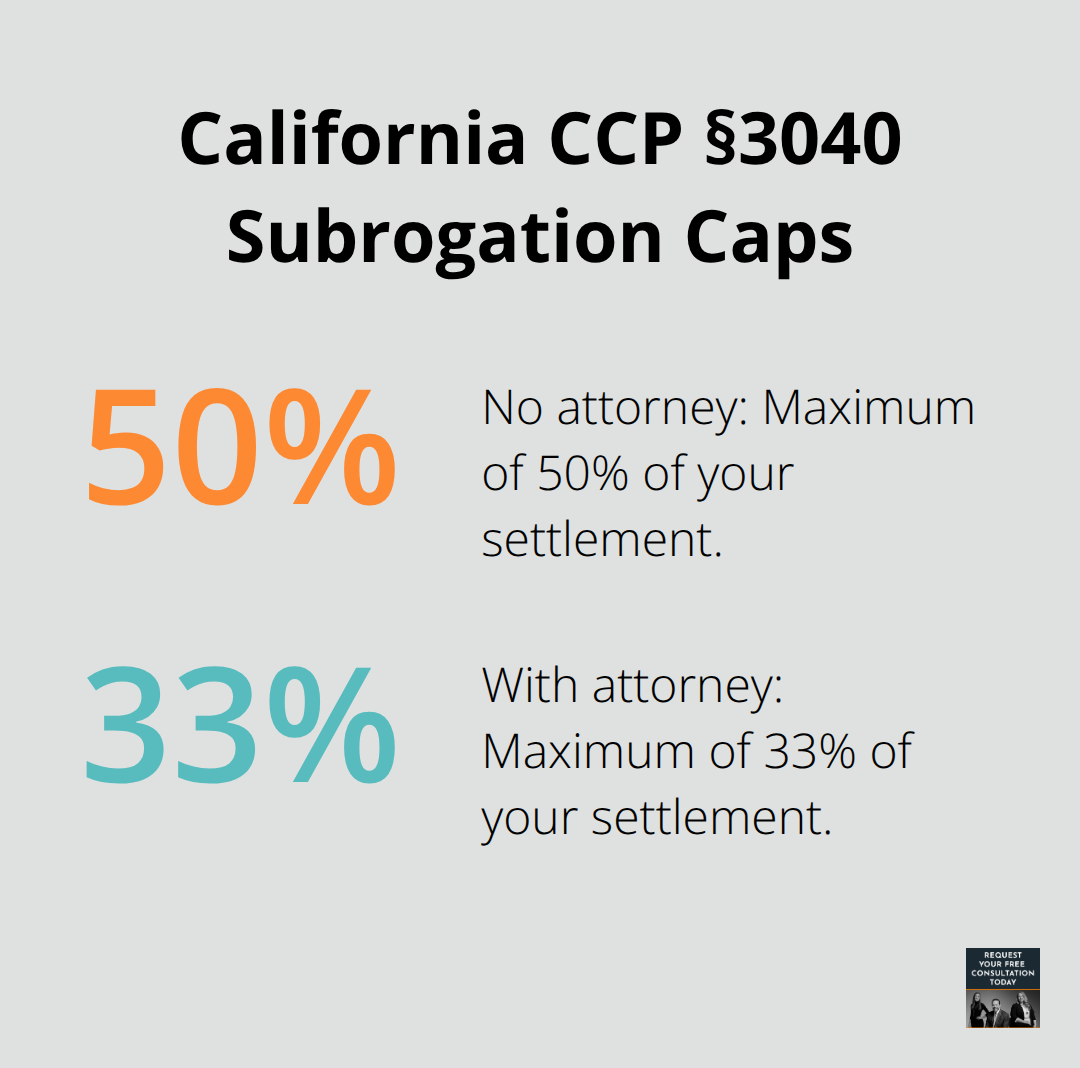
California Civil Procedure Section 3040 caps what health insurance subrogation liens can recover at 50 percent of your settlement if you have no attorney, 33 percent with an attorney, or the total medical costs-whichever is lowest. This means subrogation liens have real limits you can use in negotiations. Voluntary medical lien agreements you signed with providers operate differently and allow them to demand the full bill amount, but skilled negotiators still reduce these amounts significantly by pointing out that you need fair compensation for your actual damages.
The Made Whole Doctrine protects you by requiring full compensation for all damages before subrogation deductions apply. You must raise this protection during settlement negotiations-it does not happen automatically. Understanding these legal tools gives you leverage when providers resist reductions.
Negotiate Reductions Before Settlement
Contact each provider’s billing department and ask if they will negotiate a reduction before your case settles. Many will, especially if your case is heading to trial and they face the risk of receiving nothing if you lose. Providers often accept 40 to 60 percent of their original bill amount rather than gamble on trial outcomes.
Managing multiple liens requires coordination between your attorney and any lien management company handling your bills. A lien manager tracks payment priority, communicates with providers about settlement timing, and prevents one creditor from grabbing funds intended for another. When your settlement arrives, the lien manager coordinates payments so providers get paid in the correct order while protecting your recovery funds.
Demand a Detailed Settlement Accounting
Before you accept any settlement offer, demand a detailed accounting showing the gross settlement amount, each lien deduction, your attorney’s fees, and the net amount you will receive. Many accident victims discover too late that liens consumed 40 to 60 percent of their settlement, leaving them with inadequate compensation for ongoing medical care or lost wages. This accounting prevents surprises and lets you evaluate whether the settlement truly covers your damages.
We at Schaar & Silva LLP help accident victims in Santa Cruz County understand how lien reductions affect their net recovery and work to protect your settlement from excessive deductions before you accept any offer.
Final Thoughts
Medical liens reduce your settlement directly, and California law provides real protections only if you actively use them during negotiations. The Made Whole Doctrine and the Common Fund Doctrine work in your favor, but subrogation liens from health insurance or public benefits face strict limits under California Civil Procedure Section 3040, capping recovery at 33 percent of your settlement when you have legal representation. Voluntary medical lien agreements require more aggressive negotiation, though skilled lien managers routinely reduce these amounts by 40 to 60 percent by demonstrating that you deserve full compensation for your actual damages before liens consume your recovery.
Medical lien services in California track multiple liens, negotiate reductions with providers, and coordinate payments so you receive the money you actually earned from your case. Having both an attorney managing settlement strategy and a lien manager handling provider negotiations creates a powerful combination because lien reductions depend on factors your attorney controls, including settlement timing and case strength. This coordination prevents liens from consuming your recovery and ensures providers accept fair amounts rather than demand full bills.
Contact Schaar & Silva LLP to discuss how medical liens will affect your specific case and to learn which lien services work best with local Santa Cruz County, Sacramento, and Oakland providers. Before you accept any settlement offer, demand a detailed accounting showing how lien deductions will affect your net recovery, which prevents surprises and ensures you understand exactly how much money reaches your pocket after all liens are paid.
