

An auto accident can leave you unable to work, creating financial strain on top of physical recovery. A lost wages auto claim helps you recover income you’ve missed while healing from your injuries.
At Schaar & Silva LLP, we’ve helped countless accident victims in Santa Cruz, Sacramento, and Oakland understand their rights to compensation for time away from work. This guide walks you through the process of filing and winning your claim.
What Counts as Lost Wages After an Auto Accident
Direct Income Loss: The Foundation of Your Claim
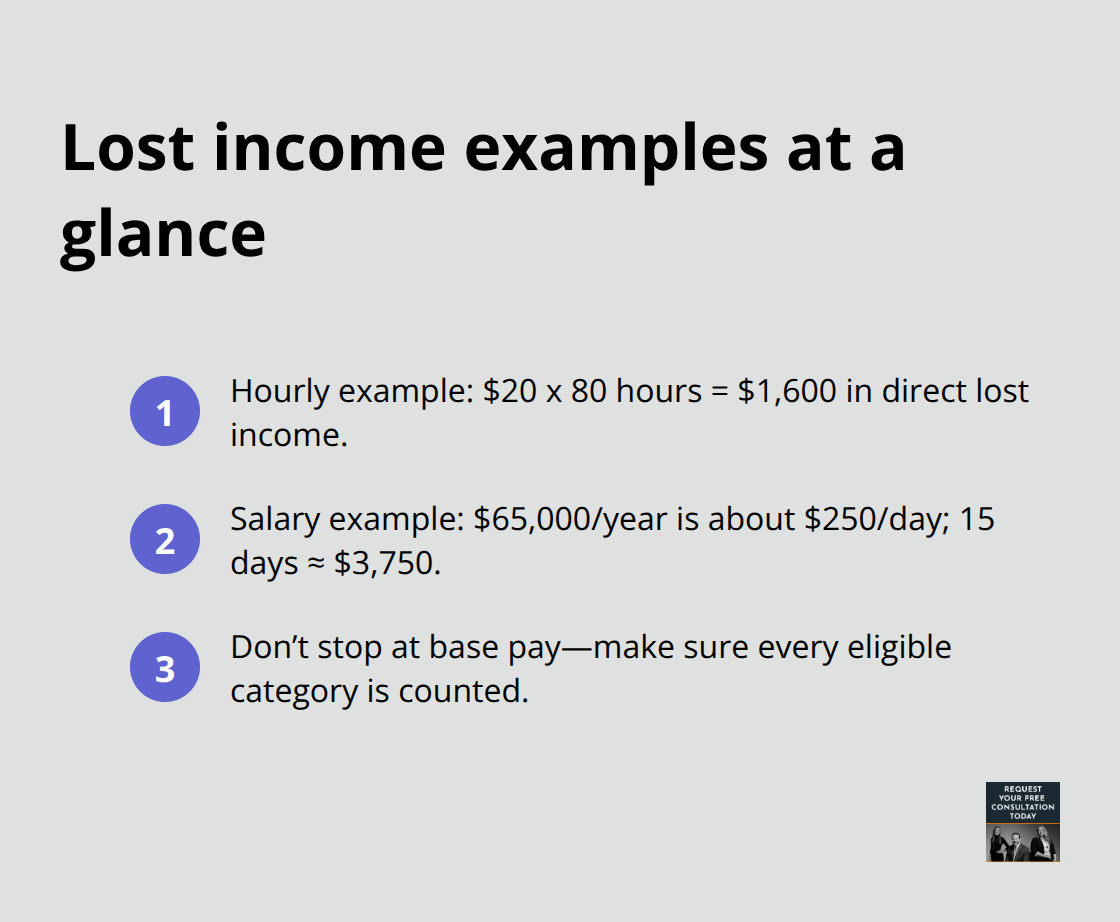
Lost wages after an auto accident extend far beyond your base salary. If you’re an hourly worker earning $20 per hour and miss 80 hours of work, that’s $1,600 in direct lost income. For salaried employees, the calculation differs: a $65,000 annual salary translates to roughly $250 per day, meaning 15 missed workdays equals approximately $3,750 in lost wages. Most people stop calculating here and leave money on the table.
Additional Income Streams You Shouldn’t Overlook
Overtime hours, bonuses, commissions, and paid time off you burn through while recovering all count as recoverable losses. If your employer typically pays you overtime during certain seasons or you consistently earn commission beyond your base pay, those income streams belong in your claim. Many accident victims also fail to account for the value of benefits they lose when unable to work-health insurance premiums, retirement contributions, and other employer-provided benefits have real monetary value that insurers should compensate.
Proving Earnings as a Self-Employed Worker
Self-employed individuals face a harder path but not an impossible one. You’ll need to prove your average earnings using tax returns from the two years before your accident, invoices or client contracts showing your work rate, and bank statements demonstrating consistent income patterns. If you earned $3,000 per month on average before the crash and lost two months of work, that’s $6,000 in lost income. The key is establishing a credible baseline with actual documentation rather than estimates.
Many self-employed claimants underestimate their losses because they lack the paycheck stubs that salaried workers have. If your injury prevents you from returning to your previous work capacity-say you earned $50 per hour as a contractor but can now only work part-time at $25 per hour-you can claim the difference in earning capacity for the foreseeable future, sometimes years. This requires careful documentation of your pre-accident work schedule, rates, and client relationships. Insurance companies will scrutinize self-employed claims more heavily, so gathering comprehensive evidence upfront prevents delays and denials later.
Understanding what qualifies as lost wages sets the foundation for your claim. The next step involves collecting the right documentation to support every dollar you’re claiming.
Building Your Documentation Before Filing
Establish Medical Evidence That Links Injury to Lost Work
Medical records form the backbone of any lost wages claim, and you need them dated and detailed from day one. After your accident, obtain a physician’s note that explicitly states you cannot work and includes any work restrictions, such as no lifting over 10 pounds or no standing for more than two hours. This medical documentation directly links your injury to lost time and prevents insurers from claiming you could have worked through the pain. Without this connection, insurers will deny your wage claim regardless of how many hours you missed. Request this note at every medical appointment and ask your doctor to update it as your condition changes. If you return to work part-time or with restrictions, get written confirmation of those limitations.
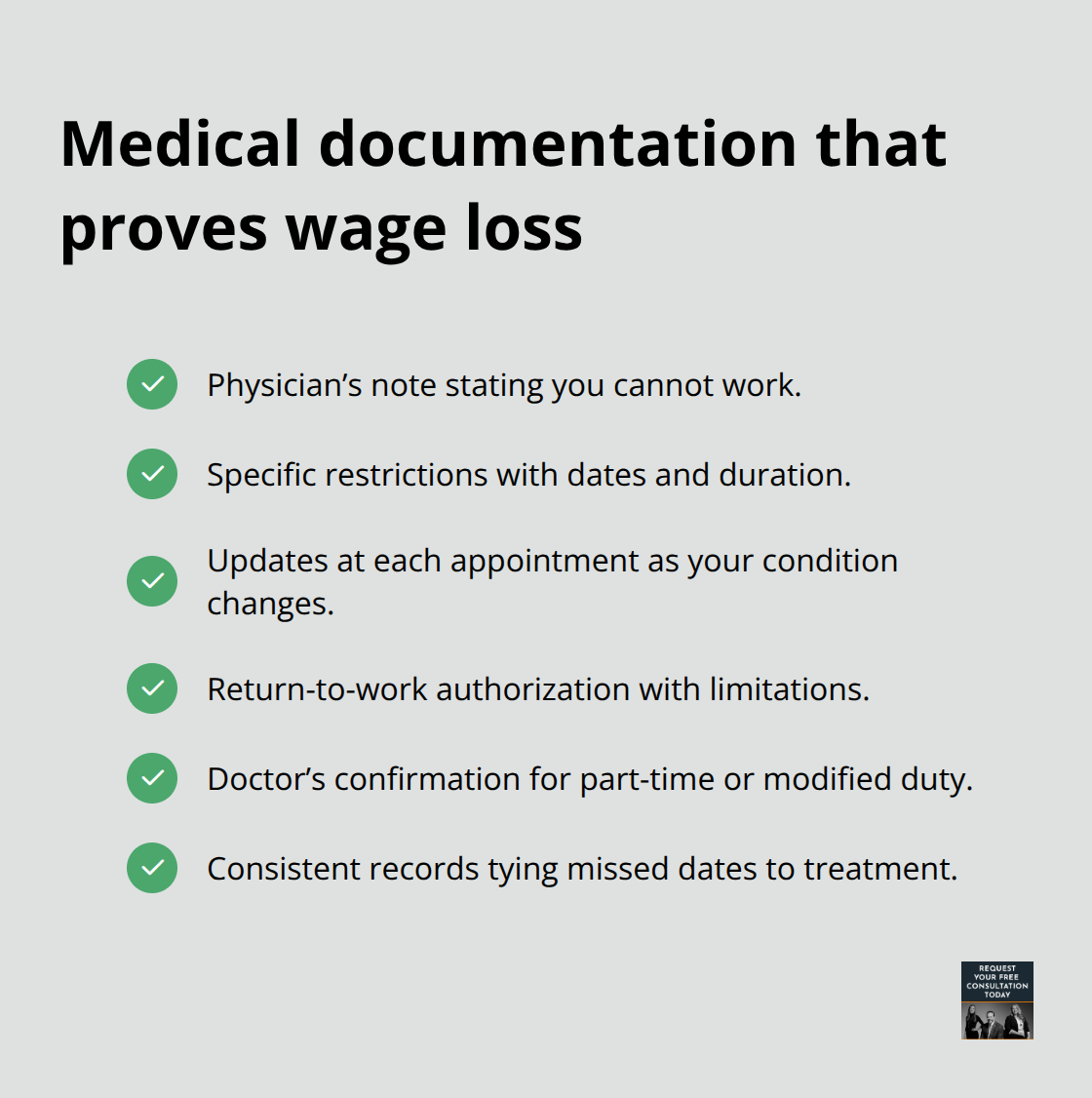
Insurance companies in California frequently challenge wage claims that lack specific medical support, so treating this step as non-negotiable saves months of back-and-forth disputes.
Request Detailed Wage Verification From Your Employer
Contact your employer immediately and request written verification of every workday you missed, your hourly rate or salary, and any overtime, bonuses, or commissions you would have earned during your absence. Ask your HR department for a detailed statement covering the period before your accident and after, showing your typical earnings and what you actually earned while recovering. For salaried employees, this verification should include your annual salary and the number of days you were unable to work. Hourly workers need their hourly rate multiplied by actual hours missed. If you earned overtime regularly, request documentation of your average monthly overtime hours for the 12 months before the accident so you can claim what you would have earned.
Document Income for Self-Employed Workers
Self-employed workers should provide their tax returns from the prior two years, copies of invoices from clients during the missed work period, and bank statements showing deposits. Employers sometimes drag their feet on this request, so send it via email and follow up within one week. This approach creates a paper trail that protects you if disputes arise later.
Organize Everything Into a Comprehensive Package
Once you have the medical documentation and employer verification, compile everything into a single folder organized by date. Create a spreadsheet listing each missed day, the hours or amount lost, and the reason (medical restriction, surgery recovery, doctor’s appointment). Submit this complete package to the insurance company all at once rather than piecemeal, as incomplete submissions trigger automatic delays. Insurance adjusters in Santa Cruz, Sacramento, and Oakland typically process claims within 30 days when documentation is thorough and complete, but missing even one document can push your timeline to 60 days or longer.
With your documentation assembled and submitted, you’re ready to navigate the next critical phase: understanding how insurance companies calculate your lost wages and what happens when they dispute your numbers.
What Stops Your Wage Claim and How to Fight Back
Insufficient Medical Documentation Kills Your Claim
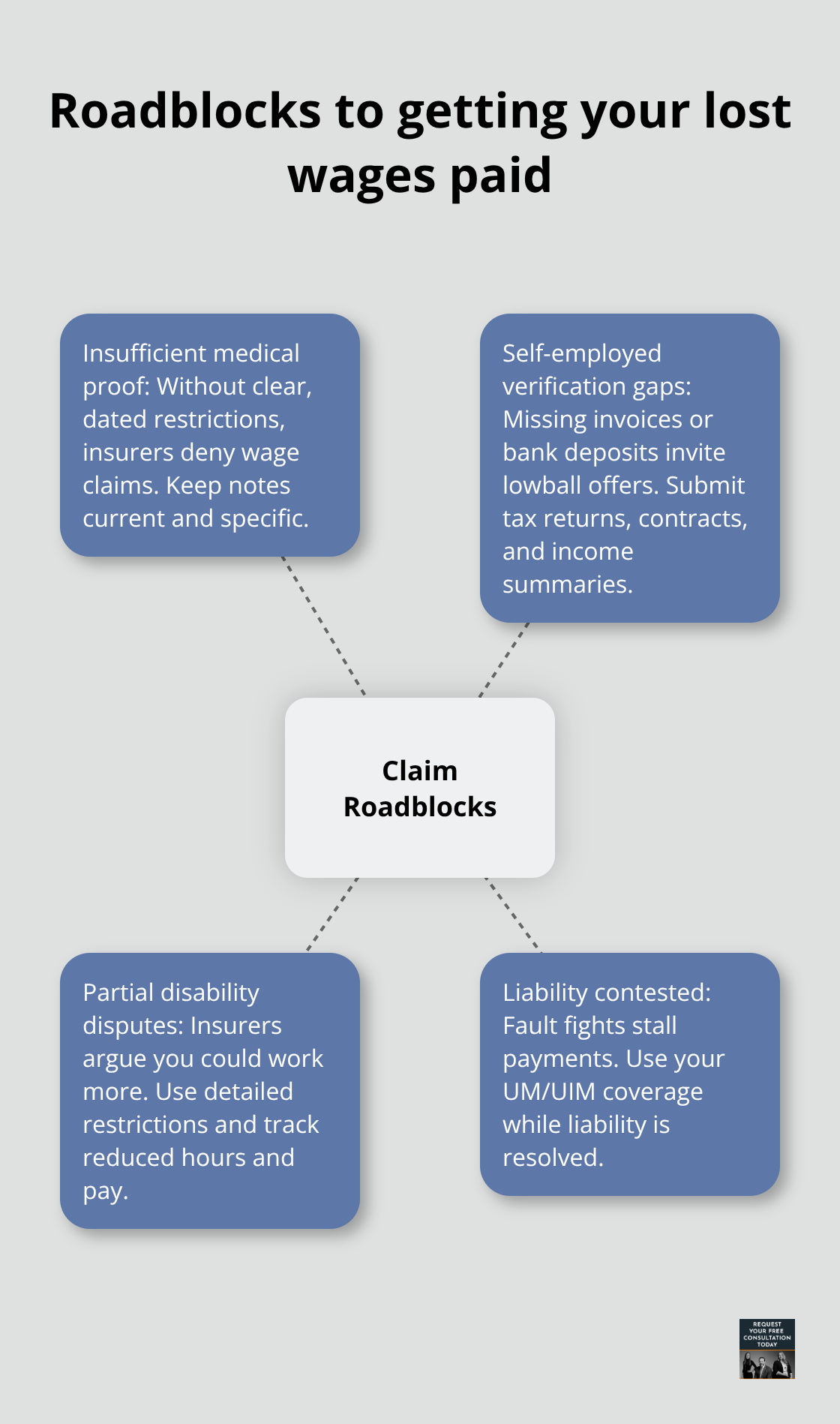
Insurance adjusters in California deny lost wage claims at higher rates than most people realize. The first major obstacle is insufficient medical documentation linking your injury to lost work time. Without a physician’s note explicitly stating you cannot work and listing specific restrictions, insurers will reject your wage claim outright. After your accident, obtain documentation from your doctor that covers the exact dates you were unable to work, any physical limitations (no lifting over 10 pounds, no standing for extended periods), and when you could return to modified or full duty. Update this documentation at every medical appointment as your condition changes. Insurance companies in Sacramento and Oakland frequently use missing or vague medical records as grounds to deny claims, so treating this step as non-negotiable prevents months of disputes.
Self-Employed Income Verification Requires Comprehensive Evidence
Self-employed individuals face the harshest scrutiny because they lack paycheck stubs that salaried workers have. An adjuster reviewing your claim will demand tax returns from the prior two years, invoices showing your work rate, and bank statements proving consistent deposits. If your income fluctuated significantly or you lack formal invoices, the insurance company will lowball your earnings calculation or reject it entirely. The solution is providing evidence that establishes your baseline earnings before the accident occurred. If you earned $4,000 per month on average for 18 months before the crash, that becomes your provable rate regardless of what your tax return shows for the entire year. Gather invoices from every client, create a spreadsheet calculating your average monthly income, and submit this analysis alongside your tax returns. Insurance adjusters frequently challenge these claims without this level of detail, but comprehensive documentation forces them to accept your numbers.
Partial Disability Creates Calculation Disputes
Partial disability or reduced work capacity creates a different calculation problem. If you returned to work part-time earning $1,200 per week instead of your normal $2,000, you can claim the $800 weekly difference for every week you worked reduced hours. However, insurers will argue that you could have returned to full duty sooner or that your medical restrictions were unnecessary. Your physician must document the specific restrictions in writing and update them as your condition improves. Request a detailed return-to-work authorization that states exactly what physical activities you cannot perform and for how long. If your employer allowed you to work from home or modified your duties temporarily, the insurer may claim you suffered no lost wages during that period. Push back by showing that reduced productivity and modified tasks still represent lost earning capacity that deserves compensation.
Liability Disputes Block Wage Recovery
Liability disputes represent the final major challenge. When the other driver’s insurance company denies fault, they simultaneously deny your lost wage claim. In California, you can pursue your own underinsured or uninsured motorist coverage if the at-fault driver lacks sufficient liability insurance. This coverage typically pays your lost wages without requiring the other party to accept fault first. If the accident liability remains unclear, file your claim with your own insurance company while the fault determination proceeds. Most policies allow concurrent claims, meaning you can recover lost wages from your own coverage while your attorney works to establish the other driver’s liability for a potential third-party recovery.
Final Thoughts
A lost wages auto claim succeeds when you combine thorough documentation, medical evidence linking your injury to lost work time, and a clear understanding of what qualifies as recoverable income. Insurance companies will challenge your claim at multiple points, from questioning your medical restrictions to disputing your income calculations, and they count on accident victims abandoning their claims rather than fighting back. An attorney handles the disputes with insurance adjusters, ensures you don’t miss critical deadlines, and identifies income streams you might otherwise overlook.
We at Schaar & Silva LLP understand the financial pressure you face after an accident and work to maximize your recovery through comprehensive claim strategies. Your next step is straightforward: gather your medical records, request wage verification from your employer, and compile your documentation into a complete package. If you’re self-employed, start collecting invoices and bank statements immediately to establish your baseline earnings.
Contact Schaar & Silva LLP to discuss your case and understand your options for recovery in Santa Cruz County, Sacramento, or Oakland. We guide you through the entire process, from filing your initial claim to negotiating with insurers or pursuing litigation if necessary. You shouldn’t navigate this alone while healing from your injuries.
