
Vehicle-pedestrian collisions remain a serious safety concern across Santa Cruz County, with the National Highway Traffic Safety Administration reporting over 6,200 pedestrian fatalities nationwide in 2022.
We at Schaar & Silva LLP understand that preventing these tragic incidents requires both drivers and pedestrians to take active steps toward road safety. Simple awareness and following proven safety practices can dramatically reduce accident risks for everyone sharing our streets.
What Really Causes Vehicle-Pedestrian Accidents
Most vehicle-pedestrian collisions stem from preventable human errors and environmental factors that drivers and pedestrians can control. Santa Cruz County ranks second in California for bicycle crashes and deaths, with over 3,000 pedestrians and cyclists injured in the past 12 years according to the California Office of Traffic Safety. These numbers reveal systemic problems that demand immediate attention.
Distracted and Impaired Drivers Create Deadly Conditions
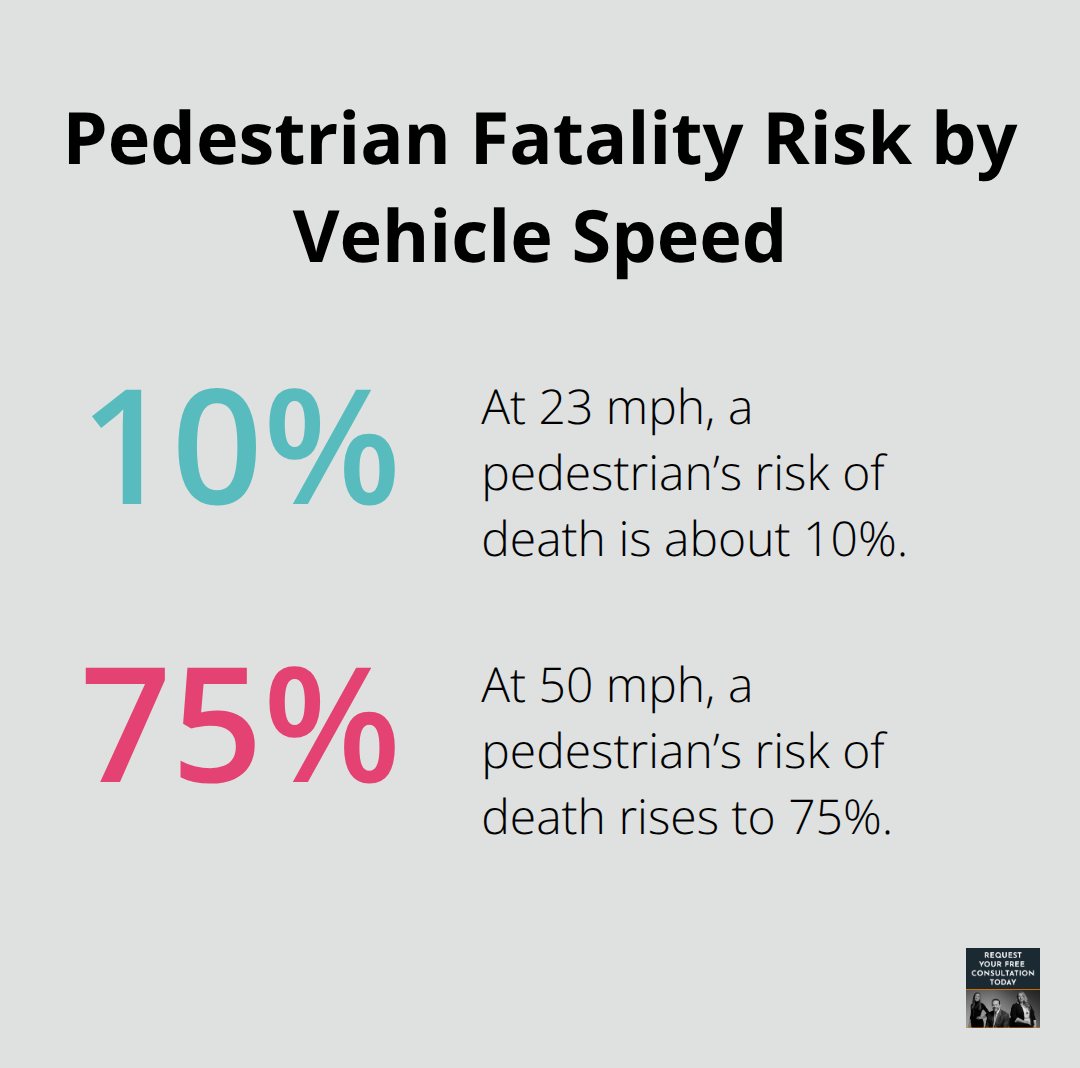
Driver distraction kills pedestrians every day in Santa Cruz County. Cell phone use, food consumption while behind the wheel, and navigation system adjustments pull drivers’ attention away from vulnerable road users at critical moments. The county’s fifth-place rank for alcohol-related crashes shows impaired drivers remain a major threat to pedestrian safety. Speed compounds these problems significantly – the U.S. Department of Transportation reports that a pedestrian’s death risk jumps from 10% at 23 mph to 75% at 50 mph.
Ocean Street, Highway 9, and Soquel Avenue represent the most dangerous areas where these factors combine with devastating results.
Weather and Visibility Transform Roads Into Danger Zones
Poor visibility conditions turn routine crossings into life-threatening situations. Rain, fog, and darkness reduce reaction times for both drivers and pedestrians, while glare from wet pavement creates additional hazards. The 2018 spike in pedestrian crashes and 2022 surge in bicycle incidents correlate with weather patterns that Santa Cruz County experiences during these periods. Drivers fail to adjust their speed and follow distance when visibility drops, while pedestrians often misjudge vehicle approach speeds in low-light conditions.
Pedestrian Actions Contribute to Collision Risk
Pedestrians bear responsibility for many accidents through jaywalking, traffic signal violations, and improper crosswalk use. Phone distractions and headphone use prevent pedestrians from hearing approaching vehicles or assessing traffic conditions accurately. The data shows that pedestrian behavior violations occur most frequently at unmarked crossings and mid-block locations where people take shortcuts instead of walking to designated areas (particularly dangerous during rush hour traffic).
These causes work together to create the dangerous conditions we see throughout Santa Cruz County, but drivers and pedestrians can take specific actions to protect themselves and others on our roads.
How Can Drivers and Pedestrians Stay Safe
Drivers must adopt aggressive defensive techniques to prevent collisions in Santa Cruz County’s high-risk areas. Slow down to 25 mph or less in neighborhoods and school zones while you scan continuously for pedestrians at crosswalks, driveways, and between parked cars.
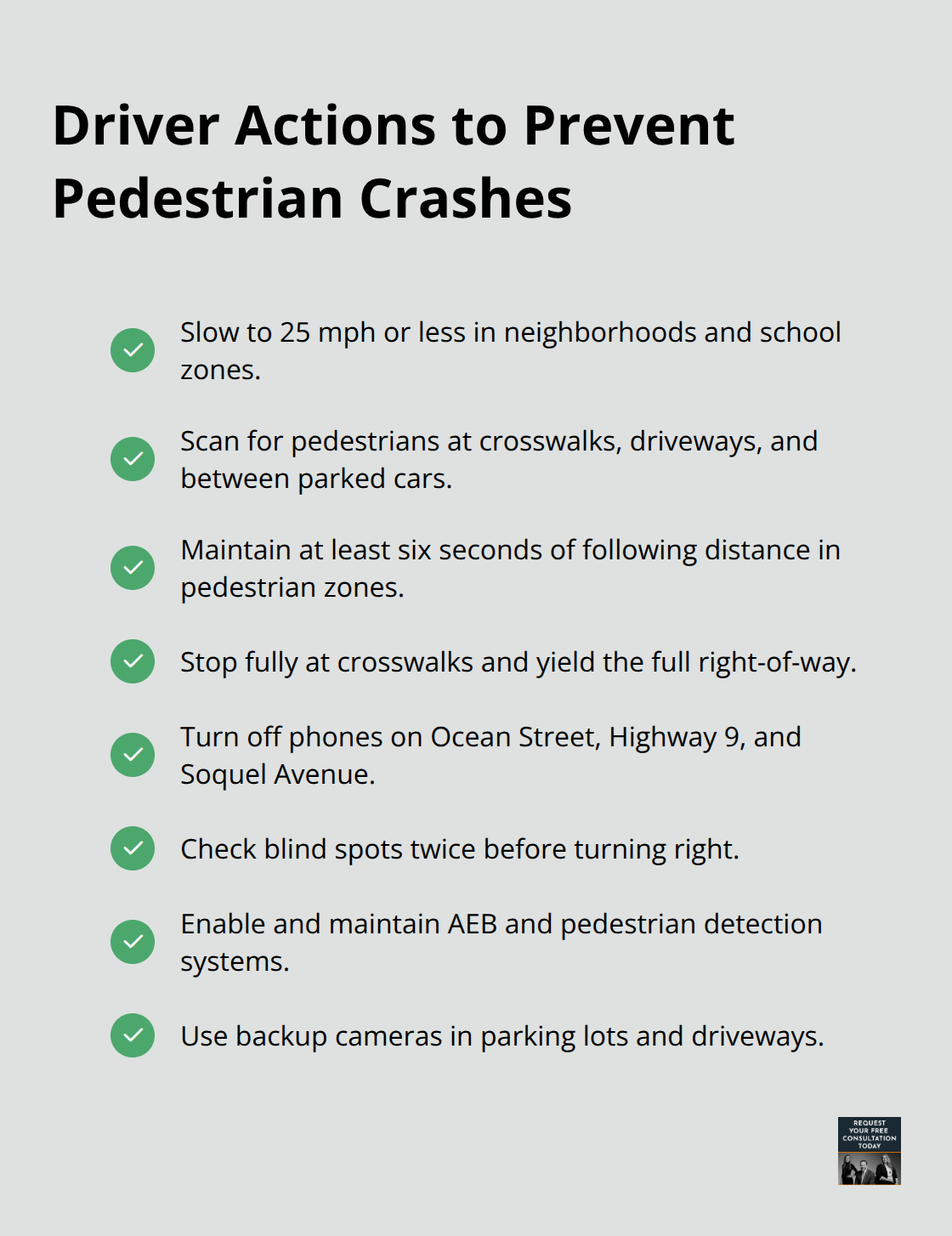
Stop completely at crosswalks rather than rolling through – give pedestrians full right-of-way even when they appear to hesitate. The three-second rule becomes worthless in pedestrian zones, so maintain at least six seconds of following distance to allow emergency stops.
Turn off phones completely while you drive through Ocean Street, Highway 9, and Soquel Avenue where most accidents occur. Check blind spots twice before you turn right, as pedestrians often approach from unexpected angles.
Technology Prevents Deaths When You Use It Correctly
Modern vehicles offer automatic emergency braking and pedestrian detection systems that reduce collision risks by 27% according to the Insurance Institute for Highway Safety. Activate these features and maintain them properly through regular software updates. Backup cameras save lives in parking lots and driveways where children and elderly pedestrians move unpredictably.
Pedestrians should download crossing signal apps that provide audible countdown timers at major intersections. Reflective clothing increases visibility by 500 feet at night compared to dark clothing. LED flashlights and reflective armbands cost under $20 but prevent fatal accidents during early morning and evening hours.
Pedestrian Actions That Actually Work
Walk while you face traffic on roads without sidewalks – stay as far left as possible while you remain alert for vehicles. Cross only at marked crosswalks or intersections since mid-block crossings account for 70% of pedestrian fatalities in Santa Cruz County. Make eye contact with drivers before you step into crosswalks, as this confirms they see you and intend to stop.
Remove headphones completely when you cross streets (hearing approaching vehicles provides critical safety information). Press pedestrian signal buttons every time rather than assume sensors detect your presence. Wait for the complete walk signal cycle before you cross, even if traffic appears clear.
Speed Limits Save Lives in High-Risk Areas
Santa Cruz County’s dangerous corridors demand strict speed compliance from all drivers. Highways 1, 129, and 152 in Watsonville have higher speed limits that increase fatal pedestrian accident risks significantly. Reduce your speed by 10 mph below posted limits in areas with heavy foot traffic or poor visibility conditions.
The county’s fifth-place ranking for speed-related crashes shows that enforcement alone cannot solve this problem – drivers must take personal responsibility. Traffic calming measures like speed bumps work, but only when drivers respect them and adjust their behavior accordingly.
Understanding these safety measures sets the foundation for knowing your legal obligations, which carry serious consequences when violated.
What Are Your Legal Duties on the Road
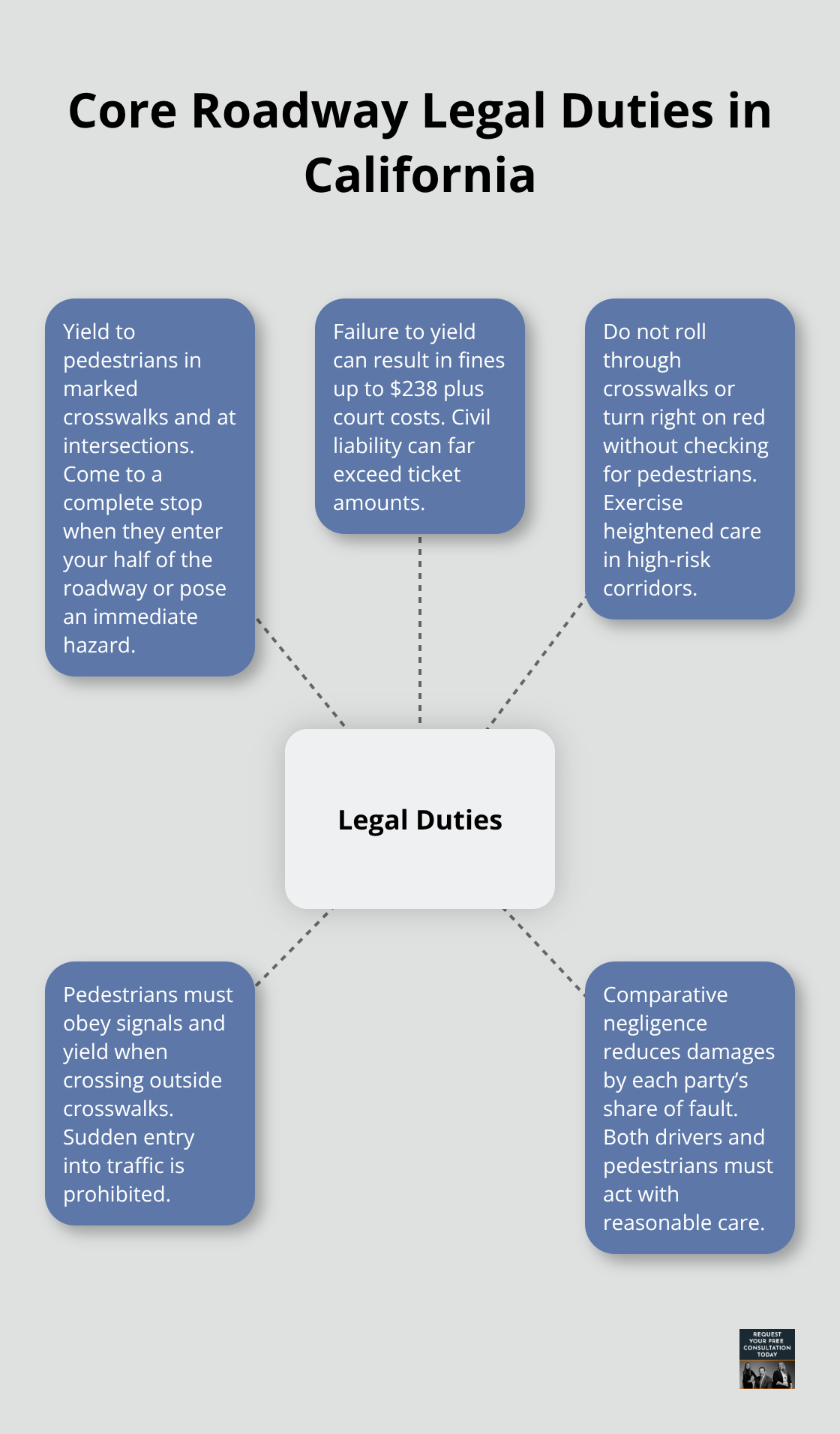
California Vehicle Code Section 21950 mandates that drivers yield right-of-way to pedestrians in marked crosswalks and at intersections, but this law extends far beyond simple stop requirements. Drivers must come to a complete stop when pedestrians enter their half of the roadway or approach closely enough to constitute an immediate hazard. The California Department of Motor Vehicles reports that failure to yield violations result in fines up to $238 plus court costs, but the financial consequences pale compared to potential civil liability. Santa Cruz County’s fifth-place rank for pedestrian crashes stems partly from drivers who roll through crosswalks or fail to check for pedestrians before they turn right on red lights.
Pedestrian Legal Obligations Create Shared Accountability
Pedestrians cannot simply step into crosswalks without regard for traffic conditions under California Vehicle Code Section 21950. The law requires pedestrians to yield to vehicles when they cross outside marked crosswalks or against traffic signals. Jaywalkers face fines that reach $197 in Santa Cruz County, but pedestrians face much greater risks when they violate laws on dangerous corridors like Ocean Street and Highway 9. The code specifically prohibits pedestrians from sudden roadway entry when vehicles cannot stop safely (this places legal responsibility on both parties to exercise reasonable care).
Driver Duties at Intersections and Crosswalks
California law requires drivers to yield to blind pedestrians who use guide dogs or white canes at all times. Drivers must never pass vehicles that stop at crosswalks, as these vehicles may yield to pedestrians. The law prohibits drivers from block intersections if they cannot cross completely before the light turns red. Diagonal crosswalks allow pedestrians to cross in any direction, and drivers must yield to those who cross. Turn signals become mandatory when drivers change lanes or exit roundabouts to inform pedestrians of vehicle intent.
Financial and Criminal Consequences Destroy Lives
Vehicle-pedestrian collision liability extends far beyond traffic tickets into devastating financial territory. California follows comparative negligence rules, which means damages get reduced by each party’s percentage of fault in accidents. Drivers who strike pedestrians while they speed or use phones face gross negligence charges that insurance companies often refuse to cover fully. Criminal charges become likely when accidents involve alcohol, drugs, or excessive speed – particularly in construction zones where penalties double. Pedestrians who cause accidents through illegal crossings or signal violations can face lawsuits for vehicle damage and driver injuries, and seeking specialized legal guidance becomes crucial for understanding complex liability issues that affect families for decades.
Final Thoughts
Vehicle-pedestrian collision prevention requires consistent action from both drivers and pedestrians throughout Santa Cruz County. Drivers must eliminate phone distractions, reduce speeds in high-risk areas like Ocean Street and Highway 9, and yield completely at crosswalks. Pedestrians need to cross only at designated areas, maintain awareness of traffic conditions, and use reflective clothing during low-light hours.
The county’s second-place rank for bicycle crashes and fifth-place position for pedestrian incidents shows that individual responsibility creates collective safety. When drivers follow the three-second rule and pedestrians wait for complete walk signals, accident rates drop significantly. Technology like automatic emergency braking and pedestrian detection systems provides additional protection when properly maintained (though regular software updates remain necessary).
Legal consequences extend far beyond traffic fines into devastating civil liability that affects families for years. California’s comparative negligence laws mean both parties share responsibility for accident prevention through careful behavior and law compliance. If you’ve been involved in a vehicle-pedestrian accident, Schaar & Silva LLP provides comprehensive legal support throughout Santa Cruz County.
