

Pedestrian accidents happen suddenly and leave victims facing serious injuries, mounting medical bills, and complex legal questions. In California, pedestrian hit by car cases involve specific laws that determine fault and compensation.
We at Schaar & Silva LLP understand the challenges you face after such a traumatic event. Taking the right steps immediately can protect your health and strengthen your legal claim.
Immediate Steps After a Pedestrian Accident
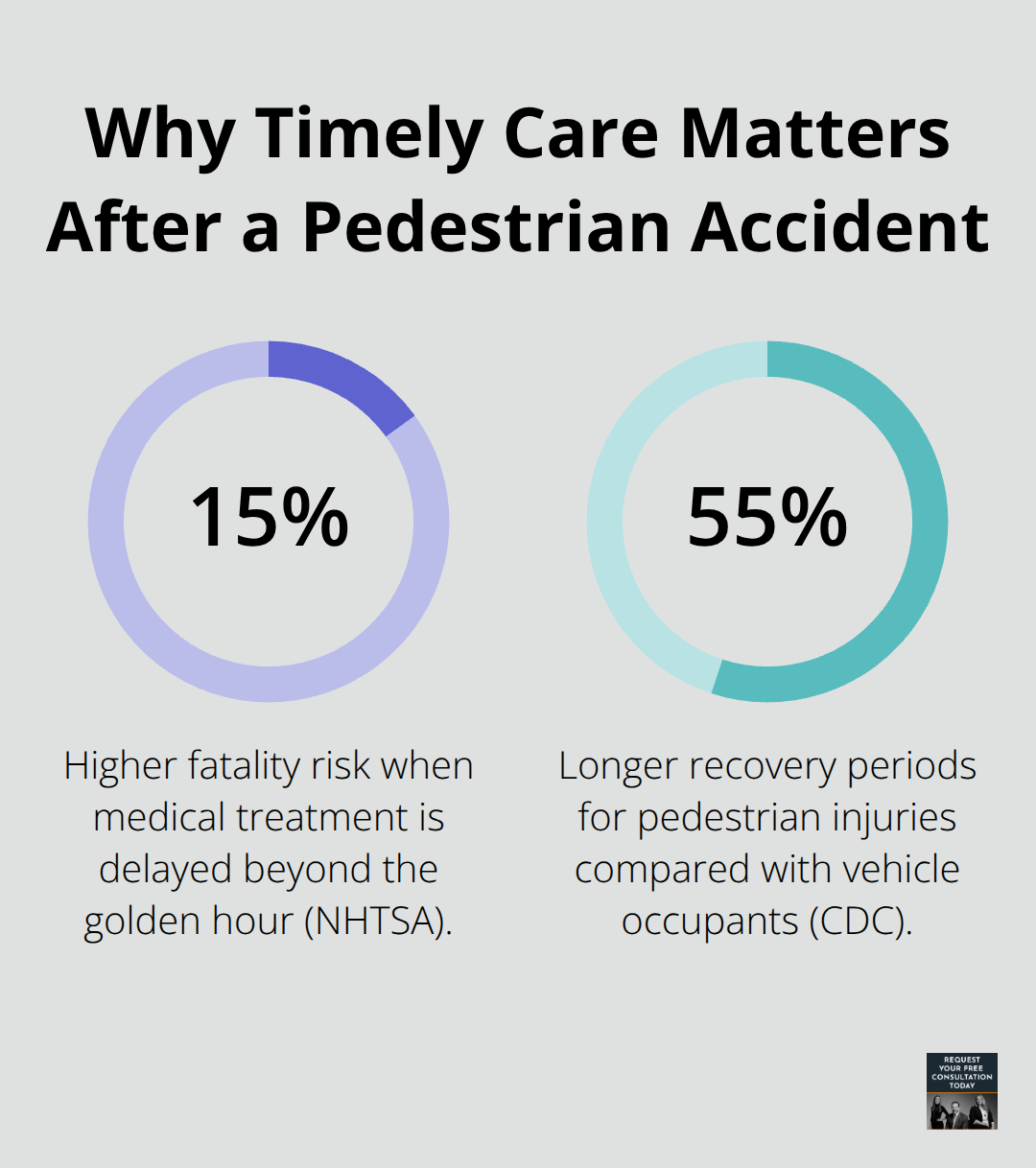
The first sixty minutes after a pedestrian accident determine both your medical outcome and legal case strength. Emergency responders must arrive quickly, as the National Highway Traffic Safety Administration reports that pedestrians face a 15% higher fatality risk when medical treatment delays exceed the golden hour. Call 911 immediately, even if injuries seem minor – adrenaline masks pain and internal injuries often remain unnoticed initially.
Call 911 and Get Medical Attention
Request ambulance transport to the hospital, regardless of how you feel. Emergency room records become critical evidence in your case, and insurance companies frequently dispute injuries that lack immediate medical documentation. The attending physician should document all visible injuries, pain complaints, and treatment provided. Visit a hospital or urgent care facility within 24 hours of your accident, even if injuries seem minor initially. Request copies of all medical records before you leave the facility, as hospitals charge significant fees for records obtained later.
Document the Scene and Gather Evidence
Take photographs of visible injuries while at the hospital – these images prove invaluable during settlement negotiations. Vehicle damage, skid marks, and debris disappear within hours of an accident. Police officers collect basic information, but their reports often miss details that strengthen your claim. Measure and photograph skid marks, vehicle positions, and property damage from multiple angles.
Contact Police and File a Report
The California Vehicle Code requires drivers to yield right-of-way to pedestrians in crosswalks (Section 21950), so document your exact location when the collision occurred. Collect contact information from all witnesses – their statements often contradict the driver’s version of events and provide objective accounts of fault. Police reports establish the official record of the incident, but witness testimony frequently reveals additional facts that support your claim.
Understanding California’s pedestrian laws becomes essential for building a strong case and determining fault in your accident.
Understanding Pedestrian Accident Laws in California
California Vehicle Code Section 21950 establishes clear right-of-way rules that favor pedestrians in crosswalks, but drivers frequently claim pedestrians violated these laws to avoid liability. The law requires drivers to yield to pedestrians in marked and unmarked crosswalks, yet insurance companies routinely argue that pedestrians stepped into traffic unexpectedly or failed to exercise due care. Assembly Bill 2147 (effective January 2023) strengthened pedestrian protections and restricts when law enforcement can cite pedestrians unless immediate collision danger exists.
Right of Way Rules for Pedestrians and Drivers
Drivers must yield to pedestrians in both marked and unmarked crosswalks under Section 21950(a), but this protection comes with conditions. Pedestrians cannot suddenly leave a place of safety and enter a vehicle’s path when the driver cannot reasonably avoid a collision. Section 21950(c) requires drivers to reduce speed and take necessary actions to safeguard pedestrians when they approach crosswalks. Insurance adjusters often twist these requirements to shift blame onto pedestrians who were lawfully present in crosswalks.
Comparative Negligence in Pedestrian Cases
California follows pure comparative negligence rules, which means your compensation reduces by your percentage of fault even if you bear primary responsibility for the accident. Insurance adjusters frequently assign 50% or higher fault to pedestrians when they claim violations of jaywalking laws or failure to look before entering crosswalks. Courts typically assign 10-30% fault to pedestrians who were struck in crosswalks but may have been distracted by phones or headphones. The key factor becomes proof that the driver failed to exercise due care as required by Section 21950, regardless of any minor pedestrian violations.
Statute of Limitations for Filing Claims
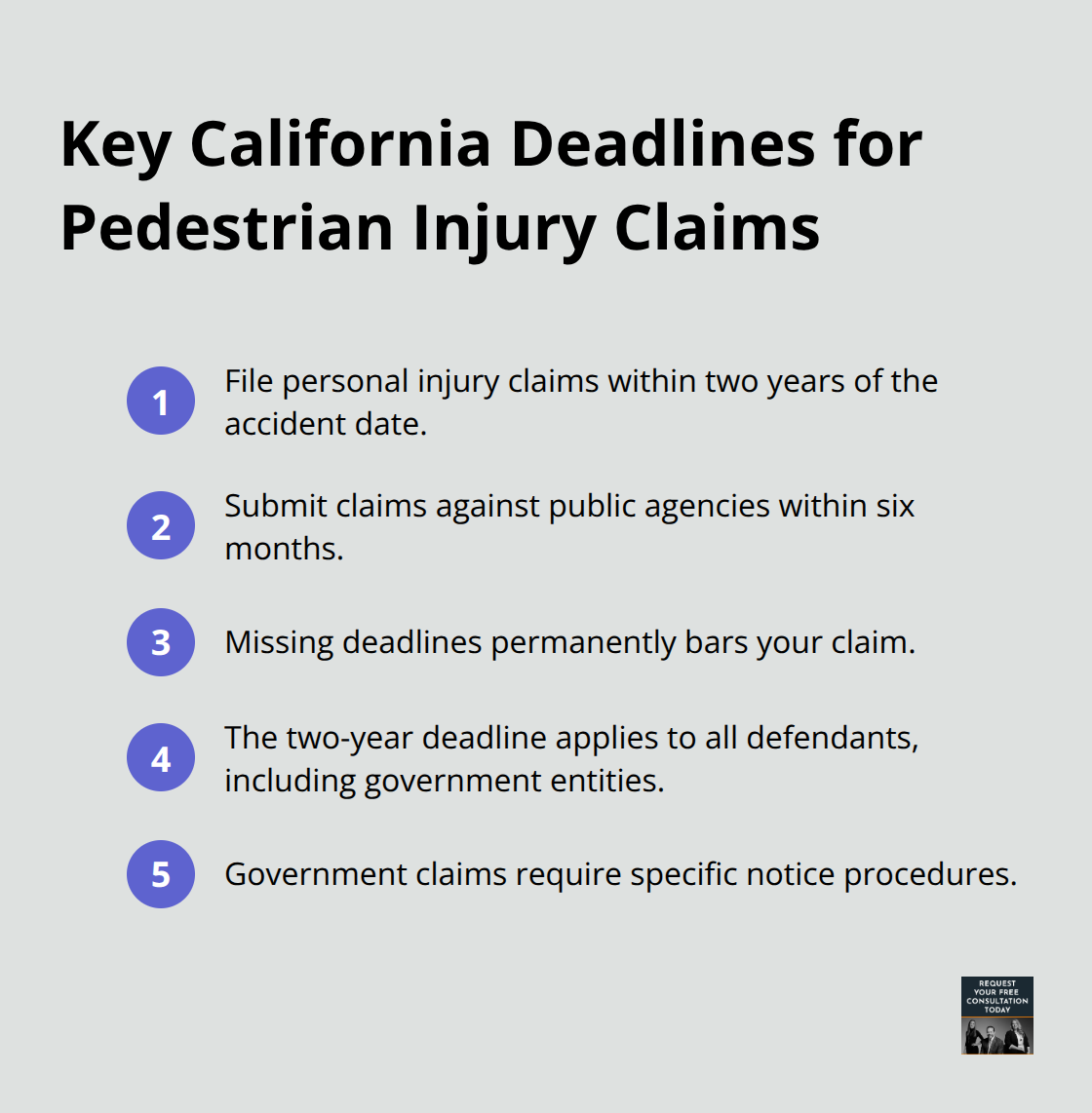
California’s two-year statute of limitations for personal injury claims starts from your accident date, not when you discover the full extent of injuries. This deadline applies to all defendants, including government entities that maintain dangerous roadways, though claims against public agencies require filing within six months. Missing these deadlines bars your claim permanently, regardless of injury severity or clear driver fault. Government liability claims require specific notice procedures that differ from standard personal injury filings.
These legal complexities directly impact the compensation you can recover for your injuries and losses.
Compensation Available for Pedestrian Accident Victims
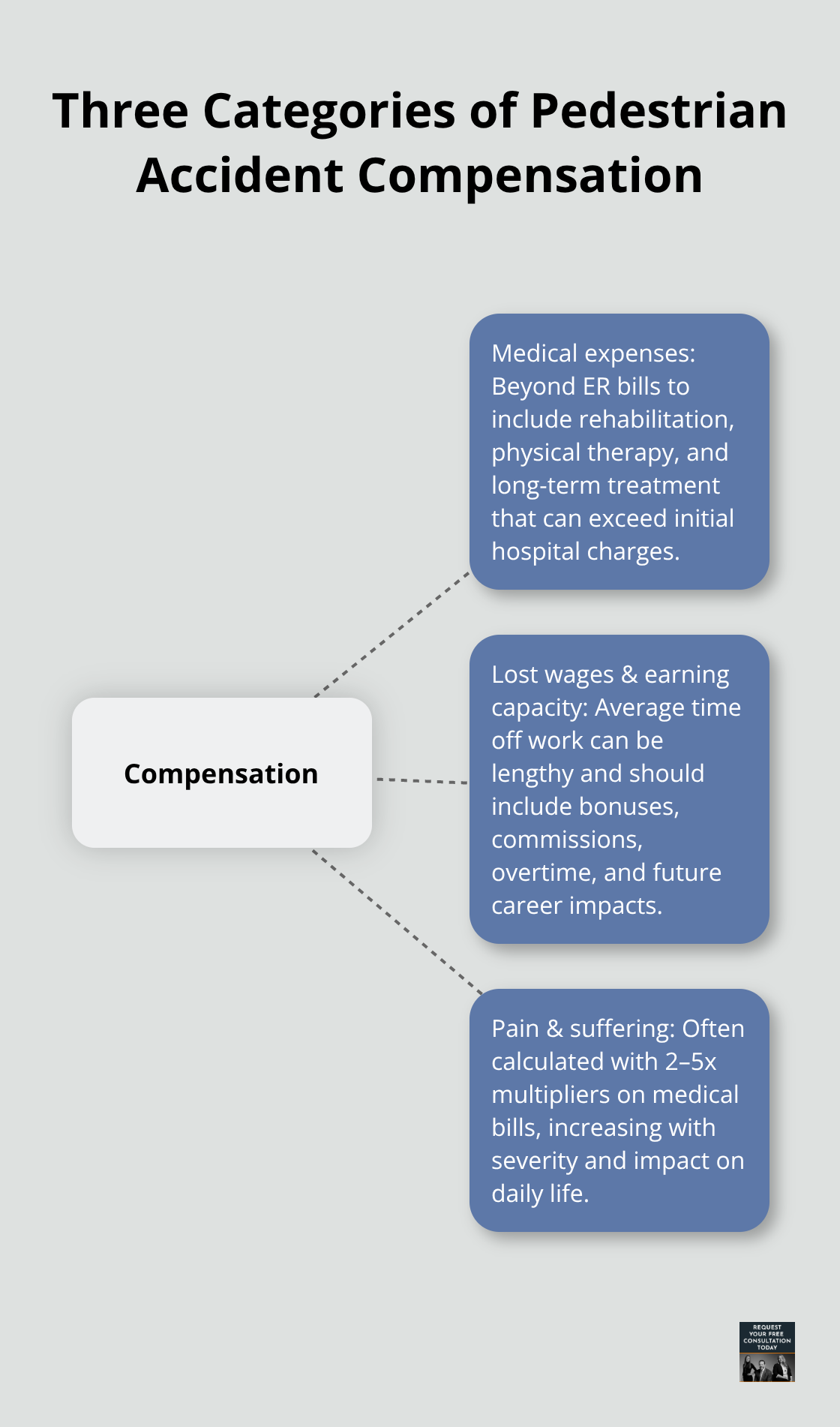
Pedestrian accident victims recover compensation through three primary categories that insurance companies systematically undervalue in initial settlement offers. Medical expenses represent the most straightforward damages but extend far beyond emergency room bills – rehabilitation costs, physical therapy, and treatment often exceed initial hospital charges by 300-400%. The Centers for Disease Control and Prevention reports that pedestrian injuries require an average of 55% longer recovery periods than vehicle occupant injuries, which results in substantial medical costs that insurance adjusters routinely dispute or minimize.
Medical Expenses and Rehabilitation Costs
Emergency room treatment for pedestrian injuries averages $57,000 according to the National Highway Traffic Safety Administration, but this figure represents only the start of your medical expenses. Traumatic brain injuries from pedestrian accidents require neurological tests that can cost $8,000-$12,000 monthly for the first year. Orthopedic surgeries for broken bones frequently require multiple procedures, with each surgery costing $25,000-$40,000 plus rehabilitation expenses. Insurance companies offer settlements that cover only immediate hospital bills while they ignore future medical needs – a strategy that leaves victims responsible for hundreds of thousands in treatment costs.
Lost Wages and Future Earning Capacity
Pedestrian accident victims lose an average of 18 months of work according to Bureau of Labor Statistics data, but income losses extend beyond basic wage calculations. Career advancement opportunities disappear when injuries prevent you from performing job duties or attending critical meetings and training sessions. Self-employed individuals face even greater challenges as business income stops immediately while overhead expenses continue to accumulate. Insurance adjusters calculate lost wages using only basic salary figures while they ignore bonuses, commissions, overtime pay, and career trajectory changes that accidents cause.
Pain and Suffering Damages
California courts award pain and suffering damages using multipliers between 2-5 times medical expenses, but actual awards depend on injury severity and impact on daily activities. Permanent disabilities that prevent recreational activities or hobbies command higher multipliers – courts awarded $850,000 in pain and suffering damages to a pedestrian who could no longer participate in marathons after a leg amputation (a case that demonstrates the significant value courts place on quality of life). Insurance companies initially offer pain and suffering settlements equal to medical bills or less, hoping victims accept quick payments before they understand their full legal rights.
Final Thoughts
Time works against you in pedestrian hit by car cases – California’s two-year statute of limitations and evidence preservation requirements demand immediate action. Insurance companies begin their defense within hours of accidents, while medical records and witness memories fade quickly. Swift action protects both your health and legal rights.
Legal representation levels the field against insurance companies that employ teams of adjusters and attorneys to minimize payouts. We at Schaar & Silva LLP handle the complex negotiations while you focus on recovery. Our experience with California pedestrian laws and insurance tactics helps maximize your compensation (which often exceeds initial settlement offers by 200-400%).
We provide comprehensive support throughout Santa Cruz County, including medical bill assistance through lien services, property damage evaluations, and connections to psychological support when needed. Our team manages every aspect of your case – from evidence collection to settlement negotiations – so you can concentrate on recovery from your injuries. Contact us today to discuss your pedestrian accident case and protect your legal rights.
