

Car accidents can turn your life upside down in seconds. Understanding tort law car accidents becomes vital when seeking compensation for your injuries and losses.
We at Schaar & Silva LLP know that navigating legal complexities after a crash feels overwhelming. This guide breaks down the key principles you need to know about tort law and how it applies to your Santa Cruz County accident case.
Understanding Tort Law in Car Accident Cases
Civil Wrongs That Create Legal Responsibility
Tort law covers civil wrongs that cause harm to another person or their property. When a car accident happens in Santa Cruz County, tort law becomes the foundation for seeking compensation from the responsible party. An automobile tort refers to any civil wrong that arises from vehicle accidents and results in injury or property damage. Unlike criminal cases where the state prosecutes wrongdoers, tort cases allow you as the victim to pursue financial recovery directly from those who harmed you.
Three Main Types of Torts in Vehicle Accidents
Negligence dominates car accident cases and occurs when drivers fail to exercise reasonable care on the road. The California Highway Patrol reported more than 3,500 injury collisions in Santa Cruz County in 2022 alone, with most cases stemming from negligent behaviors like speeding, distracted driving, or running red lights. Intentional torts involve deliberate harmful acts such as road rage incidents or assault with a vehicle. These cases often qualify for punitive damages beyond standard compensation.
Strict liability applies when defective vehicle parts cause accidents and holds manufacturers responsible regardless of negligence. Product liability cases tend to be complex and require thorough investigation of manufacturing defects (particularly in cases involving brake failures or airbag malfunctions).

How Tort Law Differs from Criminal Proceedings
Criminal law punishes wrongdoers through fines or imprisonment but provides no direct financial compensation to victims. Tort law focuses entirely on making you whole again through monetary damages. California follows pure comparative negligence rules, which means you can recover compensation even if you bear 99% responsibility for the accident, though your award gets reduced by your fault percentage.
This system offers hope for recovery in situations where criminal courts might dismiss cases due to shared responsibility. The distinction becomes particularly important when insurance companies attempt to deny claims based on partial fault (a common tactic that tort law helps counter).
Now that you understand the basic framework of tort law, the next step involves proving that negligence actually occurred in your specific case.
Proving Negligence in Car Accident Claims
The Four Legal Requirements That Make or Break Your Case
Courts examine four specific legal elements when you prove negligence in Santa Cruz County car accidents. First, you must establish that the other driver owed you a duty of care (which exists automatically when someone operates a vehicle on public roads). Second, you need to prove they breached this duty through their actions or inactions. Third, causation links their breach directly to your accident and injuries. Finally, you must demonstrate actual damages resulted from their negligent behavior.
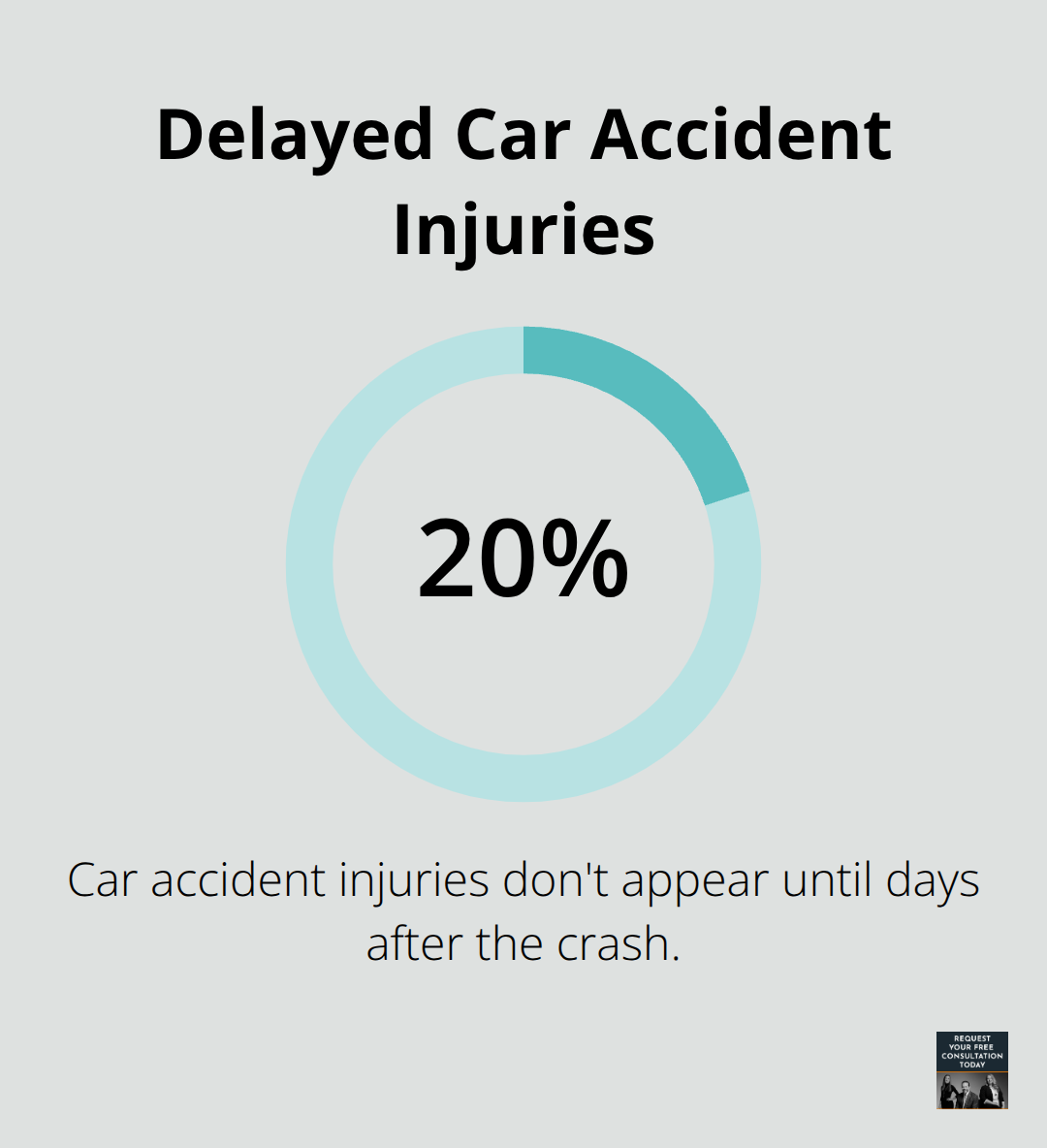
The National Highway Traffic Safety Administration found that about 20% of car accident injuries don’t appear until days after the crash, which makes the causation element particularly challenging. Courts require clear evidence that connects the defendant’s specific actions to your harm, not just general carelessness.
Behaviors That Courts Consistently Find Negligent
Speeding violations represent the most straightforward negligence cases, particularly when police reports document excessive speed. Distracted driving cases have increased dramatically with smartphone use, and California courts now recognize texting while driving as clear negligence. Red light and stop sign violations create strong negligence claims because these violations directly contradict traffic laws.
Drunk driving cases often involve both criminal charges and civil negligence claims, with blood alcohol content above 0.08% that provides concrete evidence of breach. Following too closely, improper lane changes, and failure to yield right-of-way also constitute common negligent behaviors that courts readily recognize.
How to Build Your Evidence Foundation
Photograph everything at the accident scene immediately, which includes vehicle positions, damage, skid marks, and traffic signals. The Insurance Research Council found that victims who hire attorneys receive settlements 3.5 times larger than those who handle claims independently, largely due to superior evidence collection. Police reports provide official documentation, but witness statements often prove more valuable because they capture details officers might miss.
Medical records must connect your injuries directly to the accident timeline. Keep detailed records of all communications with insurance companies, as the California Department of Insurance lists unfair claim settlement practices among the most common consumer complaints. Traffic camera footage disappears quickly, so request preservation letters immediately through legal counsel.
With solid evidence in hand, you can then focus on the various types of compensation available through tort law for your injuries and losses.
What Compensation Can You Actually Recover
Calculating Your Financial Losses
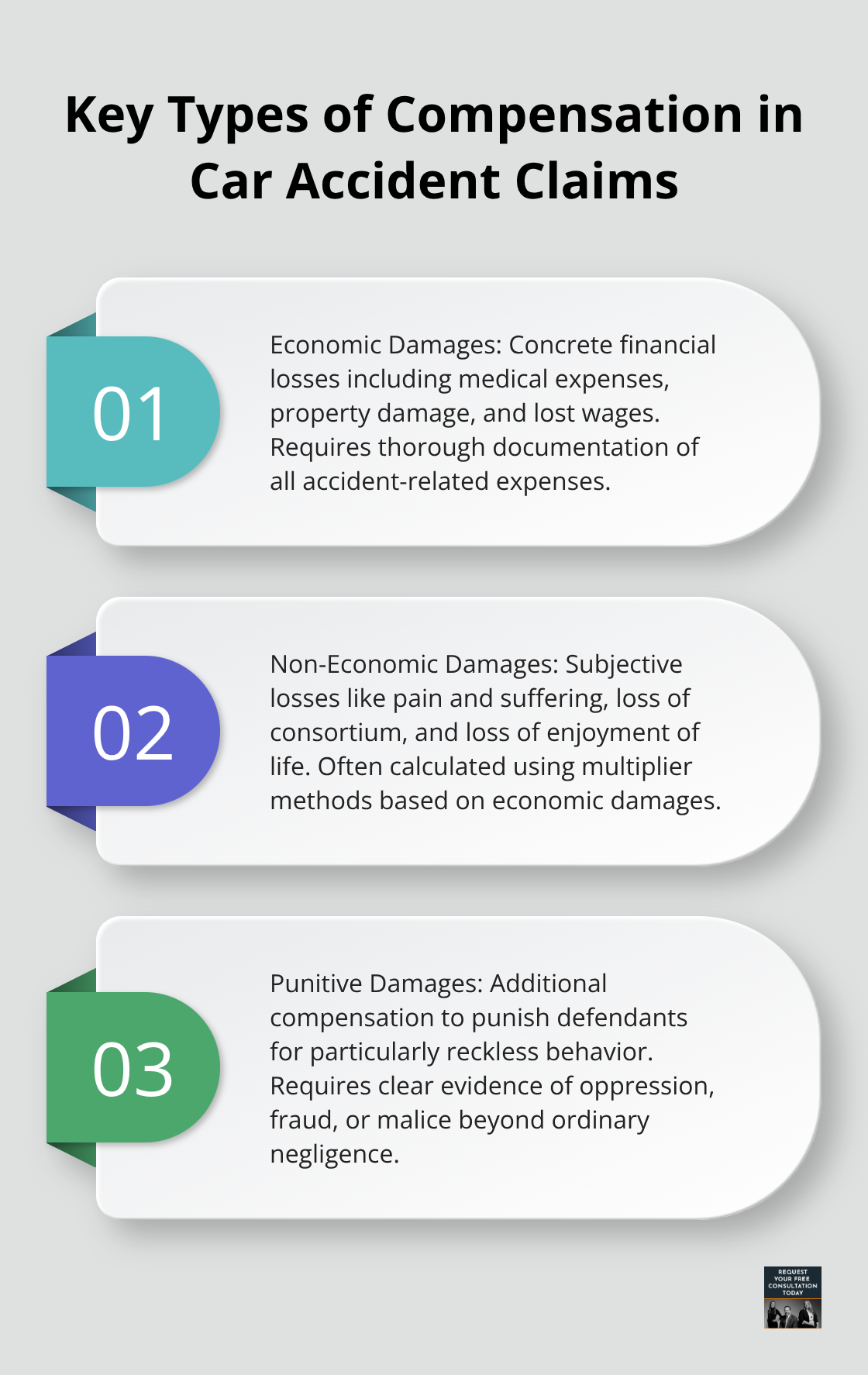
Economic damages represent the concrete financial impact of your car accident and form the foundation of most Santa Cruz County claims. Medical expenses include emergency room visits, surgeries, physical therapy, prescription medications, and future treatment costs that doctors document in your medical records. The average cost for replacement of a totaled vehicle in California exceeds $15,000, which makes property damage a significant component of economic recovery. Lost wage calculations must account for both past income loss and reduced capacity to earn if your injuries affect your ability to work long-term.
Documentation becomes absolutely critical for economic damages because courts require proof of every dollar claimed. Keep receipts for all accident-related expenses, which include mileage to medical appointments, prescription costs, and medical equipment purchases. Insurance companies frequently challenge future medical costs, so you should obtain written treatment plans from your physicians to strengthen your economic damage claims substantially.
Pain and Suffering Valuations That Actually Matter
Non-economic damages compensate for subjective losses that don’t appear on receipts but significantly impact your daily life. Pain and suffering calculations in Santa Cruz County typically use multiplier methods where economic damages get multiplied by factors that range from 1.5 to 5, depending on injury severity and recovery time. The Insurance Research Council found that attorney representation leads to settlements that are on average 40% higher than those without legal representation, primarily due to superior non-economic damage presentations.
Courts examine how injuries affect your sleep, relationships, hobbies, and overall quality of life when they determine pain and suffering awards. Keep a daily pain diary that records your symptoms, limitations, and emotional struggles to provide concrete evidence for these subjective damages. Loss of consortium claims allow spouses to recover for damaged marital relationships, while loss of enjoyment of life damages address your inability to participate in activities you previously enjoyed.
When Punitive Damages Apply
Punitive damages punish defendants for particularly reckless behavior and require clear evidence of oppression, fraud, or malice beyond ordinary negligence. Drunk drivers with blood alcohol levels significantly above legal limits often qualify for punitive awards, as do road rage incidents that involve intentional vehicle contact. These damages can multiply your total recovery significantly but require you to meet California’s higher burden of proof standards that demand clear and convincing evidence rather than simple preponderance of evidence used in standard negligence cases.
Final Thoughts
Tort law car accidents provide you with the power to protect your rights and recover fair compensation after a crash in Santa Cruz County. The four elements of negligence create your roadmap for a strong case, while comprehensive evidence collection strengthens your position against insurance companies that minimize payouts. Legal representation makes a measurable difference in your recovery.
The Insurance Research Council’s data shows attorney representation leads to settlements 3.5 times larger than self-representation, primarily because attorneys understand how to present evidence effectively and calculate damages accurately. We at Schaar & Silva LLP handle the legal complexities while you focus on recovery from your injuries. California’s two-year statute of limitations for personal injury claims means time matters, but don’t rush into quick settlements that insurance companies often push.
After your accident, prioritize medical attention first, then document everything thoroughly. Schaar & Silva LLP provides the legal guidance you need throughout Santa Cruz County (including assistance with medical bills and property damage evaluation). Your path to recovery starts with action to protect your rights under tort law.
