
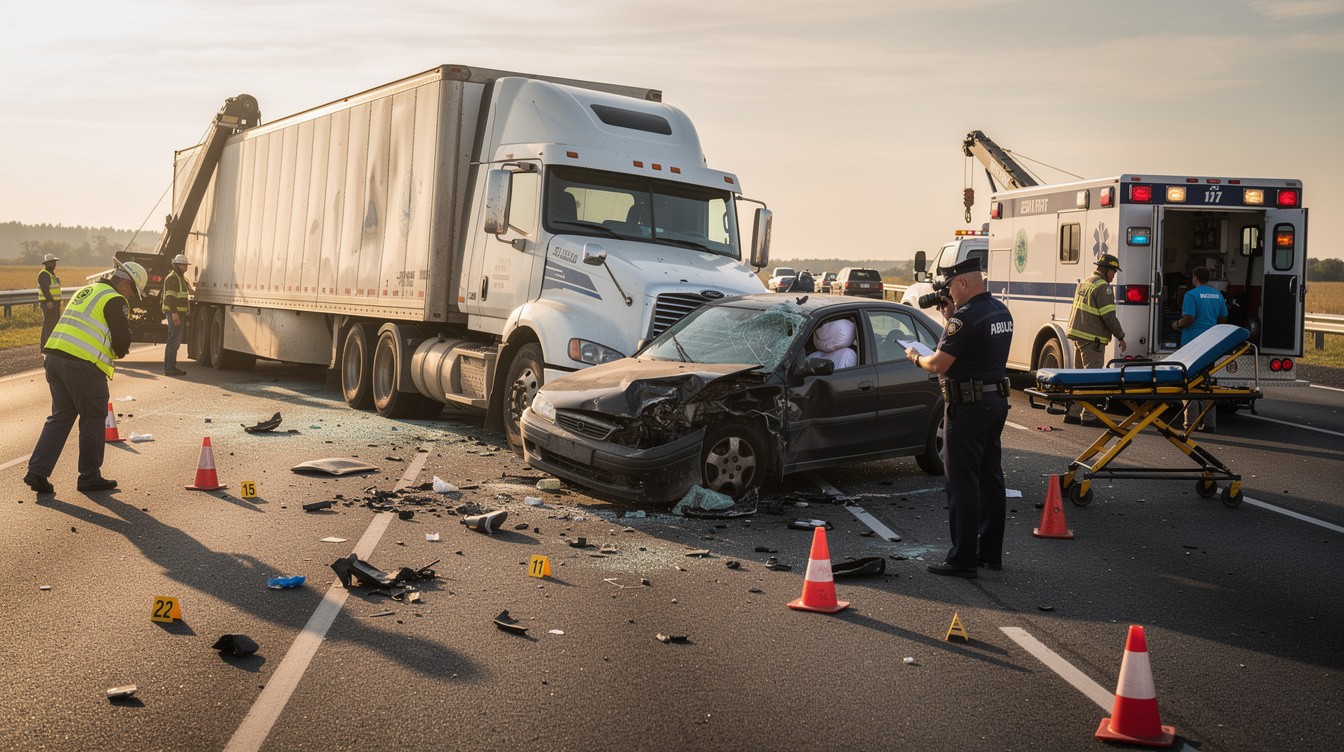
A Santa Cruz truck crash can leave you facing medical bills, vehicle damage, and lost income. The path to fair compensation isn’t always straightforward, but understanding your rights makes a real difference.
We at Schaar & Silva LLP have helped many accident victims navigate this process. This guide walks you through the essential steps to protect your claim and get the support you deserve.
What to Do Right After a Truck Accident in Santa Cruz
The first minutes and hours after a truck crash determine how strong your compensation claim will be. Most accident victims make critical mistakes during this window that weaken their position later.
Move to Safety and Document the Scene
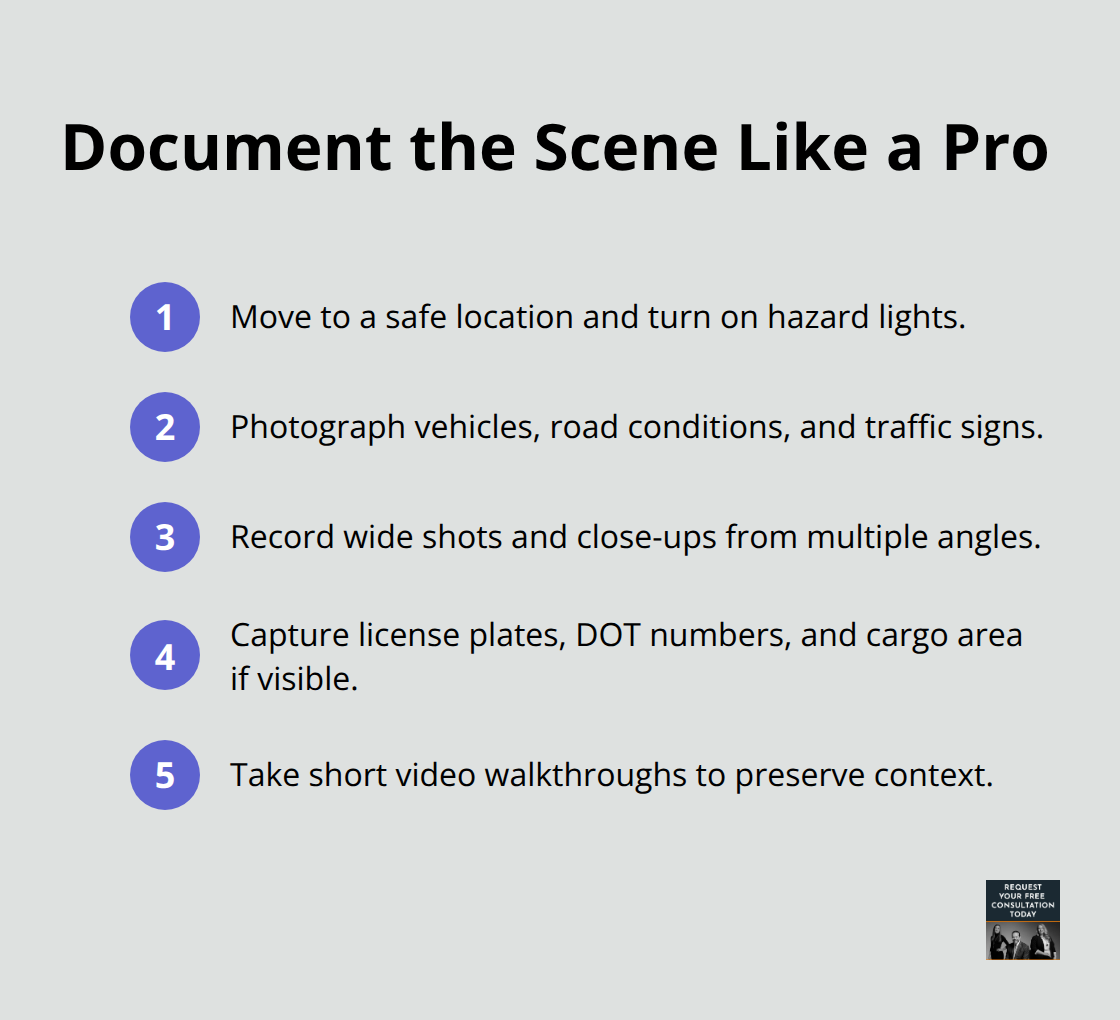
Start by moving to safety if possible, then shift your focus to photographing everything. Use your phone to capture the truck, your vehicle, road conditions, skid marks, traffic signs, and the overall scene from multiple angles. Video recordings work even better because they capture context and details photos might miss. Take close-ups of vehicle damage, license plates, and the truck’s cargo area if accessible.
California truck crashes result in over 375 fatalities annually according to state data, and the severity means insurance companies scrutinize claims heavily. Your photos and videos become powerful evidence that contradicts what adjusters claim later.
Collect Critical Information from All Parties
Obtain names, phone numbers, addresses, driver’s license numbers, insurance company names, and policy numbers from the truck driver, any passengers, and witnesses. Write down the truck’s company name, vehicle identification number, and commercial license plate information. This information forms the foundation for your claim and helps identify all liable parties.
File a Police Report Immediately
Call the Santa Cruz County Sheriff or local police immediately and file an official report, even if injuries seem minor. The police report creates an independent record and assigns an incident number you’ll reference throughout your claim. Do not accept the truck driver’s explanation or leave the scene without filing a report.
Seek Medical Evaluation Without Delay
Finally, obtain medical evaluation at an emergency room or urgent care facility regardless of whether you feel injured. Many serious injuries from truck accidents appear hours or days later, and medical records created immediately after the crash link your injuries directly to the accident (insurance companies use gaps in medical documentation to deny or reduce claims). Getting evaluated quickly protects your rights and your recovery.
With documentation complete and medical care underway, you now face decisions about your insurance claim and how to handle communications with adjusters.
What Compensation Can You Actually Recover
Economic Damages: Your Direct Financial Losses
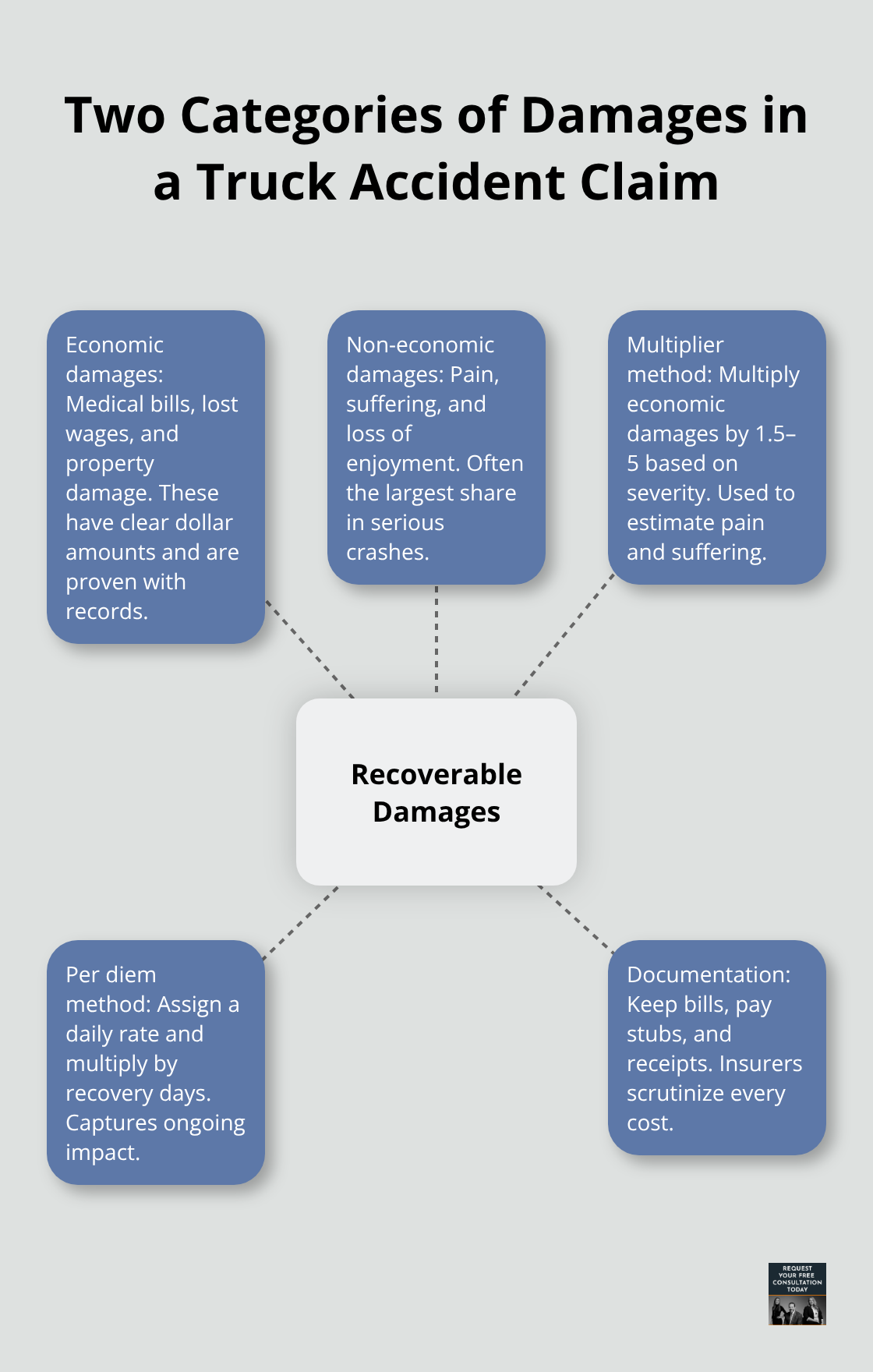
A Santa Cruz truck accident generates two distinct categories of damages you can pursue, and understanding the difference matters because insurance companies routinely undervalue one category while ignoring the other entirely. Economic damages cover your direct financial losses: medical expenses, hospital stays, surgical procedures, prescription medications, physical therapy, lost wages during recovery, and diminished earning capacity if injuries prevent you from returning to your previous job. These damages have clear dollar amounts attached. You must document every medical bill, pay stub, and expense receipt because insurance adjusters will scrutinize these costs aggressively.
Non-Economic Damages: Your Quality of Life
Non-economic damages address the impact on your quality of life and include pain and suffering, mental anguish, loss of enjoyment of life, disfigurement, and loss of consortium. California allows you to recover both categories, but the non-economic portion often represents the majority of your compensation in serious truck accident cases. The multiplier method calculates pain and suffering by multiplying your economic damages by a factor between 1.5 and 5 depending on injury severity, or the per diem method assigns a daily rate for your suffering multiplied by your recovery duration. Insurance companies deliberately minimize non-economic damages because they’re harder to dispute with paperwork alone.
Identifying All Liable Parties
Determining fault in a truck accident differs significantly from standard car crashes because multiple parties share potential liability. The truck driver bears responsibility for their actions, but the trucking company faces liability if they failed to maintain the vehicle, skipped required inspections, pressured the driver to violate federal rest period rules, or tolerated unsafe driving practices. Cargo loading companies can be liable if improper loading caused the crash.
How California’s Fault System Works
California uses pure comparative negligence, meaning you can recover damages even if you’re partially at fault, though your compensation reduces by your percentage of fault. Proving negligence requires establishing four elements: the defendant owed you a duty of care, they breached that duty, their breach caused your injuries, and you suffered damages. Federal Motor Carrier Safety Administration regulations and California Vehicle Code requirements establish the standard of care for trucking companies and drivers, so violations of these regulations constitute strong evidence of negligence.
Building Your Evidence
Insurance adjusters will claim you share fault to reduce their payout, which is why you must gather evidence immediately. Police reports, accident scene photos, driver logs, maintenance records, electronic data from the truck’s black box, and witness statements all support your position. This evidence foundation becomes critical as you navigate the claims process and communicate with insurance representatives about your case.
Moving Forward with Your Claim
Contact the Right Insurance Company Immediately
File your claim immediately after a truck accident-this step cannot wait. Start with your own auto insurance carrier because your policy typically covers uninsured or underinsured motorist protection, which applies when the truck driver lacks sufficient coverage or the trucking company disputes liability. Contact your insurer within days, not weeks, and provide only the facts from the police report and your documentation. Avoid speculating about fault or accepting blame during these conversations. Insurance adjusters record these calls, and statements you make early can be used against you later.
Communicate Strategically with Insurance Adjusters
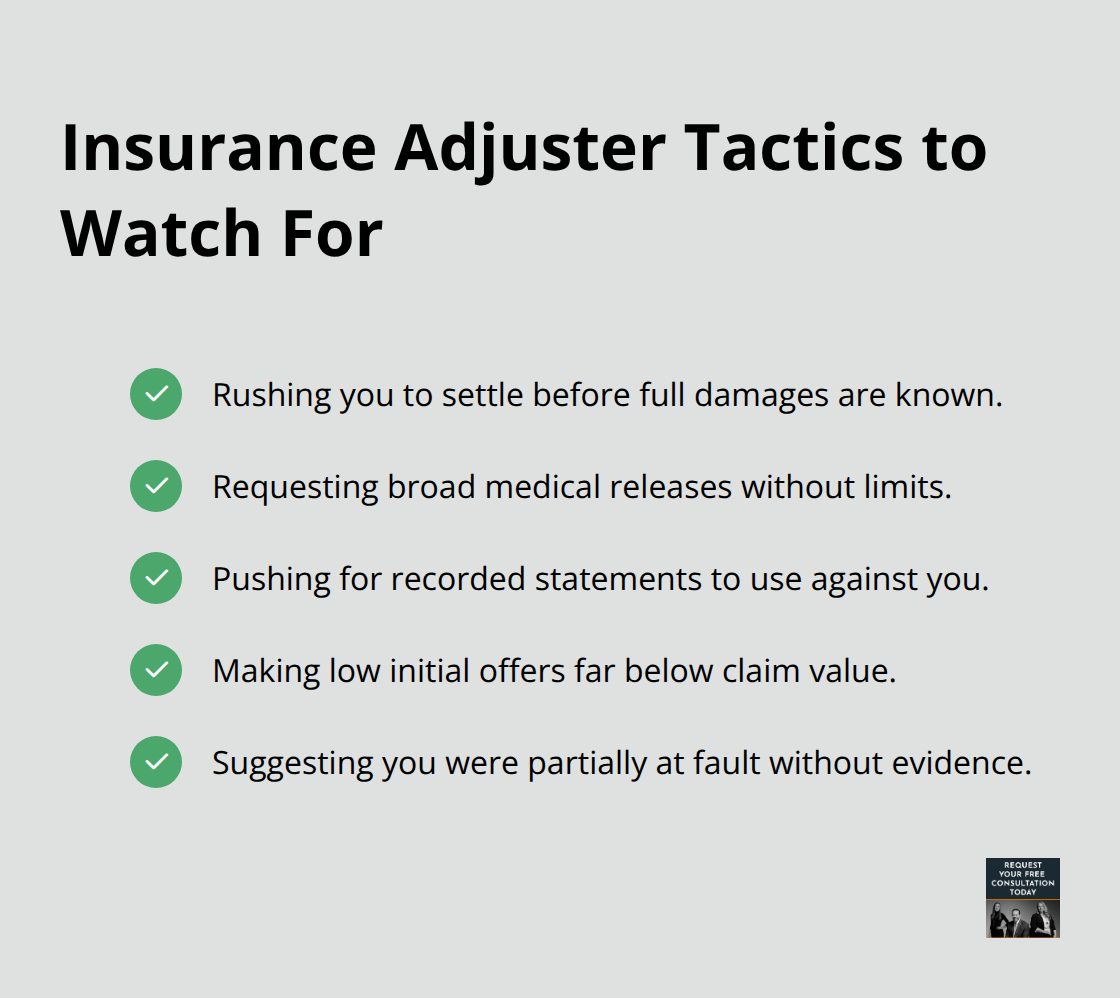
When you speak with adjusters, stick to documented facts: what happened, when it happened, and what injuries or damage resulted. Do not answer questions about your medical history, prior injuries, or how you’re feeling beyond what’s directly related to this accident. Insurance companies employ specific tactics to reduce payouts, including rushing you toward settlement before you understand your full damages, demanding medical releases without attorney review, pressuring recorded statements, and offering amounts far below actual claim value.
Never sign medical authorization forms the adjuster provides because these give insurers access to your entire medical history, not just accident-related treatment. Have a personal injury attorney review any documents before signing. Document every communication with adjusters in writing-email is superior to phone calls because it creates a permanent record. If an adjuster pressures you for a recorded statement, decline and refer them to your attorney.
Navigate Medical Liens and Property Damage Valuations
Medical providers often place liens on your settlement, meaning they agree to wait for payment until your case concludes, but this requires coordination between your medical team and the insurance company. Medical lien services facilitate this process, allowing you to receive necessary treatment without upfront payment. Property damage presents its own challenge because insurance adjusters frequently undervalue vehicle repairs or total loss amounts based on outdated market data.
Obtain independent repair estimates from two certified mechanics in Santa Cruz County and provide both to your adjuster-this creates pressure to increase their valuation offer. If the truck driver’s insurance company claims your vehicle is a total loss, request their valuation methodology and compare it against current market values for your vehicle’s make, model, year, and condition. Adjusters sometimes use outdated comparable vehicle prices to justify lower totals, so verifying their numbers protects your recovery.
Calculate Your Full Claim Value Before Accepting Settlement
Calculate your full claim value before accepting any settlement offer because once you sign a release, you surrender all future claims related to this accident. Add your economic damages (medical expenses, lost wages, property damage) to your non-economic damages (pain and suffering, loss of enjoyment of life). Insurance companies count on accident victims accepting lowball offers out of desperation or confusion about their actual damages. Knowing your claim’s true value prevents you from leaving money on the table.
Final Thoughts
A Santa Cruz truck crash demands immediate action and strategic thinking throughout your recovery. The steps you take in the first hours-photographing the scene, gathering information, filing a police report, and seeking medical care-directly determine how much compensation you ultimately receive. Understanding that you can recover both economic damages like medical bills and lost wages, plus non-economic damages for pain and suffering, prevents you from accepting inadequate settlement offers.
Insurance adjusters will pressure you to settle quickly and sign documents without review. They count on confusion about California’s comparative negligence system and underestimation of non-economic damages. Calculating your full claim value before accepting any offer protects your financial recovery and ensures you don’t leave money on the table.
The complexity of truck accident claims sets them apart from standard car crashes, with multiple parties potentially sharing liability and federal trucking regulations establishing standards of care. We at Schaar & Silva LLP understand the physical, emotional, and financial toll a Santa Cruz truck crash creates, and we contact us for a free case review to analyze your situation and explain your options without upfront fees.