

A car accident can leave you facing medical bills that stretch far into the future. Many accident victims in California underestimate how much their care will actually cost over months or years.
We at Schaar & Silva LLP help people understand their future medical costs in California and plan accordingly. This guide walks you through the real expenses you’ll face and how to protect your finances.
What Do Medical Bills Really Cost After an Auto Accident in California?
Initial Hospital and Emergency Room Expenses
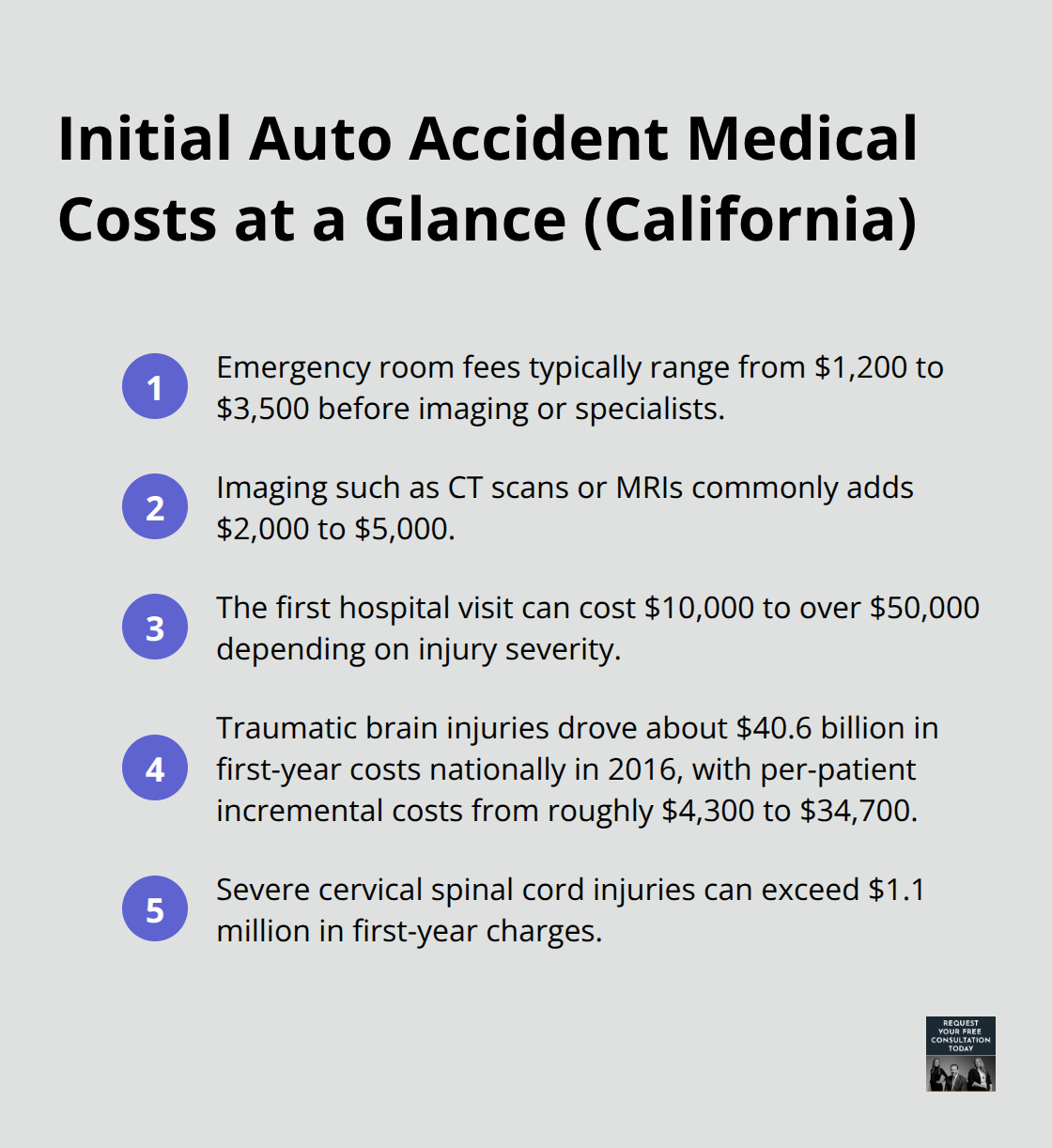
The first hospital visit after a serious auto accident costs anywhere from $10,000 to over $50,000 depending on injury severity. Emergency room fees alone typically range from $1,200 to $3,500 before any imaging, lab work, or specialist consultations. Imaging like CT scans or MRIs adds another $2,000 to $5,000 to your bill. For traumatic brain injuries, first-year costs across all payers reached about $40.6 billion nationally in 2016 according to data from the IBM MarketScan databases, with per-patient incremental costs ranging from roughly $4,300 for low-severity cases to $34,700 for high-severity injuries. Spinal cord injuries demand even higher spending-severe cervical injuries can exceed $1.1 million in first-year charges alone.
Where First-Year Costs Concentrate
The initial hospitalization accounts for 30 to 53 percent of your first-year costs, while inpatient rehabilitation adds another 30 to 58 percent. This means the hospital phase consumes the majority of your immediate medical budget. What most accident victims miss is that these initial bills represent only the beginning of your financial obligations.
Long-Term Care Expenses That Extend for Years
After you leave the hospital, the real long-term expenses emerge. In-home caregiving in California now costs about $80,080 annually for 44 hours per week according to the 2025 CareScout Cost of Care Survey. If you need assisted living, you’ll pay about $74,400 per year. Nursing home care runs roughly $114,975 annually for semi-private rooms and $129,575 for private rooms. Beyond basic care, you’ll face costs for medical equipment, home modifications (wheelchair ramps or accessible bathrooms), ongoing therapy, medications, and pressure ulcer management-which can cost around $4,745 monthly for community-dwelling individuals.
The Shift From Acute Care to Ongoing Support
The second year and beyond shift costs away from acute care toward attendant care and hospital readmissions, making long-term projections critical. Your expenses don’t decrease after leaving the hospital-they transform into different categories that often last for decades. Calculating your actual future needs matters far more than focusing only on current medical bills, which is why understanding how costs evolve over time shapes your entire financial strategy moving forward.
How to Fund Your Long-Term Care Plan
Insurance Coverage Gaps You Need to Know
Your auto policy’s Personal Injury Protection covers medical bills up to your policy limit, but these caps rarely stretch far enough for years of ongoing care. If you need $80,080 annually for in-home caregiving, a standard PIP benefit of $5,000 or $10,000 disappears in weeks. Health insurance picks up hospitalization and short-term rehabilitation, but long-term in-home nursing, assisted living, and home modifications fall into gaps that insurance companies deliberately avoid.
Life Care Planning: Your Financial Roadmap
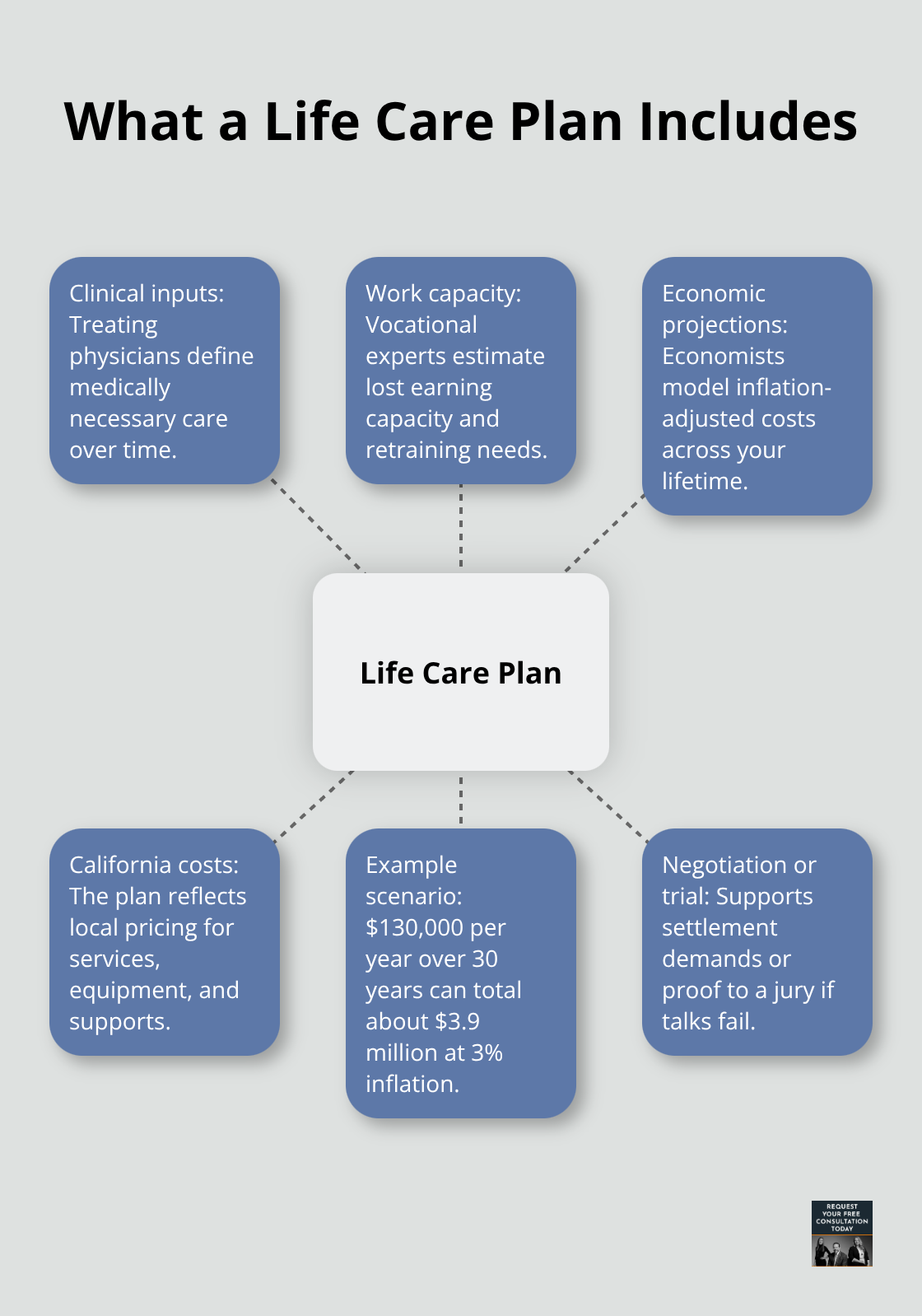
Life care planning transforms your medical needs into a detailed financial strategy. A life care plan itemizes your expected medical needs decade by decade, factoring in your age, injury severity, and local California costs. Treating physicians provide the clinical foundation, vocational experts calculate lost earning capacity if you cannot work, and economists project inflation-adjusted costs over your lifetime. For a 35-year-old with a spinal cord injury requiring $130,000 annually in care, that totals potentially $3.9 million in future costs over 30 years when inflation runs 3 percent annually. This figure shocks most accident victims, but it represents what you need to demand from insurance companies or prove to a jury if settlement talks fail.
Government Programs That Fill Insurance Gaps
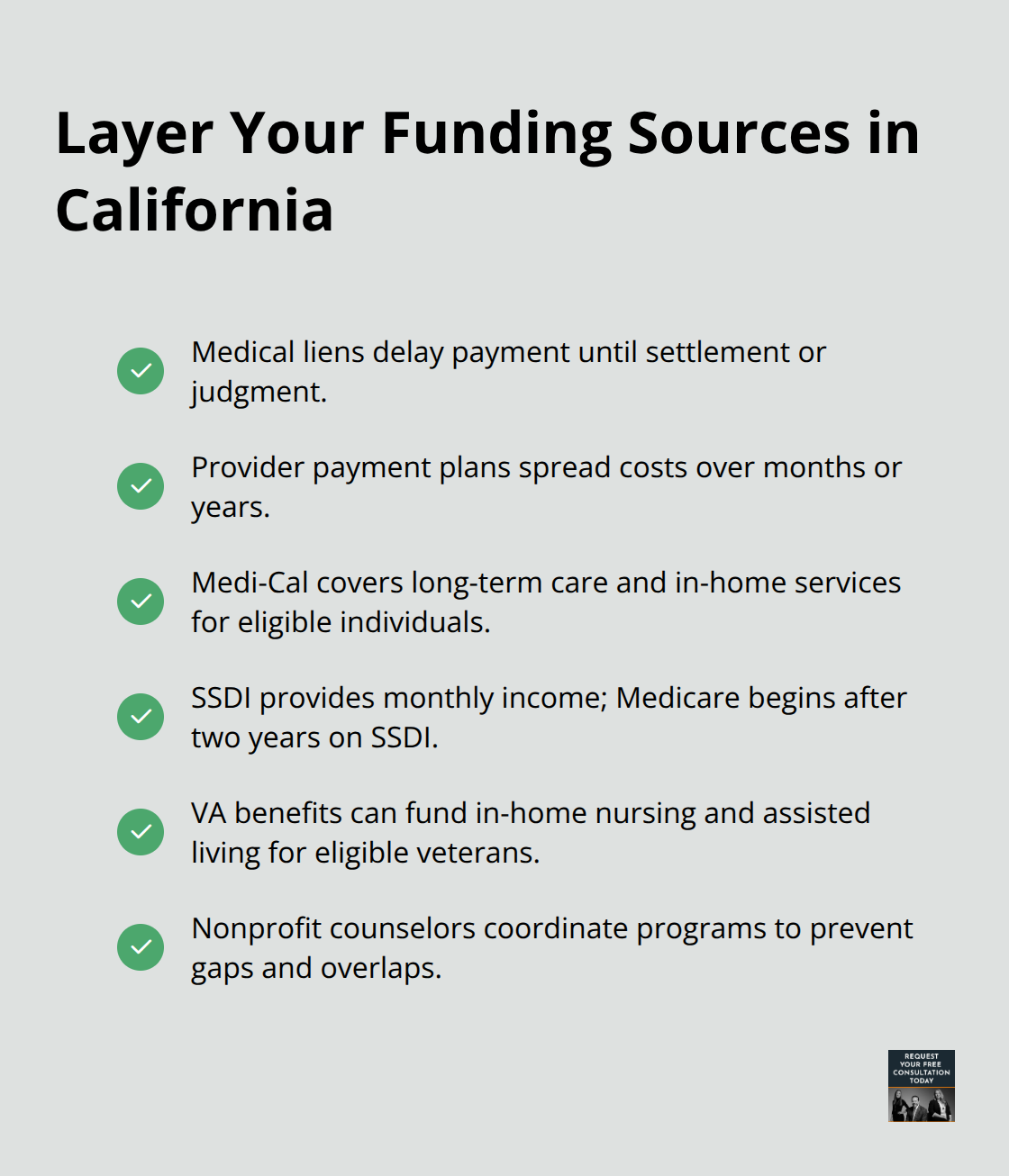
Government programs address critical gaps that private insurance will not cover. Medicaid, called Medi-Cal in California, pays for nursing home care and in-home services for low-income individuals regardless of age, making it essential if your accident depletes your savings. Social Security Disability Insurance provides monthly income if your injury prevents work, and after two years you qualify for Medicare, which covers limited nursing care and rehabilitation. Veterans with service-connected injuries access VA long-term care benefits that often exceed standard insurance coverage.
Negotiating Costs and Pursuing Compensation
Negotiating reduced rates directly with care providers cuts costs substantially-many facilities offer 10 to 20 percent discounts for upfront payment or bundled services. If another party caused your accident, a personal injury claim becomes your primary funding source. Lifetime medical coverage in a settlement isn’t a single payment but a commitment to fund your ongoing care for as long as you need it. Medical records, physician reports, and expert testimony establish your injury’s long-term impact and support compensation that covers decades of care, not just initial hospital bills. Understanding which funding avenue applies to your situation determines whether you recover what you actually owe for your recovery.
Where to Find Financial Help in California
Medical Liens and Payment Plans
Medical lien services exist specifically to bridge the gap between your immediate care needs and your eventual settlement or court award. When you receive treatment after an accident, hospitals and providers can place a lien on your future compensation, meaning they wait for payment until your case resolves rather than demanding immediate payment. This prevents medical debt from crushing you while your claim proceeds. California law allows providers to recover reasonable charges through liens, but the amounts must reflect actual costs, not inflated billing rates. Beyond liens, many California providers offer payment plans that spread costs over months or years, reducing the financial pressure during recovery. Adult day health care costs about $95 daily according to the 2025 CareScout Cost of Care Survey, and facilities often reduce this rate if you commit to extended enrollment or pay upfront.
Medi-Cal: California’s Long-Term Care Foundation
Medi-Cal stands as California’s most powerful resource for long-term care funding, covering nursing home services, in-home care, and rehabilitation for individuals who qualify based on income and assets. Unlike Medicare, which provides limited short-term rehabilitation only, Medi-Cal functions as a true long-term care payer that addresses the years-long expenses most accident victims face. If your accident depletes your savings, Medi-Cal eligibility opens within months, covering costs that private insurance abandoned.
Federal Programs That Layer Additional Coverage
Social Security Disability Insurance provides monthly income starting immediately if your injury prevents work, and after two years on SSDI you automatically qualify for Medicare, layering additional coverage onto your financial foundation. Veterans injured in service-related accidents access VA benefits that often exceed standard insurance, including in-home nursing and assisted living without the restrictive cost caps of private policies.
Coordinating Your Funding Sources
Financial counselors through nonprofit organizations and state agencies help coordinate these programs so benefits do not overlap wastefully or leave gaps uncovered. A structured approach to combining government programs, insurance, and legal compensation transforms what feels like an impossible financial burden into an achievable plan.
An experienced personal injury law firm can direct you to vetted medical lien services that negotiate fair rates with hospitals and rehabilitation facilities, protecting you from predatory pricing while your case develops.
Final Thoughts
Planning for future medical costs in California after an auto accident requires you to coordinate multiple funding sources and understand what each covers. Your immediate hospital bills represent only the first phase of expenses that will likely extend for years or decades. In-home caregiving, assisted living, nursing home care, medical equipment, and home modifications create a financial reality that most accident victims underestimate until they face the actual bills.
The foundation of sound planning rests on three pillars: calculating your realistic long-term needs through life care planning, identifying which insurance and government programs apply to your situation, and securing legal compensation that reflects your actual lifetime costs. Life care plans transform vague medical needs into specific dollar amounts, allowing you to demand fair settlements or present compelling evidence to juries. Medi-Cal, Social Security Disability Insurance, and Medicare layer additional coverage when private insurance falls short.
Legal representation fundamentally changes your financial outcome because attorneys understand how to coordinate these funding sources and fight for compensation that covers decades of care, not just initial medical bills. Insurance companies count on accident victims accepting settlements far below their actual needs. If you live in Santa Cruz County and face mounting future medical costs in California after an auto accident, contact Schaar & Silva LLP to secure fair compensation and connect with medical lien services that ease your immediate financial burden.
