

An auto accident leaves more than physical marks. The emotional trauma that follows can be just as debilitating as broken bones or whiplash, affecting your sleep, work, and relationships.
At Schaar & Silva LLP, we understand that emotional trauma recovery isn’t separate from your legal case-it’s part of your healing journey. This guide walks you through getting the mental health support you need while your personal injury claim moves forward.
How Trauma Changes Your Body After an Accident
Your Nervous System Stays in Survival Mode
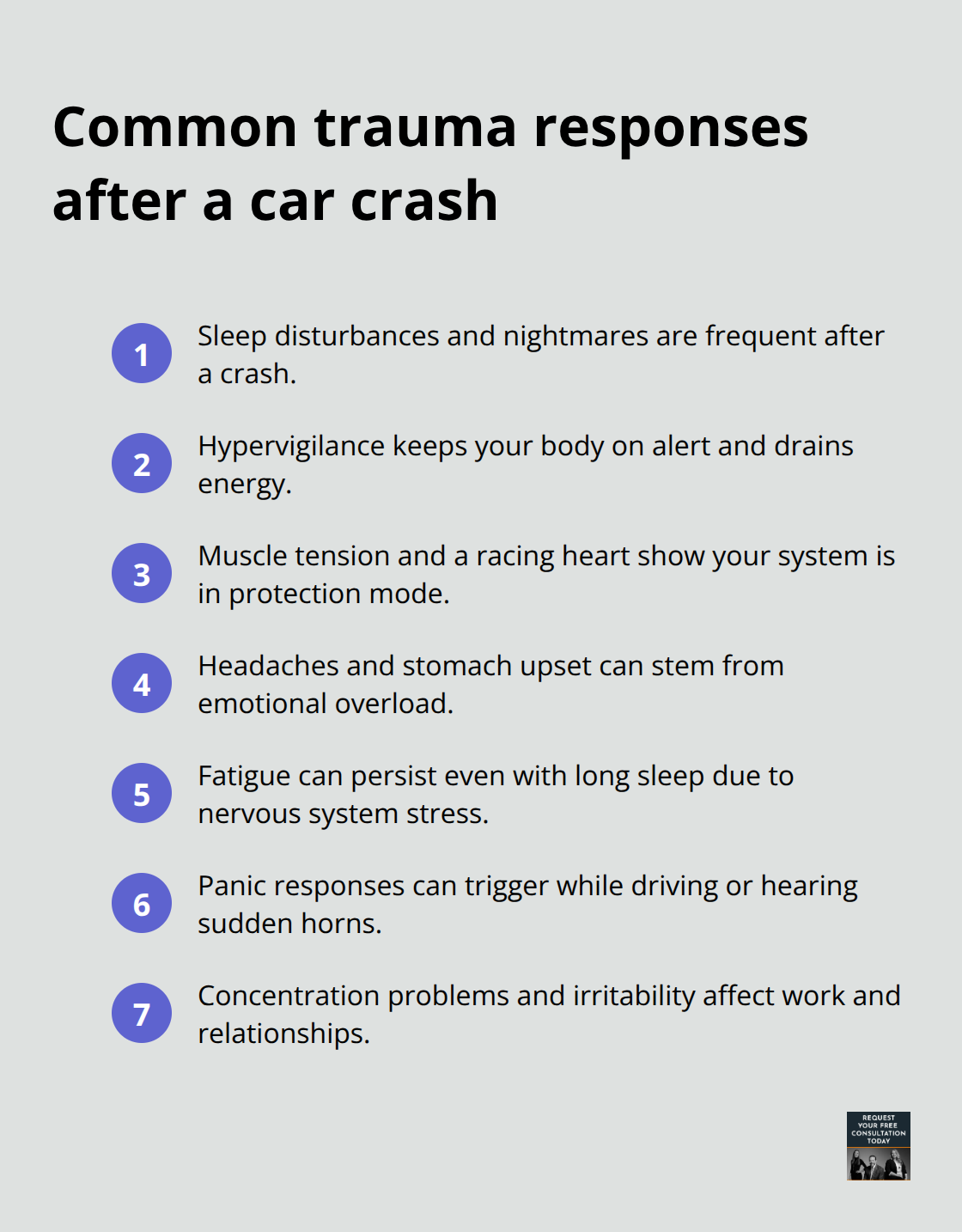
Your nervous system doesn’t distinguish between physical and emotional threats. When you’re in a car accident, your body floods with cortisol and adrenaline, triggering the fight-or-flight response designed to keep you alive. After the crash ends, this survival mode often doesn’t shut off. You might notice your heart races at sudden sounds, your shoulders stay perpetually tense, or you jerk awake from nightmares replaying the collision. These aren’t signs of weakness-they’re your nervous system stuck in protection mode. The National Institute of Mental Health notes that sleep disturbances, hypervigilance, and physical tension are standard trauma responses, not character flaws.
Physical Symptoms That Stem From Emotional Overwhelm
Your stomach might churn without reason, headaches might become daily companions, or you might feel constantly fatigued despite sleeping ten hours. These physical symptoms stem directly from emotional overwhelm, and they’re real enough to derail your work performance and strain your relationships. If you’re driving to work and suddenly panic because a car honks, that’s your amygdala hijacking your rational brain. You can’t think your way out of this response because trauma lives in your body, not just your mind.
How Avoidance Spreads the Problem
The longer you ignore these symptoms, the more entrenched they become. People who avoid seeking help after accidents often find their anxiety spreads to situations unrelated to driving-grocery stores, crowded spaces, being a passenger. Your confidence erodes. Work becomes harder when concentration feels impossible and irritability makes colleagues keep their distance. Some accident survivors report difficulty maintaining employment for months because they can’t focus or manage the emotional weight of their day. If you have a history of anxiety or depression, your risk of developing full post-traumatic stress disorder increases significantly.
Getting Support Protects Your Future
Professional mental health support addresses these symptoms before they compound into months of suffering. When you work with a therapist who understands accident-related trauma, you interrupt the cycle that keeps your nervous system locked in protection mode. This support also strengthens your personal injury claim by documenting the real impact trauma has on your life and work. In Santa Cruz County, we at Schaar & Silva LLP connect clients with mental health professionals who understand accident-related trauma, so you’re not navigating this alone while your case progresses. Getting support now prevents the erosion of your employment stability, relationships, and sense of safety-all while building a stronger foundation for your recovery and your legal claim.
Getting the Right Mental Health Care for Your Recovery
EMDR and CBT: Evidence-Based Paths to Healing
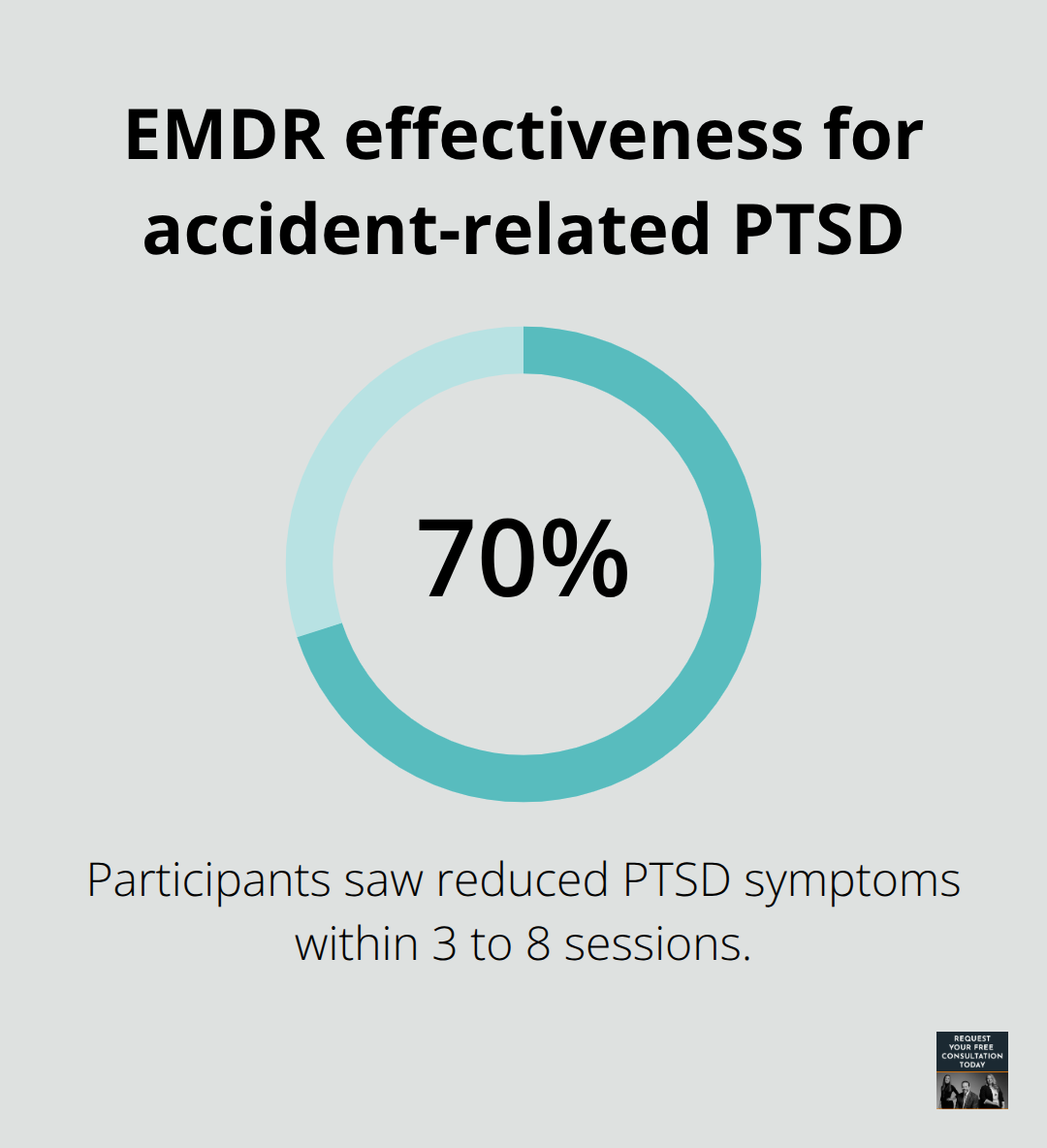
Therapy after a car accident isn’t one-size-fits-all, and choosing the wrong approach wastes time and money you don’t have. EMDR (Eye Movement Desensitization and Reprocessing) has strong research backing for accident-related trauma. A 2018 meta-analysis in the Journal of EMDR Practice and Research showed that EMDR reduced PTSD symptoms in 70 percent of participants within 3 to 8 sessions. The mechanism works because bilateral stimulation during EMDR helps your brain process fragmented traumatic memories stored in your amygdala and limbic system, allowing your nervous system to finally recognize the threat has passed.
Cognitive Behavioral Therapy (CBT) targets the thought patterns trauma creates. After an accident, your brain often locks into beliefs like “I’m not safe in cars” or “I deserve what happened.” A CBT therapist helps you identify these distortions and rebuild realistic thinking. Talk therapy with a trauma-informed counselor provides something equally important: a confidential space where you can process fear and shame without judgment. The American Psychiatric Association emphasizes that establishing safety and trust with your therapist is foundational before deeper processing happens.
Accelerating Your Recovery with Intensive Treatment
If you want faster results, EMDR intensives compress 3 to 6 hours of processing into single-day or multi-day blocks, keeping your brain in the processing zone longer and accelerating progress compared to weekly sessions. This matters because the longer trauma sits unprocessed, the more it calcifies into avoidance patterns that damage your work performance and relationships. In Santa Cruz County, the Planned Parenthood of the Pacific Southwest offers sliding-scale mental health services, and the Santa Cruz Community Health Centers provide trauma-informed care regardless of insurance status.
Connecting Your Treatment to Your Legal Claim
Coordinating your mental health treatment with your legal case requires clear communication between you, your therapist, and your legal team. Your therapist’s documentation of your emotional distress, sleep disruption, and functional impairment becomes critical evidence for your personal injury claim. Insurance companies and opposing counsel pay attention to consistent treatment records that show you sought help promptly and engaged seriously in recovery.
Start by finding a trauma-informed therapist in Santa Cruz County who has experience with accident survivors and is comfortable communicating with legal professionals. When you meet with your therapist, be direct: tell them you’re pursuing a personal injury claim and ask how they document your progress and symptoms. Most therapists understand this isn’t about exaggeration; it’s about creating an accurate record of the real impact trauma has on your functioning. Medical bills from your therapy sessions are part of your damages claim, and detailed clinical notes showing symptom improvement or setbacks strengthen your credibility.
Addressing the Stigma Around Mental Health Treatment
Some accident survivors worry that seeking mental health treatment makes them look weak in their case, but the opposite is true. Judges and juries understand that intelligent people take action when their nervous system is dysregulated after trauma. What looks weak is pretending you’re fine while your work performance crumbles and your relationships suffer. Documented mental health treatment demonstrates that you took your recovery seriously and invested in your healing from the start.
Your therapist’s records also protect you from insurance company tactics that minimize your injuries. When you have consistent, professional documentation of your emotional trauma (not just your physical injuries), you build a stronger foundation for fair compensation. The connection between your mental health treatment and your legal claim isn’t about inflating damages-it’s about ensuring the full scope of your injuries receives proper recognition and compensation. As your case moves forward, this documentation becomes the evidence that transforms abstract suffering into concrete damages your claim can address.
Balancing Healing with Your Personal Injury Claim
How Your Therapy Records Become Legal Evidence
Your therapy sessions create a paper trail that transforms emotional suffering into documented damages your claim can address. Every therapist note, every treatment receipt, and every progress report becomes evidence that the accident caused real harm requiring professional intervention. Insurance adjusters and opposing counsel scrutinize medical records constantly, so the quality of your mental health documentation directly impacts what you recover.
Start documenting from your first appointment. Ask your therapist to note specific symptoms, how they interfere with work and relationships, and measurable changes as you progress through treatment. If you had insomnia before therapy and now sleep five nights weekly instead of one, that’s concrete progress worth documenting.
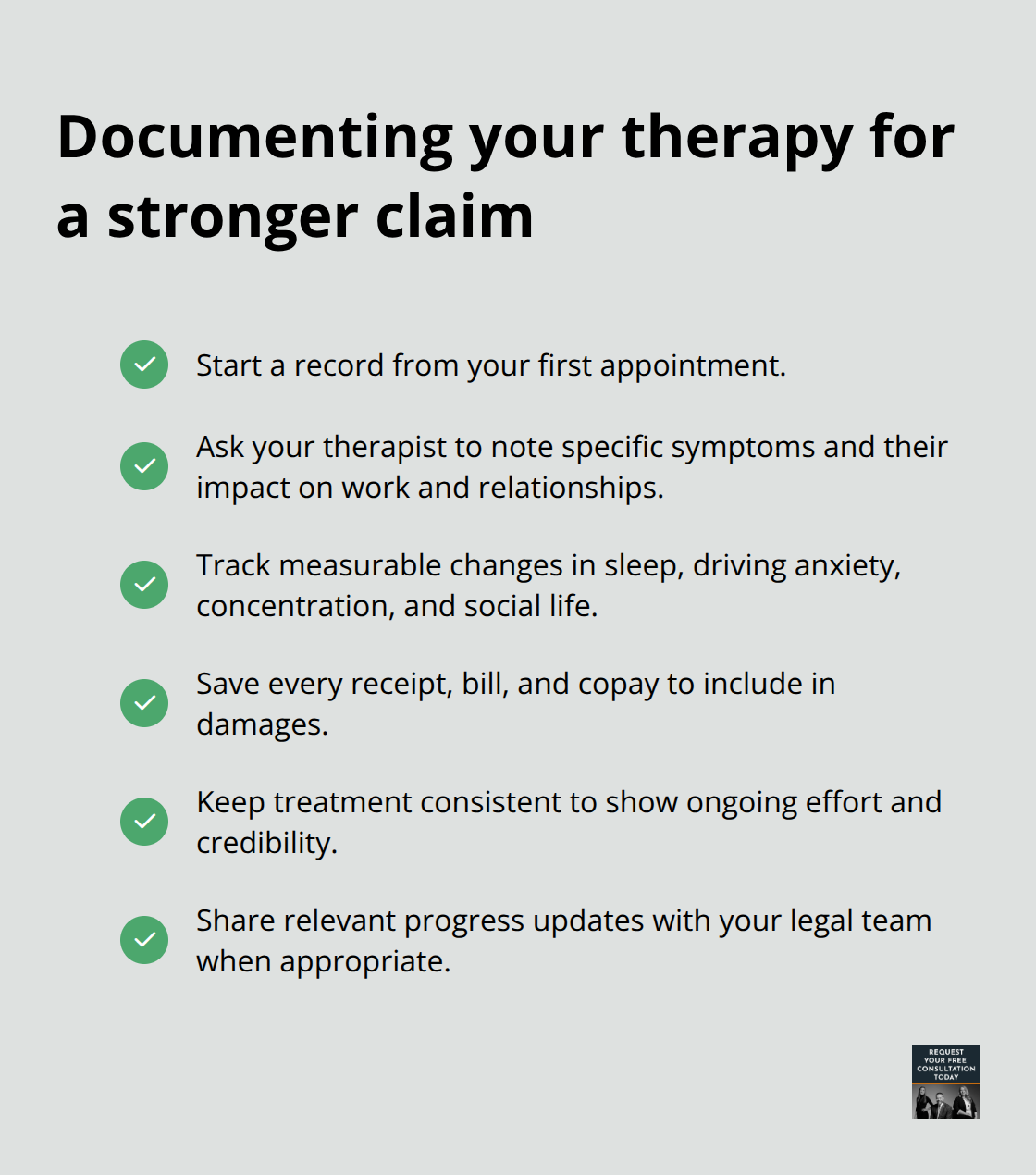
The same applies to anxiety levels during driving, concentration at work, or ability to attend social events. Therapy notes that show you couldn’t drive on highways for three months but can now handle them with minor anxiety create a timeline that demonstrates real improvement and real initial harm.
Insurance companies pay attention to consistency and specificity, not vague claims about emotional distress. When your therapist documents that you missed eight days of work due to anxiety symptoms or that your relationship deteriorated because you couldn’t tolerate being a passenger, those details strengthen your claim far more than stating you feel traumatized.
Managing Treatment Costs During Your Case
Mental health treatment costs are part of your damages claim, meaning the defendant’s insurance should ultimately cover therapy expenses. However, you typically pay out of pocket initially. Some therapists in Santa Cruz County offer sliding scale rates based on income, and community health centers provide trauma-informed care on a fee schedule tied to what you earn.
If cost is a barrier, ask your therapist whether they accept payment plans or whether they can document your financial constraints so those become part of your claim narrative. Keep detailed records of every therapy bill, every copay, and every out-of-pocket expense because these receipts become part of your damages calculation. Don’t let financial stress derail your healing by skipping sessions or choosing cheaper providers who lack trauma training. The cost of inadequate therapy compounds when your symptoms worsen and your case drags on. Invest in quality treatment now and document every penny so your claim reflects the true cost of your recovery.
Separating Legal Stress From Your Healing Work
Staying psychologically present during your case means compartmentalizing legal stress so it doesn’t hijack your therapy progress. Your therapist’s job is healing your nervous system, not managing your case strategy, so resist the temptation to use therapy sessions as case strategy discussions. Instead, maintain separate conversations with your legal team about case timelines, settlement negotiations, and legal decisions.
When legal stress creeps into your daily life, bring it to your therapist as a symptom affecting your recovery, not as a problem requiring legal analysis. The more you can keep your healing work focused on nervous system regulation and processing trauma, the faster you progress. This separation also protects your therapeutic relationship because judges and juries understand that genuine therapy focuses on healing, not case advantage.
If you find yourself unable to concentrate on recovery because legal anxiety dominates your thoughts, that’s a sign to increase check-ins with your legal team so you feel informed and secure about your case’s direction. Knowledge reduces anxiety more than avoidance does, so staying informed about realistic case timelines and next steps actually supports your mental health better than pretending the case doesn’t exist.
Final Thoughts
Emotional trauma recovery after a car accident moves forward alongside your legal case, not separate from it. Your healing directly strengthens your claim because documented mental health treatment proves the accident caused real, measurable harm. When you invest in therapy now, you protect both your nervous system and your legal standing while Santa Cruz County resources like the Santa Cruz Community Health Centers and Planned Parenthood of the Pacific Southwest provide trauma-informed care regardless of insurance status.
We at Schaar & Silva LLP connect clients with mental health professionals who understand accident-related trauma and document your progress in ways that strengthen your claim. We also assist with medical bill management through lien services, so treatment costs don’t derail your healing while your case resolves. Your emotional distress carries the same weight as your physical injuries, and your claim reflects that reality.
Call a trauma-informed therapist this week and schedule your initial appointment. Tell them how the accident affected your sleep, work, and relationships, then keep detailed records of your treatment. Contact our legal team so your healing and your case move forward in coordination.
