

A car accident can leave you injured, confused, and unsure where to turn for help. The first hours and days after a crash are critical for protecting your health and your legal rights.
At Schaar & Silva LLP, we’ve helped countless people in Santa Cruz County, Sacramento, and Oakland navigate car accident injury resources and recover what they’re owed. This guide walks you through the immediate steps, medical care options, and compensation claims you need to know about.
What to Do First at the Crash Scene
The moments right after a crash determine what happens next for your health and your claim. The National Safety Council reported that motor vehicle crash deaths exceeded 40,000 in 2022, and even minor crashes can cause injuries that don’t show up immediately. Your first priority is safety-move to a safe location away from traffic if you can do so without worsening injuries.
Document Everything at the Scene
Start recording the accident immediately. Use your phone to photograph the accident scene from multiple angles, capturing vehicle damage, road conditions, traffic signals, street signs, and the overall layout. Take videos that show the sequence of the crash location and any visible injuries. These images become critical evidence later and often matter more than what you remember in weeks to come.
Collect information from everyone involved in the crash. Write down their names, phone numbers, addresses, and insurance information. Ask for their driver’s license number and license plate number. If witnesses are present, collect their contact details immediately-their accounts fade from memory quickly, and you may need them for your claim.
File a Police Report
Call police to file a report, even for minor crashes. The police report creates an official record that insurers and attorneys rely on to establish what happened. When the officer arrives, stick to factual statements about what occurred and your injuries. Do not discuss fault or apologize, as these statements can be used against you later.
Notify Your Insurance Company
Contact your insurance company within 24 hours of the crash. Provide them with the accident report number and the information you collected at the scene. Keep records of all communications with your insurer, including dates, times, and names of representatives you speak with.
Seek Medical Attention Immediately
Follow your doctor’s advice to seek medical attention right away, even if you feel fine-adrenaline can mask serious injuries. Early medical documentation creates a clear link between the crash and your injuries, which strengthens any future claim. Your medical records form the foundation for what comes next in your recovery and any compensation claim.
Getting Medical Care Right After Your Accident
Seek Treatment Immediately After Your Crash
After a crash, your medical decisions in the first days shape your entire recovery. The National Safety Council data shows that even minor crashes trigger long-lasting neck or back pain, yet many people delay treatment because they feel okay initially. Adrenaline masks serious injuries, so seek medical care immediately regardless of how you feel. If you have severe pain, loss of consciousness, difficulty breathing, or visible injuries, go to the emergency room or call 911. For less obvious injuries, visit your primary care doctor within 24 to 48 hours.
This early documentation creates a medical record linking your crash to your injuries, which becomes essential if you later pursue compensation. Your doctor will order imaging like X-rays or MRI scans to identify fractures, soft tissue damage, or internal injuries that aren’t visible. Keep copies of all medical reports, test results, and doctor’s notes in one organized file. Insurance companies and attorneys review these records carefully, so completeness matters.
Manage Pain and Support Healing
Cold therapy within the first 48 hours reduces swelling, then heat therapy helps relax muscles and improve circulation under your doctor’s guidance. Follow your prescribed treatment plan closely, attending all follow-up appointments and rehabilitation sessions without skipping. Consistent physiotherapy restores range of motion and strengthens injured areas far better than sporadic visits.
Rest is important, but complete immobility slows recovery, so balance rest with gentle movement as your doctor advises. Nutrition supports healing, so try protein, antioxidants, and healthy fats while limiting sugar and processed foods. Stay hydrated throughout recovery. If pain persists or new symptoms emerge, contact your doctor immediately rather than assuming it will resolve on its own.
Document and Manage Medical Expenses
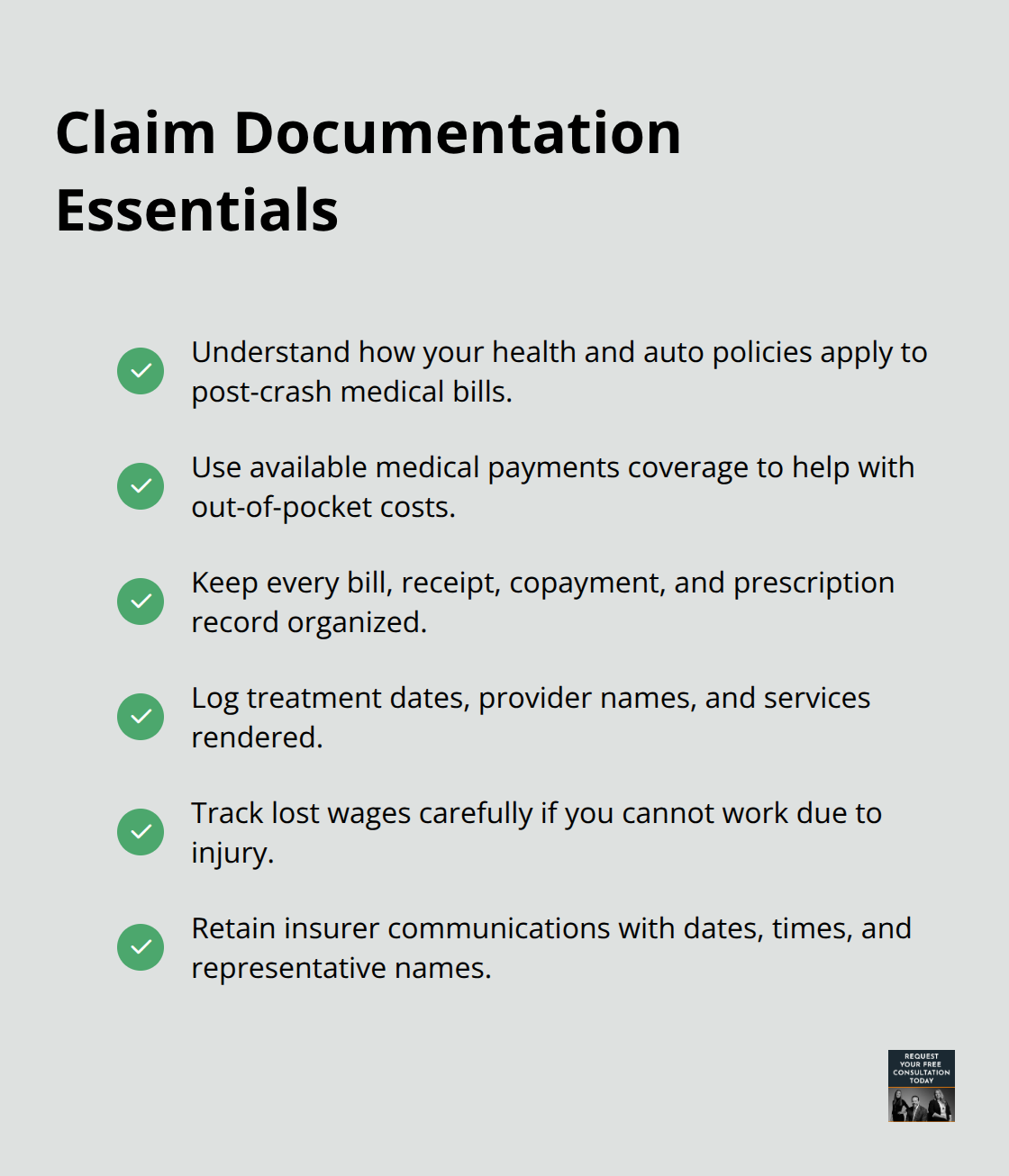
Insurance coverage for medical bills varies significantly, so understand your policy before bills arrive. Your health insurance covers treatment costs, but your auto insurance may also provide medical payments coverage up to a specified limit. Document every medical expense, including bills, receipts, copayments, and prescription costs.
The legal team at Schaar & Silva LLP can direct you to medical lien services that facilitate payment of your bills until your case resolves, removing financial stress while you heal. Keep detailed records of treatment dates, provider names, and services rendered. If you’re unemployed due to injury, document lost wages carefully. These records strengthen any future claim for compensation and help ensure you receive fair reimbursement for all accident-related costs.
Your medical documentation now forms the foundation for understanding what damages you can claim and how to pursue compensation for your losses.
What Damages Can You Claim After a Crash
After your medical care stabilizes and you have documented bills and lost wages, understanding what you can claim becomes your next priority. California law allows you to recover economic damages, which include medical expenses, lost income, property damage to your vehicle, and costs for future medical care related to your injury. You can also claim non-economic damages for pain and suffering, emotional distress, loss of enjoyment of life, and permanent scarring or disfigurement.
Calculate Your Economic Damages
The value of your claim depends on the severity of your injuries, how long recovery takes, and whether the injury affects your ability to work long-term. A brain injury that requires ongoing therapy and limits your career options carries far higher damages than a minor soft tissue injury. Start calculating your claim by adding up every medical bill, every day of missed work, and every cost directly tied to the crash. Then assess the impact on your daily life-can you exercise, work your job, or spend time with family the way you did before? These factors determine the non-economic portion of your claim.
Understand Your Two-Year Filing Deadline
California gives you two years from the date of the crash to file a personal injury lawsuit, but this deadline is absolute and courts will not extend it. However, waiting two years is a serious mistake because evidence fades, witness memories blur, and insurance companies become harder to negotiate with over time. Contact an attorney within the first few weeks after your crash, while details remain fresh and before the at-fault party’s insurance company pressures you into a low settlement. Many people attempt to settle directly with the other party’s insurer and accept inadequate offers because they lack legal guidance. Insurance adjusters are trained to minimize payouts, and they count on injured people to accept whatever they offer first. Filing a claim within 30 to 90 days of your crash gives you leverage and time to build a strong case.
Work With an Attorney to Maximize Your Recovery
A personal injury attorney handles the negotiation and legal work so you can focus on healing instead of fighting insurance companies. Your attorney obtains your medical records, police reports, and witness statements to build evidence of liability and damages. If the insurer refuses a fair settlement, your attorney files a lawsuit and prepares your case for trial, which forces them to take your claim seriously. Most cases settle before trial because insurers know a jury will award far more than their initial offer once they see the full extent of your injuries and losses. At Schaar & Silva LLP, we work on contingency, meaning you pay nothing unless we recover compensation for you, so there is no financial risk in pursuing your claim. Our team can also direct you to medical lien services that facilitate payment of your bills until your case resolves, removing financial stress while you heal.
Final Thoughts
Recovery after a car accident requires you to coordinate medical care, manage expenses, and pursue fair compensation for your losses. The car accident injury resources available throughout Santa Cruz County, Sacramento, and Oakland span emergency services, ongoing medical treatment, mental health support, and legal guidance. Your immediate actions at the crash scene and your commitment to following medical advice directly shape both your physical recovery and the strength of any compensation claim.
You must prioritize three parallel efforts to move forward effectively. First, commit to your medical recovery by attending all appointments, following your doctor’s treatment plan, and documenting every expense and symptom. Second, organize your records systematically so you have clear evidence of your injuries, costs, and impact on your life. Third, contact a personal injury attorney early rather than waiting months or years, because evidence fades and insurance companies exploit delays to minimize settlements.
We at Schaar & Silva LLP handle the legal complexity while you focus on healing. We direct you to medical lien services that pay your bills until your case resolves, removing financial pressure during recovery (and we evaluate your property damage claim as well). Contact our team to discuss your case at no cost and with no obligation-we work on contingency, meaning you pay nothing unless we recover compensation for you.
