

Car accidents leave more than physical injuries. The emotional aftermath can be just as debilitating, affecting your ability to work, sleep, and trust being on the road again.
Oakland emotional support services exist specifically to help survivors process trauma and rebuild their lives. At Schaar & Silva LLP, we recognize that mental health recovery is inseparable from your overall healing and your legal claim.
This guide connects you with real resources in Oakland and shows you how to document psychological harm for your case.
How Car Accidents Trigger Lasting Psychological Harm
Car crashes produce immediate physiological stress responses that can solidify into long-term mental health conditions. Within hours of a collision, your nervous system enters hyperarousal-your heart races, muscles tense, and your brain floods with cortisol and adrenaline. For most people, these symptoms fade within days. For crash survivors, they persist. Anxiety about driving resurfaces months later.
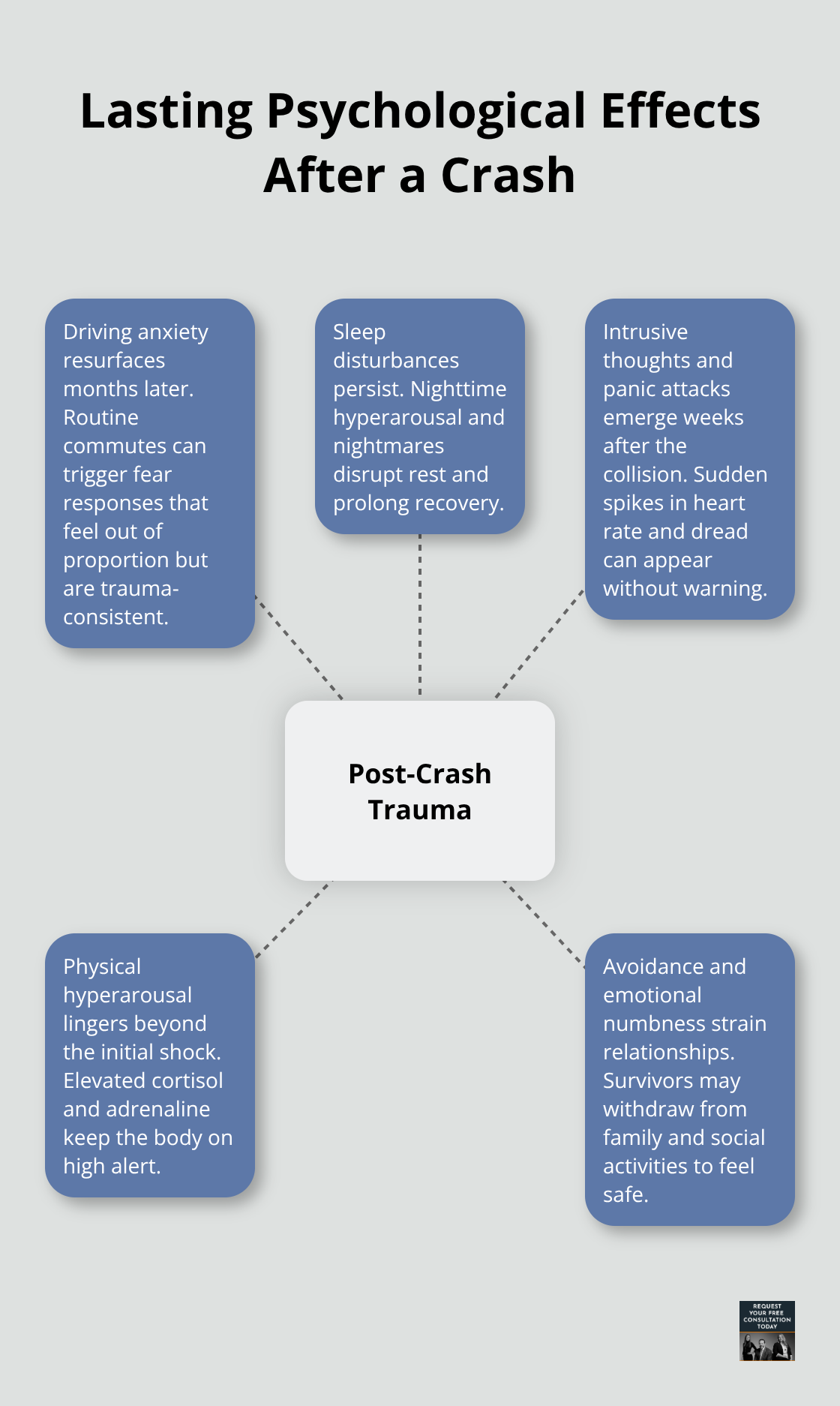
Sleep disturbances continue for years. The 988 Suicide & Crisis Lifeline reports that crash survivors frequently contact their service with intrusive thoughts and panic attacks weeks after an accident, indicating that emotional trauma from collisions is neither rare nor temporary.
PTSD and Trauma Responses After Crashes
Post-traumatic stress disorder affects a measurable portion of crash survivors. You might experience flashbacks triggered by specific sounds-a car horn, screeching tires-that transport you mentally back to the moment of impact. Hypervigilance while driving becomes exhausting; you scan for hazards obsessively, grip the steering wheel tightly, and feel genuine fear during normal traffic. Some survivors avoid driving altogether, which cascades into job loss, social isolation, and financial strain. Other common responses include intrusive memories during quiet moments, avoidance of routes near the accident site, and emotional numbness that makes connecting with family and friends feel impossible. These aren’t character flaws or weakness; they’re documented trauma responses that mental health professionals recognize and treat.
Physical Symptoms Reveal Deeper Emotional Injury
Your body communicates emotional distress through concrete symptoms. Insomnia becomes chronic. Headaches intensify. Digestive problems emerge. Some survivors experience panic attacks so severe they mistake them for heart attacks and visit emergency rooms repeatedly. These physical manifestations matter legally and medically. When you document emotional harm for a personal injury claim, these tangible symptoms strengthen your case significantly. Medical records showing sleep disturbance, anxiety medication prescriptions, or therapy sessions provide evidence courts recognize. Without professional mental health treatment, you lose this documentation entirely, weakening any future claim for emotional distress damages.
Why Documentation Starts Now
The connection between your crash and your emotional distress must be clear and provable. Courts require concrete evidence beyond personal belief or feelings. Medical records, treatment from mental health professionals, and documentation of physical symptoms like panic attacks or sleep problems establish this link. Witness statements from family or friends who observed the impact can support your claim. A personal journal of your thoughts, moods, and symptoms becomes valuable evidence. The earlier you seek professional support and begin this documentation, the stronger your position becomes when pursuing compensation for emotional distress.
Oakland counseling centers and trauma specialists stand ready to help you process what happened while simultaneously creating the medical evidence your legal claim requires.
Where to Find Trauma Support in Oakland
Specialized Trauma Providers in Your Area
Oakland crash survivors need access to mental health providers who understand accident-related trauma. The Bay Area offers organized emotional support through multiple channels, though finding the right fit requires knowing what to look for. Evidence-based therapies like trauma-focused cognitive behavioral therapy and EMDR specifically address crash-related PTSD and intrusive thoughts. Access Institute, Community Counseling, and Berkeley Therapy Institute serve Oakland residents with trauma-informed approaches. When selecting a provider, prioritize licensed clinicians with documented experience treating accident survivors rather than general anxiety practitioners. Ask directly whether they use trauma-focused CBT or EMDR, as these therapies show measurable effectiveness for post-crash symptoms.
Navigating Insurance and Costs
Many Oakland facilities accept Medi-Cal and offer sliding-scale fees, which removes financial barriers during recovery. Insurance verification happens during intake, so bring your policy information to your first appointment.
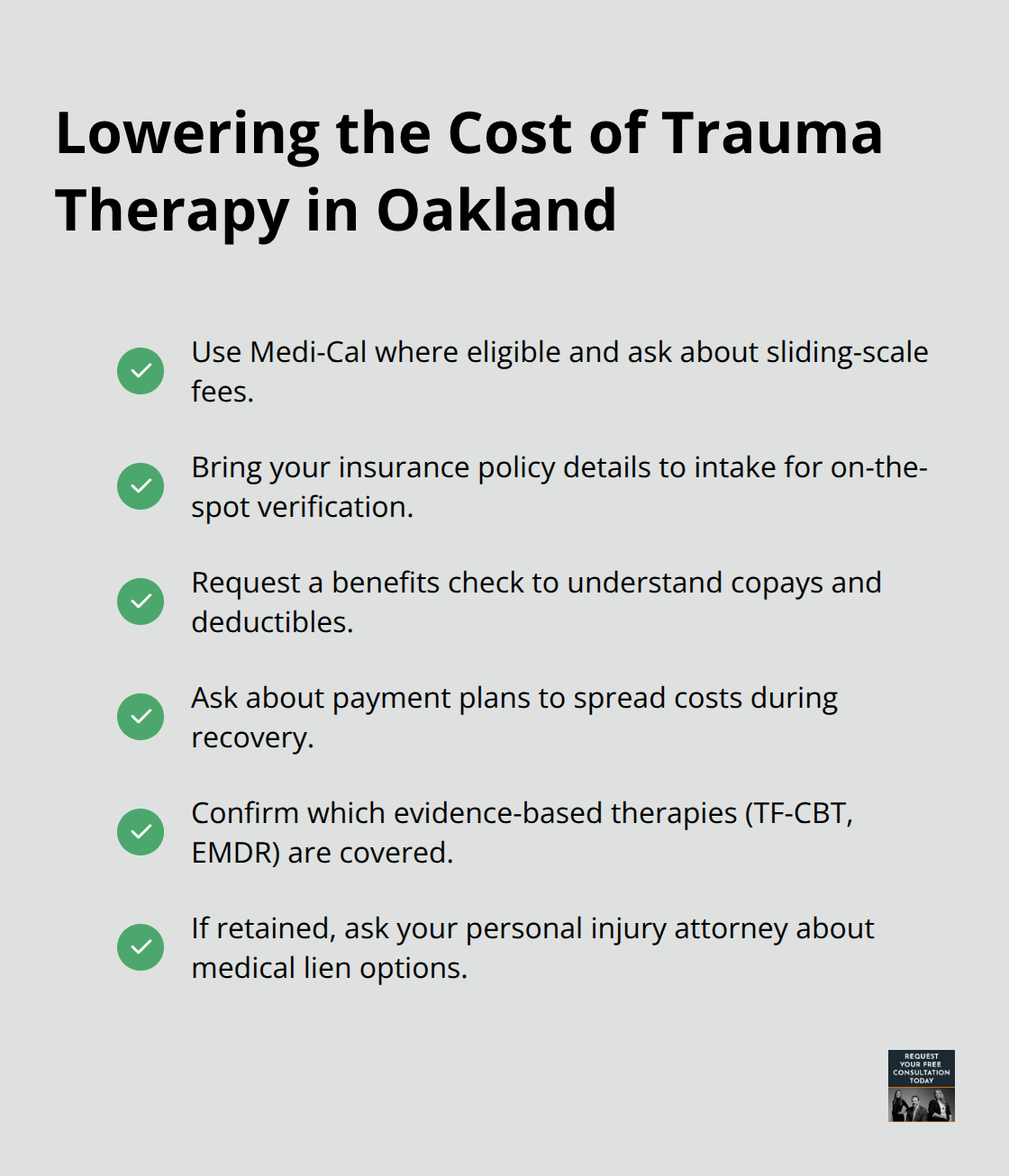
Staff members at these centers help explore payment options and perform benefit checks to reduce out-of-pocket costs. If you work with a personal injury attorney, they can connect you with medical lien services that facilitate bill payment until your case resolves.
24/7 Crisis Support When You Need It Most
Crisis support operates around the clock for survivors in acute distress. The 988 Suicide & Crisis Lifeline handles crash-related panic, suicidal thoughts, and acute anxiety 24/7 through call or text, providing immediate intervention when symptoms spike. Contra Costa Crisis Center provides free individual and group support across the region. These services activate instantly when you experience overwhelming emotional responses.
Building Your Support Network
Local support groups connect you with other survivors who have navigated the same road. Families for Safe Streets emphasizes peer support and turns grief into action, offering both in-person gatherings and online community where isolation loses its grip. Building your emotional support network means combining immediate crisis access with ongoing therapy and peer connection. Document every mental health appointment and every symptom you experience during this period, as this record becomes essential evidence if you pursue a personal injury claim for emotional distress damages.
Your recovery strengthens when you prioritize professional mental health care from the moment the crash occurs-and this same documentation protects your legal interests. The next section shows you exactly how to organize this evidence for your claim.
Building Your Evidence Trail
Emotional distress damages hinge entirely on documentation. Courts do not award compensation based on your word alone; they require concrete proof that the crash caused measurable psychological harm. This means every therapy session, every panic attack, and every sleepless night needs to be recorded in ways that courts recognize. Start this process immediately after your accident, not months later when memories fade and gaps in your timeline become obvious.
Medical Records Create Legal Foundation
Medical records from licensed mental health professionals carry far more weight than personal statements. When a therapist documents that you experience intrusive flashbacks or that your sleep disturbance began the week after your crash, that clinical note becomes evidence. Insurance companies and judges understand medical language; they trust licensed providers. Access Institute, Community Counseling, and Berkeley Therapy Institute all create detailed clinical records that establish the connection between your accident and your symptoms.
Request copies of every assessment, progress note, and treatment plan. These documents show the severity of your distress, how long it persists, and whether evidence-based treatments like trauma-focused cognitive behavioral therapy or EMDR are necessary. Without these records, you have no proof. Licensed professionals know how to document thoroughly without compromising the therapeutic relationship. They document for your treatment needs first, but thorough documentation serves both your recovery and your legal interests.
Your Personal Trauma Journal as Evidence
Your personal trauma journal operates as a powerful legal tool. This is your raw account of what you experience day-to-day: the panic attacks that strike without warning, the routes you avoid, the relationships strained by your emotional withdrawal. Write specific details, not vague observations.
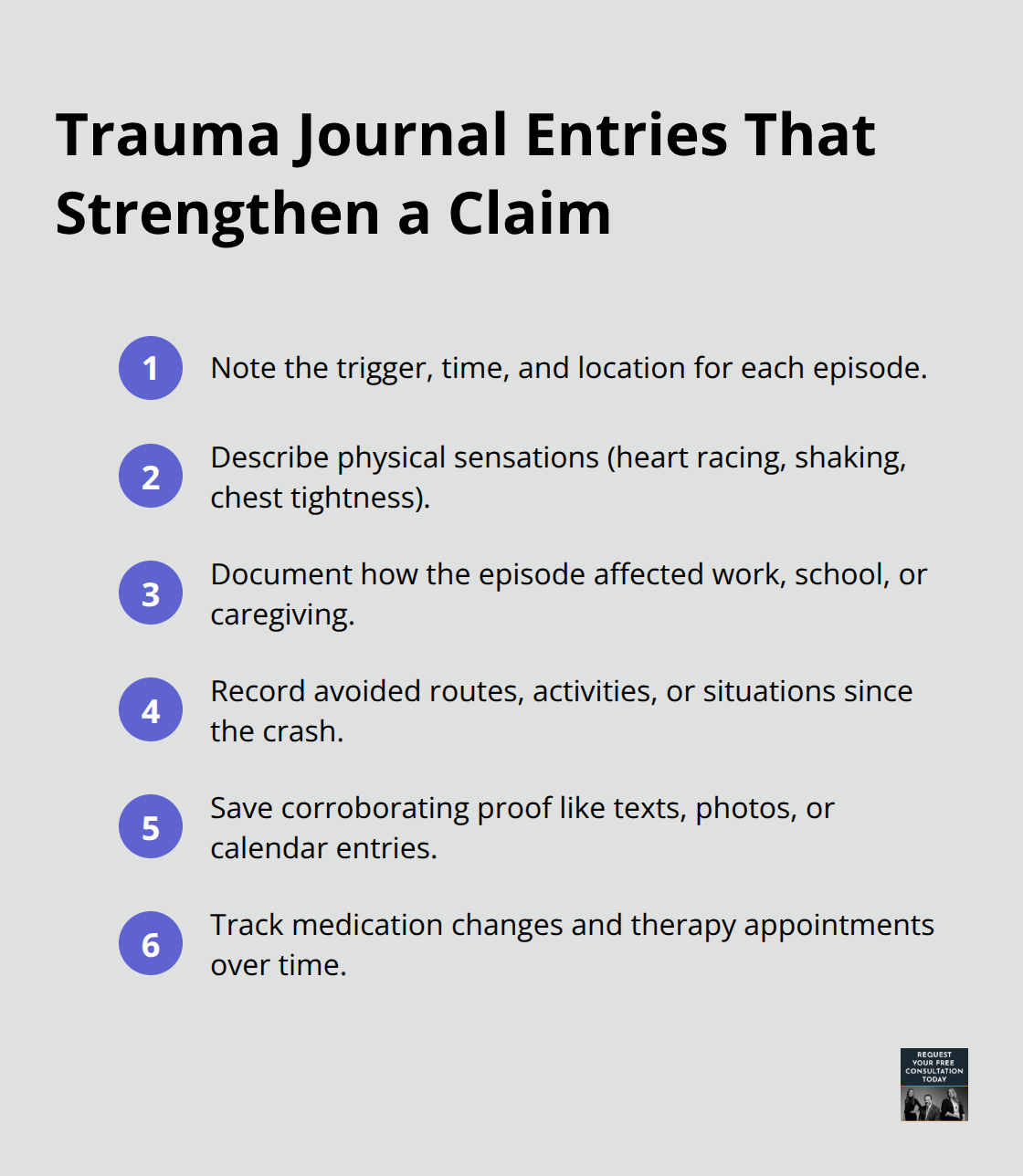
Instead of saying you felt anxious, describe the physical sensations, the time of day, what triggered the episode, and how it affected your ability to work or care for family.
Courts recognize that real people experiencing real trauma maintain these records for their own coping, not for legal purposes, which makes them credible. Combine this journal with symptom documentation: photographs of any visible stress responses, text messages to friends describing your distress, or calendar entries marking medication changes.
Physical Symptoms Strengthen Your Claim
Physical symptoms strengthen your case dramatically. If insomnia led you to purchase prescription sleep aids, that pharmacy record proves your distress. If panic attacks landed you in an emergency room, that hospital visit creates a timestamped medical record. These tangible manifestations (sleep disruption, medication use, emergency visits) transform emotional distress from an invisible injury into a legally compensable harm.
Work directly with your mental health provider to ensure they understand you may pursue a personal injury claim. Understand that thorough documentation serves both your recovery and your legal interests simultaneously. This approach creates an undeniable chain of evidence that demonstrates the crash’s impact on your psychological well-being.
Final Thoughts
Your recovery after a car crash demands immediate action on two fronts: accessing mental health treatment and documenting your emotional distress for legal purposes. Oakland emotional support services provide the professional care you need to process trauma and rebuild your life, while simultaneously creating the medical records that strengthen any claim for damages. The providers, crisis lines, and support groups outlined in this guide exist specifically to help you navigate this difficult period.
Starting therapy immediately after your accident matters far more than waiting until symptoms worsen. Medical records, treatment documentation, and your personal trauma journal form an undeniable chain of evidence that courts recognize and value. We at Schaar & Silva LLP understand that emotional trauma deserves the same legal attention as physical injuries, and our team connects crash survivors with mental health specialists while helping you navigate financial barriers that often prevent people from seeking care.
Your next step is reaching out to one of these services today, not tomorrow. The sooner you begin treatment and documentation, the stronger your position becomes in both your recovery and any legal action you pursue.
