

A DUI crash in California can leave you facing serious injuries, mounting medical bills, and uncertainty about your rights. You may be entitled to compensation from the at-fault driver, even while criminal charges are being handled separately.
We at Schaar & Silva LLP help accident victims understand what they can recover and how to move forward. This guide walks you through your legal options and the compensation available to you.
What Is a DUI Crash Under California Law
A DUI crash in California occurs when a driver operates a vehicle while impaired by alcohol, drugs, or both. Under California Vehicle Code Section 23152, it’s illegal to drive with a blood alcohol concentration of 0.08% or higher if you’re 21 or older. Commercial drivers face a 0.04% limit, and drivers under 21 cannot have any detectable alcohol. The California Highway Patrol reported that alcohol-impaired driving caused approximately 10,500 crashes statewide in 2023, resulting in over 3,500 injuries. For your compensation claim, what matters is that the at-fault driver violated these laws and created liability-regardless of whether criminal charges are filed or prosecuted. Many victims mistakenly believe they must wait for a criminal conviction before pursuing civil compensation. That’s incorrect. You can file a personal injury claim even if criminal proceedings are still ongoing or if charges are dropped entirely.
How Blood Alcohol Testing Works in Your Case
When police suspect a DUI, they use breathalyzers or blood tests to measure impairment. Breathalyzer results can be challenged in court if the device wasn’t properly calibrated, but blood tests are generally more accurate and harder to dispute. If the at-fault driver refused testing, California’s implied consent laws mean their refusal can be used against them in your civil case. This refusal often strengthens your position because juries view it unfavorably. Police reports, test results, and arrest records all establish that the driver was impaired, which directly supports your right to compensation. Request these records from law enforcement as soon as possible after the crash.
Why DUI Crashes Create Stronger Legal Claims
A DUI collision differs fundamentally from a standard traffic accident because the driver’s impairment establishes negligence automatically. In typical accident cases, you must prove the other driver was careless. In DUI cases, the violation itself proves negligence. Some jurisdictions allow punitive damages in DUI cases when the driver’s conduct was particularly reckless (though California limits these in most situations). The fact that a DUI occurred makes your claim significantly stronger and often leads to faster settlements. Insurance companies recognize the liability is clear and the damages are legitimate, so they offer fair compensation quickly rather than fight the claim.
Your understanding of how DUI liability works positions you to take the right steps next. The compensation available to you depends on the specific injuries and losses you suffered in the crash.
What You Can Actually Recover After a DUI Crash
Medical Treatment and Documentation
After a DUI collision, you have the right to immediate medical treatment, and documenting every aspect of that treatment matters enormously. From the moment the ambulance arrives, request copies of all medical records, imaging results, emergency room reports, and physician notes. California law requires healthcare providers to maintain these records for at least seven years, so obtain them within 30 days of your initial visit while details remain fresh and facilities still have active files. The National Highway Traffic Safety Administration reports that alcohol-impaired crashes cost the U.S. economy approximately $44 billion annually, with average hospitalization costs exceeding $35,000 per victim. Your medical documentation becomes the foundation of your compensation claim because insurance adjusters evaluate settlements based on documented injuries and treatment costs. Photograph your injuries at multiple stages of recovery, keep receipts for every medication and medical device, and maintain a dated log of symptoms and how they affect your daily life. This documentation directly translates into compensation dollars.
Filing Your Personal Injury Claim
You have the right to file a personal injury claim against the at-fault driver’s insurance company, and you should initiate this within 30 days of the crash. California’s statute of limitations allows two years from the accident date to file a lawsuit, but waiting beyond 30 days weakens your claim because witnesses’ memories fade and evidence deteriorates. The at-fault driver’s liability is already established by the DUI violation, which means the insurance company cannot dispute fault. Instead, they will only debate the value of your damages. This distinction gives you significant leverage in settlement negotiations because the insurer knows liability is clear and fighting the claim will cost them more than paying it.
Quantifying Your Losses
You have the right to pursue compensation that covers medical expenses both past and future, lost wages during recovery, and pain and suffering damages. If you earned $60,000 annually and missed four months of work, you can claim $20,000 in lost wages. Future medical costs matter equally if your injuries require ongoing physical therapy, medications, or specialist visits projected over the next several years. Insurance companies often undervalue pain and suffering damages, so understanding how courts calculate these amounts protects you from accepting inadequate offers. The specific compensation you receive depends on the severity of your injuries, the length of your recovery, and the impact on your earning capacity-factors that vary significantly from case to case.
Your documented losses and established liability position you to negotiate from strength. The next step involves understanding exactly what compensation categories apply to your situation and how to calculate each one accurately.
What Your DUI Crash Compensation Actually Covers
Medical bills from a DUI collision add up fast, and California law entitles you to recover every documented expense. The National Institute on Alcohol Abuse and Alcoholism reports that alcohol-related traffic crashes cost victims an average of $44,000 per incident when accounting for medical treatment, lost income, and property damage. Your compensation covers emergency room visits, hospital stays, surgery, diagnostic imaging, rehabilitation, prescription medications, and medical equipment like braces or mobility aids.
Medical Expenses You Can Claim
Many victims overlook future medical costs, but if your injuries require ongoing physical therapy sessions for six months or specialist appointments over two years, you can claim those projected expenses now rather than waiting to bill them later. Request itemized invoices from every healthcare provider and calculate the total cost of care your doctor projects you’ll need. Insurance companies often accept medical bills without argument because they’re documented and verifiable, making medical expenses the easiest component of your claim to recover.
Lost Wages and Earning Capacity
Lost wages deserve equal attention because missing work compounds your financial losses during recovery. If you earned $4,500 monthly and missed eight weeks of work, that’s $9,000 in lost income you can claim. Document this with your employer’s written statement confirming the dates you missed and your hourly rate or salary. If your injuries permanently reduce your earning capacity, you can claim additional compensation for the difference between what you would have earned and what you’ll realistically earn going forward.
Pain and Suffering Damages
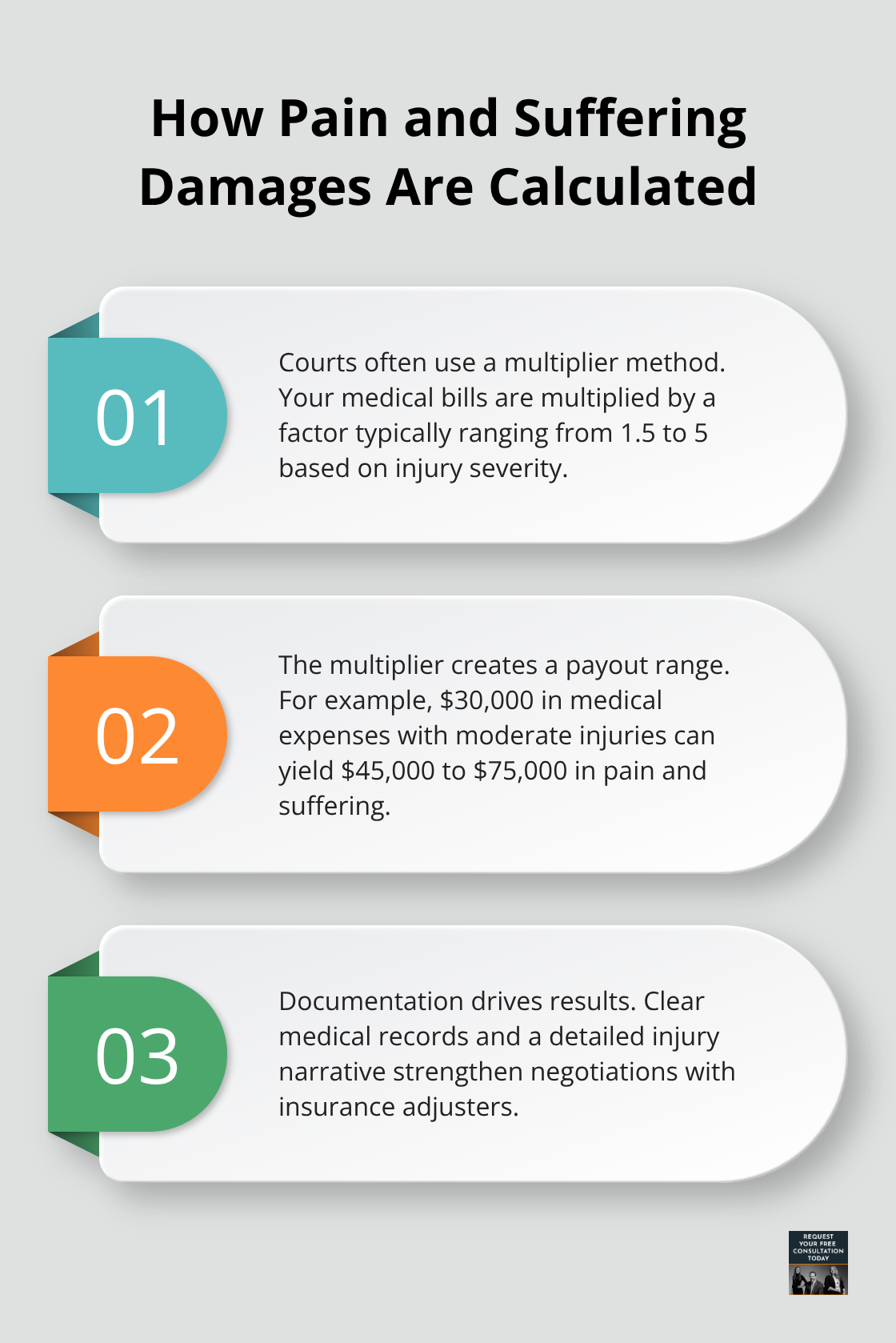
Pain and suffering damages cover the physical pain, emotional distress, and reduced quality of life caused by the crash. California courts calculate these damages by multiplying your medical bills by a factor typically ranging from 1.5 to 5, depending on injury severity. A victim with $30,000 in medical expenses and moderate injuries might receive $45,000 to $75,000 in pain and suffering damages (more severe injuries with permanent disability warrant higher multipliers). Insurance adjusters understand these calculations, so presenting a clear medical record and detailed injury narrative strengthens your negotiating position significantly.
Final Thoughts
A DUI crash in California creates a clear legal pathway to compensation because the driver’s impairment establishes liability automatically. You have the right to recover medical expenses, lost wages, and pain and suffering damages without waiting for criminal proceedings to conclude. The documentation you gather immediately after the crash-medical records, police reports, wage statements, and injury photographs-directly determines how much compensation you receive.
Acting quickly matters more than most victims realize. California gives you two years to file a lawsuit, but insurance companies respond faster and offer better settlements when you file your claim within 30 days. Witnesses’ memories fade, medical facilities archive records, and evidence deteriorates over time, so the sooner you submit your claim, the stronger your position in negotiations becomes.
Contact Schaar & Silva LLP to discuss your DUI crash case and learn what compensation you can realistically expect. We help accident victims in Santa Cruz County navigate these claims from start to finish while you focus on healing.
