
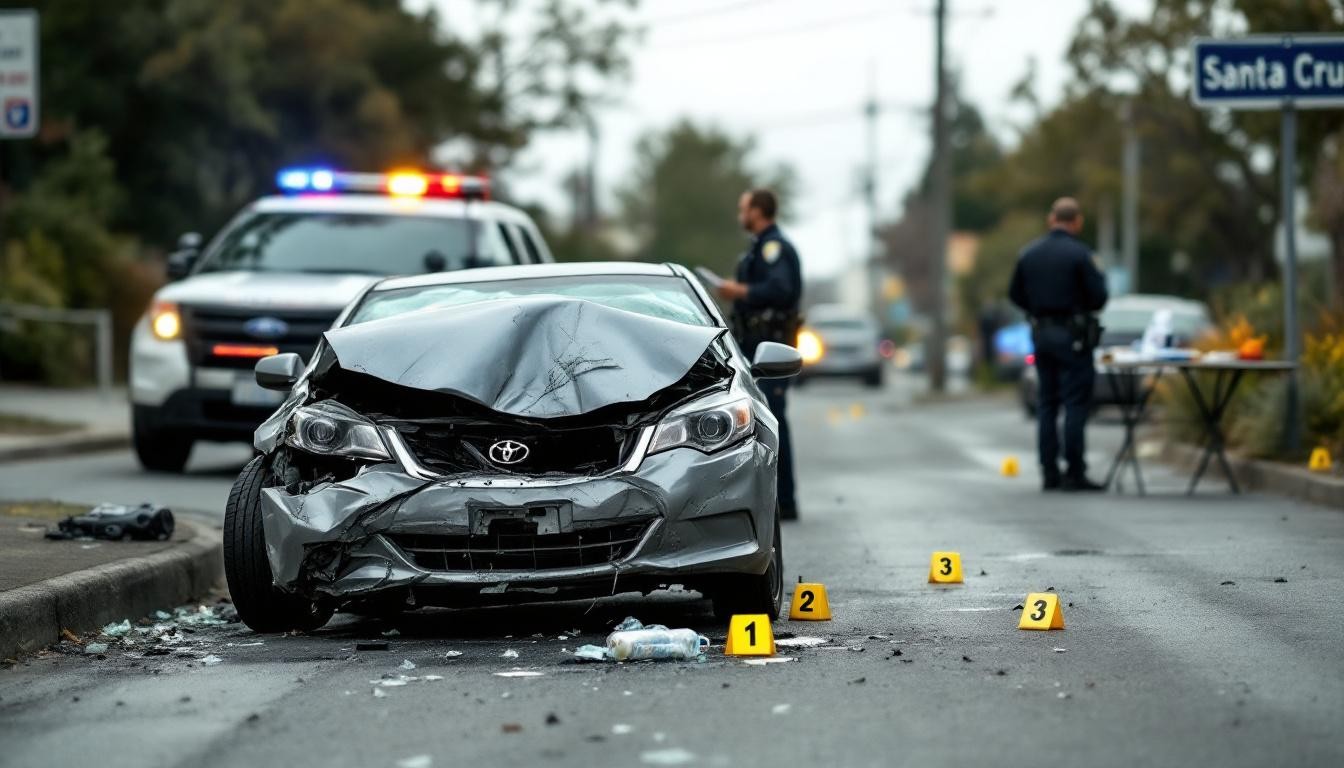
A Santa Cruz DUI accident can leave you facing serious injuries, mounting medical bills, and property damage. When an intoxicated driver causes a crash, you have the right to pursue compensation for these losses.
We at Schaar & Silva LLP help accident victims build strong cases by gathering BAC evidence, police reports, and medical documentation. This guide walks you through the legal process and shows you how to recover the damages you deserve.
Building Your DUI Case: What the Evidence Reveals
How BAC Evidence Establishes Impairment
When an intoxicated driver hits your vehicle, blood alcohol content becomes your strongest piece of evidence. BAC measures the percentage of alcohol in a driver’s bloodstream and directly correlates to impairment level. The median BAC among convicted DUI offenders in California reached 0.16% according to the California DMV’s 2022 Annual Report-double the 0.08% legal limit. This matters because higher BAC levels demonstrate recklessness and strengthen your claim for enhanced damages in civil court.
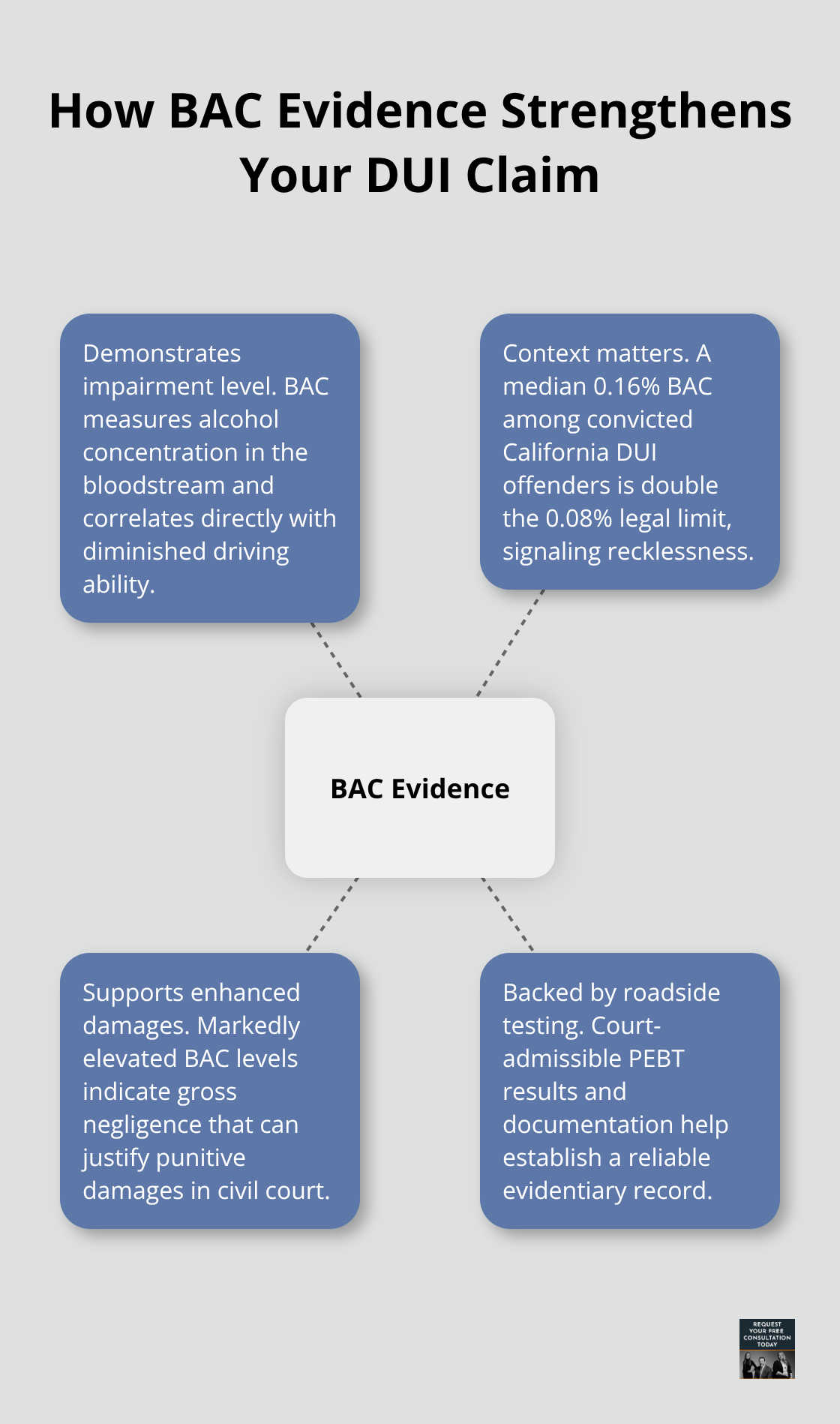
The Santa Cruz Police Department and California Highway Patrol use portable evidential breath testing, or PEBT, equipped with Draeger Alcotest 7510 instruments that capture BAC readings at the roadside. These devices produce court-admissible results and print documentation immediately, creating a reliable chain of custody that prosecutors and civil attorneys rely on throughout litigation.
Understanding DUI Reports and Police Documentation
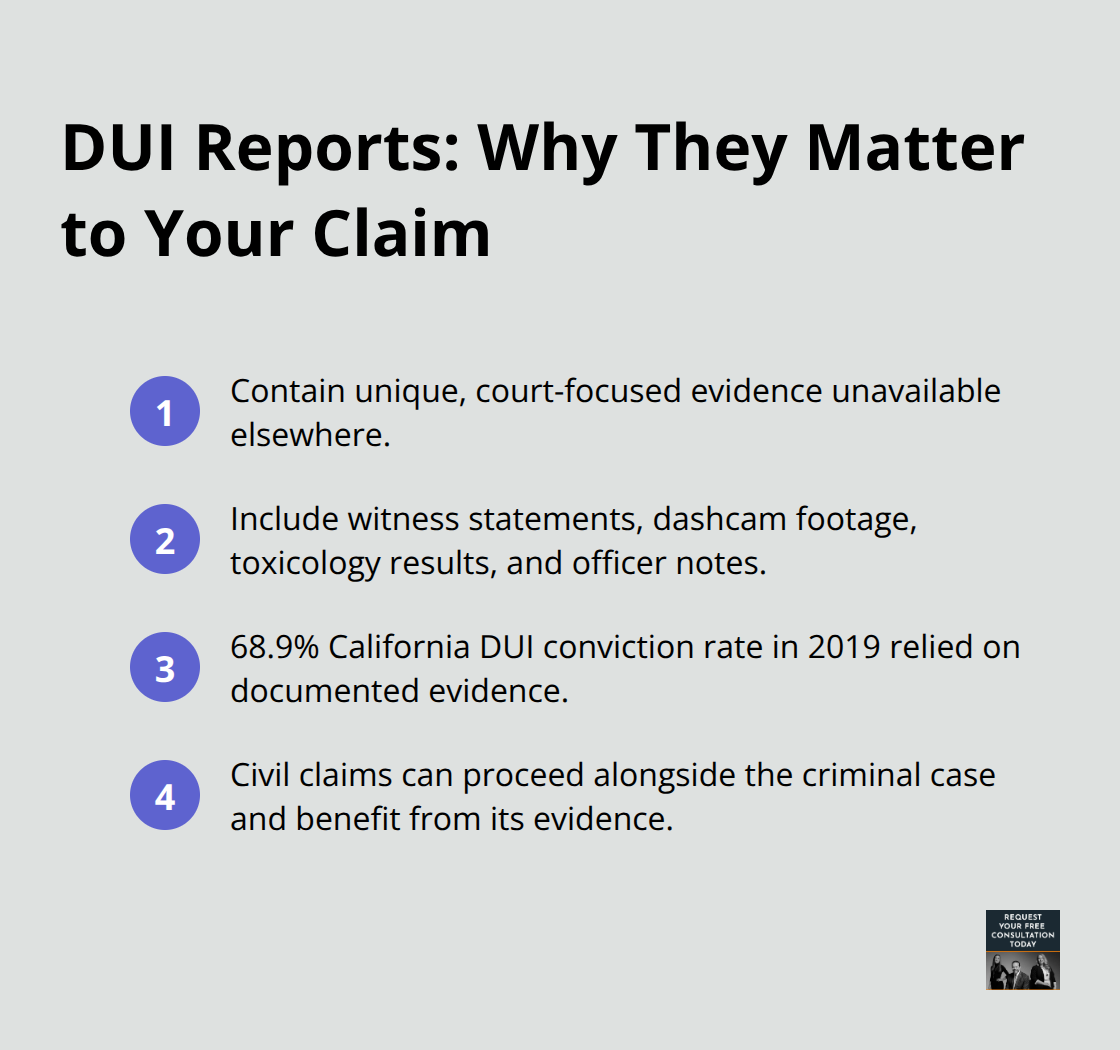
When officers make an arrest, they document field sobriety test performance, physical observations of impairment, and the driver’s statements in the DUI report filed with local courts. The DUI report becomes central to your civil case because it contains evidence you cannot obtain elsewhere. Police reports include witness statements, dash camera footage from patrol vehicles, toxicology results, and officer notes about the driver’s behavior and appearance.
Approximately 68.9% of DUI arrestees in California resulted in conviction in 2019, and convictions rest on this documented evidence. You do not need to wait for the criminal case to conclude before pursuing your civil claim; both proceed concurrently, and the criminal evidence strengthens your position significantly.
Accessing Evidence from Local Arresting Agencies
In Santa Cruz County, you can request official case files, incident reports, and BAC results directly from the Santa Cruz Sheriff’s Office at 5200 Soquel Avenue or by calling (831) 454-7600. The Sheriff’s Office serves unincorporated areas and coordinates with municipal police departments, so identifying which agency arrested the driver matters for your records request. Officers document everything at the scene-from witness observations to physical evidence-and these details appear in reports that support your recovery claim.
Pursuing Enhanced Damages Through BAC Evidence
When BAC evidence shows gross negligence (particularly a BAC significantly above 0.08%), you can pursue punitive damages beyond medical bills and lost wages. Courts award enhanced damages specifically when a driver demonstrated extreme disregard for public safety, and the BAC level is your strongest indicator of that disregard. The evidence collected at the roadside through PEBT testing and documented in police reports provides the foundation prosecutors need to prove criminal liability-and the same evidence supports your civil claim for maximum compensation. Understanding how this evidence works positions you to recover not just economic losses but also damages that reflect the driver’s reckless conduct.
What Damages Can You Recover in a DUI Accident Claim
A DUI accident creates two separate financial realities: immediate expenses and long-term costs that extend years into your recovery. Medical bills arrive within weeks, but future rehabilitation, lost earning capacity, and pain and suffering often exceed the initial emergency room charges. When an intoxicated driver causes your crash, California law allows you to pursue both economic damages-medical expenses, property damage, lost wages-and non-economic damages like pain and suffering. The key difference between a criminal DUI case and your civil claim is that prosecutors focus on punishment while you focus on recovery. Insurance companies know most accident victims underestimate their damages, so they push quick settlements that fail to account for ongoing treatment costs. An experienced attorney evaluates your claim by calculating immediate medical expenses, projecting future care needs, and documenting the driver’s BAC level to establish grounds for enhanced damages.
Medical Costs Beyond the Emergency Room
Your initial hospital visit covers emergency stabilization, but DUI accident injuries often require months or years of follow-up care. Physical therapy, orthopedic surgery, neurological treatment for traumatic brain injury, and mental health counseling accumulate into substantial expenses that insurance companies routinely minimize. You must document every medical appointment, prescription, and specialist consultation because these records form the foundation of your damages calculation. Spinal injuries may require ongoing pain management, imaging studies, or surgical intervention that wasn’t apparent immediately after the crash. Medical lien services facilitate payment of your bills until your case resolves, removing the burden of managing healthcare costs while you pursue compensation. Future medical expenses require expert testimony-a physician must project your long-term care needs and estimate costs for that care, which strengthens your claim significantly compared to guessing at future expenses.
Property Damage and Enhanced Recovery
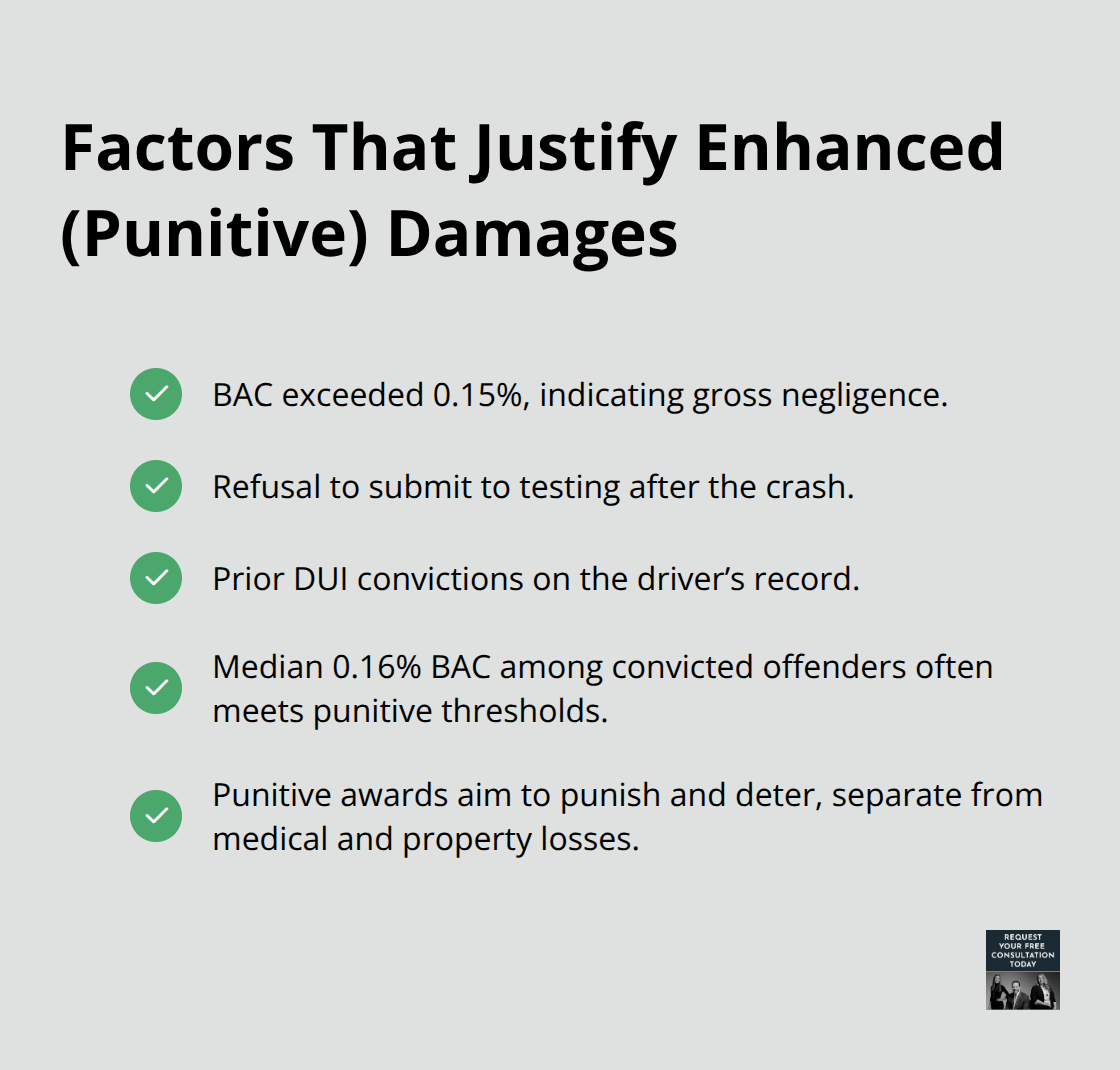
Your vehicle sustained damage from the collision, but the insurance company’s initial estimate often undervalues repairs or total loss. You should request multiple repair estimates and photograph all damage before any repairs begin, because photographic evidence prevents disputes about pre-existing damage. If the vehicle is a total loss, you should obtain the market value from multiple sources rather than accepting the insurer’s first offer. Enhanced damages apply when the drunk driver’s BAC exceeded 0.15%, demonstrated test refusal, or had prior DUI convictions-these factors signal gross negligence and justify punitive damages beyond your actual losses. The median BAC among convicted DUI offenders in California was 0.16% according to the California DMV’s 2022 Annual Report, meaning most convicted drunk drivers meet the threshold for enhanced damages. Courts award these punitive damages specifically to punish reckless conduct and deter future drunk driving, so they represent compensation separate from your medical bills and property loss.
Lost Wages and Earning Capacity
A serious DUI accident injury forces you away from work during recovery, and lost wages represent real financial harm that extends beyond medical bills. You lose income during hospitalization, physical therapy appointments, and medical consultations-time that accumulates into thousands of dollars in lost earnings. Some injuries prevent you from returning to your previous job, which means your earning capacity declines permanently. An attorney calculates lost wages by reviewing your pay stubs and tax returns, then projects future earning loss based on your age, education, and work history. Insurance companies frequently underestimate earning capacity losses because they focus only on immediate time away from work rather than long-term career impact.
Pursuing Enhanced Damages Through BAC Evidence
When BAC evidence shows gross negligence (particularly a BAC significantly above 0.08%), you can pursue punitive damages beyond medical bills and lost wages. Courts award enhanced damages specifically when a driver demonstrated extreme disregard for public safety, and the BAC level is your strongest indicator of that disregard. The evidence collected at the roadside through portable evidential breath testing and documented in police reports provides the foundation prosecutors need to prove criminal liability-and the same evidence supports your civil claim for maximum compensation. Understanding how this evidence works positions you to recover not just economic losses but also damages that reflect the driver’s reckless conduct. The next step involves gathering all documentation from local arresting agencies and medical providers to build the strongest possible case for your recovery.
What Evidence Do You Need From Police and Medical Records
Obtaining Police Reports From Local Arresting Agencies
Police reports from the Santa Cruz Sheriff’s Office or local municipal departments form the foundation of your DUI case, and you must request them immediately after the crash. The Santa Cruz Sheriff’s Office at 5200 Soquel Avenue or (831) 454-7600 can provide incident reports, BAC results from portable evidential breath testing, field sobriety test documentation, and officer observations about the driver’s impairment. These reports document the Draeger Alcotest 7510 readings that establish the driver’s BAC level, which directly supports your claim for enhanced damages. Request the complete case file, not just the arrest summary, because officers include witness statements, dash camera footage, toxicology results, and handwritten notes that prosecutors and your attorney will use throughout litigation.
Collecting Medical Records and Documentation
Medical records translate your injuries into financial damages that courts recognize. Collect records from every provider-emergency room, specialists, physical therapists, mental health counselors-and organize them chronologically to show the full scope of your treatment. Expert medical testimony projects your future care needs and costs, which often exceeds initial hospital bills by substantial margins. Insurance adjusters minimize claims when they ignore follow-up care, so documentation of every appointment, imaging study, and prescription creates an undeniable record of your damages.
Using Accident Scene Photography and Witness Statements
Accident scene photography and witness statements provide the visual and testimonial evidence that reinforces your case narrative. Photograph all vehicle damage before repairs begin, capture road conditions and traffic signals, and document any visible environmental factors that contributed to the crash. Witness statements carry tremendous weight because independent observers corroborate the driver’s impairment, reckless behavior, and the severity of impact-details that strengthen your position against insurance company pushback. Contact witnesses within days of the crash while their memories remain sharp, and document their names, phone numbers, and email addresses for your attorney to follow up.
Building an Irrefutable Chain of Evidence
Medical records combined with police reports create an irrefutable chain of evidence: the BAC level proves impairment, the police report documents the arrest and field sobriety tests, and your medical records prove the injuries resulted from that impaired driving. The Santa Cruz Sheriff’s Office serves unincorporated areas and coordinates with municipal police departments, so identifying which agency arrested the driver matters for your records request. Officers document everything at the scene (from witness observations to physical evidence), and these details appear in reports that support your recovery claim. Schaar & Silva LLP coordinates with local arresting agencies to obtain complete documentation and works with medical experts to calculate damages that reflect your actual recovery needs rather than insurance company minimums.
Final Thoughts
A Santa Cruz DUI accident demands an attorney who understands how BAC evidence translates into damages and how to extract complete documentation from local arresting agencies. We at Schaar & Silva LLP analyze the driver’s BAC level, review police reports from the Santa Cruz Sheriff’s Office, and calculate both immediate and long-term damages that insurance adjusters routinely overlook. We identify whether the BAC exceeded thresholds that justify enhanced damages and determine which local agency made the arrest so we can request complete case files.
Insurance companies operate on profit margins, not fairness, and they push quick settlements because most accident victims underestimate their medical costs and earning capacity losses. We negotiate aggressively by presenting medical expert testimony about future care needs, documenting every treatment appointment, and demonstrating how the driver’s BAC level establishes gross negligence. When insurers refuse reasonable offers, we prepare your case for trial and make clear we will pursue maximum compensation in court.
Your recovery matters more than insurance company convenience, and building your case requires coordination between medical providers, local law enforcement, and strategic legal planning. We preserve evidence before it disappears, obtain toxicology results and dashcam footage from police reports, and work with accident reconstruction experts when necessary. Contact Schaar & Silva LLP to discuss your Santa Cruz DUI accident claim and learn how we pursue the damages you deserve.
