
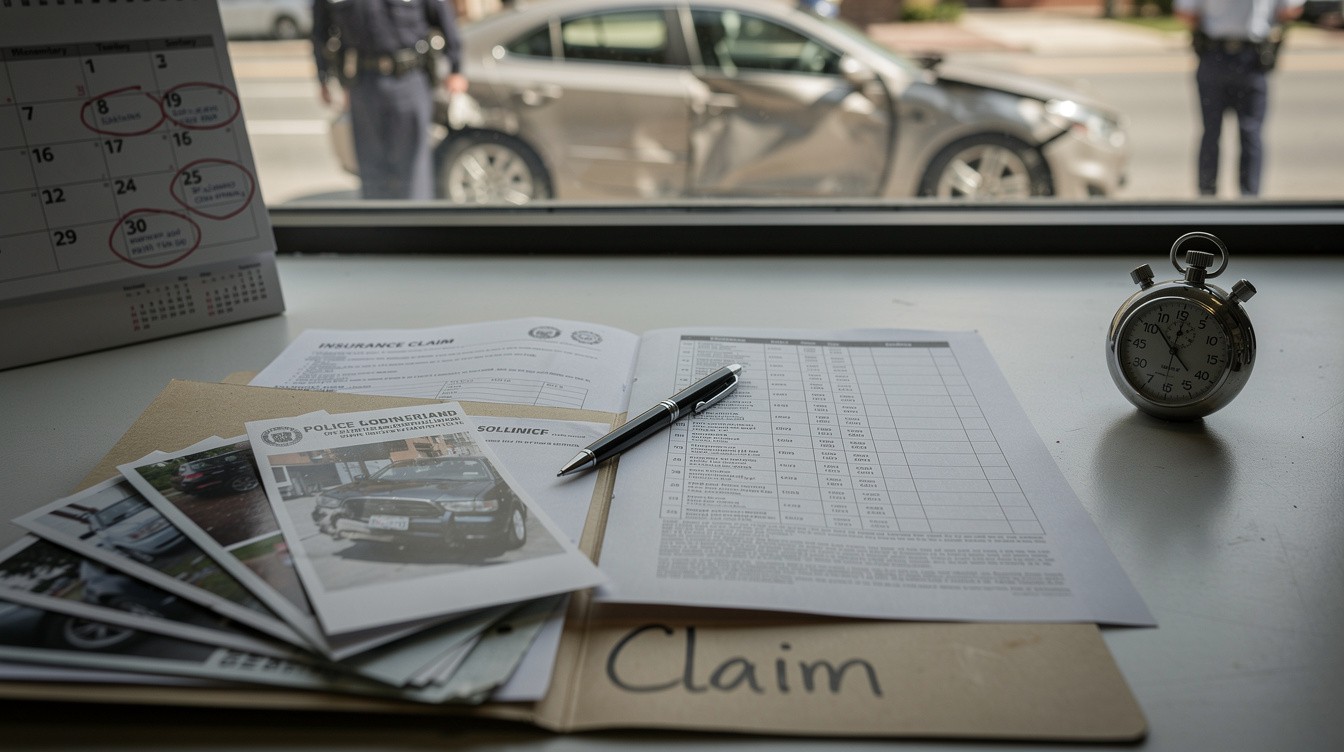
After a car accident, understanding how long your claim will take is one of the first questions on your mind. The car accident claim timeline in California varies significantly depending on whether your case settles quickly or requires court involvement.
At Schaar & Silva LLP, we’ve guided countless clients through this process. We’ll walk you through each stage so you know what to expect.
What Should You Do Right After Your Accident
The First 30 Days Matter Most
The first 30 days after a car accident determine the strength of your claim. This is when evidence remains fresh, witnesses are still reachable, and your medical condition gets documented for the first time. Most California accident claims begin with this initial investigation phase, where a representation letter goes to insurers, the police report gets gathered, witness statements are collected, and medical records are compiled. If you miss this window, evidence vanishes. Witnesses move or forget details. Medical gaps emerge that insurers will exploit later.
Document Everything at the Scene
Start documenting immediately at the accident scene. Take photos of vehicle damage from multiple angles, road conditions, traffic signals, and street signs. Photograph the other driver’s license, vehicle registration, and insurance card. Collect the names, phone numbers, and addresses of at least two witnesses who saw the accident happen, not just the other driver. If a police officer arrives, get their name and badge number.
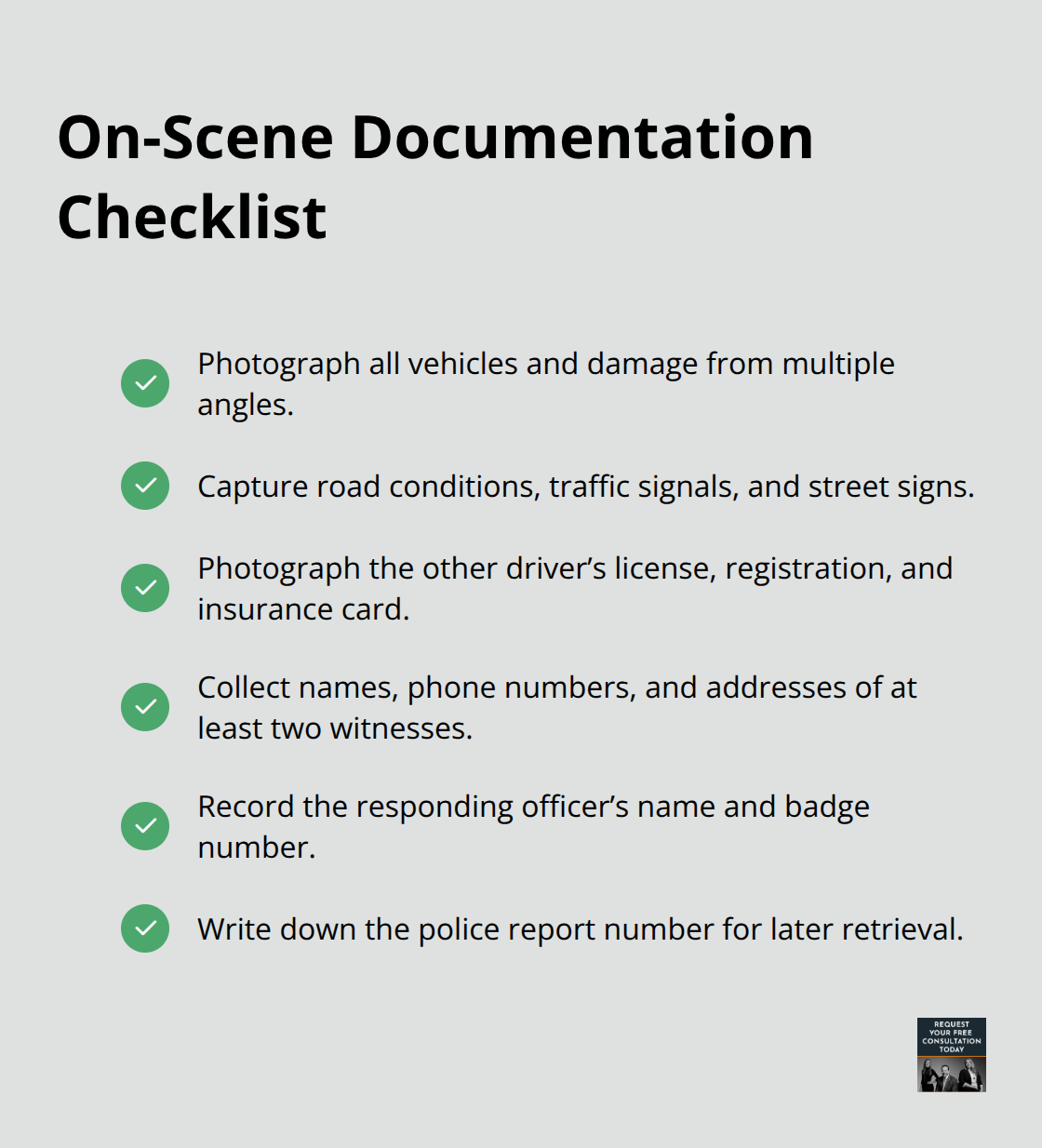
Request the police report number so you can retrieve it later from the local police department.
Do not admit fault or apologize for the accident, even if you think you caused it. Insurance adjusters and defense attorneys will use any statement you make against you later. Keep your description factual and limited to what you observed.
Seek Medical Care Within 48 Hours
Seek medical attention within 48 hours of the accident, even if you feel fine. Many injuries, particularly soft tissue injuries and traumatic brain injuries, develop over days or weeks. The Insurance Research Council found that represented claimants recover on average 3.5 times more than unrepresented claimants, even after legal fees, largely because early medical documentation strengthens claims.
Request copies of all medical records, test results, and treatment notes from your doctor. Keep organized records of every medical expense, including copays and prescriptions. Document your symptoms in writing immediately after the accident and update this log weekly. Note how injuries affect your daily activities, work capacity, and sleep. This written record becomes powerful evidence later when negotiating with insurers.
Protect Your Claim From the Start
Do not post about the accident on social media, even vague posts about feeling sore or angry. Insurers monitor social media constantly, and any post can be twisted to minimize your injuries. Additionally, avoid giving recorded statements to the other driver’s insurance company without counsel present. Many accident victims inadvertently say things that undermine their claims when speaking to adjusters without guidance. With these steps completed, you’re ready to move forward with filing your claim and working with insurance adjusters.
How Long Until Settlement Arrives
MMI: The Turning Point in Your Timeline
Filing your claim initiates a formal timeline that typically unfolds over months. When you file with the insurance company, you set the clock for the claims process. The insurer has a legal obligation to investigate your claim within a reasonable timeframe, though California law does not specify an exact deadline for settlement. In practice, straightforward claims with minor injuries and clear liability settle within three to six months. Moderate injuries requiring extended treatment extend the timeline to six to twelve months. The single biggest factor determining settlement speed is reaching Maximum Medical Improvement, or MMI-the point where your condition stabilizes and further recovery becomes unlikely. Settling before MMI can cost you tens of thousands in future medical expenses that insurers should have covered. Insurance adjusters know this and will often delay settlement discussions until your treatment ends and your medical records are complete. This is not malice; it is standard practice. You complete treatment on your medical provider’s schedule, not the insurer’s timeline.
The Demand Package and Negotiation Phase
Once your treatment concludes, the negotiation phase accelerates. A detailed demand package containing your medical records, bills, lost wages, and a narrative explaining liability and damages goes to the insurance company. Insurers typically respond within 30 days. If your demand is reasonable and supported by evidence, settlement often follows within 60 to 90 days. However, demanding significantly more than evidence supports-for example, claiming $500,000 in damages when your actual medical bills and lost wages total $75,000-adds six to twelve months of back-and-forth without improving your outcome.
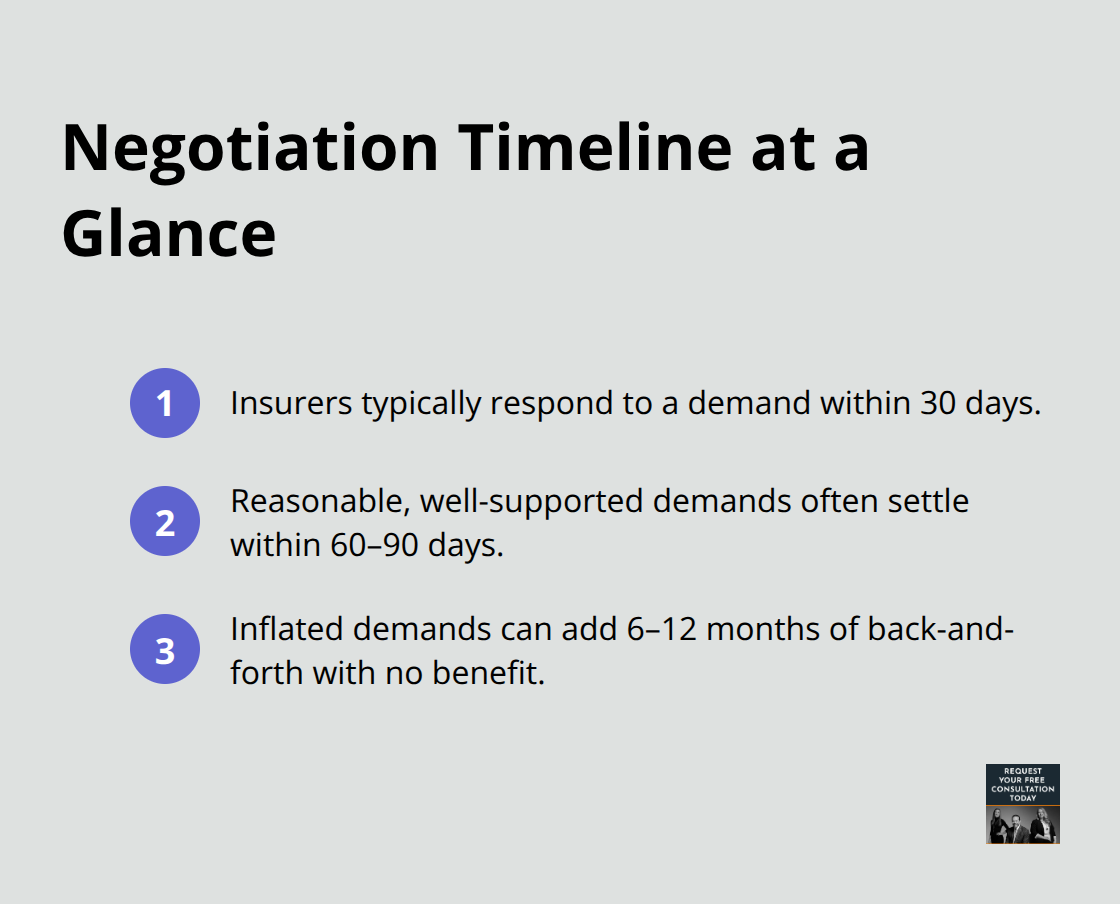
The insurer simply will not budge past what the evidence justifies.
Documentation and Liability Evidence Speed Resolution
Organized documentation and clear liability evidence accelerate settlements dramatically. A police report, dashcam footage, and witness statements all reduce the insurer’s ability to dispute liability and delay payment. If the at-fault driver has sufficient insurance coverage relative to your actual damages, settlement moves quickly. If damages exceed policy limits, resolution may require exploring additional coverage sources, which extends the timeline.
Common Delays and How Professional Representation Helps
Common delays include repeated requests for the same medical records, assignment of a new adjuster who restarts the entire review, and liability questions that resurface after months of silence. Professional representation prevents many of these delays. Adjusters often exploit confusion and perceived desperation to justify waiting, but patience combined with clear, documented communication from counsel typically accelerates resolution. When settlement negotiations stall or the insurer refuses to offer fair value, your case moves into a different phase entirely-one where litigation becomes necessary.
When Settlement Fails and Litigation Begins
Filing a Lawsuit Signals Serious Intent
If the insurer refuses to offer fair value or settlement discussions stall entirely, litigation becomes your path forward. This is not failure-it is a deliberate strategic choice. California’s two-year statute of limitations for personal injury claims gives insurers room to delay, and they know it. At some point, continuing to negotiate becomes counterproductive. Filing a lawsuit in California Superior Court signals that you are serious, and many cases settle faster once a complaint is filed than they ever did during pre-litigation negotiations.
Discovery: The Evidence Exchange Phase
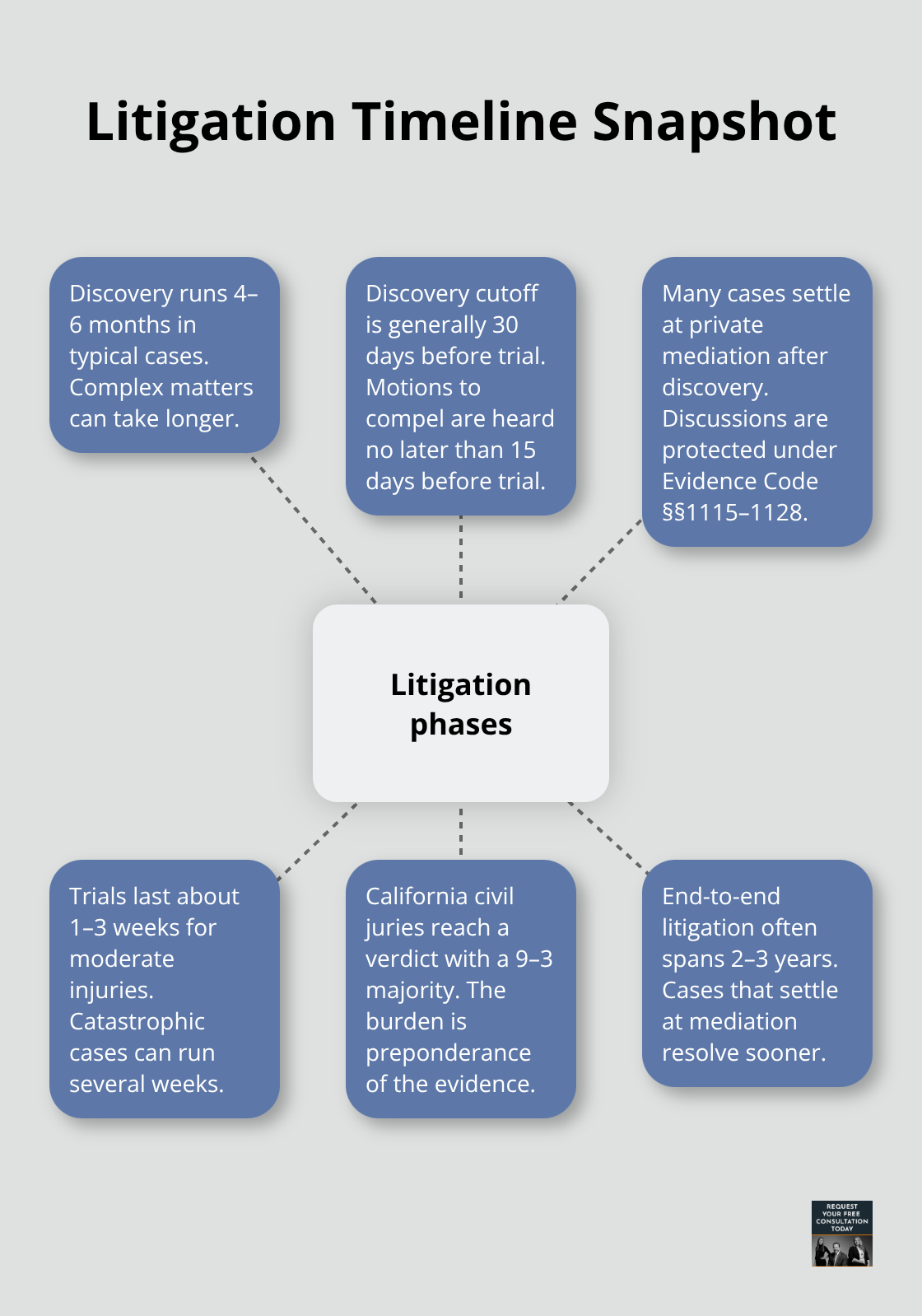
The complaint initiates formal discovery, where both sides exchange evidence under oath. You serve written interrogatories, requests for production of documents, and requests for admissions on the other party. The other party does the same to you. Depositions follow-recorded question-and-answer sessions where witnesses, medical providers, and the at-fault driver answer questions under oath. Discovery typically runs for four to six months, though complex cases extend longer. The discovery cutoff is generally 30 days before trial, with motions to compel heard no later than 15 days before trial under California Code of Civil Procedure Section 2024.020.
Expert Witnesses in Serious Injury Cases
During discovery, you exchange expert witnesses if your case involves serious injuries. Catastrophic brain or spinal injury cases commonly involve six to ten experts, including neurologists, neurosurgeons, life-care planners, vocational economists, and biomechanical engineers. The life care plan becomes the single most important document in catastrophic cases, detailing every future medical service, therapy, equipment, and home modification with lifetime costs. This document drives settlement value and jury understanding of long-term damages.
Mediation and Settlement Before Trial
Most California personal injury cases settle at private mediation after discovery concludes, often resulting in a signed term sheet rather than trial. Mediation communications are inadmissible under Evidence Code Sections 1115–1128, which makes mediation the pivotal moment where realistic settlement discussions finally occur. If mediation fails, your case proceeds to trial before a jury. California requires a nine-to-three jury majority (three-fourths of the jury) to reach a verdict under California Constitution Article I, Section 16. The burden of proof is preponderance of the evidence-meaning more likely than not.
Trial and Post-Verdict Collection
Trials typically last one to three weeks for moderate injury cases and several weeks for catastrophic cases. After verdict, if you win, the other party or their insurer pays the judgment. Collection is straightforward if insurance coverage exists; if it does not, wage garnishment and bank levies become necessary. The entire litigation process from complaint to judgment typically spans two to three years, though cases settling at mediation resolve much faster.
Final Thoughts
Your car accident claim time depends on injury severity, liability clarity, and insurer cooperation. Minor injuries with clear liability resolve in three to six months, while moderate injuries extend timelines to six to twelve months. Severe or catastrophic injuries involving brain or spinal damage commonly take twelve to thirty-six months because reaching Maximum Medical Improvement requires time and expert testimony becomes necessary.
Organized documentation accelerates everything-a police report, dashcam footage, and witness statements eliminate liability disputes and prevent adjusters from manufacturing delays. Consistent medical treatment from day one strengthens your position and prevents gaps insurers exploit. Reasonable settlement demands supported by actual medical bills and lost wages move cases forward, while inflated demands backed by weak evidence stall negotiations indefinitely.
Professional representation prevents costly mistakes that unrepresented claimants face constantly. Adjusters exploit claimants without counsel by requesting the same documents repeatedly, assigning new adjusters who restart reviews, and raising liability questions after months of silence. We at Schaar & Silva LLP guide clients through every stage of this timeline, handle communications with insurers, coordinate medical documentation, and know when settlement discussions have stalled beyond repair-contact us for a free case review to understand your specific timeline and protect your rights from the start.
