
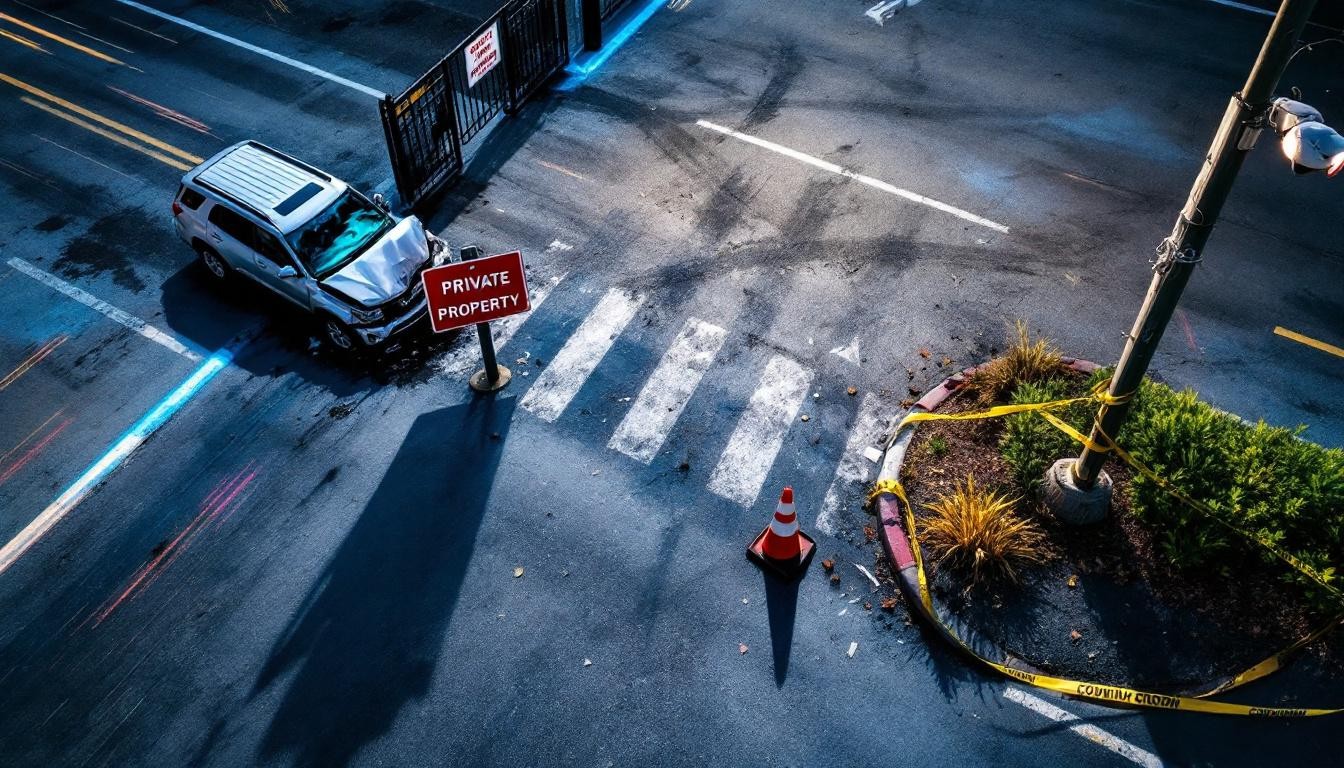
Parking lot accidents happen more often than most people realize, and they raise important questions about who’s responsible for your injuries. Property owners have legal duties to maintain safe conditions, and when they fail to do so-whether through negligent security, poor lighting, or lack of maintenance-you may have grounds for a claim.
At Schaar & Silva LLP, we help accident victims in Santa Cruz County, Sacramento, and Oakland understand their rights and options. This guide walks you through the legal framework that determines whether you can sue for parking lot and private property accidents.
Who’s Responsible When You’re Hurt in a Parking Lot
Property Owner Duties Under California Law
Property owners in California must maintain reasonably safe conditions for visitors. This requirement stems from California negligence law, not from voluntary best practices. When a property owner knows or should have known about a hazard and fails to address it, they breach that duty. The National Safety Council reports tens of thousands of parking lot crashes annually, with hundreds of fatalities. Many of these incidents result from preventable hazards: potholes, inadequate lighting, poor drainage, or unmanaged snow and ice. If you slip on black ice because the owner failed to salt the lot, or trip over a pothole they ignored for months, you have grounds for a claim. California courts apply a reasonably prudent person standard-not whether the hazard was obvious to everyone. A hidden pothole or recurring water pooling supports liability claims because property owners should catch these conditions through regular inspections.
Motor Vehicle Claims vs. Premises Liability Claims
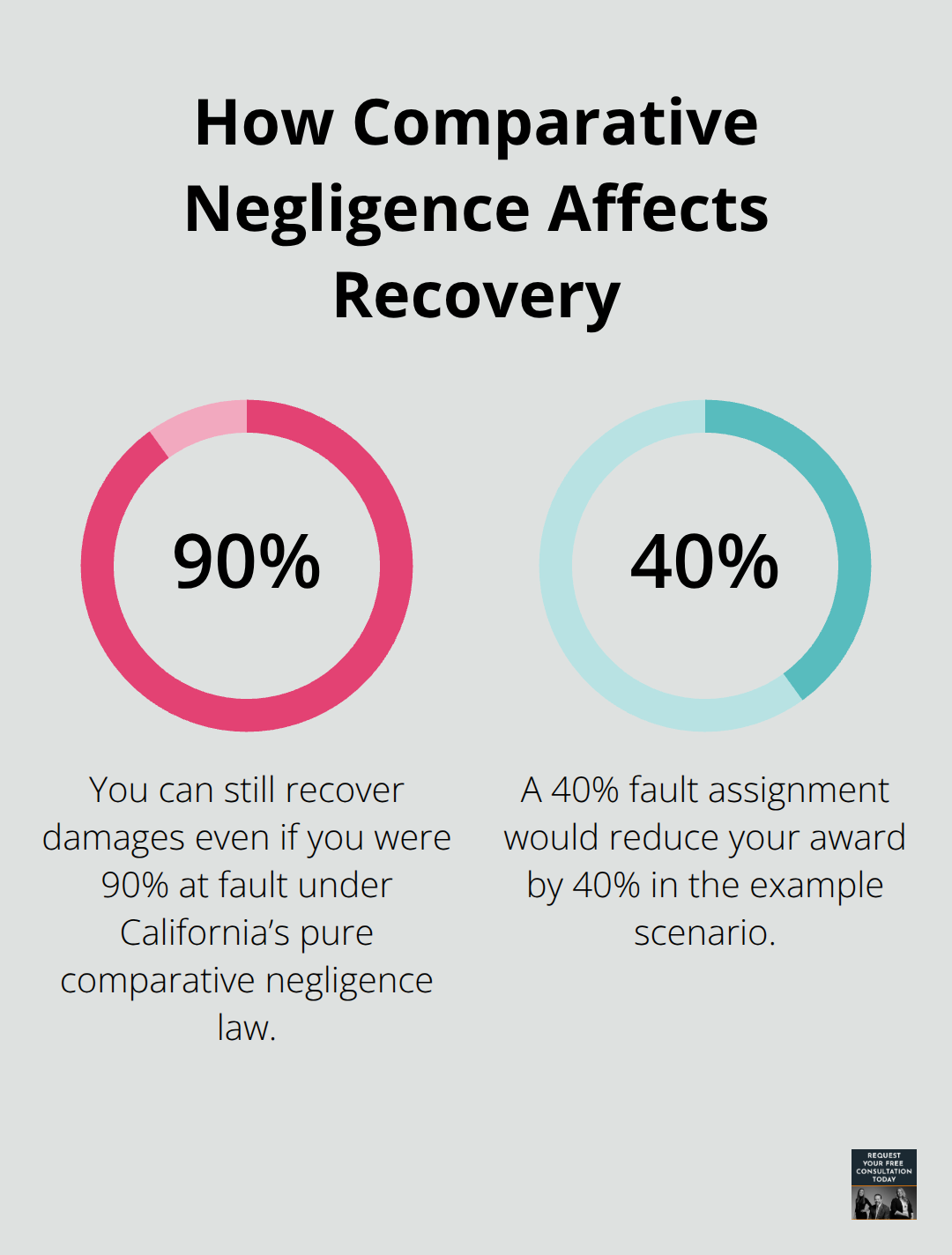
Negligence in parking lots takes different forms depending on who caused your injury. If another driver hit your car or struck you as a pedestrian, you pursue a motor vehicle accident claim against that driver’s liability insurance. If the property itself was unsafe, you pursue a premises liability claim against the owner. Many cases involve both scenarios-a driver behaving carelessly on a poorly maintained lot creates dual liability. California uses pure comparative negligence, which means you can recover damages even if you bear 90 percent of the fault, though your compensation gets reduced by your percentage of fault.
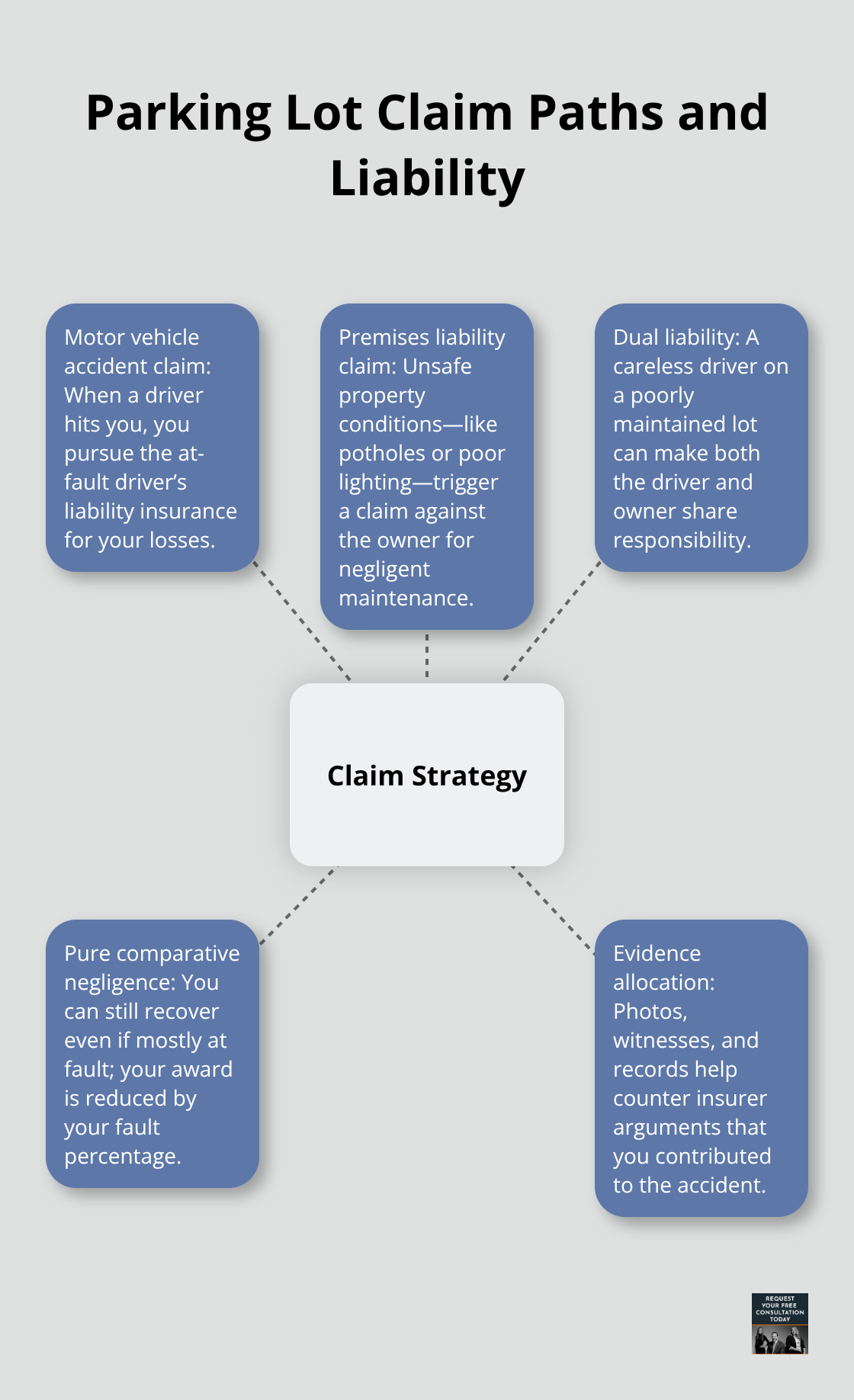
This matters because insurance companies often claim you contributed to the accident. For example, if you walked while distracted but the lot lacked adequate lighting, both factors may have contributed to your injury.
Insurance Coverage and Your Protection
Your insurance coverage plays a critical role in recovery. Collision coverage on your auto policy protects your vehicle regardless of fault. If an unidentified driver hit you and fled, uninsured motorist coverage becomes your safety net. For premises liability claims, the property owner’s liability insurance should cover your medical bills and other damages, but only if you prove negligence. The statute of limitations in California gives you two years from the date of injury to file suit, though the discovery rule can extend this window if you didn’t immediately know the injury resulted from the property’s unsafe condition. Understanding what coverage applies to your specific accident determines which claims you can pursue and how much compensation you might recover.
What Proves You Have a Valid Claim
Establishing Negligence and Breach of Duty
Winning a parking lot accident case requires concrete evidence that the property owner or another party breached a legal duty and caused your injury. California courts reject vague claims or assumptions. You must demonstrate that the defendant knew or reasonably should have known about the hazard through regular inspections, that they failed to fix it or warn you, and that this failure directly caused your damages. A pothole that existed for months gives constructive knowledge because any reasonably prudent owner would discover it during routine maintenance. Weather-related hazards like snow and ice demand immediate attention, so delayed salt application creates clear liability. Inadequate lighting in parking structures represents negligence because property owners understand that poor visibility increases accident risk. The Cornell Legal Information Institute confirms that parking lot accidents are premises liability claims where owners must maintain safe surfaces, lighting, and drainage.
Building Your Evidence Foundation
Your documentation directly determines whether an insurer or court believes your version of events. Photograph the hazard immediately after the accident, capturing multiple angles and surrounding conditions that show why the danger existed. Photograph lighting conditions if darkness contributed to the accident, or wet pavement if water pooling caused your slip. Collect names and contact information from witnesses on the spot, not days later when memories fade.
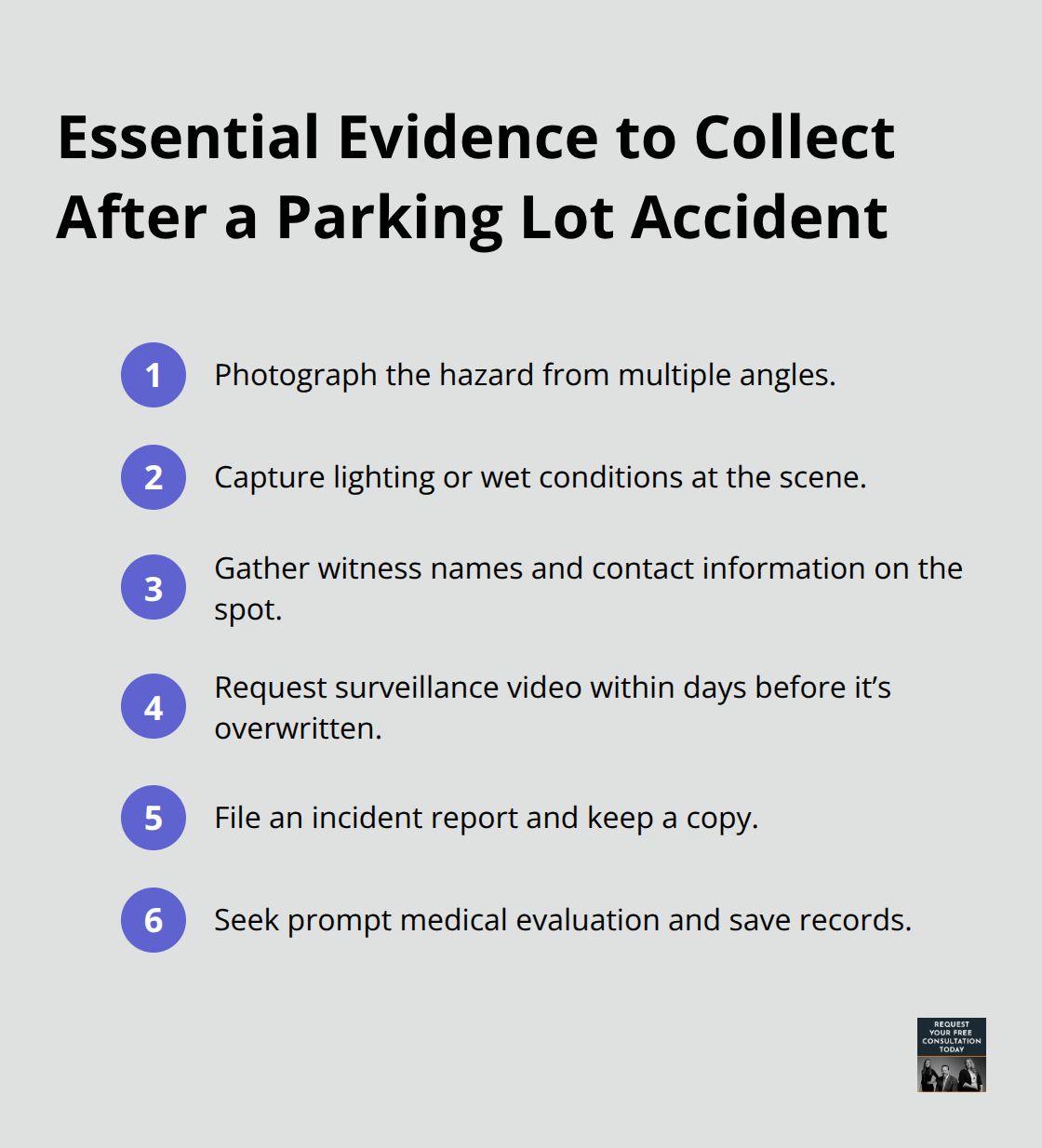
Request surveillance footage from the property owner’s management company within days, not weeks, because many systems overwrite footage after 30 days. File an incident report with the property manager and request a copy for your records. Medical records documenting your injuries establish the connection between the accident and your damages, so seek evaluation immediately even if injuries seem minor.
Understanding Comparative Negligence and Shared Fault
Comparative negligence rules in California significantly impact your recovery amount. California’s pure comparative negligence law means you can recover even if you were 90 percent at fault, though your compensation reduces by your percentage of fault. If you were texting while walking and the parking lot had no lighting, a court might assign you 40 percent fault and reduce your award accordingly. Insurance companies weaponize this standard by exaggerating your contribution to the accident.
They’ll argue you should have seen the pothole, heard the backing vehicle, or noticed the wet floor, regardless of whether visibility or warnings made detection reasonably possible. This is why securing witness statements immediately matters; independent observers can confirm whether hazards were truly visible or hidden. When multiple parties share fault (such as a driver hitting you on a poorly maintained lot), both the driver and owner may owe compensation. Your recovery depends on proving each party’s percentage of responsibility.
Acting Within California’s Time Limits
The two-year statute of limitations in California gives you time to build a strong case, but delays weaken evidence quality as memories fade and surveillance footage disappears. Early investigation reveals maintenance records, inspection logs, and prior incident reports that show whether the owner ignored recurring problems. Prompt action to preserve video evidence prevents it from being overwritten and identifies all potentially liable parties so you receive full compensation rather than settling with one defendant who bears only partial fault. The sooner you gather documentation and witness information, the stronger your position becomes when negotiating with insurers or preparing for litigation.
Moving Forward With Your Claim
Once you’ve gathered evidence and understand the negligence standards that apply to your accident, the next step involves determining which parties bear responsibility and how much compensation you should pursue. Identifying all liable parties-whether the property owner, another driver, or both-shapes your entire claim strategy and recovery potential.
Real-World Parking Lot Accident Scenarios
Vehicle-to-Vehicle Collisions and Liability
Vehicle-to-vehicle collisions in parking lots happen constantly, and they involve more complexity than street accidents because multiple parties may share fault. A driver backing out of a space without checking blind spots hits another vehicle in the driving lane-the backing driver typically bears primary liability because vehicles in main lanes have the right of way. However, if the lot lacked mirrors or had inadequate sight lines due to poor design or overgrown landscaping, the property owner shares responsibility. The National Safety Council reports tens of thousands of parking lot crashes annually, many involving distracted drivers who fail to pay attention while reversing. When you’re hit in a parking lot, photograph the vehicle positions, the sight lines from the backing space, and any obstructions that prevented the other driver from seeing you. Collect witness contact information immediately because independent observers can confirm whether the backing driver had a reasonable view. Your collision insurance covers your vehicle damage regardless of fault, but you’ll need clear documentation to recover from the at-fault driver’s insurer or to challenge comparative negligence claims that the insurer will inevitably raise.
Pedestrian Accidents and Hit-and-Run Situations
Pedestrian accidents in parking lots carry different dynamics because California law gives pedestrians the right of way at crosswalks and near building entrances, yet drivers routinely violate this standard. If a driver hit you while you walked in a designated crosswalk or near a store entrance, the driver bears primary liability-their duty to yield is unambiguous. Hit-and-run situations create additional complications because you’ll need uninsured motorist coverage to recover if the driver isn’t identified, making it critical to photograph the fleeing vehicle’s license plate, color, and distinguishing features if possible. Report the incident to police immediately and request the incident number and officer’s contact information for your claim file.
Accidents Caused by Poor Maintenance and Hazards
Accidents caused by poor maintenance-slipping on black ice, tripping over a pothole, or falling due to inadequate lighting-require different evidence than driver-caused accidents. Photograph the hazard from multiple angles, document weather conditions at the time, and note whether warning signs or barriers existed. If the lot had a history of similar incidents, request maintenance records and prior incident reports from the property manager because repeated problems demonstrate that owners knew about the danger. In maintenance-related cases, timing matters enormously: a pothole that existed for months shows negligence far more clearly than one that appeared days before your accident. The property owner’s inspection records and maintenance logs become your strongest evidence, so work with an attorney who can demand these documents through discovery if the owner’s insurer resists your claim.
Final Thoughts
Parking lot accidents in California create liability questions that depend entirely on the specific facts of your situation. Whether another driver caused the collision, a negligent security accident left you vulnerable to crime, or poor maintenance created a hazard, California law holds responsible parties accountable for damages. The key to recovering fair compensation lies in understanding that property owners owe visitors a duty of reasonable care, drivers must follow traffic rules and yield to pedestrians, and comparative negligence rules mean you can still recover even if you bear partial fault.
Your documentation immediately after an accident determines whether insurers take your claim seriously or attempt to minimize your recovery. Photographs of hazards, witness statements, medical records, and incident reports create the foundation for proving negligence. The two-year statute of limitations gives you time to investigate, but delays weaken your position as evidence disappears and memories fade.
If you’ve been injured in a parking lot accident, contact us at Schaar & Silva LLP to discuss your situation and learn what compensation options apply to your case. We help accident victims in Santa Cruz County, Sacramento, and Oakland navigate the legal complexities of parking lot and private property claims. Our team handles the legal details while you focus on healing.
