

A car crash in Santa Cruz County creates immediate stress, medical concerns, and financial pressure. The litigation process that follows can feel overwhelming without understanding how local courts work and what to expect.
We at Schaar & Silva LLP have guided many Santa Cruz residents through auto litigation, and we know the specific procedures and challenges that arise in our county courts. This guide walks you through each stage of your case, from filing through resolution.
How Santa Cruz Courts Process Your Auto Case
Santa Cruz County handles roughly 150 to 200 auto accident trials annually from about 2,500 total claims filed, according to California Department of Insurance data. This means most cases settle before trial, but understanding the court timeline matters because settlements take 6 to 8 months on average while trials stretch 18 to 24 months. The speed difference is significant: a settled case typically pays out 30 to 45 days after agreement, whereas a trial verdict can take 6 to 18 months longer due to appeals and collection delays. Knowing this timeline helps you plan financially and medically.
Filing Deadlines and Evidence Collection
When you file a personal injury lawsuit in Santa Cruz, California gives you two years from the crash date to file, though your insurance claim may have shorter deadlines set by your carrier. If a government entity is involved, the rules change dramatically: you must file an administrative claim within six months, the agency has 45 days to respond, and if rejected, you have six months to sue. Missing these deadlines almost always leads to dismissal with few exceptions. Start gathering evidence immediately because dashcam and surveillance footage can be overwritten or deleted if you wait. Photographs of the scene and damage, medical records, witness statements, the police report, and insurance information become critical early on.
Liability Determination in Santa Cruz County
Fault complexity drives whether your case settles quickly or heads to trial. Santa Cruz courts see higher trial rates in multi-vehicle crashes at Highway 1 intersections, which involve roughly 40 percent more trials than rear-end collisions because liability becomes contested. Weather-related, pedestrian, and motorcycle collisions have trial rates between 12 and 15 percent, well above the statewide average of 6 to 7 percent. About 60 percent of California car accident trials involve disputed liability where fault is genuinely unclear.
Medical disputes also predict trial outcomes: when treatment costs exceed $50,000, insurers commonly challenge medical necessity and require independent medical examinations that conflict with your treating physicians, pushing cases toward trial about 18 percent of the time. Santa Cruz insurance adjusters reportedly earn quarterly bonuses for maintaining settlement rates above 92 percent, which means they face internal pressure to resolve cases fast-something that can work in your favor if you’re prepared for negotiation.
How Settlement Pressure Shapes Your Case Strategy
Understanding these local patterns tells you whether your case fits the settlement track or the trial track. The financial incentives adjusters face (quarterly bonuses for high settlement rates) create opportunities for informed negotiation. Your preparation and evidence strength directly influence how aggressively insurers pursue settlement versus how they dig in on liability or medical necessity disputes. The next section explores how you can navigate settlement negotiations and trial preparation to maximize your position.
What Obstacles Stand Between You and Fair Compensation
Insurance companies operate on predictable patterns in Santa Cruz County, and understanding these patterns protects your recovery. Insurers face quarterly bonus incentives when settlement rates stay above 92 percent, according to Santa Cruz County insurance adjuster compensation data, which means they prioritize speed over generosity. This creates a fundamental conflict: their internal pressure to close cases fast works against your interest in maximizing recovery.
How Adjusters Control Your Claim
When you file a claim, adjusters immediately begin a cost-containment strategy. They request independent medical examinations (IMEs) when treatment costs exceed $50,000, and these examinations frequently contradict your treating physician’s recommendations. Insurance medical reviewers approve only about 60 percent of physician-recommended permanent disability restrictions, meaning your doctor’s assessment of your ongoing limitations gets challenged routinely.
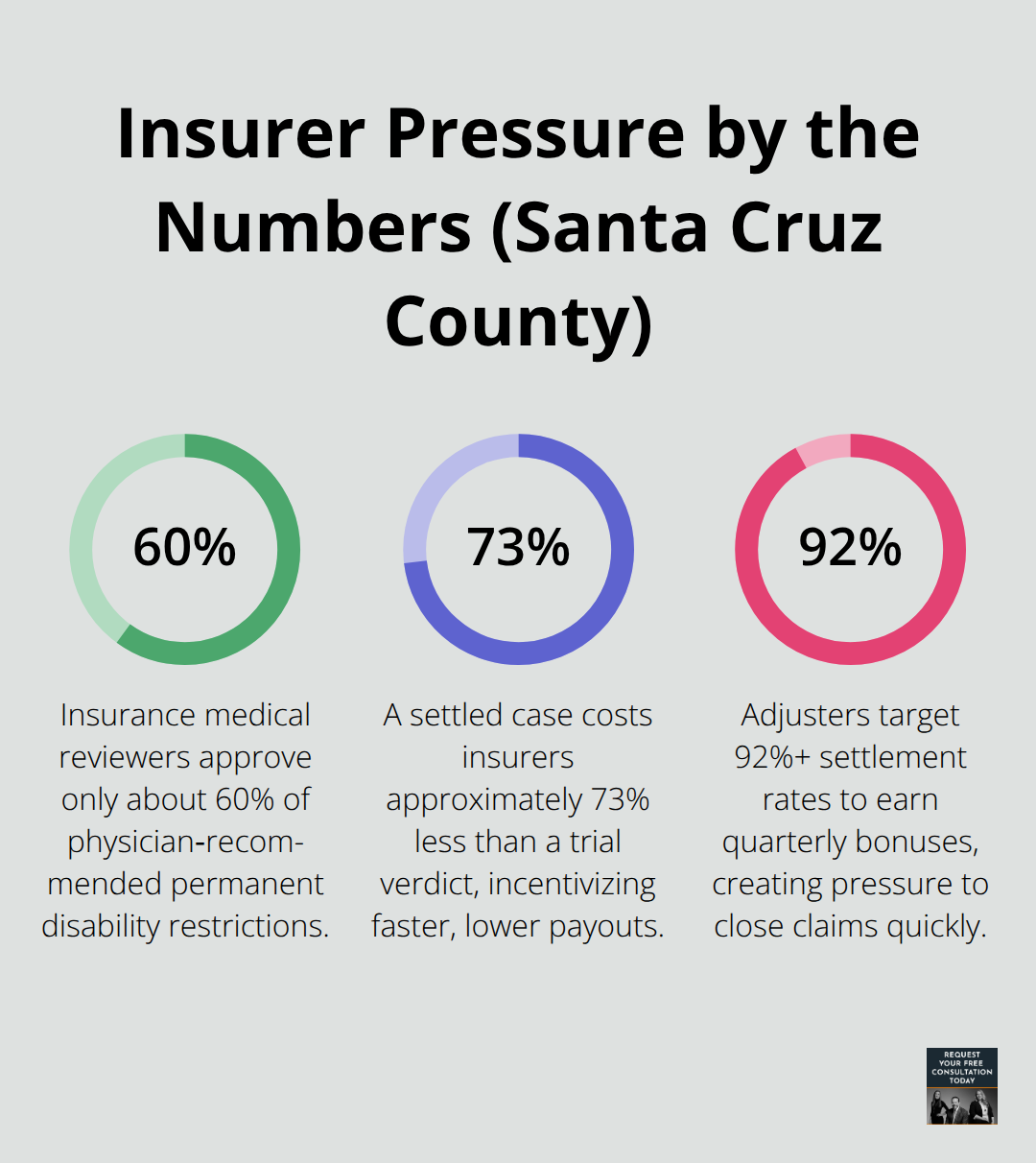
Delays intensify this pressure. Insurers deliberately slow evidence requests, postpone settlement discussions, and extend the claims process because they know that financial pressure and medical fatigue push injured people toward accepting lower offers. A settled case costs insurers approximately 73 percent less than a trial verdict according to data from the American Insurance Association, so they calculate that delay tactics eventually pay off.
Property Damage Disputes and Hidden Costs
Property damage disputes compound this problem. Repair estimates vary widely, and insurers frequently hire their own appraisers who undervalue damage to reduce payout obligations. If your vehicle sustained frame damage or hidden structural problems, the initial estimate often misses these issues entirely. You discover the full extent of damage only after repairs begin, at which point the insurer resists covering the additional costs.
For property damage, obtain multiple repair estimates from reputable shops and photograph all damage thoroughly before repairs begin. If repair costs exceed the initial estimate, present the additional invoices immediately with documentation of hidden damage discovered during repairs.
Medical Bill Negotiations and Lien Complications
Medical bill negotiations operate as a separate battleground. When your treatment extends beyond initial projections, insurers question medical necessity aggressively. They argue that certain procedures, imaging studies, or specialist referrals fall outside reasonable treatment protocols, effectively denying coverage for legitimate care. Hospital liens and medical provider liens then complicate settlement because multiple parties claim portions of your recovery. A medical provider might place a lien on your case for $15,000 in unpaid bills, and negotiating that lien down requires separate conversations with billing departments while your overall settlement remains frozen.
Contact your providers’ billing departments early to negotiate lien reductions based on your settlement amount, rather than waiting until settlement funds arrive.
Building Your Defense Against Delay Tactics
Gather detailed medical records and treatment notes before settlement discussions begin, because gaps in documentation give insurers ammunition to challenge necessity claims. Document every conversation with adjusters in writing by sending follow-up emails summarizing what was discussed, creating a record that prevents the insurer from later denying statements made during calls. Request written explanations for any denial or delay, forcing the insurer to justify decisions on paper rather than hiding behind vague reasons.
Understanding that settlement pressure, medical necessity challenges, and lien complications are standard industry moves removes the shock factor and lets you respond strategically rather than emotionally. These obstacles also reveal why your preparation and evidence strength directly influence how aggressively insurers pursue settlement versus how they dig in on liability or medical necessity disputes. The next section explores how you can navigate settlement negotiations and trial preparation to maximize your position.
Navigating Settlement and Trial Decisions
Your case follows one of two paths: settlement or trial. About 96 percent of bodily injury car crash claims settle according to the Insurance Research Council, but that statistic masks a critical reality. The 4 percent that proceed to trial typically involve either disputed liability, medical necessity challenges, or bad faith conduct by the insurer.
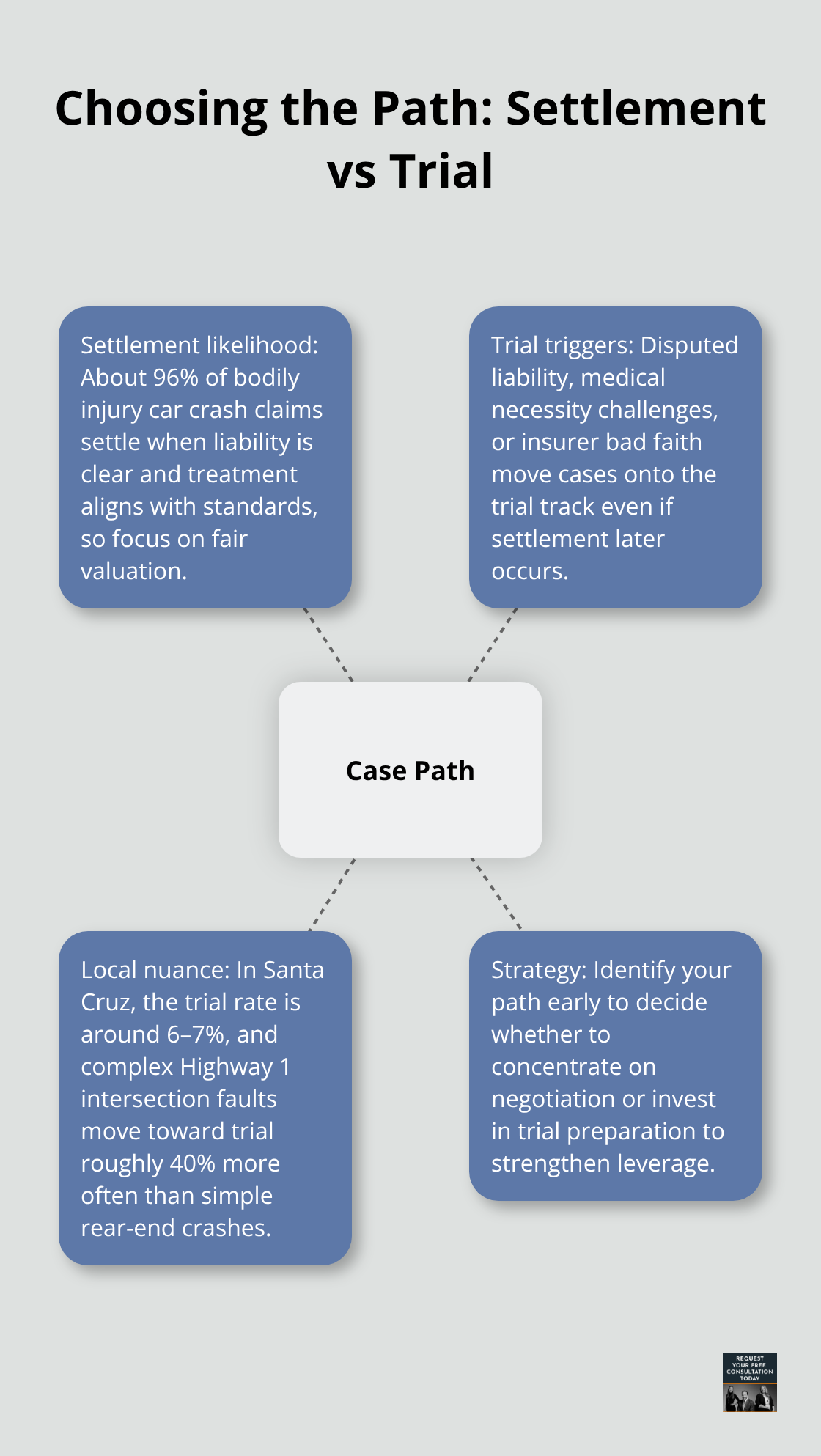
In Santa Cruz County specifically, the trial rate sits around 6 to 7 percent, though complex fault cases at Highway 1 intersections move toward trial roughly 40 percent more often than simple rear-end collisions. Understanding which path your case likely takes determines your strategy immediately. If liability is clear and medical treatment aligns with industry standards, settlement becomes your realistic goal and you should focus on evidence that supports fair valuation. If liability is genuinely contested or the insurer has challenged medical necessity aggressively, trial preparation becomes necessary even if settlement eventually occurs because that preparation directly strengthens your negotiating position.
Timing Your Settlement Decision Strategically
Settlement timing matters more than most injured people realize. Farmers Insurance reported that Santa Cruz County vehicle settlements averaged about $78,000 in 2023 while verdicts averaged approximately $127,000, meaning jury awards run roughly 40 percent higher than settlements according to the National Center for State Courts. However, that higher verdict comes with a cost: trial takes 18 to 24 months while settlement resolves in 6 to 8 months, and trial expenses add approximately $15,000 in extra legal and administrative costs per case. Many injured people settle too early because financial pressure and medical fatigue push them toward accepting offers before maximum medical improvement occurs. The better approach involves waiting until your medical treatment stabilizes and your doctors document permanent limitations, then using that complete medical picture as leverage in settlement negotiations. If you settle before knowing your full medical condition, you forfeit the ability to claim future treatment costs. Filing a protective lawsuit before your statute of limitations expires preserves your rights while you continue treatment or settlement discussions, giving you negotiating power without forcing an immediate decision.
Protecting Evidence and Medical Documentation
Evidence preservation directly influences settlement value and trial success. Dashcam and surveillance footage disappears quickly once overwritten, so retrieve and save this material within days of your crash. Photographs of vehicle damage, scene conditions, traffic signals, and road hazards should be taken immediately and stored in cloud-based backup. Medical records require different handling: obtain complete copies of every treatment note, imaging study, lab result, and billing record from each provider before settlement discussions begin because gaps in documentation give insurers ammunition to challenge whether certain treatments were necessary.
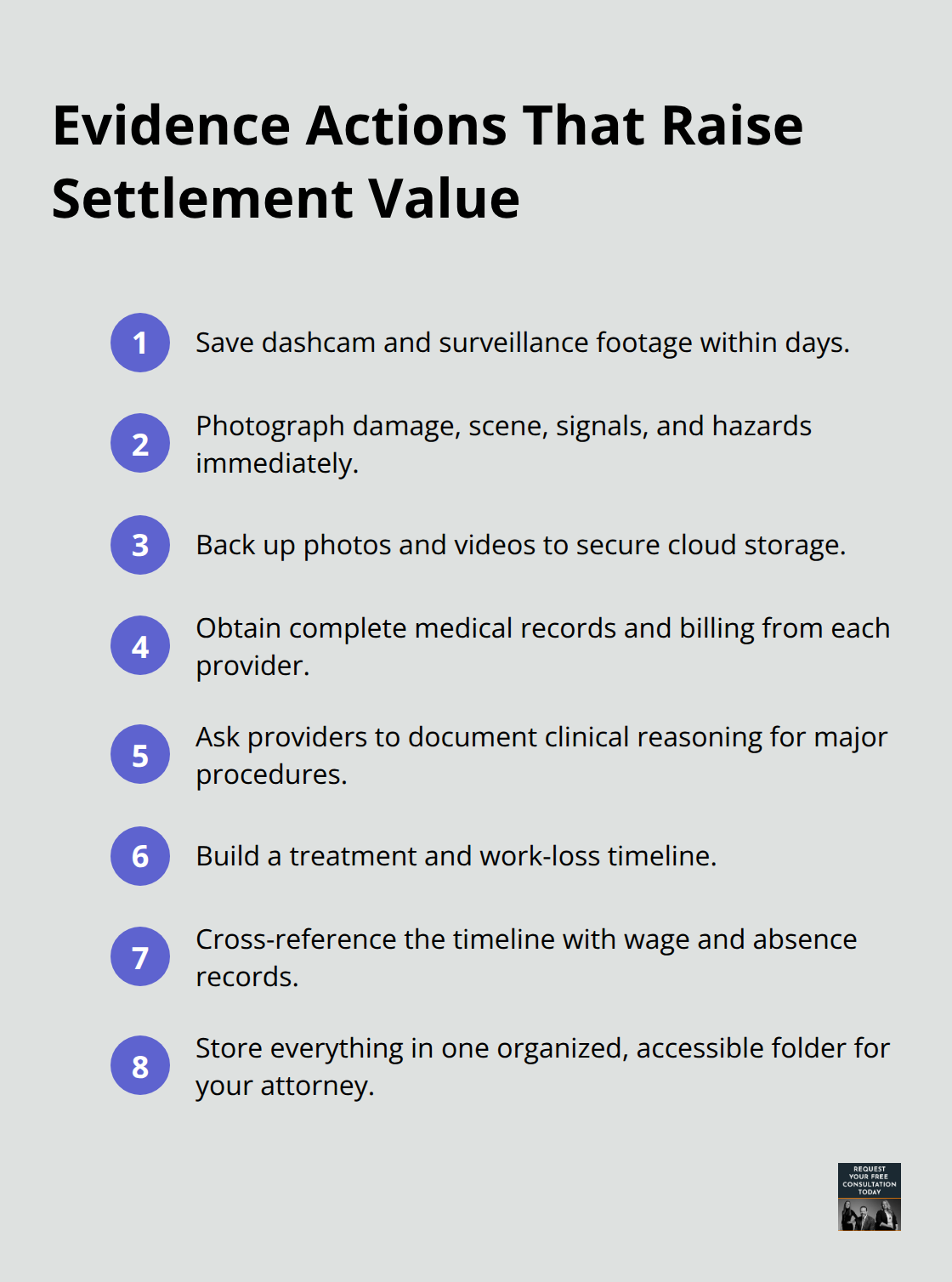
Many injured people discover too late that their provider never documented why a particular procedure was ordered or what symptoms justified the treatment, allowing the insurer to deny payment retroactively. Request written explanations from your providers about the clinical reasoning behind major procedures or specialist referrals; this documentation becomes invaluable when negotiating with insurers. Create a timeline document showing each treatment date, provider visited, and medical findings, then cross-reference this timeline with your work absence records and lost wage documentation to demonstrate how injuries affected your daily functioning. Store all medical records, photographs, and communications with insurers in a dedicated folder accessible to your attorney, preventing loss or disorganization that could derail your case during settlement negotiations or trial preparation.
How Settlement Pressure Shapes Your Negotiating Position
Santa Cruz insurance adjusters earn quarterly bonuses for maintaining settlement rates above 92 percent, which means they face internal pressure to resolve cases fast. This creates opportunities for informed negotiation because adjusters operate within cost-containment budgets that reward speed over generosity. Your preparation and evidence strength directly influence how aggressively insurers pursue settlement versus how they dig in on liability or medical necessity disputes. When you present complete medical documentation, clear liability evidence, and organized damage assessments, adjusters recognize that trial risk increases and settlement becomes more attractive to their bottom line. Conversely, incomplete evidence or disorganized records signal weakness, prompting adjusters to hold firm on lower offers and challenge medical necessity claims more aggressively.
Final Thoughts
Your Santa Cruz auto litigation case hinges on three realities: most cases settle, but settlement value depends entirely on your preparation and evidence strength. The 96 percent settlement rate masks a critical truth-cases that proceed to trial in Santa Cruz County produce verdicts roughly 40 percent higher than settlements, yet require 18 to 24 months and $15,000 in additional costs. This means your decision to settle or prepare for trial should rest on concrete factors: whether liability is genuinely disputed, whether the insurer has challenged medical necessity aggressively, and whether your medical documentation is complete and organized.
Start now by collecting every piece of evidence before settlement discussions begin. Retrieve dashcam footage immediately, photograph all damage thoroughly, obtain complete medical records from every provider, and document the clinical reasoning behind major procedures. Create a timeline connecting your treatment dates to work absences and lost wages, then store everything in one organized location-this preparation directly influences how aggressively insurers pursue settlement because adjusters recognize that incomplete evidence signals weakness while thorough documentation signals trial readiness.
Understanding Santa Cruz County’s specific patterns removes the mystery from how insurers operate locally. We at Schaar & Silva LLP have guided Santa Cruz residents through this process and understand how local court procedures, insurance tactics, and settlement dynamics interact in your specific situation. Contact us to review your case and confirm your exact deadlines, evidence strategy, and whether settlement or trial preparation serves your interests best.