

Most car accident victims wonder how many car accident cases go to trial versus settling out of court. The answer might surprise you.
Only about 4-5% of personal injury cases actually reach trial, with the vast majority resolving through settlements. We at Schaar & Silva LLP see this pattern consistently in Santa Cruz County cases.
Understanding these statistics helps you make informed decisions about your case.
Car Accident Settlement Statistics
Over 90% of car accident cases in California settle before they reach trial, which makes settlement the standard outcome rather than the exception. The National Safety Council data reveals that fewer than 5% of personal injury claims proceed to trial, typically only when liability disputes arise or damages exceed standard settlement ranges. Santa Cruz County follows this pattern, with our busy court system creating additional pressure for out-of-court resolutions.
Settlement Amounts Versus Trial Awards
Trial awards in Santa Cruz County average 60% higher than initial settlement offers, but this advantage carries significant risks. The California Judicial Council reports that while successful trials can yield substantial compensation, unpredictable jury behavior means some verdicts fall below settlement proposals. Settlement amounts typically cover 70-80% of total damages when attorneys negotiate effectively, while trials can range from zero to several times the settlement value. Insurance companies know California juries tend to favor plaintiffs, which drives settlement offers higher in our region compared to other states.
Timeline Reality Check
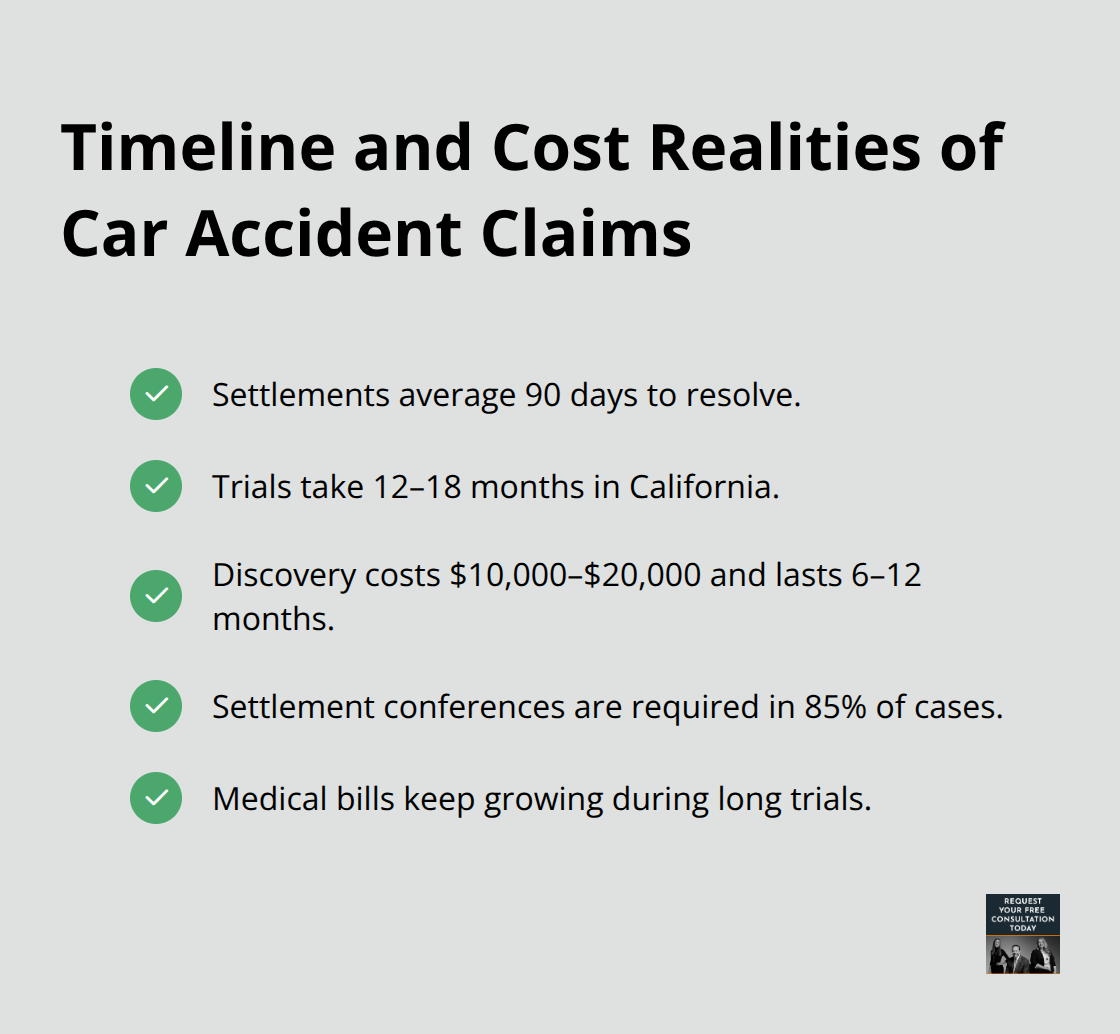
Settlements resolve within 90 days on average, while trials stretch 12-18 months due to California’s court backlog. Discovery alone costs $10,000 to $20,000 and lasts 6-12 months before any trial begins. The mandatory settlement conferences (required in 85% of personal injury cases) often produce better offers as trial dates approach. Medical bills and expenses continue to accumulate during lengthy trial processes, which makes quick settlement resolution financially attractive for most accident victims.
Financial Impact Analysis
The economic differences between settlements and trials extend beyond the final award amount. Trials require substantial upfront costs that can reach $20,000 or more before you see any compensation. Settlement negotiations typically involve minimal out-of-pocket expenses (mostly attorney fees and medical record requests). Insurance companies factor these cost differences into their settlement strategies, often offering amounts that reflect the savings from avoiding trial expenses.
These statistics and financial realities shape how insurance companies approach your case, but several key factors determine whether your specific situation will follow the typical settlement path or require trial intervention.
Factors That Determine Whether a Case Goes to Trial
Three primary factors push car accident cases toward trial rather than settlement. Medical expenses that exceed $25,000 or permanent disabilities consistently trigger litigation because insurance companies refuse adequate compensation. The National Highway Traffic Safety Administration confirms that catastrophic injuries (spinal damage, traumatic brain injuries, or multiple fractures) require trial intervention when insurers offer settlements that cover only 20-30% of actual damages. Cases with disputed liability face trial when fault remains unclear or multiple parties share responsibility under California’s comparative negligence system.

Insurance Coverage Disputes Drive Litigation
Policy limit disputes and coverage denials force cases to trial when insurance companies deny claims or offer inadequate limits. California’s minimum liability requirements increased to $30,000 per person in January 2025, but severe accidents often exceed these limits by hundreds of thousands. Uninsured motorist claims and disputes over policy interpretations require judicial resolution when insurance companies refuse fair coverage. Settlement negotiations break down when insurers claim policy exclusions or question the validity of medical treatments, particularly for soft tissue injuries or psychological trauma (which affects 39% of accident survivors according to the American Psychological Association).
Settlement Breakdown Triggers Trial
Negotiation failures occur when settlement offers fall substantially below documented damages or when insurance companies refuse to acknowledge clear liability. Insurance adjusters aim to settle claims for the lowest amount possible, but stubborn adjusters sometimes force trials rather than pay fair compensation. Time pressure tactics near the two-year statute of limitations deadline often backfire when victims have strong legal representation. Successful trial preparation itself increases settlement leverage, as insurers recognize the potential for adverse verdicts in Santa Cruz County (where juries award higher damages in 60% of cases compared to settlement offers).
These factors create the foundation for trial decisions, but understanding the specific advantages and disadvantages of each path helps accident victims make informed choices about their legal strategy.
Should You Settle or Go to Trial?
Settlement provides immediate financial relief without the uncertainty and stress of trial proceedings. Accident victims receive compensation within 90 days on average, which allows them to pay medical bills and replace lost income quickly. The California Judicial Council confirms that 95% of cases settle because victims prefer guaranteed compensation over the unpredictable nature of jury verdicts. Settlement negotiations avoid the substantial costs of discovery (which range from $10,000 to $20,000), plus expert witness fees that can exceed $5,000 per witness.

Insurance companies know these financial pressures and often structure settlement offers to account for the savings from trial expense avoidance.
Trial Awards Can Exceed Settlement Offers Significantly
Trials in Santa Cruz County produce awards that average 60% higher than initial settlement offers when plaintiffs win their cases. The National Safety Council data shows that successful trials can yield compensation several times larger than settlement proposals, particularly for catastrophic injuries or clear liability cases. Jury trials allow victims to present their full story, which includes pain and suffering damages that insurance adjusters typically minimize during settlement negotiations. However, trial outcomes remain completely unpredictable – some verdicts fall below settlement offers, and losing at trial means receiving nothing while still owing attorney fees and court costs.
California Evidence Rules Create Trial Risks
The California Evidence Code requires strict adherence to procedural rules that can exclude important evidence, which makes even strong cases vulnerable to unexpected outcomes. Judges may exclude witness testimony or medical records if attorneys fail to follow proper foundation requirements. Insurance defense attorneys use these technical rules to challenge evidence that supports your claim. Trial preparation demands months of work to meet these strict procedural standards, while settlement negotiations operate with more flexibility.
Financial Risk Analysis Favors Quick Resolution
Trial preparation requires substantial upfront investment with no guarantee of return, while settlements provide certainty for both parties. Discovery costs accumulate quickly through depositions, medical examinations, and document production, often reaching $15,000 before any trial begins. Court filing fees start at $435 for cases seeking over $25,000 in damages, plus additional costs for jury selection and trial transcripts. The emotional toll of lengthy litigation affects 39% of accident survivors according to the American Psychological Association, which makes quick settlement resolution beneficial for psychological recovery.
Final Thoughts
The statistics paint a clear picture: over 90% of car accident cases settle out of court, with only 4-5% that proceed to trial. The question of how many car accident cases go to trial helps you set realistic expectations for your situation. While trials can produce awards 60% higher than settlement offers, they also carry substantial risks and costs that can exceed $20,000 before you receive any compensation.
Your decision depends on injury severity, liability clarity, and settlement offer adequacy. Cases with medical expenses over $25,000 or permanent disabilities often require trial intervention when insurance companies offer inadequate compensation. However, the guaranteed nature of settlements appeals to most accident victims who need immediate financial relief (particularly when medical bills continue to accumulate).
The complexity of California’s legal system makes professional guidance essential for Santa Cruz County residents. We at Schaar & Silva LLP help accident victims navigate these decisions through case evaluation, insurance negotiations, and trial preparation when necessary. Our team handles the legal complexities while you focus on recovery.
