
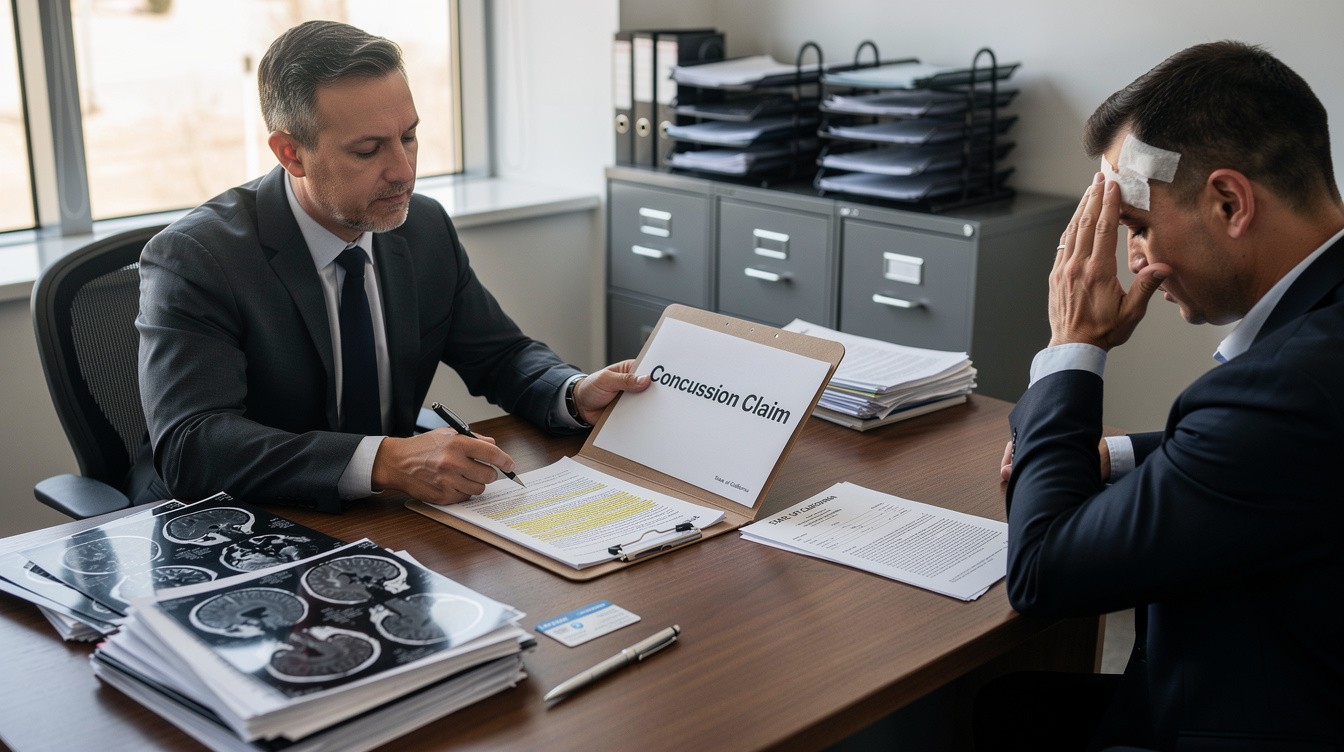
A concussion from a car accident can change your life in seconds, yet many insurance companies treat these brain injuries as minor complaints. We at Schaar & Silva LLP know that concussion claims in California require solid medical evidence and a clear understanding of how the law protects you.
This guide walks you through the filing process, shows you how to calculate fair compensation, and explains the tactics insurers use to minimize settlements.
How Concussions Occur and Why Documentation Wins Your Case
What Happens to Your Brain in a Car Accident
A concussion from a vehicle collision occurs when your head strikes an object or your brain moves forcefully inside your skull, causing chemical changes and sometimes stretching and damaging brain cells. In car accidents, this happens even at speeds as low as 10 mph, yet many people don’t realize they’ve suffered a concussion until symptoms emerge hours or days later. The impact doesn’t need to be dramatic-rear-end collisions, T-bone crashes, and even minor fender-benders create enough force to injure your brain. What makes concussions particularly dangerous is that CT scans and MRIs often show nothing, making these injuries invisible to standard medical imaging. This invisibility is exactly why insurance companies exploit concussion cases, claiming the injury isn’t real or isn’t as severe as you claim. The Mayo Clinic reports that 15 to 20 percent of concussion patients develop post-concussion syndrome, meaning your symptoms could last months or years, requiring ongoing treatment and causing permanent changes to your work and daily life.
California’s Two-Year Filing Window
California law gives you two years from the accident date to file a personal injury claim under California Code of Civil Procedure Section 335.1. This deadline is absolute-miss it and you lose your right to compensation entirely. If a government vehicle caused your accident, the timeline is even tighter: you must file an administrative claim within six months before you can pursue a lawsuit. Acting fast strengthens your settlement position because early medical documentation and evidence gathering create a compelling record. The sooner you obtain neuropsychological testing, imaging reports, and detailed medical records, the harder it becomes for insurers to deny the injury’s severity. California follows pure comparative negligence, meaning even if you were partially at fault for the accident, you can still recover damages-though your award will be reduced by your percentage of fault. This legal framework protects you, but only if you file on time and build a rock-solid case with comprehensive evidence.
Why Documentation Decides Your Payout
Concussion settlements in California range from $10,000 for mild cases to over $1,000,000 for severe long-term injuries, but the difference between a lowball offer and fair compensation comes down to documentation. Insurance companies will request medical records, wage loss statements, therapy notes, and proof of ongoing symptoms. Without this paper trail, they’ll argue your injury resolved quickly and doesn’t warrant substantial compensation. Start a symptom journal immediately after your accident, recording daily headaches, memory problems, sleep disruption, mood changes, and how these symptoms affect your job performance and relationships. Gather all medical bills, prescription receipts, and treatment notes from neurologists, neuropsychologists, or vestibular therapists. Request wage loss documentation from your employer showing time off work or reduced hours due to your injury. This meticulous documentation transforms your claim from a he-said-she-said dispute into an undeniable record of financial and personal harm that justifies higher settlements. The next section explains how to gather this medical evidence and organize it in a way that strengthens your negotiating position with insurers.
Building Your Case: Medical Evidence and Damage Calculation
Neuropsychological Testing Proves What Scans Cannot
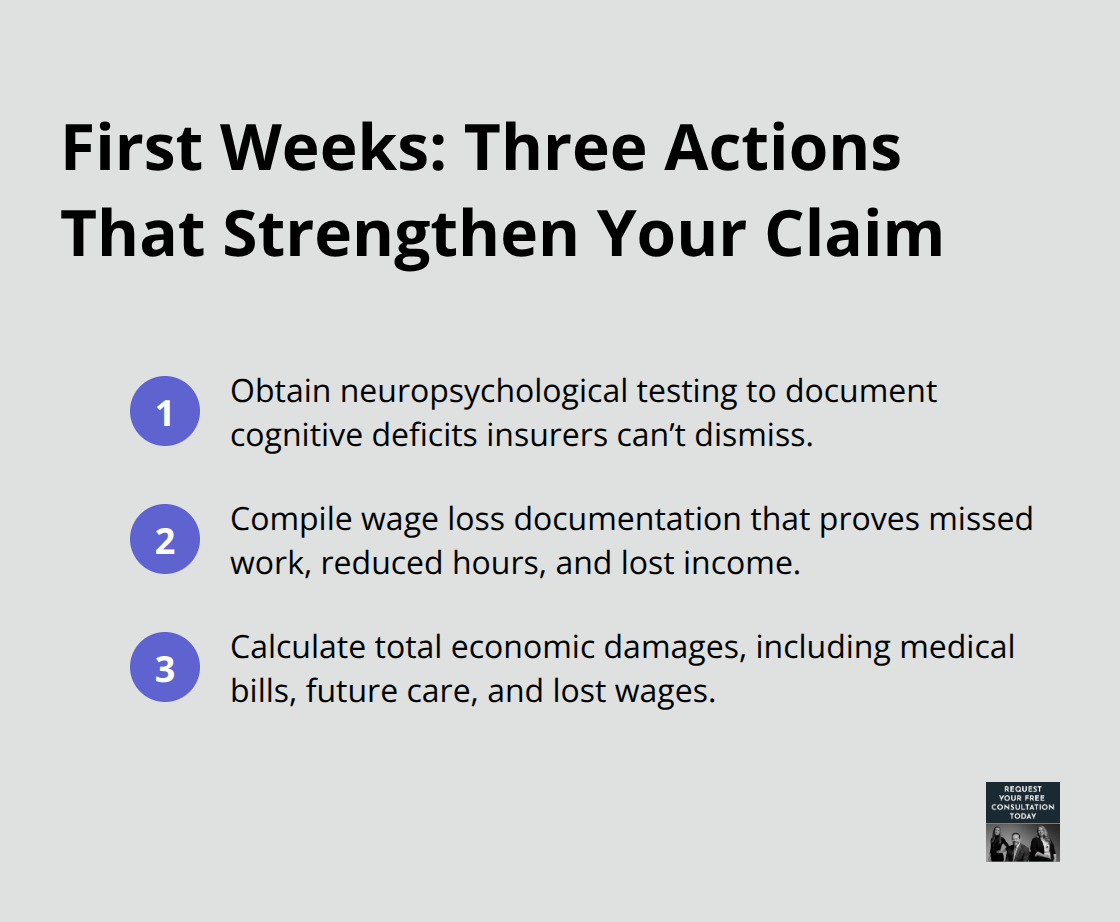
The path from accident to settlement hinges on three concrete actions taken in the first weeks after your injury. First, obtain neuropsychological testing that documents your cognitive deficits-memory lapses, attention problems, processing speed-because insurers will claim you’re exaggerating symptoms that don’t show on standard scans.
The Mayo Clinic data showing 15 to 20 percent of concussion patients develop post-concussion syndrome gives you a statistical foundation for arguing that your case belongs in the moderate-to-severe range, not the mild category insurers prefer. Request copies of all medical records, including ER reports, imaging results, and follow-up visits with neurologists or vestibular therapists; organize these chronologically and flag any notations about symptom progression or functional limitations.
Wage Loss Documentation Quantifies Your Financial Harm
Second, compile wage loss documentation that quantifies your financial harm. Ask your employer for written confirmation of dates you missed work, hours reduced due to medical appointments or symptom severity, and any lost overtime or bonuses. If you’re self-employed, gather invoices, client communications, and tax records showing reduced income during your recovery period. An economist can then project lifetime earning capacity loss if your symptoms prevent you from returning to your previous job-this single figure often justifies settlements in the $150,000 to $500,000 range for moderate cases.
Calculate Total Economic Damages with Precision
Third, calculate total economic damages by adding medical expenses (past and projected future costs), lost wages, and rehabilitation costs like vestibular therapy or cognitive rehabilitation. California settlements for concussion cases typically range from $10,000 for mild injuries to over $1,000,000 for severe long-term cases, with moderate injuries commonly settling between $50,000 and $250,000 when damage calculation is thorough.
Anchor Your Settlement Demand in Hard Numbers
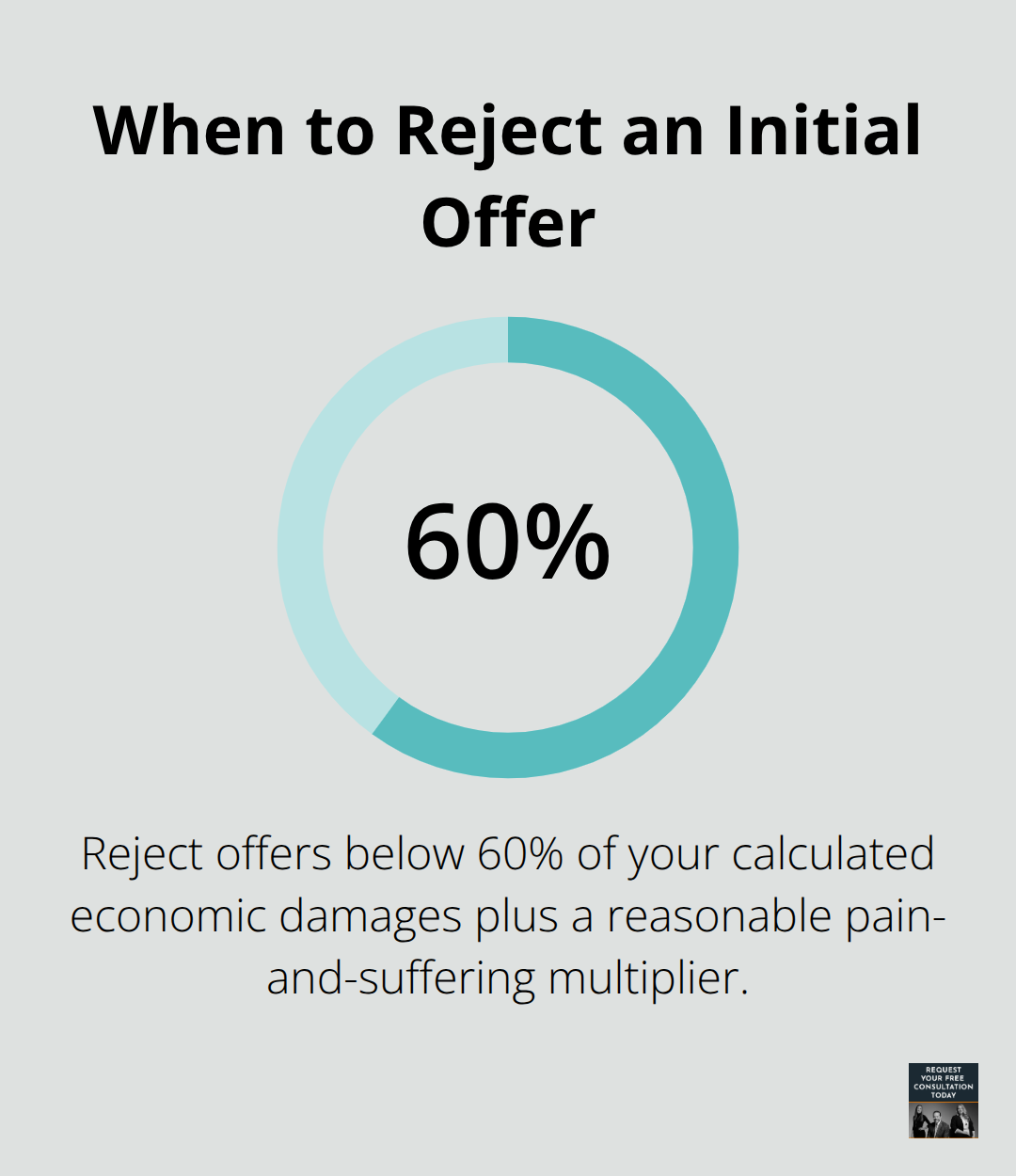
Insurance companies will open settlement negotiations with a demand letter, and your response should anchor the conversation in hard numbers, not emotion. If the insurer’s initial offer falls below 60 percent of your calculated economic damages plus a reasonable multiplier for pain and suffering-typically 2.5x to 4x economic damages for moderate concussion cases-reject it outright and explain why their valuation ignores post-concussion syndrome risk and long-term impairment. Avoid accepting any settlement without having an attorney review the terms, because once you sign, you forfeit all future claims related to that injury.
Document Everything in Writing During Negotiations
If negotiations stall, the case moves toward mediation or litigation, where recent California jury verdicts demonstrate that concussion and brain injury cases yield substantial awards when medical evidence is compelling. Document everything in writing during negotiations: send emails summarizing settlement discussions, confirm any verbal offers in follow-up messages, and never discuss settlement amounts or case details on the phone without a record. The insurance company’s goal is to minimize payout; your goal is to maximize recovery based on actual medical evidence and economic loss, and that requires patience, organization, and refusal to accept lowball offers that don’t reflect the injury’s true impact on your life. When insurers resist fair valuations, the next section explains the specific obstacles you’ll face and how to overcome them.
What Stops Insurers From Paying Fair Settlements
Insurance companies use three predictable tactics to suppress concussion payouts, and understanding these obstacles lets you counter them with evidence and strategy.
Insurers Dismiss Invisible Brain Injuries
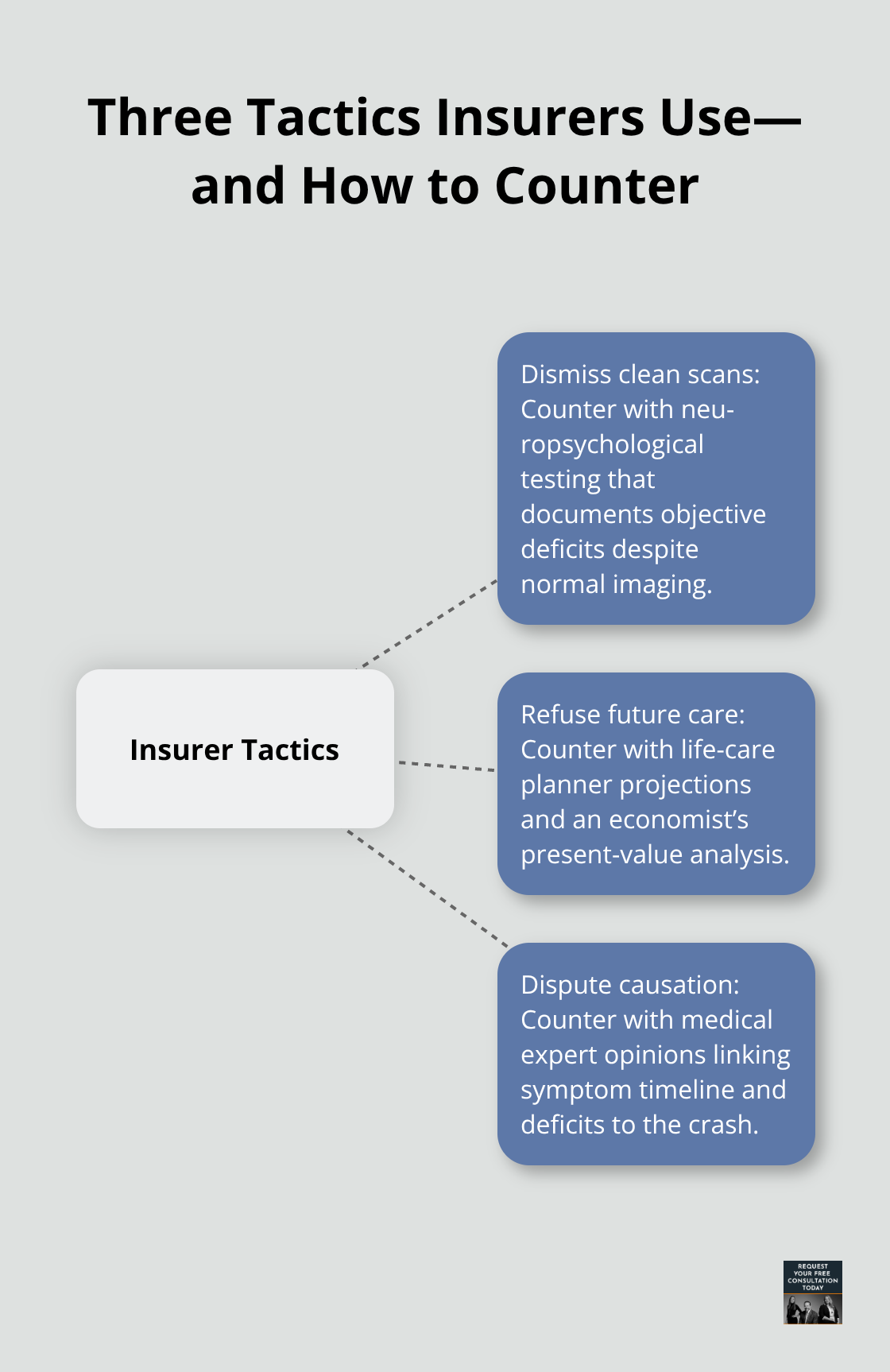
Insurers downplay symptom severity by claiming that because your CT or MRI scans appear normal, your concussion must be mild or nonexistent. This argument ignores the Mayo Clinic data showing 15 to 20 percent of concussion patients develop post-concussion syndrome with symptoms lasting months or years, yet insurers routinely cite clean imaging as proof of minimal injury. You can fight back by obtaining neuropsychological testing that documents cognitive deficits insurers cannot dismiss-memory problems, processing speed delays, attention lapses show up on objective testing even when brain scans look normal. Request formal reports from a neuropsychologist that link specific test results to your accident and explain how these deficits prevent you from working or functioning at your pre-injury level. When the insurer claims your symptoms are exaggerated, respond with the neuropsychologist’s written assessment and ask the insurer to produce their own independent medical evaluation contradicting your results.
Insurers Refuse to Fund Future Care Costs
Insurers dispute long-term medical costs by refusing to fund future care, arguing that your symptoms will resolve without ongoing treatment. Concussion settlements in California range from $10,000 for mild cases to over $1,000,000 for severe long-term injuries, and the gap between these figures hinges on whether you can prove future medical needs. You should hire a life-care planner to project your lifetime costs for vestibular therapy, cognitive rehabilitation, neurologist follow-ups, and medication management. An economist then translates these projected costs into present-day dollars and lifetime earning capacity loss if your symptoms prevent return to your previous job. When the insurer offers a settlement that ignores future care costs, calculate what their offer actually covers-if they propose $50,000 but your documented medical bills total $30,000 and your economist projects $80,000 in future care, their offer leaves you $60,000 short. Present this gap in writing and demand they increase their offer to cover documented future needs.
Causation Disputes Require Medical Expert Testimony
Proving causation between your accident and concussion symptoms requires medical experts who can link the impact force to your specific injuries. Insurers argue that your symptoms stem from pre-existing conditions, depression, or normal aging rather than the accident itself. You should request medical records showing your health status before the accident and have your neurologist document in writing that your symptom timeline and severity are consistent with traumatic brain injury from vehicle impact. The American Academy of Neurology acknowledges that delayed symptom onset can occur, so document when symptoms first appeared and how they progressed. If symptoms emerged hours or days after the accident, that timeline supports causation because concussion symptoms often develop gradually rather than immediately. When insurers claim your pre-existing conditions explain your current symptoms, have your treating physician specifically address this argument in a declaration stating that your current symptoms exceed what would be expected from your baseline condition and directly correlate with the accident’s impact force. Reject any settlement offer that doesn’t address these three obstacles with concrete medical evidence and economic projections, because accepting a lowball figure forfeits your right to pursue additional damages later.
Final Thoughts
Your concussion claim succeeds when you combine thorough medical documentation, precise damage calculation, and refusal to accept inadequate settlement offers. Start immediately after your accident by obtaining neuropsychological testing, organizing medical records chronologically, and documenting wage loss with written confirmation from your employer. Calculate your total economic damages by adding medical expenses, lost wages, and projected future care costs, then anchor your settlement demand in these hard numbers rather than emotion.
When insurers claim your brain scans look normal or dispute future medical needs, respond with neuropsychologist reports and life-care planner projections that prove causation and quantify long-term costs. Reject any initial offer that falls below 60 percent of your economic damages plus a reasonable multiplier for pain and suffering (typically 2.5x to 4x for moderate cases), and document all settlement discussions in writing so you have a clear record of what the insurance company has offered and refused. Concussion claims in California demand this level of precision because insurers exploit the invisibility of post-concussion syndrome and count on injured people to accept lowball figures out of desperation.
Contact Schaar & Silva LLP for a consultation about your concussion claim, and let our legal team evaluate your case strength, gather evidence, and pursue the compensation you deserve. The two-year filing deadline approaches faster than you expect, and early action strengthens your negotiating position with insurers who count on delay and confusion to minimize payouts.
