
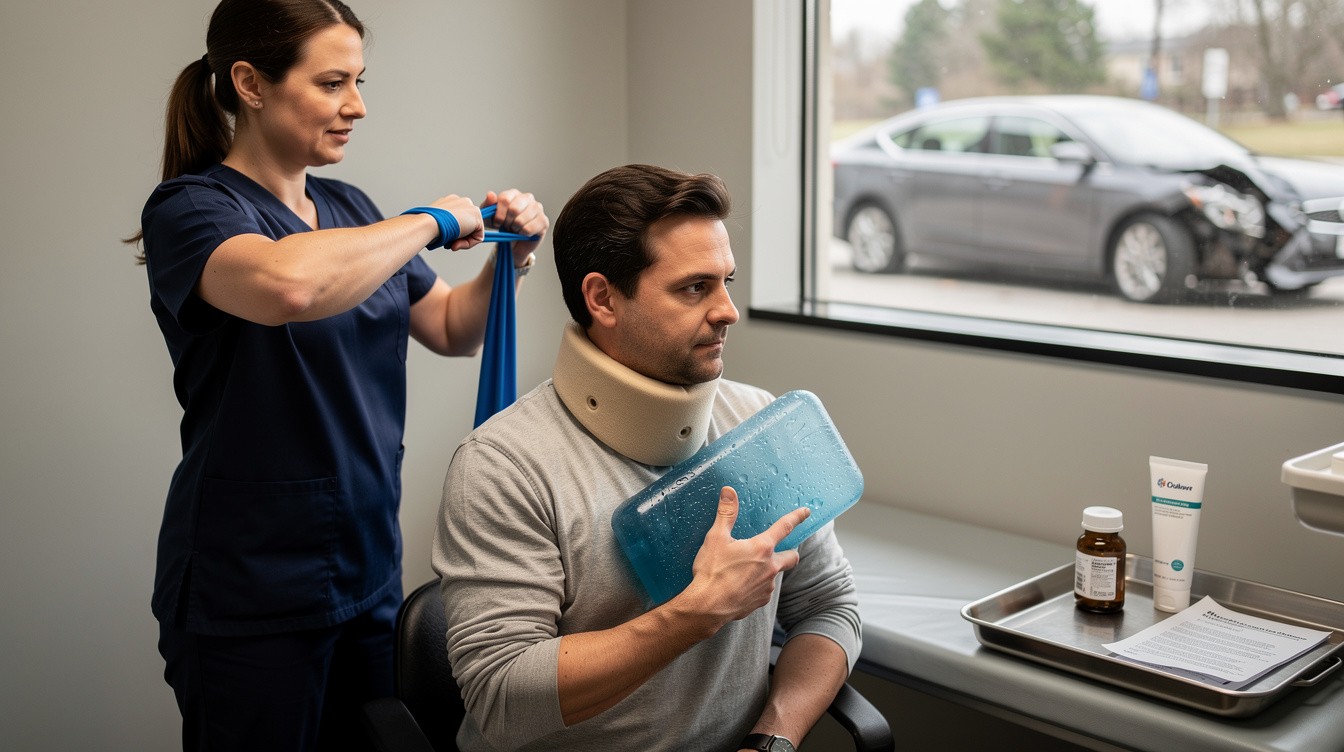
Car accident pain doesn’t always show up immediately. Sometimes it takes hours or days for injuries to become noticeable, and by then, you’re already dealing with discomfort that affects your daily life.
The good news is that effective car accident pain management strategies exist, and knowing your options helps you recover faster and protect your legal claim. We at Schaar & Silva LLP help accident victims understand both their healing options and their rights.
The First 72 Hours: What Actually Works
Start Treatment Immediately
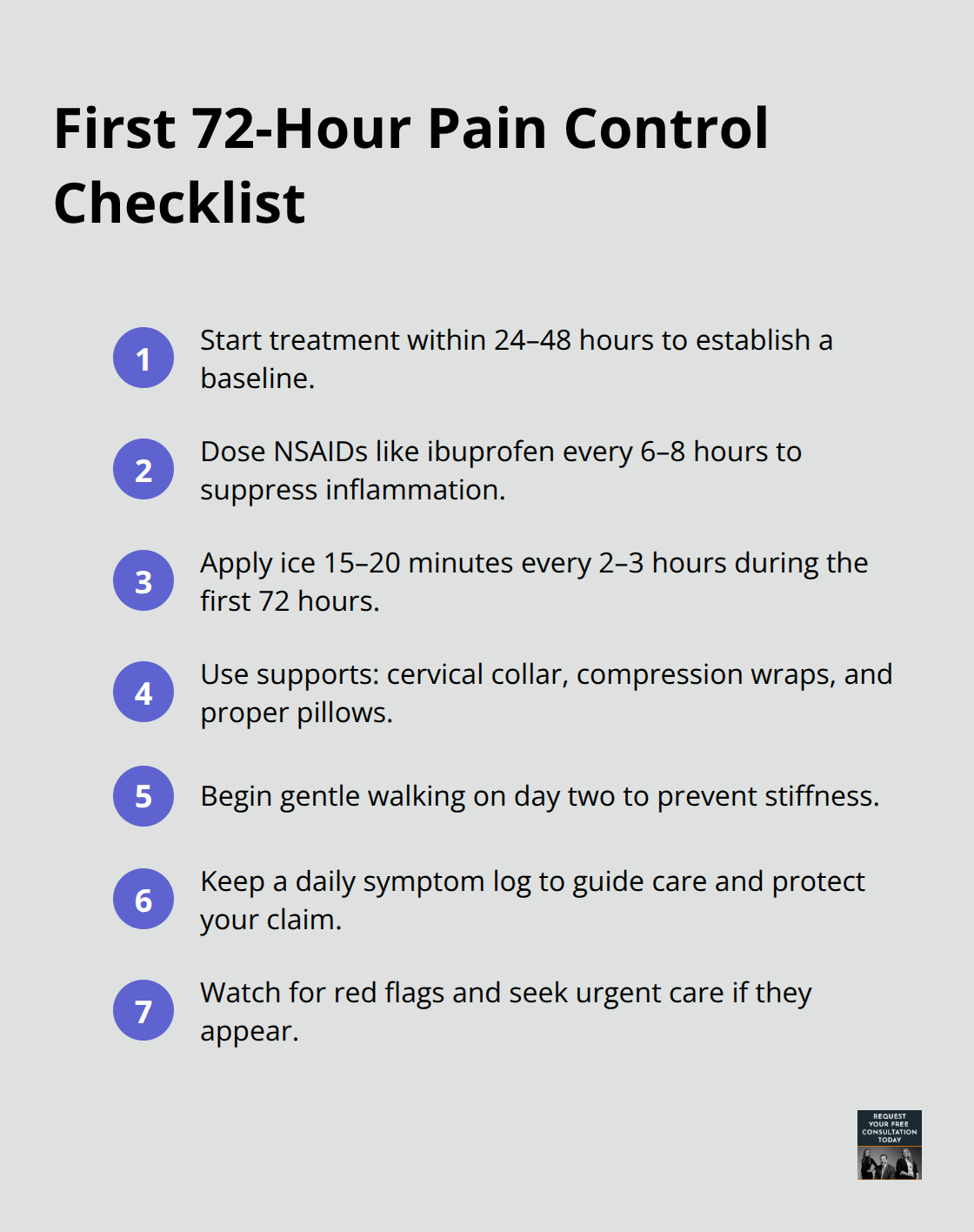
The window after a car accident is critical. Within 72 hours, your body’s inflammatory response peaks, and how you manage pain during this period directly affects whether you develop chronic pain later. Start treatment within 24 to 48 hours of the crash-this establishes a health baseline and prevents hidden injuries from worsening. Over-the-counter pain relievers like ibuprofen and naproxen work best during this acute phase because they target inflammation at its source, not just mask symptoms.
Medication Timing and Selection
Take ibuprofen every 6 to 8 hours rather than waiting until pain becomes unbearable; this keeps inflammation suppressed consistently. Acetaminophen doesn’t reduce swelling, so it’s less effective for post-accident pain than NSAIDs. Your goal is to control inflammation while your body heals, not to eliminate all discomfort through medication alone.
Ice Therapy in the Acute Phase
Ice is your first tool-apply it for 15 to 20 minutes every 2 to 3 hours during the first 72 hours to numb pain and reduce swelling. After that window closes, switch to heat therapy to relax muscles and improve circulation. Contrast therapy (alternating 3 minutes of heat with 1 minute of ice) works well once acute swelling subsides, typically after the first 72 hours.
Immobilization and Controlled Movement
Many people skip proper immobilization and pay for it later with prolonged stiffness. Use a cervical collar for neck injuries, compression wraps for limbs, and pillows to support your spine while resting. Rest doesn’t mean complete bed rest; gentle movement like slow walking after the first day prevents stiffness and actually speeds recovery.
Track Your Symptoms and Watch for Red Flags
Keep a daily symptom log tracking pain intensity, sleep quality, and what activities triggered flare-ups; this document helps clinicians adjust your treatment plan and becomes valuable if your case requires legal documentation. If you experience red-flag symptoms like numbness, weakness, severe headaches, confusion, dizziness, or difficulty breathing, seek urgent care immediately rather than relying on home management alone. Most people recover within three months with proper early care, but delaying professional evaluation increases chronic pain risk significantly. What happens next depends on how your body responds to these initial strategies-some injuries require additional interventions beyond home care.
Beyond Home Care: What Real Recovery Looks Like
Physical Therapy Restores Function
Physical therapy becomes your most powerful tool once acute inflammation subsides, typically around week two post-accident. Unlike passive treatments that simply reduce pain temporarily, physical therapy actively restores function and prevents chronic pain from developing. A 2019 study in JAMA Internal Medicine found that people who engaged in structured physical therapy within the first month after injury had significantly better long-term outcomes and lower rates of persistent pain compared to those who relied solely on medication.
Start with gentle range-of-motion exercises, progress to strengthening work targeting stabilizer muscles around injured areas, and gradually reintroduce functional movements that mirror your daily activities. Most people need 12 to 20 sessions over 6 to 8 weeks, though this varies based on injury severity. The key is consistency: skipping sessions delays progress and extends recovery time unnecessarily.
Medication Strategy for Pain Control
Prescription medications enter the picture when over-the-counter options fail to control pain enough for you to participate meaningfully in physical therapy. NSAIDs like meloxicam or naproxen work for inflammation-driven pain, while medications like duloxetine address neuropathic pain (numbness, tingling, radiating sensations), and gabapentin helps with nerve-related discomfort.
Opioids should never be your first choice and absolutely should not become a long-term solution; they mask pain without addressing underlying injury and carry serious dependence risks. If your doctor prescribes opioids, use them only for 3 to 7 days maximum while establishing other pain management strategies. Ask your physical therapist specifically about exercises you can do at home between appointments, because the work you do outside the clinic matters as much as supervised sessions.
Complementary Therapies That Accelerate Healing
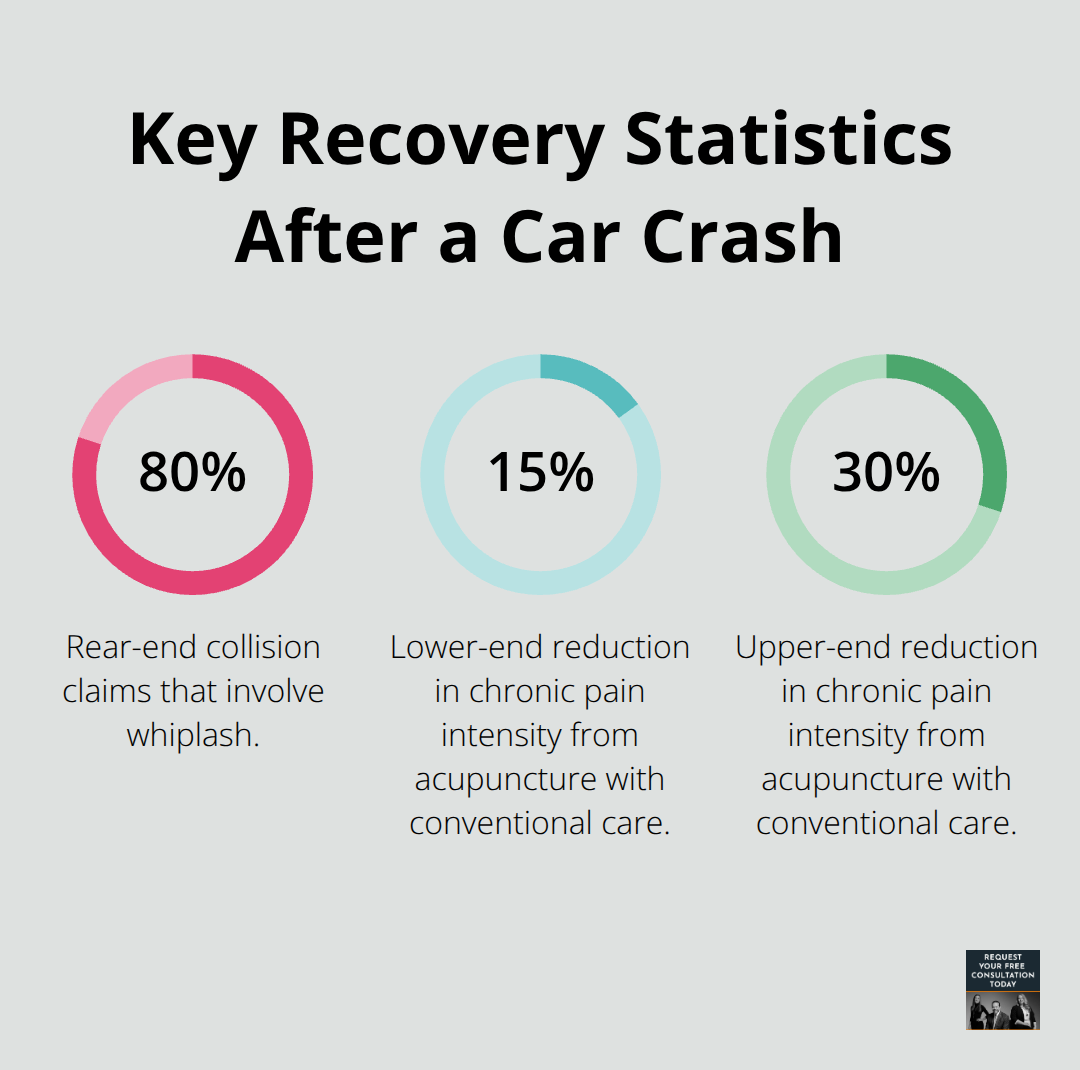
Alternative therapies like acupuncture and massage complement rather than replace physical therapy. Research shows acupuncture reduces chronic pain intensity by 15 to 30 percent when combined with conventional care, and massage therapy improves circulation, reduces muscle tension, and supports the healing process.
Schedule massage 1 to 2 times weekly during the first month, then taper frequency as your condition improves.
The most successful recovery plans integrate multiple approaches: medication that enables participation in therapy, consistent physical therapy, strategic use of ice and heat, proper sleep hygiene, and complementary techniques tailored to your specific injury pattern. This integrated strategy works far better than any single treatment alone-and it sets the stage for addressing the specific injuries that commonly emerge from car accidents.
The Three Injuries That Define Car Accident Recovery
Whiplash: The Hidden Threat in Rear-End Collisions
Whiplash accounts for roughly 80 percent of rear-end collision claims according to insurance data. Your neck contains seven vertebrae stacked with minimal muscle protection, making it vulnerable to sudden acceleration-deceleration forces that stretch soft tissues beyond their normal range. Symptoms often appear 24 to 48 hours after impact rather than immediately, which is why many accident victims dismiss initial stiffness as minor.
The reality differs significantly: whiplash causes muscle strains, ligament sprains, and sometimes disc injuries that require aggressive early treatment to prevent chronic neck pain. Stabilize your neck with a cervical collar for the first 48 to 72 hours, then transition to gentle range-of-motion exercises. If radiating pain travels down your arm, numbness affects your fingers, or persistent headaches accompany neck pain, imaging like MRI becomes necessary to rule out nerve compression or disc involvement. Most whiplash cases resolve within 8 to 12 weeks with consistent physical therapy, but skipping early treatment substantially increases your risk of persistent pain lasting months or years.
Back and Spinal Injuries: Distinguishing Severity
Back and spinal injuries split into two distinct categories that require different treatment approaches. Muscle strains from impact forces typically cause localized pain and muscle spasms that respond well to NSAIDs, ice therapy, and physical therapy within 4 to 6 weeks. Disc injuries are far more serious: a herniated or bulging disc can press on nerve roots, causing radiating pain, numbness, or weakness that extends into your legs or feet.
Seek imaging immediately if you experience this type of pain rather than waiting to see if it resolves on its own. The CDC reports that early imaging in suspected disc injuries reduces the risk of permanent nerve damage and guides treatment decisions between conservative care and interventional options like epidural steroid injections. Your treatment intensity should match your symptoms: severe pain disrupting sleep or work warrants faster escalation to more advanced therapies, while mild discomfort often responds to conservative approaches. Truck accidents produce particularly severe spinal trauma due to impact force and vehicle weight differences, necessitating closer monitoring and potentially quicker intervention.
Soft Tissue Damage: Why It Matters More Than You Think
Soft tissue damage encompasses bruising, swelling, and muscle tearing that creates pain disproportionate to what imaging shows. Many accident victims underestimate soft tissue injuries because X-rays appear normal, then experience weeks of persistent pain and limited mobility. The seatbelt itself causes abdominal and chest wall contusions that can affect breathing and core stability during recovery.
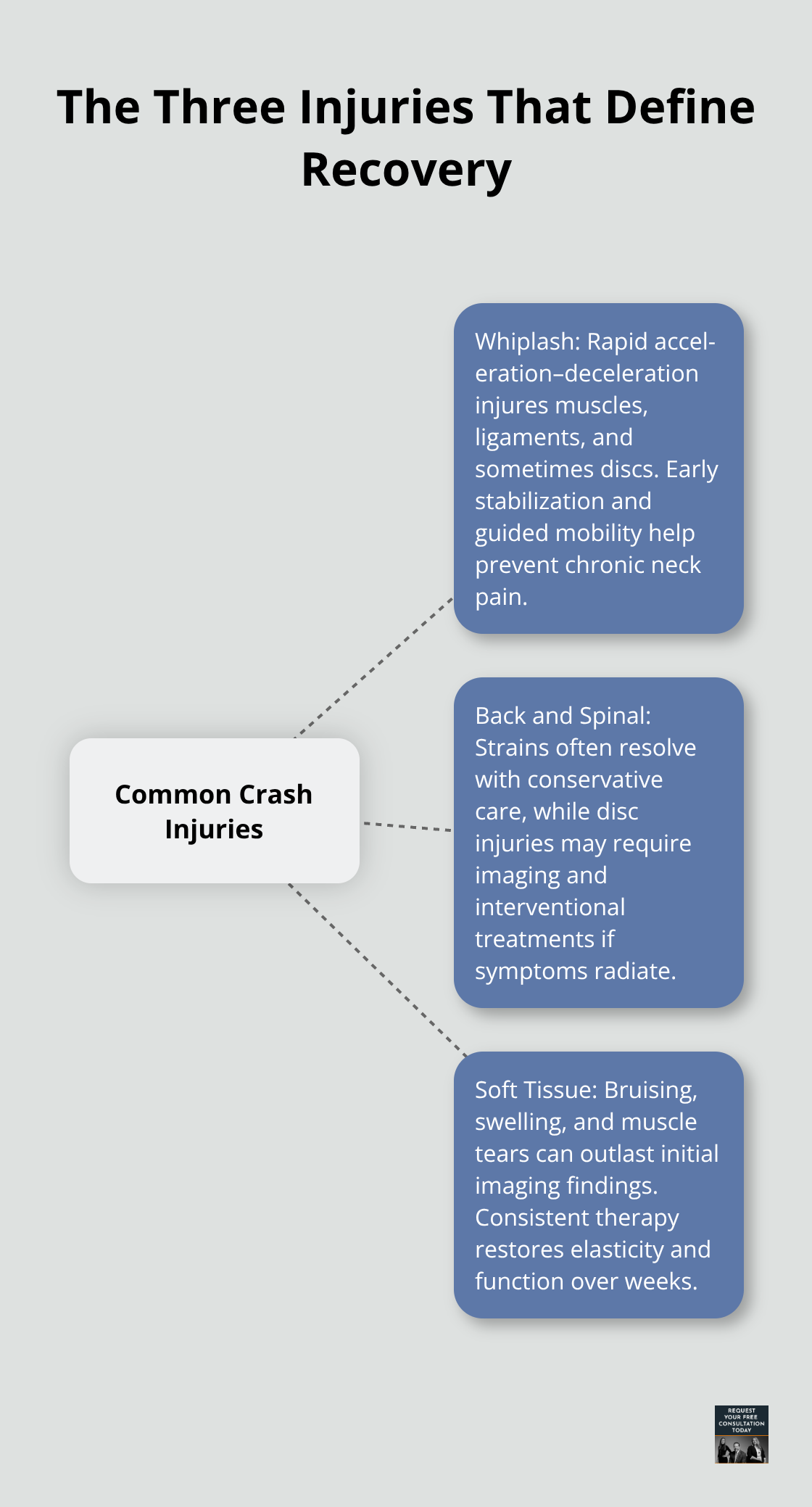
Treatment focuses on reducing inflammation through ice therapy, compression wraps, and NSAIDs during the first 72 hours, then progresses to massage and targeted physical therapy to restore tissue elasticity and function. Soft tissue injuries heal slower than bone fractures, typically requiring 8 to 12 weeks of consistent care, which means your rehabilitation plan must extend well beyond initial pain relief.
Final Thoughts
Effective car accident pain management requires a coordinated strategy that addresses immediate inflammation, restores function through physical therapy, and prevents chronic pain from developing. The approach you choose during those critical first 72 hours directly influences your recovery timeline and long-term outcomes. Over-the-counter medications combined with ice therapy, proper immobilization, and early medical evaluation form your foundation, while physical therapy becomes essential for rebuilding strength and mobility as your body heals.
Whiplash, spinal injuries, and soft tissue damage each demand specific treatment strategies tailored to your injury pattern. Documenting your symptoms, following medical recommendations consistently, and avoiding the temptation to rely on opioids long-term protects both your health and your legal position. Medical records establish the connection between the accident and your injuries while demonstrating the genuine impact on your life.
We at Schaar & Silva LLP understand that recovery involves more than just pain relief-it requires professional guidance at every step. Contact us to discuss your recovery and protect your rights while you focus on healing, and let our team support you through both the medical and legal complexities of your car accident pain management journey.
