
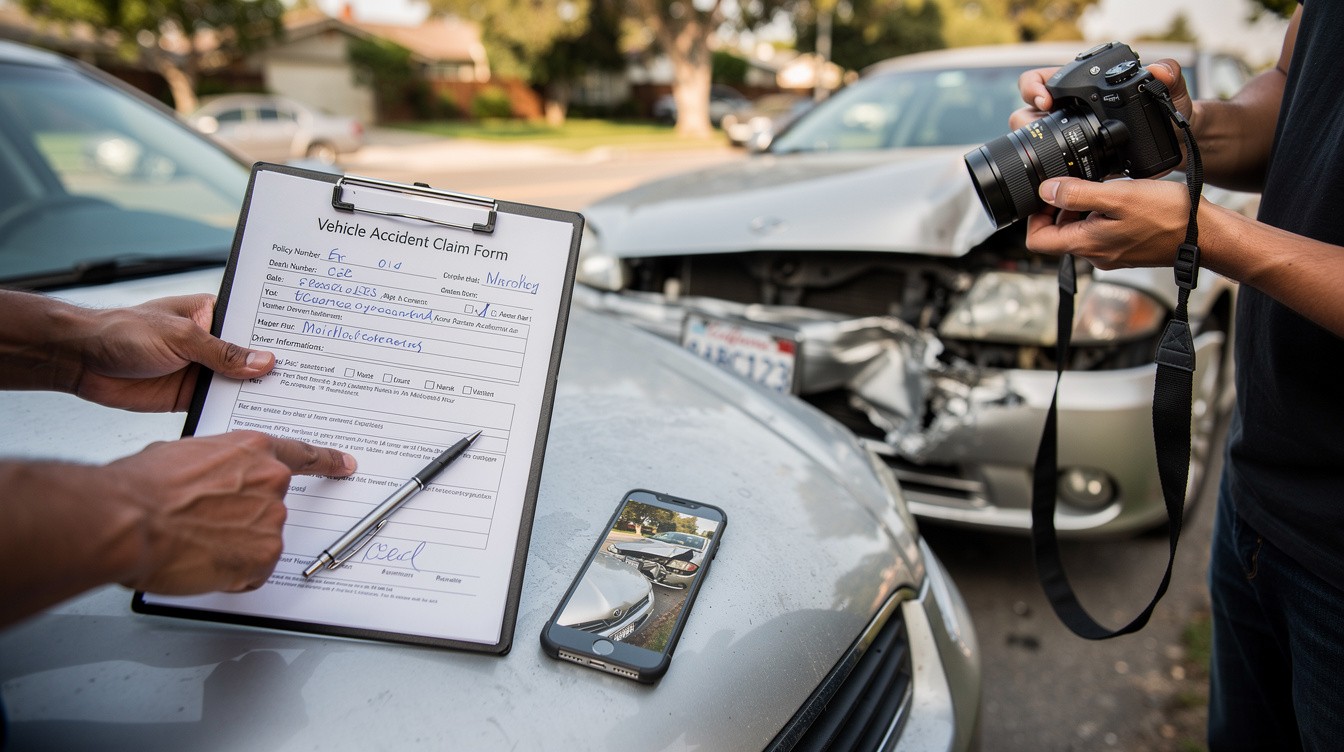
A vehicle accident claim in California involves specific legal rules and timelines you need to understand. At Schaar & Silva LLP, we help people navigate these requirements so they can recover what they’re owed.
This guide walks you through California’s accident laws, what to do immediately after a crash, and how to file your claim properly.
How California’s Accident Laws Affect Your Claim
Pure Comparative Negligence Works in Your Favor
California operates under a pure comparative negligence system, which fundamentally changes how accident claims work compared to many other states. You can recover damages even if you’re partially at fault for the accident. Your compensation gets reduced by your percentage of fault. For example, if you’re found 20 percent responsible for a crash and your total damages are $100,000, you’d recover $80,000. This matters significantly in Santa Cruz County, Sacramento, and Oakland because you shouldn’t automatically assume a claim is worthless if you bear some responsibility for what happened. California law recognizes that real accidents often involve shared fault, and the system reflects that reality.
Strict Deadlines for Filing Your Claim
California gives you two years from the date of your accident to file a personal injury claim, though property damage claims have a three-year window. This two-year deadline applies whether you’re in Santa Cruz County or anywhere else in the state. If your case involves a government vehicle, the timeline shrinks dramatically to just six months for personal injury claims and one year for property damage, according to California Government Code sections 905 and 911.2.
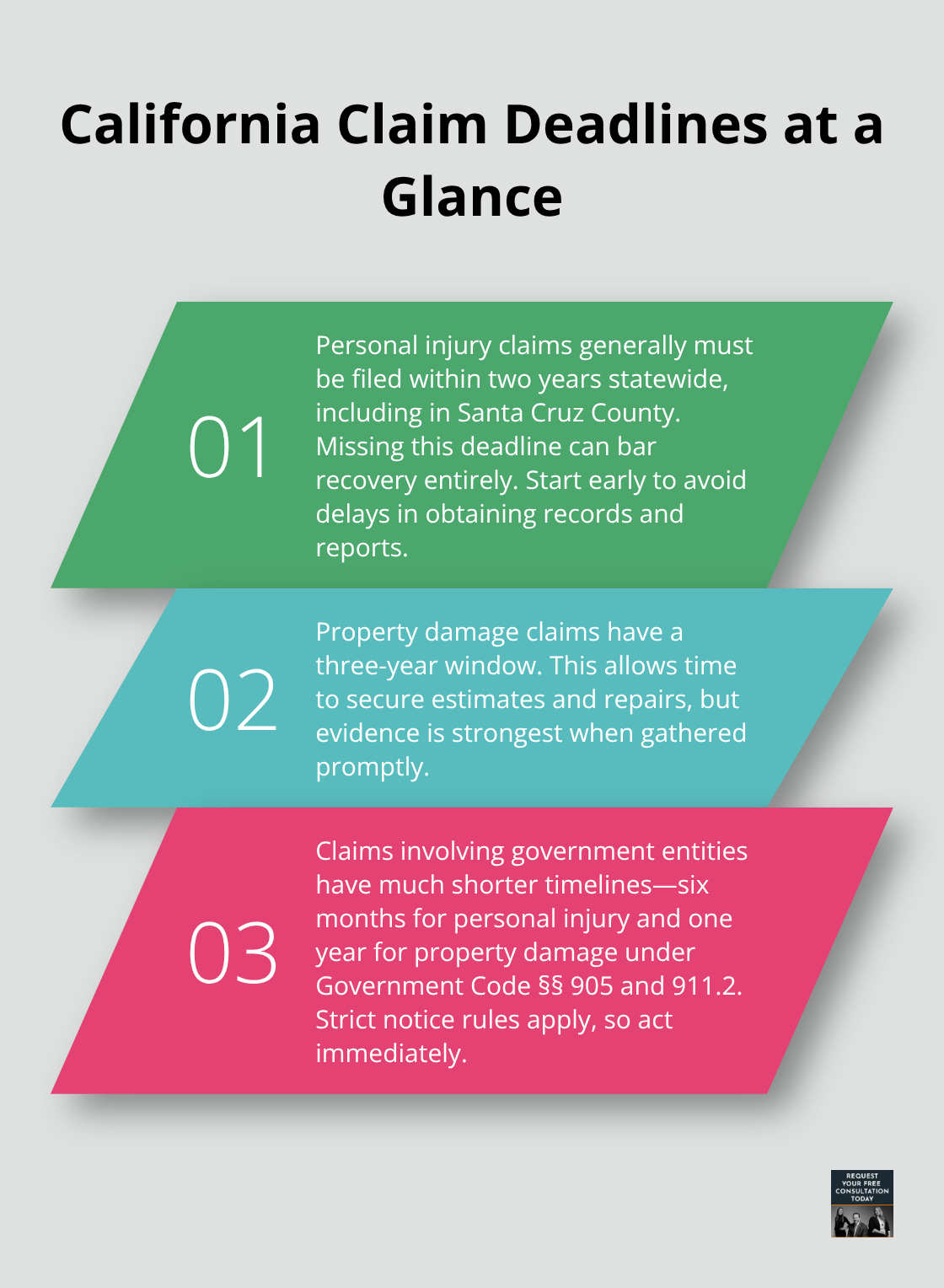
Starting your claim process early matters because delays in documentation and treatment weaken your case significantly. Insurance companies count on people missing these windows or waiting too long to gather evidence.
Insurance Coverage Gaps Leave You Exposed
California’s minimum auto insurance requirements haven’t kept pace with actual accident costs. The state mandates just $15,000 in property damage coverage and $30,000 per person or $60,000 per accident in bodily injury coverage. These minimums prove inadequate for serious injuries in today’s economy. Most accident victims with substantial injuries find these limits far too low, especially in urban areas like Oakland and Sacramento where medical costs run high. About 15 percent of California drivers remain uninsured, which is why carrying uninsured and underinsured motorist coverage protects you when the at-fault driver either has no insurance or insufficient limits to cover your damages. If you’re injured by an uninsured driver and lack UM coverage, California Proposition 213 restricts your ability to recover non-economic damages like pain and suffering unless the other driver was driving under the influence or had a felony conviction. Review your own policy limits now, not after an accident. Most people with significant assets or families should carry at least $100,000 per person and $300,000 per accident in bodily injury coverage, with matching uninsured motorist limits.
Economic and Non-Economic Damages Add Up Quickly
Economic damages in accident claims include medical expenses, lost wages, rehabilitation costs, and property damage repair. Non-economic damages cover pain and suffering, emotional distress, and loss of enjoyment of life. California places no cap on non-economic damages in vehicle accident cases, which means serious injuries result in substantial awards. The distinction matters because insurance companies often lowball offers by minimizing non-economic damages or disputing whether injuries warrant the treatment you received. Understanding what damages you can claim helps you evaluate settlement offers accurately and recognize when an insurer’s initial proposal falls short of what you actually deserve.
What to Do Right After Your Accident
Prioritize Safety and Call for Help
The first hour after a crash determines how strong your claim becomes. Your immediate actions either preserve critical evidence or allow it to disappear forever. Safety comes first, so check for injuries, call 911 if anyone needs medical attention, and move to a safe location if possible. Activate your hazard lights and stay away from traffic. Once you’re safe, start documenting everything because insurance companies and opposing parties will scrutinize your evidence heavily.
Document the Scene Thoroughly
Take photos of all vehicle damage from multiple angles, including close-ups of dents, broken glass, and contact points. Photograph the accident scene itself, including road conditions, traffic signals, lane markings, weather conditions, and any debris. Get clear shots of license plates from all vehicles involved.
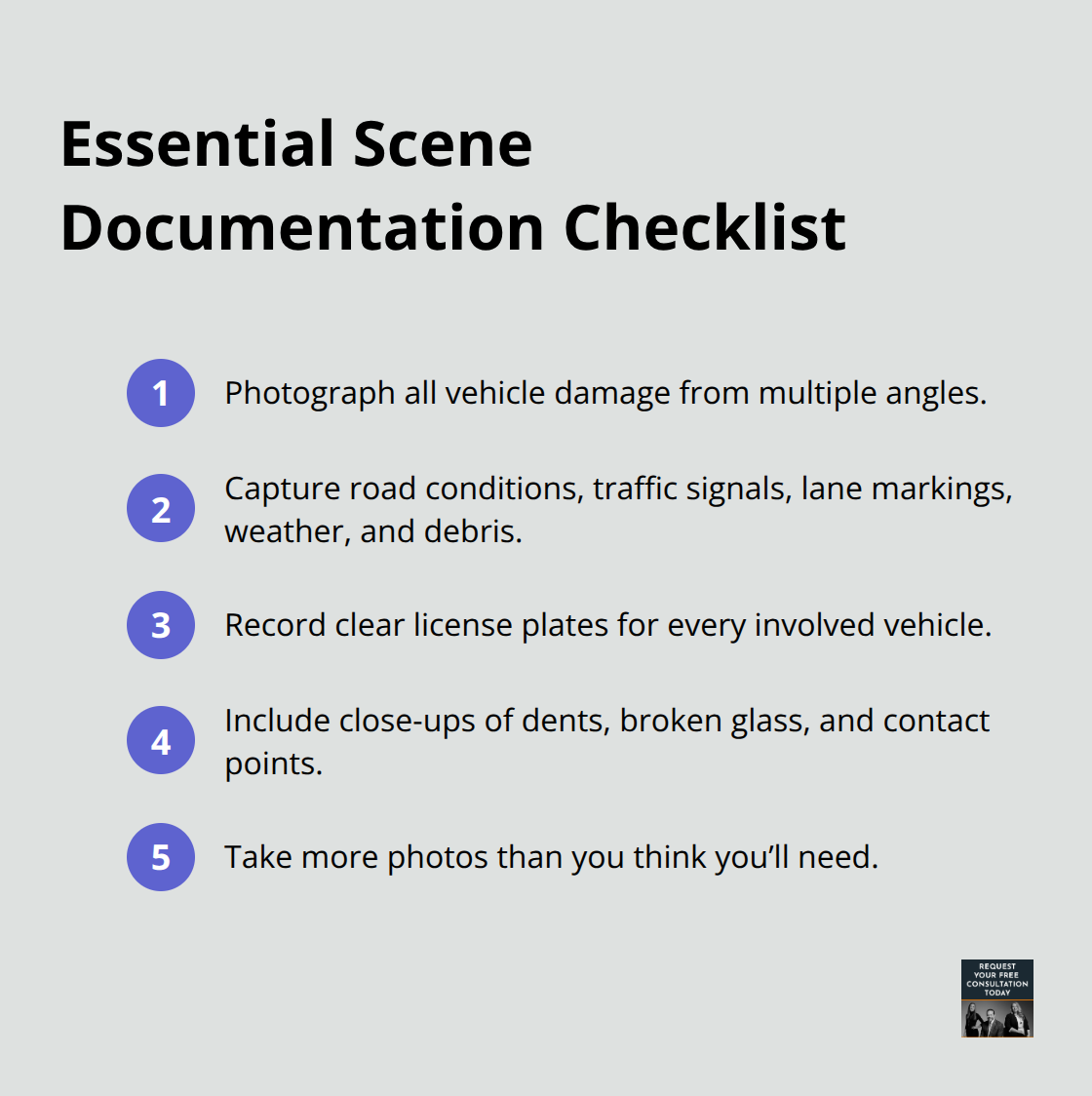
These photos matter far more than your memory will six months later when settlement discussions happen. Many people regret not taking enough photos at the scene because details fade and insurance adjusters question claims without visual proof.
Collect Information from Other Parties
Exchange information with the other driver immediately, collecting their name, address, driver’s license number, phone number, insurance company name and policy number, vehicle make and model, and license plate number. Do not admit fault or apologize at the scene, even if you think you caused the accident. Anything you say can be used against you later. If police respond, get the officer’s name, badge number, and the Traffic Collision Report number because you’ll need this to request the official report within five to ten business days.
Gather Witness Details Before They Leave
Talk to any witnesses before they leave and write down their names, phone numbers, and what they saw. Witness contact information disappears quickly once people leave the scene. Report the accident to your insurance company within 24 hours with a factual account of what happened, but do not sign any releases or recorded statements from the other driver’s insurance company without consulting your own insurer or an attorney first. Insurance companies use recorded statements to lock you into specific language that can later be used to minimize your claim.
Seek Medical Care and Preserve Records
Seek medical evaluation within 24 to 72 hours even if you feel fine, because some injuries like whiplash and internal injuries develop over days. Keep all medical records, bills, and receipts because these documents directly support your damages claim. Do not delay treatment or skip follow-up appointments because insurance companies view gaps in medical care as evidence that injuries weren’t serious. The steps you take now-from photos to medical visits to witness statements-form the foundation of your claim and directly influence what you recover later.
Filing Your Claim with Insurance Companies
Contact Your Insurer Immediately and Accurately
Notifying your insurance company within 24 hours sets the timeline for your entire claim process, and how you communicate matters tremendously. Provide a factual account of what happened without admitting fault or speculating about causes. Insurance adjusters listen carefully to initial statements and use them to build their position, so stick to observable facts: the date, time, location, weather conditions, vehicle damage, and whether emergency services responded. Do not authorize recorded statements from the other driver’s insurance company, and decline requests to sign releases or medical authorizations without reviewing them first.
Your own insurer has a legal duty to act in good faith, but the other party’s insurer has no such obligation to you. When you contact your insurer, ask specifically about your coverage limits, deductibles, rental car provisions, and whether your policy includes uninsured motorist protection. Request written confirmation of your claim number and the adjuster’s direct contact information. Many people make the mistake of having casual phone conversations and later discover that important details weren’t documented in their claim file. Follow up every conversation with an email summarizing what was discussed, and keep copies of everything you send to any insurance company.
Build Your Damages Case with Complete Documentation
Gathering complete medical documentation and repair estimates before negotiating with insurers strengthens your position significantly because you’ll know your actual damages rather than guessing. Collect all medical bills, receipts, prescription costs, and therapy invoices from day one through your final treatment. Document lost wages with pay stubs or employer letters showing how many hours you missed and your hourly rate. Request written repair estimates from at least two shops and include photos of the damage with each estimate.
Insurance companies frequently challenge repair costs, so multiple estimates demonstrate that your repair bill reflects fair market pricing. When the other party’s insurer makes an initial settlement offer, treat it as a starting point, not a final number. According to industry data, insurance companies typically open negotiations at 30 to 50 percent below what they ultimately pay, so a lowball offer doesn’t reflect your case’s actual value.
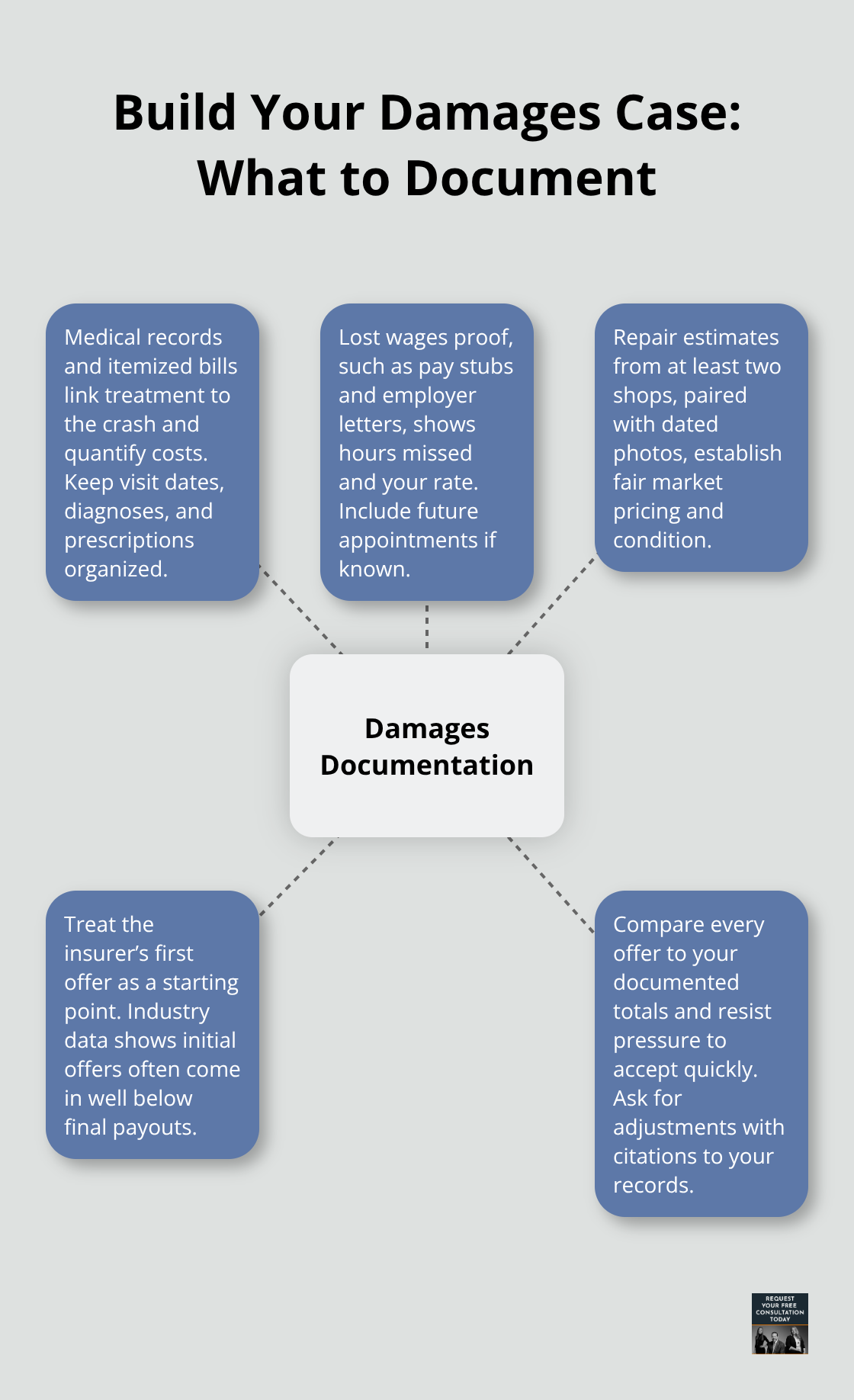
Take time to review the offer against your documented damages, and resist pressure to accept quickly.
Recognize Insurance Company Tactics and Respond Strategically
Insurers use urgency and convenience as tactics to settle claims for less than they’re worth, knowing that most people lack the patience or knowledge to negotiate effectively. If the other driver’s insurance company disputes your treatment or claims certain injuries weren’t caused by the accident, your medical records become your strongest defense. Continuity of treatment and documentation showing when symptoms began and how they progressed directly counter these disputes.
When negotiations stall or the insurer refuses to move substantially from their position, that’s the moment to consider whether professional guidance makes financial sense for your situation. In Santa Cruz County, the legal team at Schaar & Silva LLP stands out for its dedicated client service and in-depth legal knowledge. Our years of experience in personal injury law position us to handle the legal intricacies of your situation while you focus on recovery.
Final Thoughts
California vehicle accident claim laws follow specific rules that directly impact your recovery amount. The state’s comparative negligence system allows you to pursue compensation even if you share fault, but only if you act within strict deadlines-two years for personal injury claims and three years for property damage. Missing these timelines eliminates your right to recover anything, so starting your claim process immediately matters far more than waiting.
The foundation of every successful vehicle accident claim in California rests on what you do in the first hours after impact. Photos, witness statements, medical records, and insurance documentation create the evidence that supports your damages, while insurance companies count on people skipping these steps or waiting too long to gather information. When you document thoroughly from the start, you control the narrative rather than letting adjusters define what happened.
Deciding whether to hire an attorney depends on your situation-if injuries are serious, fault is disputed, or the at-fault driver is uninsured or underinsured, professional guidance typically results in significantly higher recovery. The legal team at Schaar & Silva LLP serves Santa Cruz County, Sacramento, and Oakland to help accident victims navigate these complexities while focusing on recovery.
