

After a car accident, car accident claim time becomes your biggest concern. Missing even one deadline can cost you thousands in damages you could have recovered.
We at Schaar & Silva LLP have seen too many cases where people waited too long to file claims or respond to insurance companies. California’s strict deadlines mean you need to act fast.
How Long Do You Have to File a Car Accident Claim in California?
Your Two-Year and Three-Year Windows
California gives you two years from the accident date to file a personal injury lawsuit against the at-fault driver. This deadline is absolute-miss it and you lose your right to recover medical expenses, lost wages, pain and suffering, and any other damages. For property damage claims involving your vehicle, you have three years, which provides slightly more breathing room.
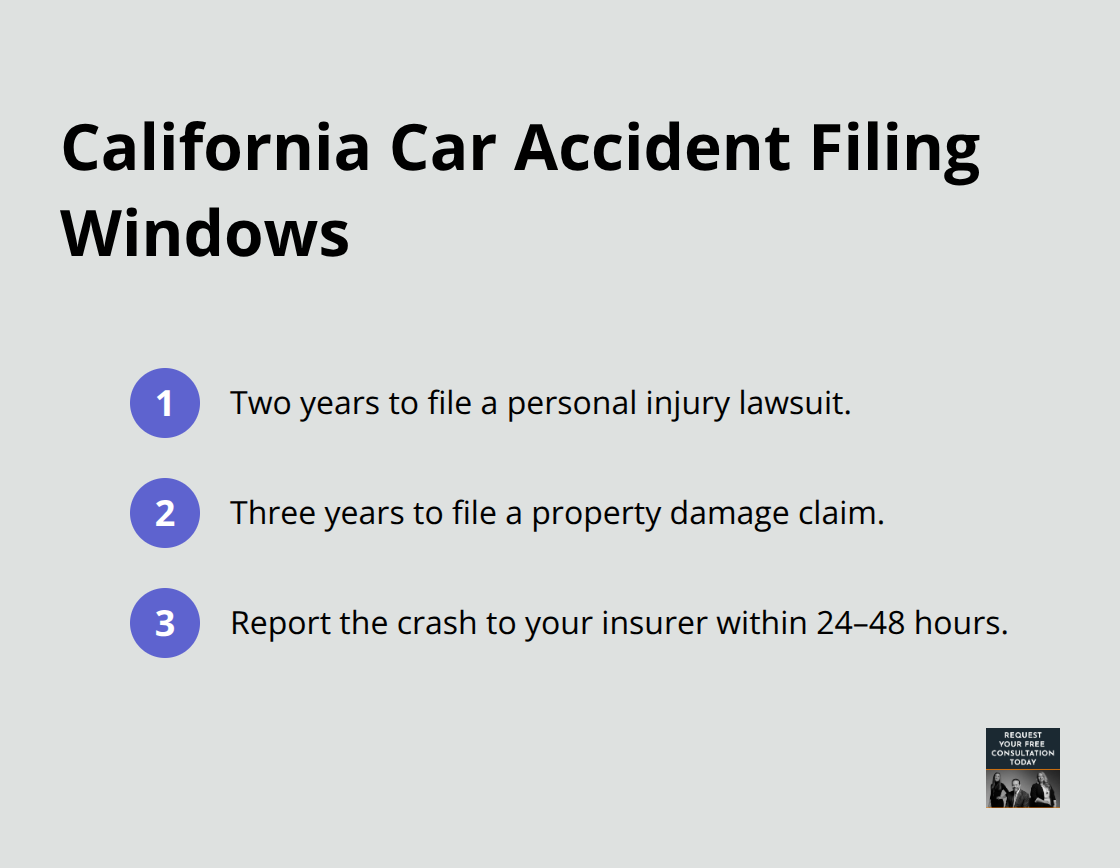
However, do not let the longer property damage window fool you into delaying action. Insurance companies impose their own deadlines that come far earlier than the statute of limitations, typically requiring you to report an accident within 24 to 48 hours.
When the Clock Actually Starts
The clock starts on the date of the accident itself, not when you discover injuries. This matters because delayed-onset injuries like whiplash, concussions, or herniated discs often appear days or weeks after impact. Even if your injuries emerge later, California’s two-year window begins counting from the crash date, not from when symptoms appeared. One exception exists: the discovery rule can apply in narrow circumstances when you could not reasonably have discovered your injury earlier, but courts apply this narrowly and it rarely extends crash cases significantly.
Why Filing Within 30 Days Changes Everything
Filing within 30 days of your accident protects your claim substantially more than waiting until month 11 of the two-year window. Early filing preserves evidence because witness memories fade, surveillance footage gets deleted, and accident scenes change. Insurance adjusters also begin their investigations within about 48 hours of learning about a crash, meaning they gather information while details remain fresh. If you wait six months to file, their investigation has already concluded and their damage assessment is locked in.
Document Everything Immediately
Take photos of vehicle damage and the accident scene, collect witness contact information, obtain the police report number, and keep records of all medical treatment. Do not give recorded statements to insurance adjusters before consulting an attorney-statements made early can be used against you later when you have more information about your injuries. For government entity claims involving city, county, or state vehicles or dangerous road conditions, notice deadlines compress dramatically to 30 to 180 days depending on the agency, making immediate action even more critical.
What Comes Next in Your Claim
Understanding these filing windows sets the foundation for your case, but insurance companies and courts impose additional deadlines that affect how your claim moves forward. The next section covers the specific deadlines within your claim process that determine whether you receive fair compensation or face unexpected obstacles.
What Deadlines Apply After You Report Your Accident
Insurance Company Response Timelines
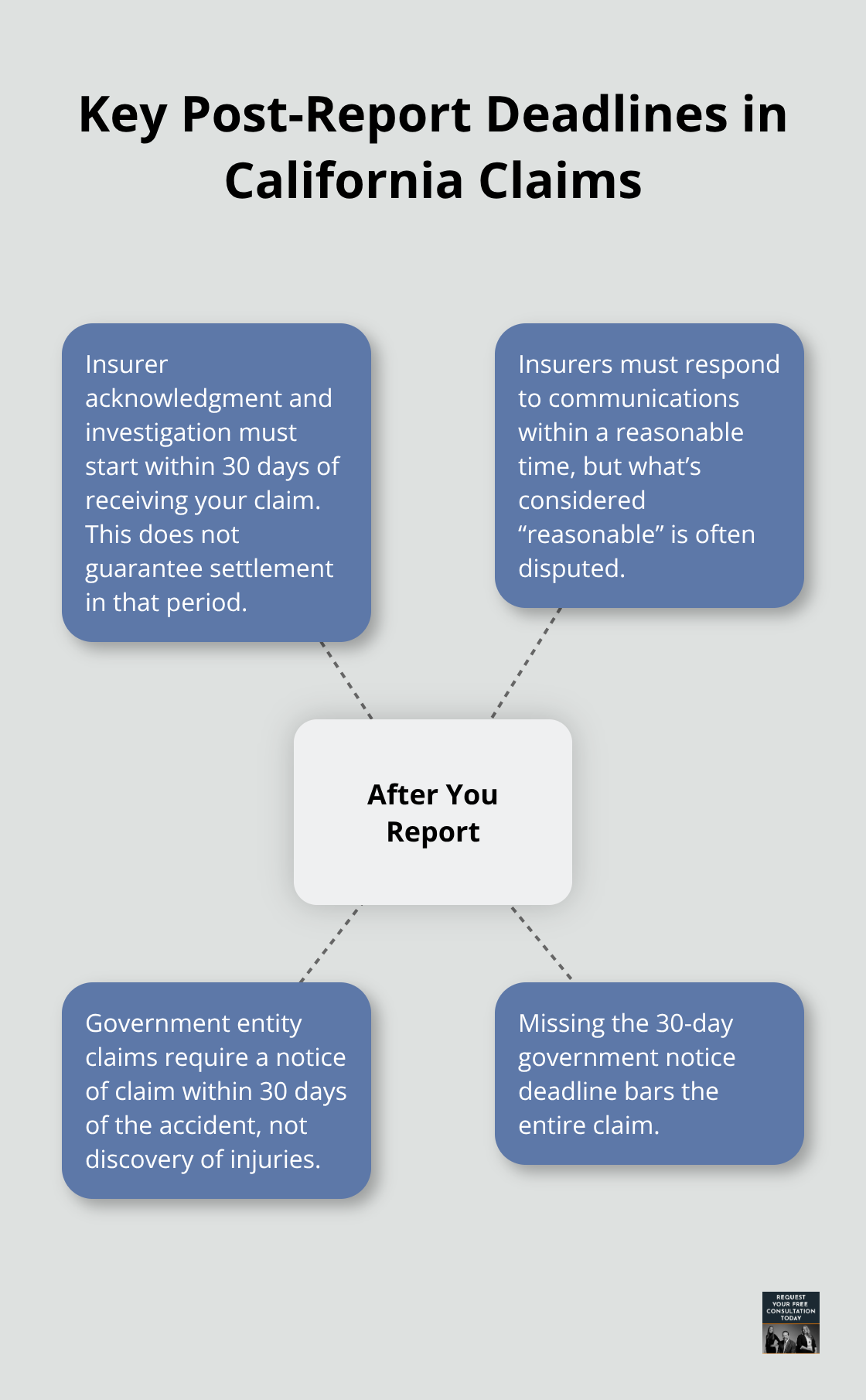
After you report your accident to your insurance company, a series of strict deadlines kicks in that determines whether you recover full compensation or face denial. Your insurer must acknowledge your claim and begin their investigation within 30 days of receiving it, though this does not mean they will settle within 30 days. California law requires insurers to respond to communications within a reasonable timeframe, but what counts as reasonable remains vague and subject to dispute. More importantly, if you file a claim against a government entity like a city or county that owns the at-fault vehicle, you must file a notice of claim within 30 days of the accident, not 30 days of discovering injuries. Missing this deadline bars your entire claim regardless of how serious your injuries are.
Government Entity Claims Demand Immediate Action
Government vehicle accidents operate under compressed timelines that catch most accident victims off guard. You have only 30 days to file a notice of claim with the government agency, and this deadline applies to accidents involving city vehicles, county equipment, or dangerous road conditions caused by government negligence. Courts enforce this 30-day window strictly, and judges will not extend it based on your lack of knowledge about the requirement. If your accident involved a government vehicle, contact an attorney immediately rather than waiting to see if your personal injury claim develops.
Discovery Deadlines in Court Proceedings
If your case proceeds to court, discovery deadlines become your next critical concern. In California, discovery typically runs for 10 months, meaning both sides exchange documents, answer written questions, and conduct depositions within this window. Missing a discovery deadline set by the court or opposing counsel can result in sanctions ranging from monetary penalties to dismissal of your case entirely. Courts do not grant extensions easily, and claiming you forgot a deadline will not persuade a judge to reopen your case.
Service and Filing Requirements
Many car accident victims believe their insurance claim settlement means their legal obligations end, but filing a lawsuit creates entirely separate deadlines governed by the California Code of Civil Procedure. Your attorney must serve the at-fault driver with the lawsuit within 60 days of filing, and failure to serve properly can result in case dismissal. If you pursue damages beyond what your insurance covers, these court deadlines move faster than most people expect, making early legal consultation essential before your two-year window narrows significantly. The next section examines what happens when you miss these deadlines and how courts respond to late filings.
What Happens When You Miss a Deadline
California Courts Enforce Deadlines Without Exception
Judges in California enforce deadlines with zero flexibility, and the consequences of missing even one are permanent and irreversible. If you miss the two-year statute of limitations for a personal injury claim, your case faces dismissal and your right to recover any compensation vanishes completely. The court will not consider how serious your injuries are, whether the other driver was clearly at fault, or whether you have mounting medical bills. A missed deadline becomes a complete bar to recovery, and California courts treat it as final. This happens regularly to accident victims who believe they still have time or who wait for their injuries to fully resolve before filing.
Government Claims and Discovery Deadlines Carry Separate Consequences
If you miss the 30-day notice deadline for a government entity claim, the entire claim is barred regardless of negligence. Missing a discovery deadline in active litigation triggers sanctions that can include monetary penalties, case dismissal, or even default judgment in favor of the other party. Courts impose these harsh consequences because deadlines protect the legal system’s ability to resolve cases fairly and efficiently. Each missed deadline closes a door that cannot be reopened through appeals or motions.
Insurance Companies Exploit Deadline Pressure in Negotiations
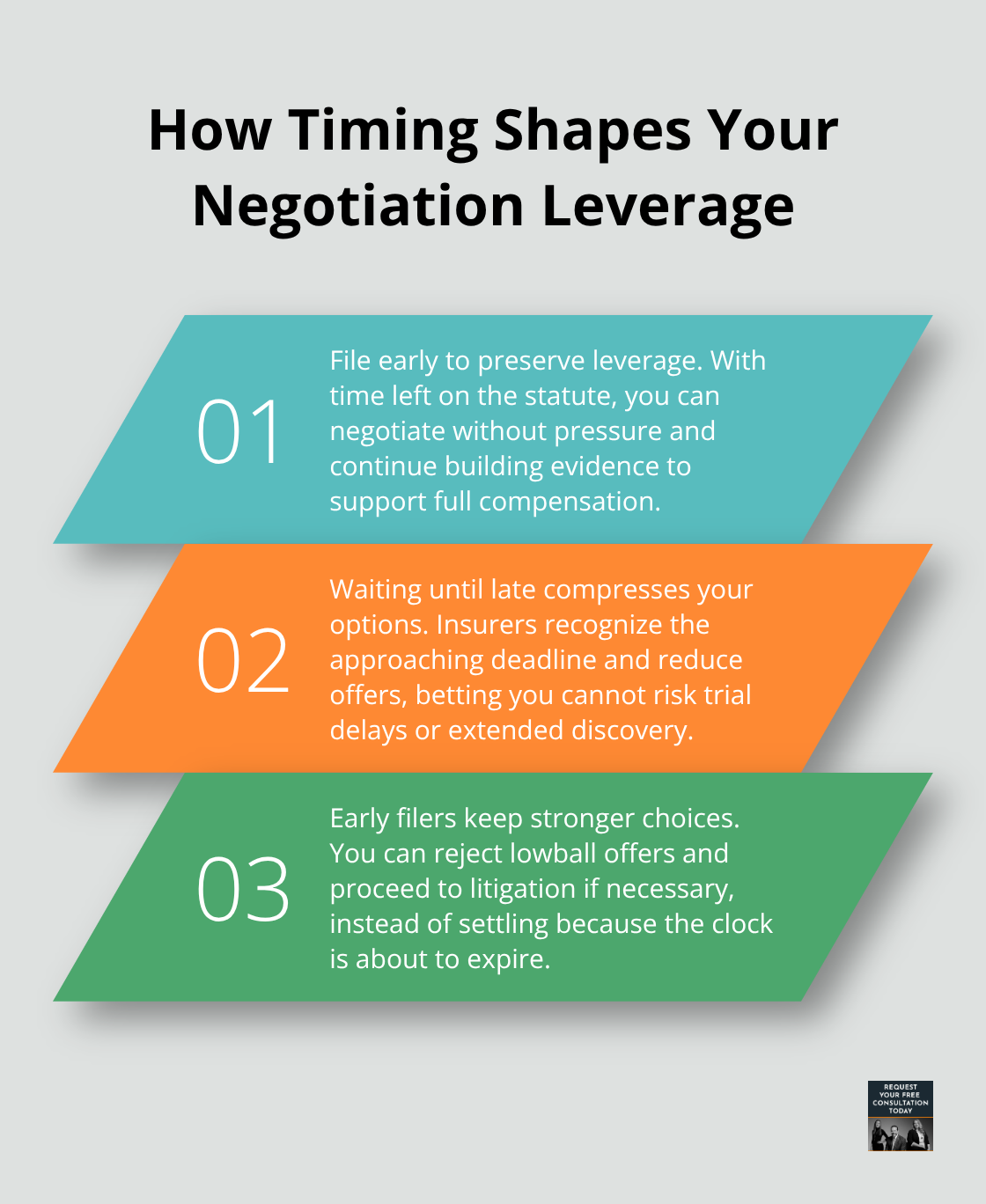
Insurance companies exploit missed deadlines aggressively in settlement negotiations because they know a victim with an approaching statute of limitations deadline has far less leverage than one who files early. If you wait 20 months to hire an attorney and file suit, you have only 4 months remaining before your case becomes worthless. The at-fault driver’s insurer knows this timeline constraint and will lowball settlement offers knowing you cannot afford to wait for trial. Early filers maintain negotiating power because they can afford to reject inadequate settlements and proceed to litigation if necessary.
The Financial Reality of Missed Deadlines
The National Safety Council reports that the average economic cost of a disabling car crash injury is approximately $167,000, yet victims who miss deadlines recover nothing regardless of injury severity. If your case involves serious injuries or disputed liability, contact an attorney immediately rather than waiting to see how your recovery progresses. The moment you realize you have been in an accident, the clock starts running and no action you take after a deadline expires will restore your legal rights.
Final Thoughts
Car accident claim time moves faster than most people realize, and California’s two-year window for personal injury claims represents a hard cutoff that courts enforce without exception. Government entity claims compress this timeline dramatically to just 30 days, catching accident victims off guard when they discover their entire claim has been barred by a missed notice requirement. Report your accident to your insurance company within 24 to 48 hours and begin gathering evidence immediately through photographs, witness contact information, and police report numbers.
Insurance companies exploit deadline pressure in settlement negotiations, offering lower settlements to victims who wait until their statute of limitations window narrows. Early action preserves your negotiating power and prevents you from accepting inadequate compensation simply because time has run out. Delayed-onset injuries like whiplash or herniated discs do not extend your filing deadline-the clock starts on the accident date regardless of when symptoms appear.
Contact Schaar & Silva LLP today to protect your rights before any deadline passes. Our team helps you navigate these deadlines while you focus on healing, and we assist with medical bill support and property damage evaluation. Do not wait to reach out if your accident involved a government vehicle or serious injuries.
