

A serious accident can leave you facing unexpected medical bills that stretch far beyond initial treatment. At Schaar & Silva LLP, we understand how future medical costs in California can overwhelm families already dealing with injury recovery.
This guide walks you through realistic planning strategies, from understanding healthcare inflation to exploring insurance options and government programs available to California residents.
How Much Are California’s Medical Costs Rising
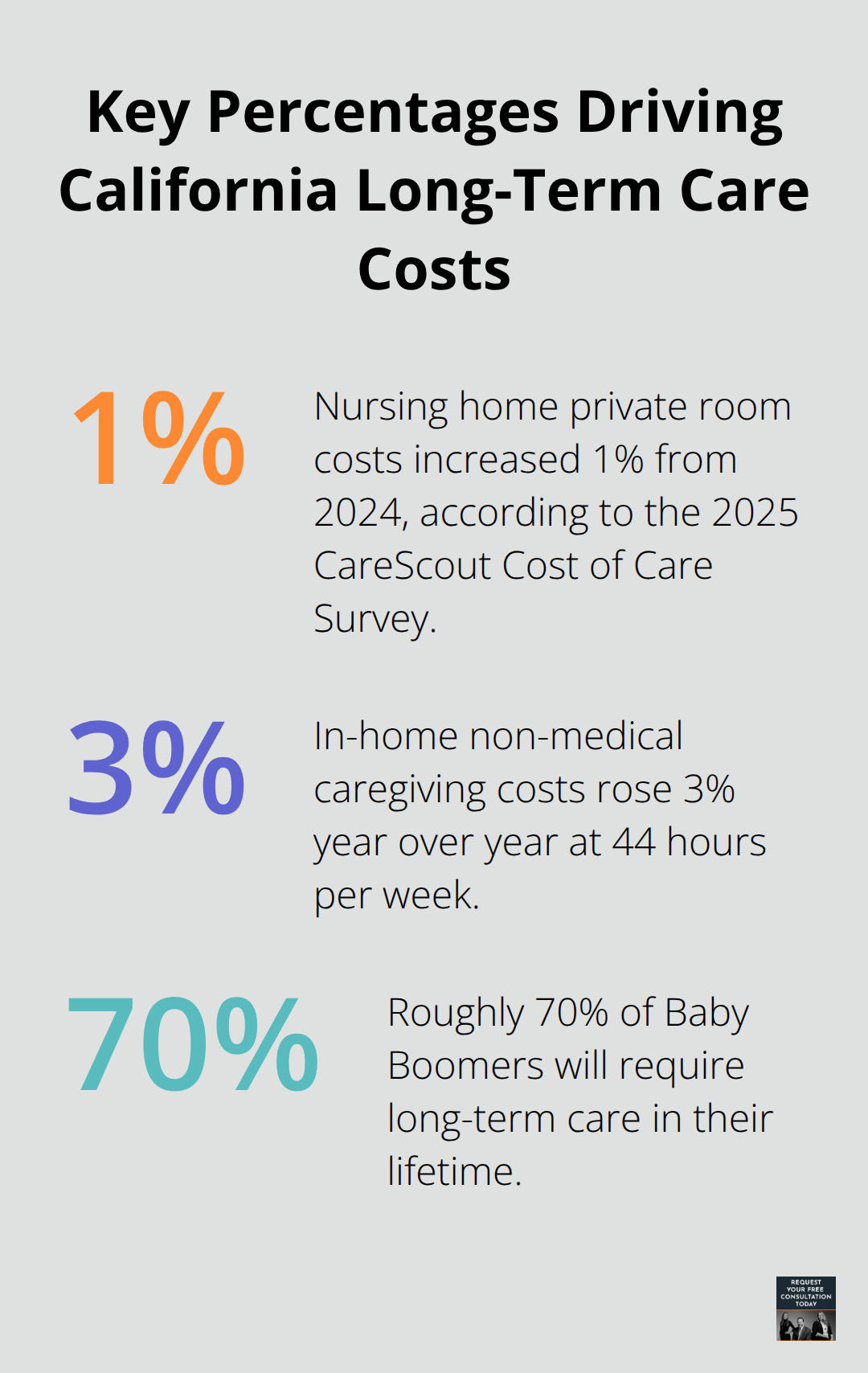
Healthcare inflation in California outpaces the national average, with nursing home costs climbing significantly faster than general inflation. The 2025 CareScout Cost of Care Survey shows nursing home private rooms averaging $10,798 per month ($129,575 annually), up 1% from 2024, while semi-private rooms hit $9,581 monthly ($114,975 yearly). In-home non-medical caregiving costs around $80,080 annually at 44 hours per week, reflecting a 3% year-over-year increase. These figures matter because they directly shape how much you’ll need to save for long-term care.
Regional Price Variations Across California
California’s coastal cities drive the highest costs: San Francisco private rooms run approximately $687 daily ($250,755 annually), while Los Angeles averages $389 daily ($141,985 yearly). Sacramento reaches $650 daily ($237,250 yearly), and San Jose hits $617 daily ($225,205 yearly). Smaller inland markets like Bakersfield cost roughly $358 daily ($130,488 yearly), revealing substantial regional variation across the state. If you live in Santa Cruz County or Oakland, expect costs closer to Bay Area levels than inland rates. Sacramento residents face mid-range costs but still significantly higher than national averages.
Skilled Nursing Care After Serious Injuries
Private duty nursing, the skilled medical care needed after serious injuries like spinal cord or brain trauma, costs around $90 hourly in 2025. This matters for accident victims because rehabilitation and ongoing medical needs often require professional nursing rather than basic caregiving. The aging population intensifies demand for these services, with approximately 10,000 Baby Boomers turning 65 daily and roughly 70% requiring long-term care in their lifetime. This demographic surge pushes facility costs upward and creates waiting lists, making early planning essential rather than optional.
Medicare and Medicaid Coverage Reality
Medicare covers nursing home stays at 100% for the first 20 days, then requires roughly $217 daily copayment for days 21 through 100, with coverage ending after day 100. Medicaid covers 100% for eligible beneficiaries but imposes strict asset limits around $2,000 and income caps near $2,982 monthly in 2026. Medicaid typically reimburses facilities at roughly 70% of private pay rates, meaning facilities often prioritize private-paying residents. Private rooms almost always require private payment under Medicaid rules, forcing families to supplement costs or accept shared accommodations. Understanding these gaps is critical because medical costs frequently run much higher than standard coverage during recovery.
Alternative Care Settings That Lower Costs
Adult day health care in California averages $95 daily in 2025, offering a lower-cost weekday option if you maintain some independence. Assisted living communities, called Residential Care Facilities in California, average $6,200 monthly ($74,400 yearly) nationally but run higher in major California markets. These options matter because they provide intermediate steps between home care and full nursing home placement, potentially reducing long-term costs if your recovery allows for less intensive settings. After a brain or spinal cord injury, you’ll face specialized rehabilitation costs that standard Medicare and Medicaid coverage doesn’t fully address, requiring immediate planning for gaps. The next section explores how to build a life-care plan that accounts for your specific injury, location, and long-term needs.
How to Choose Care and Protect Your Savings
Compare Regional Costs Against Coverage Limits
Selecting between nursing homes and assisted living in California requires comparing actual costs in your region against what Medicare and Medicaid will cover, then filling the gap with savings or other resources. If you live in Santa Cruz County or Oakland, private nursing home rooms run substantially higher than state averages due to Bay Area pricing. Santa Cruz County facilities mirror San Francisco costs, with private rooms reaching approximately $687 daily, while Oakland residents face similar Bay Area rates. Sacramento offers more affordable options at roughly $650 daily for private rooms, but still far exceed national averages. Assisted Living Communities, called Residential Care Facilities in California, average $6,200 monthly statewide but cost considerably more in coastal markets.
Account for Skilled Nursing After Serious Injuries
The CareScout Cost of Care Survey shows private duty nursing at $90 hourly remains necessary after brain or spinal cord injuries, meaning you cannot simply shift to lower-cost assisted living without sacrificing medical supervision. Medicare’s 100-day coverage window ends quickly, leaving you personally responsible for costs that continue for decades. Medicaid covers everything for eligible beneficiaries, but the $2,000 asset limit forces most families to spend down savings before qualification becomes possible. This creates a hard reality: if your recovery requires ongoing skilled nursing, you’ll exhaust private funds rapidly unless you plan ahead.
Calculate Location-Based Savings Targets
Building a realistic savings strategy means calculating your actual location-based costs, not national averages, then working backward from your current age and income to determine monthly contributions needed. If you’re age 55 and face potential future care costs in San Francisco at $687 daily, you need substantially more savings than someone in Sacramento at $650 daily or Bakersfield at $358 daily.
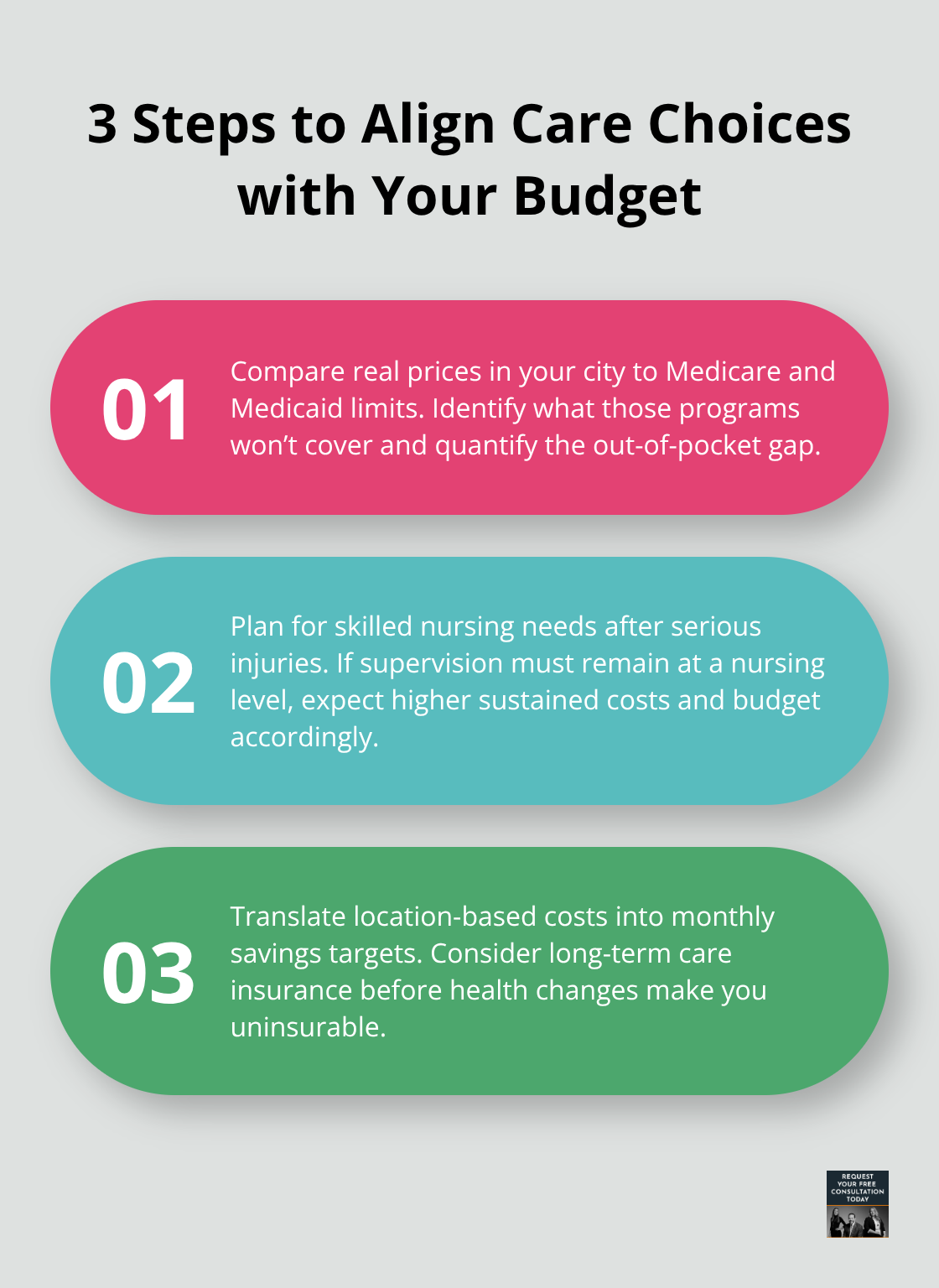
Long-term care insurance policies exist to address these gaps, but they require purchasing before you develop health conditions that make you uninsurable. After a serious accident, obtaining new coverage becomes impossible, making pre-injury planning the only protection available.
Use Life Care Plans to Document Exact Costs
Life care plans, created by certified planners and based on your specific injury, location, and medical needs, provide the foundation for calculating exact future costs rather than guessing. These plans account for initial rehabilitation, ongoing therapies, adaptive equipment, home modifications, and personal care attendants specific to your condition. The plan becomes your budgeting roadmap and, if litigation follows your accident, forms the basis for recovering these costs from the at-fault party. If you sustained a brain or spinal cord injury in Santa Cruz County, the legal team at Schaar & Silva LLP can coordinate these planning elements with your legal recovery, ensuring that documented future care needs support both your settlement and your long-term financial security. Understanding how to structure these plans properly determines whether you recover full compensation or leave money on the table-a distinction that shapes your financial stability for decades.
How to Fund Your Long-Term Care Without Depleting Savings
Long-Term Care Insurance Protects Your Financial Future
Long-term care insurance purchased before an accident occurs remains your strongest financial tool, but timing matters critically. The CareScout Cost of Care Survey shows that average annual costs for nursing home private rooms reach $129,575 in 2025, and these expenses compound over decades. Most people purchase this insurance in their 50s when premiums stay reasonable and insurability is straightforward, but after a serious injury like spinal cord or brain trauma, no insurance company will cover you. If you’re under 55 and haven’t purchased coverage, obtaining a policy now protects against future costs that could otherwise devastate your finances. Policies typically cost $2,000 to $4,000 annually depending on age and health, locking in today’s rates while you remain insurable.
Calculate Your Regional Cost Gap
The alternative to insurance is calculating exact location-based costs through a life care plan, then building savings aggressively to cover the gap between what Medicare and Medicaid provide. If you live in Santa Cruz County or Oakland, that gap widens substantially because private nursing home rooms run $687 daily compared to $358 daily in Bakersfield. Government assistance programs like Medicaid require spending down assets to roughly $2,000 before eligibility begins, making pre-injury planning essential to avoid financial ruin during recovery.
Explore California-Specific Cost Reduction Strategies
California residents facing serious injuries have access to several legitimate cost-reduction strategies beyond standard insurance and savings. Medicaid covers 100 percent of nursing home costs for eligible beneficiaries, but the asset and income limits force most families to exhaust private funds first through a process called spend-down planning. Residential Care Facilities, California’s term for assisted living communities, average $6,200 monthly statewide and may qualify for Medicaid coverage in some circumstances, offering lower costs than nursing homes if your medical condition allows. Adult day health care at $95 daily provides another intermediate option for maintaining some independence while reducing full-time care expenses. Veterans Administration pensions cover long-term care costs for eligible veterans and surviving spouses, providing up to $3,500 monthly depending on circumstances.
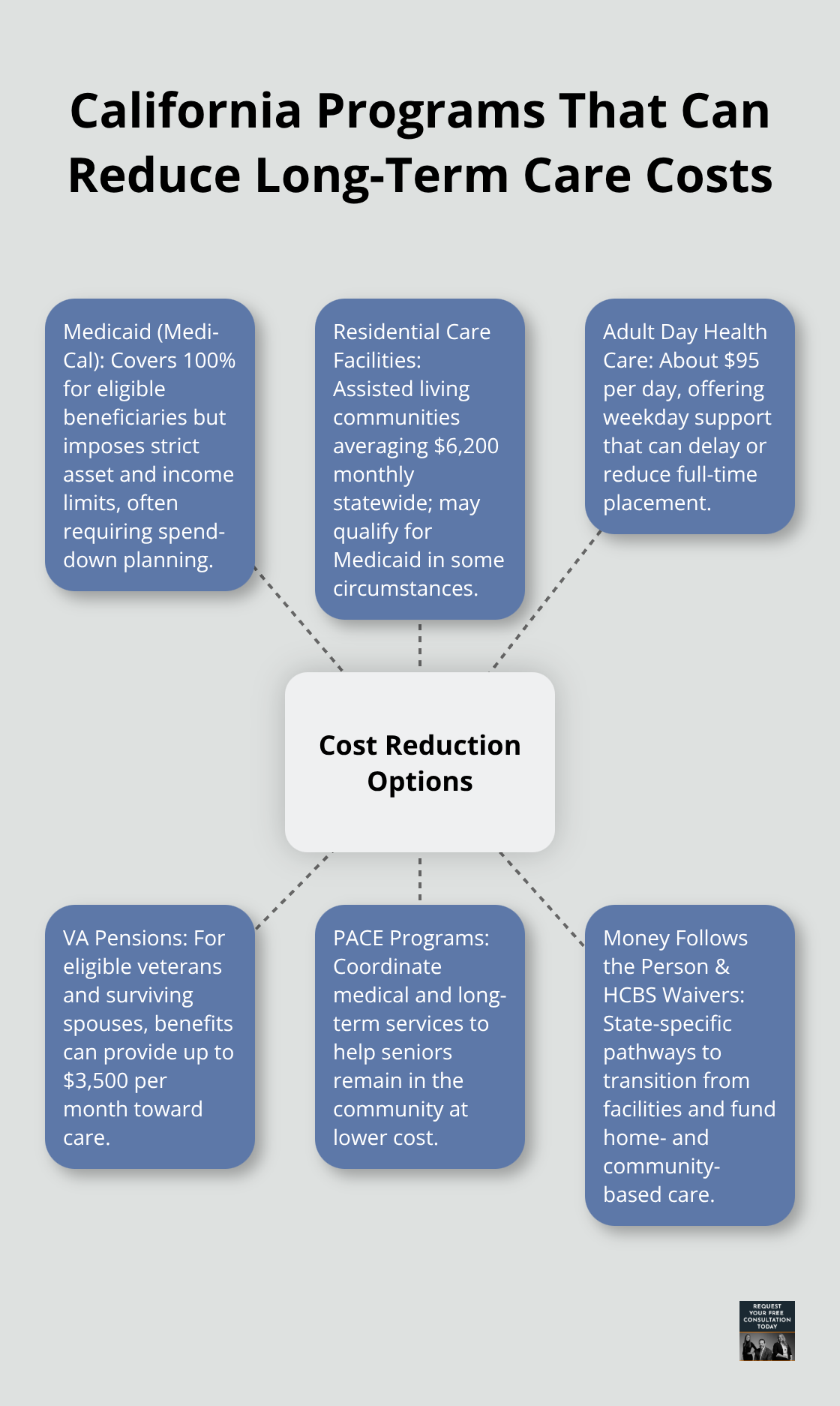
PACE programs, Money Follows the Person initiatives, and HCBS waivers offer state-specific alternatives that can reduce costs compared to traditional nursing home placement.
Work With Financial Advisors Who Understand California Markets
Working with a financial advisor who understands California’s specific programs and regional cost variations matters more than following generic national advice. These professionals help you navigate spend-down strategies, Medicaid eligibility timing, and alternative care settings that fit your injury and location. If you sustained injuries from an accident in Santa Cruz County, the legal team at Schaar & Silva LLP can help coordinate your recovery while you address these financial planning questions with appropriate advisors.
Final Thoughts
Planning for future medical costs in California requires honest assessment of your location, your potential care needs, and your financial capacity to cover gaps that insurance and government programs leave behind. Private nursing home rooms in Santa Cruz County and Oakland run $687 daily, while Sacramento facilities cost $650 daily, and these expenses compound across decades of care. If you sustained a brain or spinal cord injury from an accident, the timeline for planning compresses dramatically because post-injury insurance becomes unavailable and your medical needs are already documented.
Start by calculating your actual regional costs rather than relying on national averages that understate California’s market. If you’re under 55 and uninsured, purchasing long-term care insurance now locks in affordable premiums while you remain insurable. If you’ve already experienced a serious injury, work with a financial advisor to map out spend-down strategies, Medicaid eligibility timing, and alternative care settings like Residential Care Facilities that may reduce costs compared to nursing homes.
Life care plans created by certified planners provide the foundation for these calculations and, if your injury resulted from someone else’s negligence, form the basis for recovering documented costs through legal action. We at Schaar & Silva LLP serve Santa Cruz County and can help coordinate your recovery while you address these financial planning questions. Contact us to discuss how we can support both your legal recovery and your financial planning for the years ahead.
