
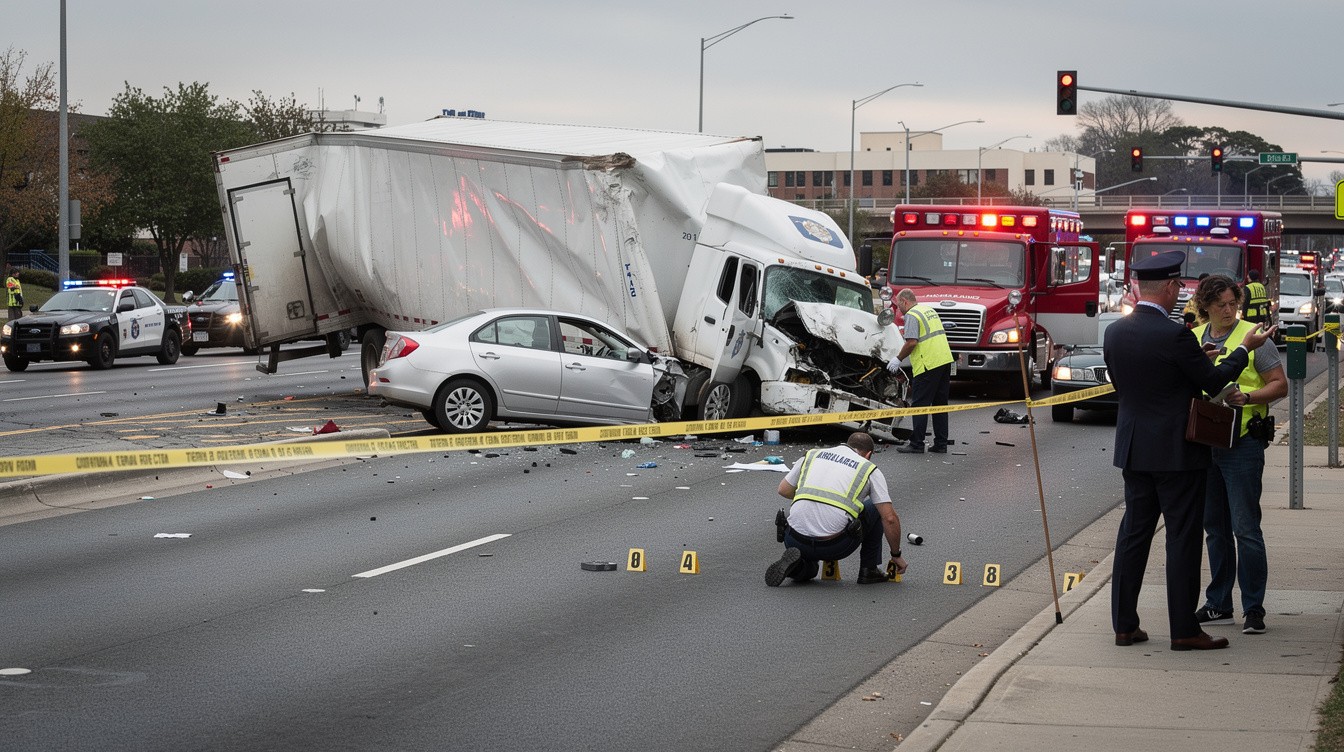
A Santa Cruz truck crash can leave you facing serious injuries, mounting medical bills, and uncertainty about what comes next. The aftermath of a collision with a commercial truck is fundamentally different from a standard car accident-the stakes are higher and the legal process more complex.
We at Schaar & Silva LLP have guided countless truck accident victims through litigation and helped them recover the compensation they deserve. This guide walks you through the essential steps, from the scene of the accident to the courtroom.
What to Do Right After a Truck Crash
The first minutes after a truck collision are critical. Your actions during this window directly affect the strength of your case and your ability to recover full compensation. Start by moving to safety if the vehicles are mobile and no one is trapped. Turn on hazard lights and, if safe, place warning triangles or flares at least 100 feet behind the crash site to alert oncoming traffic.
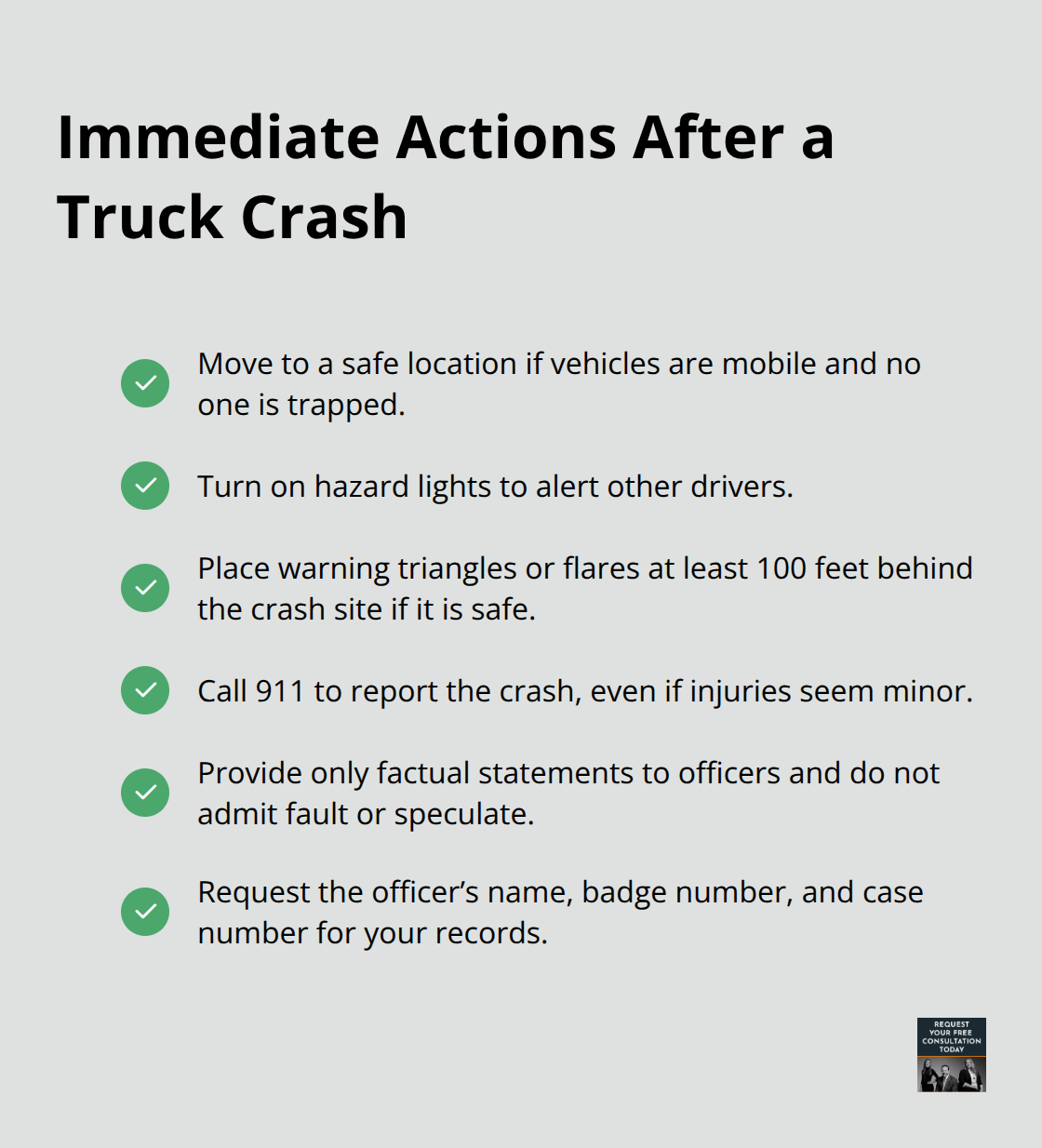
Call 911 immediately, even if injuries seem minor. Truck crashes often involve hidden injuries that surface hours or days later, and a police report creates an official record that protects your claim. When officers arrive, provide factual statements about what happened, but do not admit fault or speculate about causes. Request the officer’s name, badge number, and case number for your records.
Capturing Evidence at the Scene
Document everything with your phone camera before anything is moved. Photograph the truck from multiple angles, showing its size, cargo, and any visible damage. Capture the accident scene from wide shots to show road conditions, traffic signals, weather, and vehicle positions. Take close-ups of tire treads, brake fluid leaks, cargo securing straps, and any defects on the truck. If the truck’s cargo is visible, photograph it-overloaded or improperly secured loads are major liability factors in Santa Cruz County crashes. Photograph your vehicle’s damage, road markings, and any skid marks. Write down the truck’s license plate, company name, DOT number, and any visible branding. Get the truck driver’s name, phone number, address, commercial driver’s license number, and insurance information. Ask for the trucking company’s name and contact details. Collect names and phone numbers from all witnesses, including other drivers and bystanders. If a witness refuses to stay, photograph their vehicle license plate. Never leave the scene without this information-trucking companies move quickly to secure evidence and may pressure witnesses not to cooperate.
Seeking Medical Evaluation Without Delay
Seek medical evaluation immediately, even if you feel fine. Whiplash, internal injuries, and traumatic brain injuries frequently appear delayed in truck crash victims. Keep all medical records, billing statements, and receipts-these documents support your compensation claim and establish the full scope of your injuries. Medical evidence forms the foundation of your damages, so thorough documentation matters from day one.
Acting on Legal Deadlines and Evidence Preservation
Report the crash to your insurance company within the timeframe required by your policy, typically within 24 to 48 hours. California’s statute of limitations for personal injury claims is two years from the date of injury, but gathering evidence becomes harder as time passes. Trucking companies and their insurers move within days to interview witnesses, obtain black box data, and secure the truck for inspection. The sooner you consult with an attorney, the sooner preservation letters can legally require the trucking company to maintain all evidence, including electronic log data and maintenance records. This step is non-negotiable in serious cases-lost black box data can eliminate your ability to prove negligence or mechanical failure.
Understanding who bears responsibility for the crash requires examining the specific facts of your collision and the regulations that govern commercial trucking operations in California.
Who Is Responsible for Your Santa Cruz Truck Crash
Truck crashes in Santa Cruz County rarely involve a single at-fault party. The truck driver might have been speeding or fatigued, but the trucking company could have violated federal hours-of-service rules that limit drivers to 11 hours of driving within a 14-hour window after a 10-hour break. The cargo loader might have overloaded the truck or failed to secure freight properly, creating instability on downhill grades common along I-5 and Highway 99. The manufacturer could have installed defective brakes, worn tires, or steering components that failed under normal driving conditions. California’s pure comparative negligence rule means liability gets allocated by percentage, and you can recover compensation even if you share fault for the crash-your recovery simply reduces by your fault percentage. This system fundamentally changes how liability investigation unfolds.
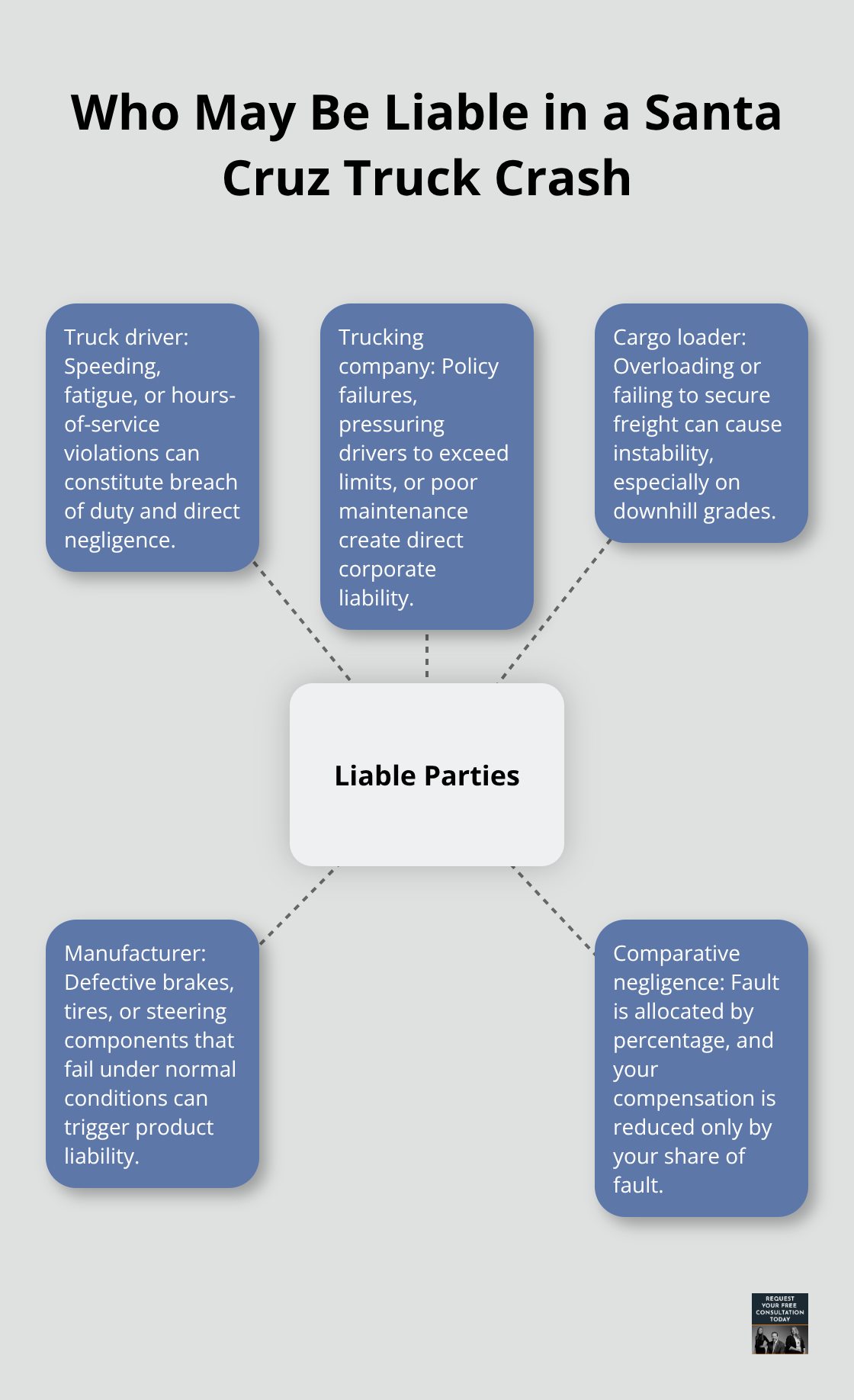
Instead of proving one party caused the accident, you identify every party whose negligence contributed to the collision, then quantify their share of responsibility.
Four Elements Establish Negligence
The responsible party must have owed you a duty of care, breached that duty, caused your injuries through that breach, and caused measurable damages. Truck drivers owe a duty to operate their vehicles safely and obey traffic laws and hours-of-service regulations. Trucking companies owe a duty to maintain their fleet properly, train drivers adequately, and enforce safety policies. Cargo loaders owe a duty to load trucks within legal weight limits and secure freight to prevent shifting. Manufacturers owe a duty to design and produce safe vehicles free from defects.
Proving breach means showing the defendant violated these duties through specific actions or omissions. A driver who exceeded the federal speed limit or drove after exhaustion breached duty. A company that failed to replace worn brake pads or pressured drivers to violate hours-of-service rules breached duty. A loader who stacked cargo without proper securing straps breached duty. A manufacturer whose brake system failed prematurely under normal use breached duty.
The breach must have caused your crash and resulting injuries. Black box data from the truck’s event recorder, driver logs, maintenance records, and inspection reports establish causation. These documents show what the truck was doing at the moment of impact, whether the driver was fatigued, and whether mechanical failures contributed to the collision. Without this evidence, proving causation becomes nearly impossible.
Fatigue and Maintenance Failures Drive Most Crashes
Fatigue ranks as the leading cause of truck crashes in Northern California. Federal regulations exist precisely because drivers who work excessive hours experience slowed reaction times and dulled focus. A driver operating beyond the 11-hour limit or without adequate rest breaks is negligent per se-meaning the violation itself proves breach of duty. Maintenance failures rank second. Trucking companies that tolerate failing brakes, bald tires, or steering problems knowingly operate dangerous vehicles. Poor maintenance often stems from cost-cutting rather than driver error, making the company directly liable.
Cargo and Training Issues Create Additional Liability
Overloaded or improperly secured cargo creates dangerous instability, especially on the steep grades near Santa Cruz. A truck carrying 5,000 pounds over its legal limit or with cargo that shifts during transit presents obvious hazards. Inadequate driver training leaves operators unprepared for emergency maneuvers or steep downhill segments. Speeding and reckless driving amplify crash severity given the truck’s massive weight and extended stopping distance. Substance use or impairment by drivers, combined with employer negligence in oversight, elevates liability.
Safety Culture Separates Negligent Companies from Responsible Operators
The trucking company’s safety culture matters enormously. Did they enforce speed limits through GPS monitoring? Did they mandate regular drug and alcohol testing? Did they terminate drivers with multiple violations? These details reveal whether a company prioritized safety or cut corners to maximize profits. Investigating these patterns systematically-reviewing driver logs, maintenance schedules, and safety policies-builds a complete liability picture that holds all responsible parties accountable. The evidence you preserve immediately after the crash, combined with thorough investigation of company practices, determines whether you can prove negligence and recover full compensation for your injuries and losses.
How Truck Accident Claims Move Through the Legal System
Meeting Deadlines and Preserving Evidence
California law gives you two years from the date of injury to file a personal injury lawsuit, but this timeline moves faster than most people realize. Evidence preservation must happen immediately after you contact an attorney. Preservation letters go to the trucking company, cargo loader, and manufacturer to legally require them to retain black box data, driver logs, maintenance records, and the truck itself. Failure to preserve this evidence can result in sanctions against the defendant or spoliation rulings that prevent you from proving your case. Trucking companies routinely discard or destroy critical evidence within weeks of a crash. Your insurance company also has contractual obligations to investigate your claim, so notifying them within 24 to 48 hours of the accident creates a parallel investigation timeline. Once your claim is formally filed, the discovery phase begins, and this is where the case either strengthens or weakens based on what evidence emerges.
What Discovery Reveals About Your Crash
Discovery typically lasts four to eight months and involves exchanging documents, written questions, and depositions with the defendant’s legal team. You will receive the truck’s black box data, which records speed, brake application, throttle position, and steering input in the seconds before impact. This data either proves the driver was speeding and failed to brake or shows a mechanical failure occurred despite proper driver response. You will also obtain the driver’s logs, which reveal whether federal hours-of-service violations occurred and whether the driver falsified records to hide excessive hours. Maintenance records expose whether the trucking company ignored known defects or failed to perform required inspections. Deposition testimony from the truck driver, company safety manager, and maintenance personnel often reveals negligence that documents alone cannot capture.
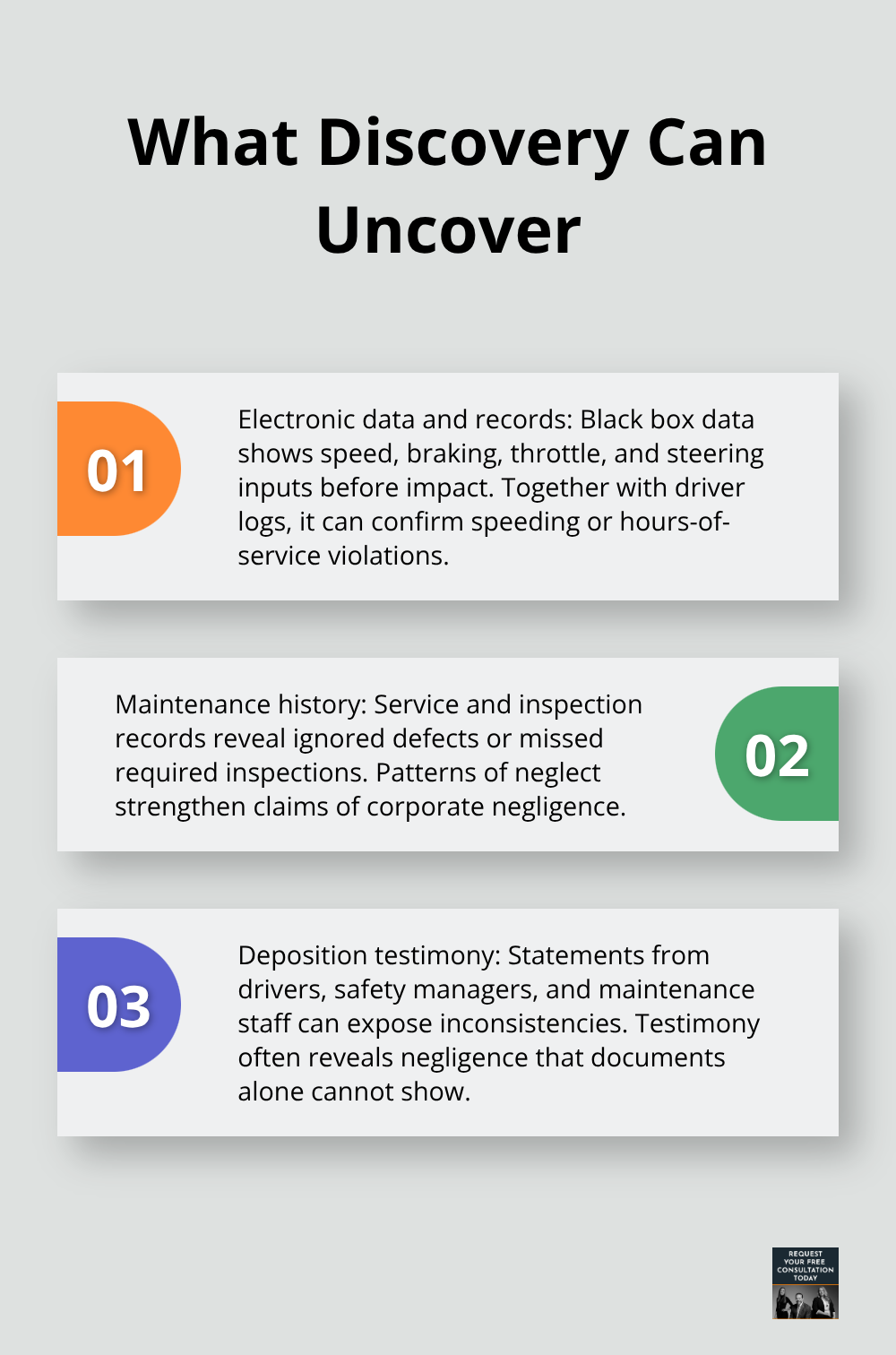
During depositions, inconsistencies between what witnesses claim and what the evidence shows become apparent. If the driver claims brakes felt normal but maintenance records show brake pads were worn to the backing plate, that contradiction strengthens your case significantly.
Settlement Negotiations and Trial Decisions
Settlement discussions typically begin once discovery is substantially complete and both sides understand the strength of available evidence. Most truck accident cases settle before trial because the cost of litigation, combined with the risk of an adverse jury verdict, motivates defendants to resolve claims. Settlement offers should account for all damages: medical bills, lost wages, diminished earning capacity, pain and suffering, and emotional distress. An attorney evaluates every settlement offer against the likely outcome at trial, considering jury composition, local verdicts in similar cases, and the specific facts of your collision. If the offer falls short of what you deserve based on the evidence and comparable cases, proceeding to trial becomes the right choice, even though it extends the timeline by another year or more.
Final Thoughts
A Santa Cruz truck crash demands immediate action and sustained legal attention. The steps you take in the first hours after impact directly determine whether you can recover full compensation for your injuries and losses. Documenting the scene, gathering witness information, seeking medical evaluation, and preserving evidence create the foundation for a strong case.
The litigation process unfolds over months, but each phase serves a purpose. Discovery reveals the black box data, driver logs, and maintenance records that prove negligence. Settlement negotiations leverage this evidence to secure fair offers, and if defendants refuse reasonable compensation, trial becomes the path forward with the evidence you preserved from day one determining the outcome.
We at Schaar & Silva LLP guide truck accident victims through every stage of this process. Contact Schaar & Silva LLP to discuss your case and learn how we can help you move forward with confidence.
