
A car accident turns your life upside down fast. Between injuries, vehicle damage, and medical bills, you’re suddenly facing decisions you’ve never made before.
Filing a claim doesn’t have to be overwhelming. We at Schaar & Silva LLP have helped countless people in Santa Cruz County, Sacramento, and Oakland navigate this process and get the compensation they deserve.
This guide walks you through how to file a claim step by step, from the moment the accident happens to recovering what you’ve lost.
What to Do Right After Your Accident
Safety and Scene Documentation
The first hour after an accident determines how strong your claim becomes. At the scene, your priority is safety-move to a safe location if possible, call 911 if anyone is injured, and wait for police to arrive. California law requires you to report accidents involving injuries or property damage exceeding $750 to the DMV within 10 days, so documentation starts immediately.
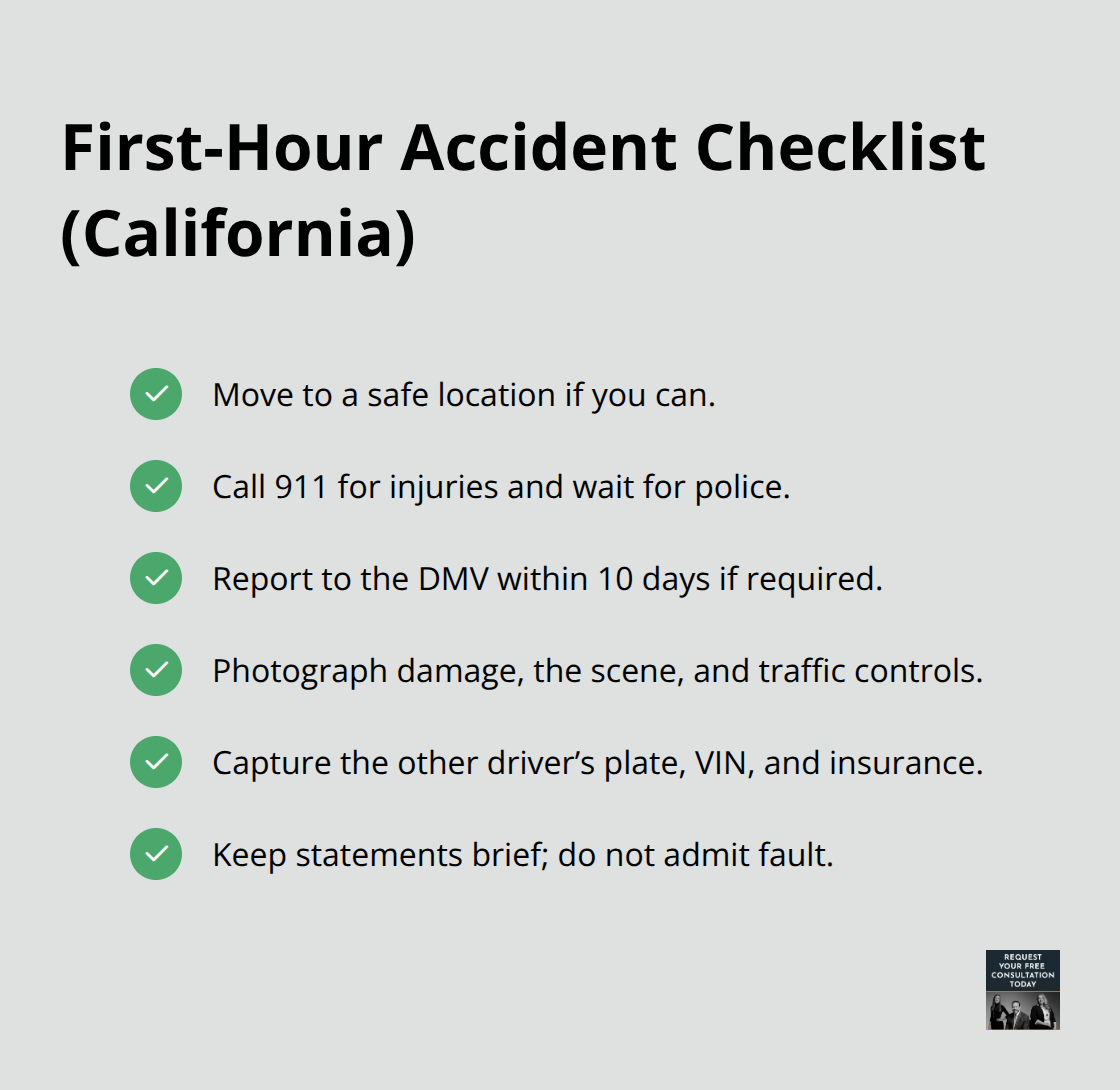
Take photos of vehicle damage, the accident scene, road conditions, and traffic signs or signals. Photograph the other driver’s license plate, vehicle identification number, and insurance card. These images create a visual record that protects your claim later.
Gathering Critical Information
Get the names, phone numbers, addresses, and driver’s license numbers of all parties involved and any witnesses. Write down the other driver’s insurance company and policy number. If the police arrive, get the officer’s name and report number.
Do not admit fault or apologize for the accident, as these statements can be used against you later. Keep your communication brief and factual.
Notifying Your Insurance Company
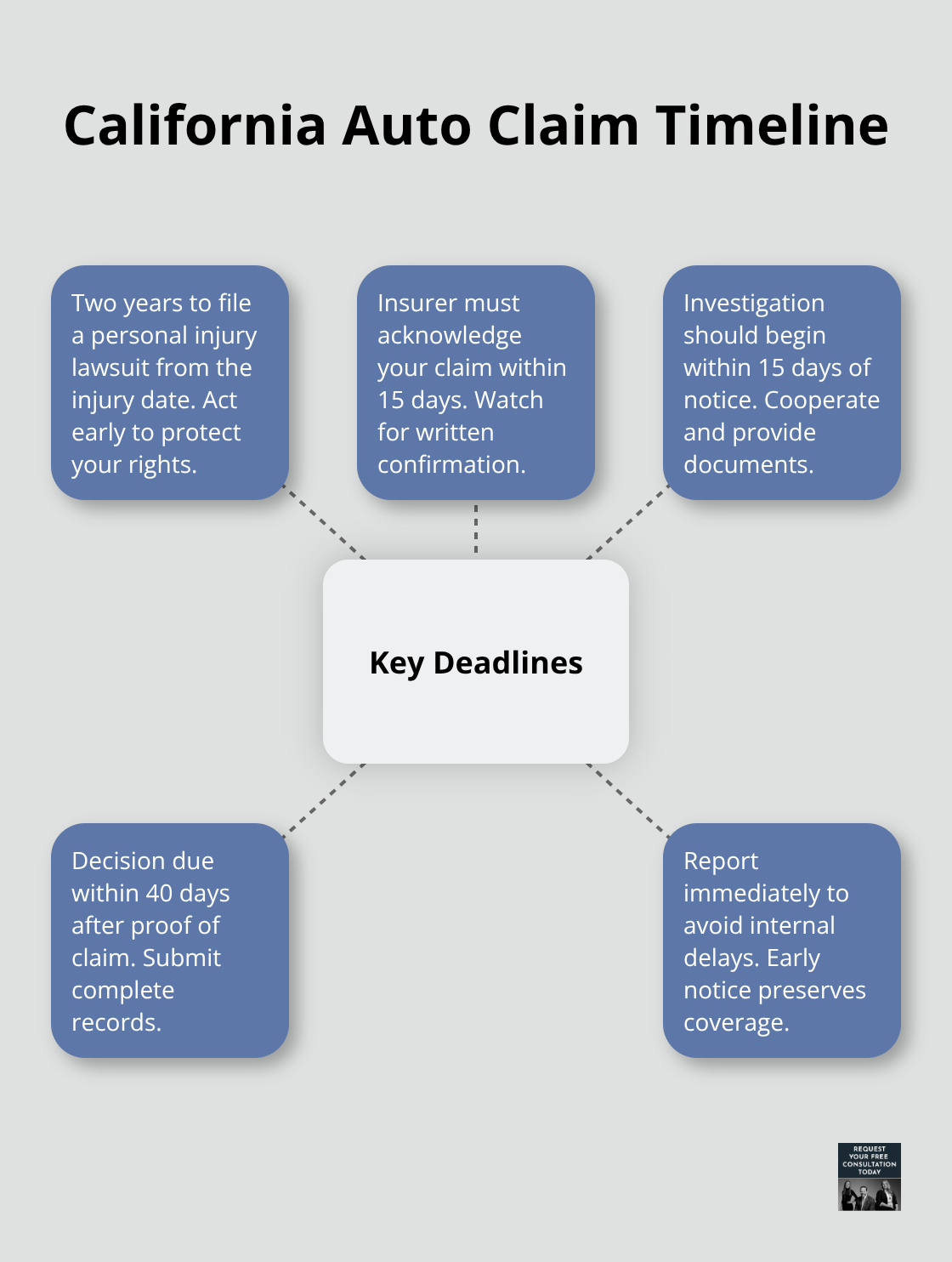
Contact your insurance company within 24 hours, not days. The California Department of Insurance requires insurers to acknowledge claims within 15 days and begin investigations within 15 days of notice, but reporting immediately protects your timeline and prevents coverage issues.
Medical Care and Documentation
Your medical records become evidence the moment you see a doctor. Seek medical attention even if you feel fine, because some injuries appear days later. Keep every receipt, invoice, and estimate related to the accident, including rental car costs, transportation to medical appointments, and medication.
If you miss work, document lost wages with pay stubs or a letter from your employer stating the dates you were absent. Preserve all accident-related records in one organized folder (both physical and digital). Do not post about the accident on social media, as insurers and defense attorneys monitor these posts and may use them to minimize your damages.
Protecting Your Privacy
If the accident involved doxing or online harassment, you can file for confidentiality protection using the appropriate court forms to shield your personal information during legal proceedings. This step protects you from further exposure while your case moves forward.
With your documentation complete and your insurance company notified, you’re ready to understand what your policy actually covers and what claim options are available to you.
What Your Insurance Policy Actually Covers
Understanding Your Coverage Limits and Deductible
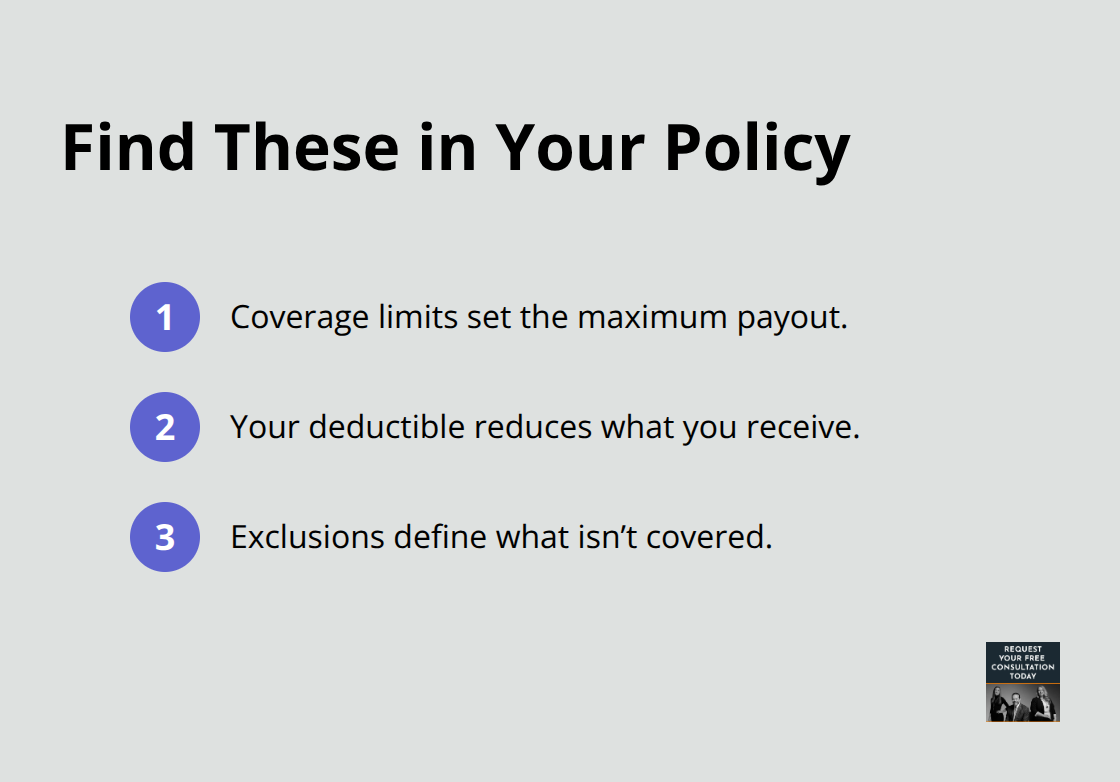
Your insurance policy is a contract, and most people never read the sections that matter most. California requires minimum coverage of $15,000 per person injured, $30,000 per accident for injury or death, and $5,000 for property damage, but your actual policy likely includes more. Open your policy documents and locate three specific sections: your coverage limits, your deductible amount, and any exclusions that apply to your situation. Coverage limits represent the maximum your insurer will pay, and this number directly impacts how much you can recover.
If the other driver caused the accident and you have collision coverage, their liability insurance should cover your damages up to their policy limits. If their coverage falls short, your own uninsured motorist coverage fills the gap, but only if you purchased it.
How Vehicle Damage Claims Work
Property damage claims work differently from injury claims. Your insurer pays vehicle damage as the lesser of repair costs or the vehicle’s actual cash value, which is defined as the fair market value of your vehicle. Most policies include an appraisal provision if you and your insurer disagree on the total loss amount or payout value. Both sides select appraisers and an umpire, whose decision is binding. If your vehicle has an outstanding loan, you may owe the difference if the payout is less than what you owe-gap insurance protects against this shortfall if you purchased it. Rental car coverage, if included in your policy, pays up to a daily limit for a set number of days and ends once repairs are complete or the loss is paid.
Meeting Your Claim Deadlines
Your claim deadline matters as much as your coverage limits. California law gives you two years from the injury date to file a personal injury lawsuit, but your insurance company has stricter timelines. The California Department of Insurance requires insurers to acknowledge your claim within 15 days, start investigations within 15 days of notice, and accept or deny your claim within 40 days after you submit proof. Report your accident immediately rather than waiting, as missing these internal deadlines can complicate your recovery.
When your insurer requests a written or recorded statement, provide documentation of injuries, medical expenses, and lost wages, but avoid elaborating beyond what’s asked.
Processing Payments and Settlements
Insurance checks for repairs may be issued to you and any lienholders, and repair facilities can be named as payees. Do not sign a settlement check without reviewing what it covers, because accepting payment often closes your claim. Subrogation allows your insurer to recover paid amounts from at-fault third parties, and if recovery occurs, your deductible may be refunded. Most policies provide coverage out of state and in Canada, but many exclude Mexico, so check your specific policy before traveling.
When to Involve an Attorney
If the accident caused severe or long-term injuries, fault is unclear, or multiple parties may be responsible, an attorney can review your coverage and ensure you’re not leaving compensation on the table. With your policy details understood and your claim timeline clear, the next step is building a strong claim with the medical records and evidence that prove your losses.
Building Your Claim with Evidence That Counts
Medical Records Form Your Foundation
Medical records are your claim’s foundation, and the sooner you start collecting them, the stronger your position becomes. Every doctor’s visit, physical therapy session, and prescription creates a paper trail that directly connects your injuries to the accident. Request copies of all medical records from every healthcare provider you’ve seen since the accident, including emergency room reports, diagnostic imaging results, surgical records, and follow-up appointment notes.
Insurance adjusters scrutinize gaps in medical treatment, so if you stop seeing doctors for weeks and then resume care, they’ll argue your injuries weren’t serious. The California Department of Insurance requires insurers to respond to your proof of claim within 40 days, so having complete medical documentation ready before that deadline matters significantly. Organize these records chronologically in a dedicated folder, both digital and physical, because you’ll reference them repeatedly throughout your claim.
Include itemized bills from hospitals, clinics, and specialists showing what was charged and what your insurance paid. If you received treatment you couldn’t afford, document that too, because unpaid medical debt is still a legitimate damage claim.
Lost Wages and Accident-Related Expenses
Lost wages represent income you actually earned before the accident, and this is where many people fail to document properly. Don’t estimate what you lost-obtain a letter from your employer on company letterhead stating the exact dates you were absent, your hourly rate or salary, and total hours or days missed. If you’re self-employed, gather bank statements, invoices, and tax records showing your average income during the period you couldn’t work.
Include all accident-related expenses beyond medical bills: transportation to appointments, medication copays, home care services, childcare costs while you recovered, and rental car expenses. Keep receipts for everything. These expenses add up quickly and represent real losses that your claim should cover.
Photographs and Scene Documentation
Photographs from the accident scene and damage to your vehicle should be organized by category-vehicle damage, road conditions, traffic signals, and scene context-because these images help prove liability and the force of impact. Police reports contain statements from witnesses and officers’ observations about fault, so request this report from your local police department and cross-reference it with your photographs.
Visual evidence (photographs, diagrams, and police reports) creates a compelling narrative about how the accident happened and who caused it. This documentation prevents the other party from disputing basic facts about the incident.
Statements and Consistency
If the other driver’s insurance company contacts you, do not provide a recorded statement without reviewing what information you’ve already documented, because inconsistencies between your statement and your medical records can weaken your claim. Stick to facts you can verify with your evidence rather than relying on memory alone.
The evidence you gather now determines what you can realistically claim later, so completeness matters more than speed.
Final Thoughts
The strongest claims come from people who act fast and stay organized. Report your accident to police and your insurance company within 24 hours, photograph the scene and vehicle damage, collect witness information, and seek medical attention even if you feel fine. Keep medical records, lost wage documentation, and accident-related expenses organized in one place, because gaps in your evidence give insurers reasons to deny or reduce your claim.
Your insurance policy sets the maximum you can recover, so read it carefully and understand your deductible, coverage limits, and any exclusions that apply to your situation. California law gives you two years to file a personal injury lawsuit, but your insurer’s internal deadlines are much tighter. When injuries are severe, fault is unclear, or multiple parties caused the accident, an attorney becomes invaluable.
We at Schaar & Silva LLP help people in Santa Cruz County, Sacramento, and Oakland understand their rights and recover what they’ve lost (including medical bill navigation, property damage evaluation, and connecting you with support services). Contact us for a free consultation to discuss your specific situation and next steps.
