
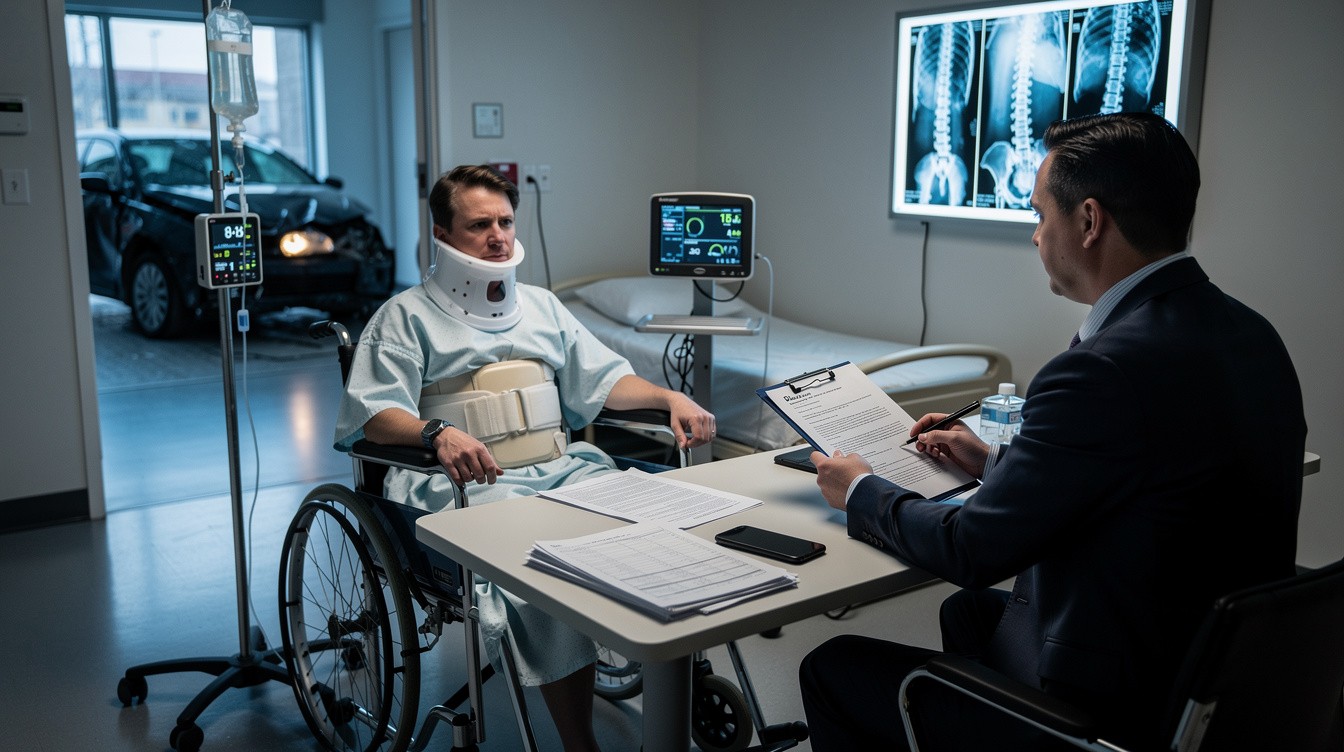
A spinal injury from a car crash can change your life in seconds. The physical pain, medical bills, and emotional toll often extend far beyond the initial accident.
We at Schaar & Silva LLP help people in Sacramento navigate both their recovery and their legal options after spinal injuries. This guide covers what happens to your body, the types of injuries you might face, and how to pursue the compensation you deserve.
What Happens to Your Body After a Spinal Injury
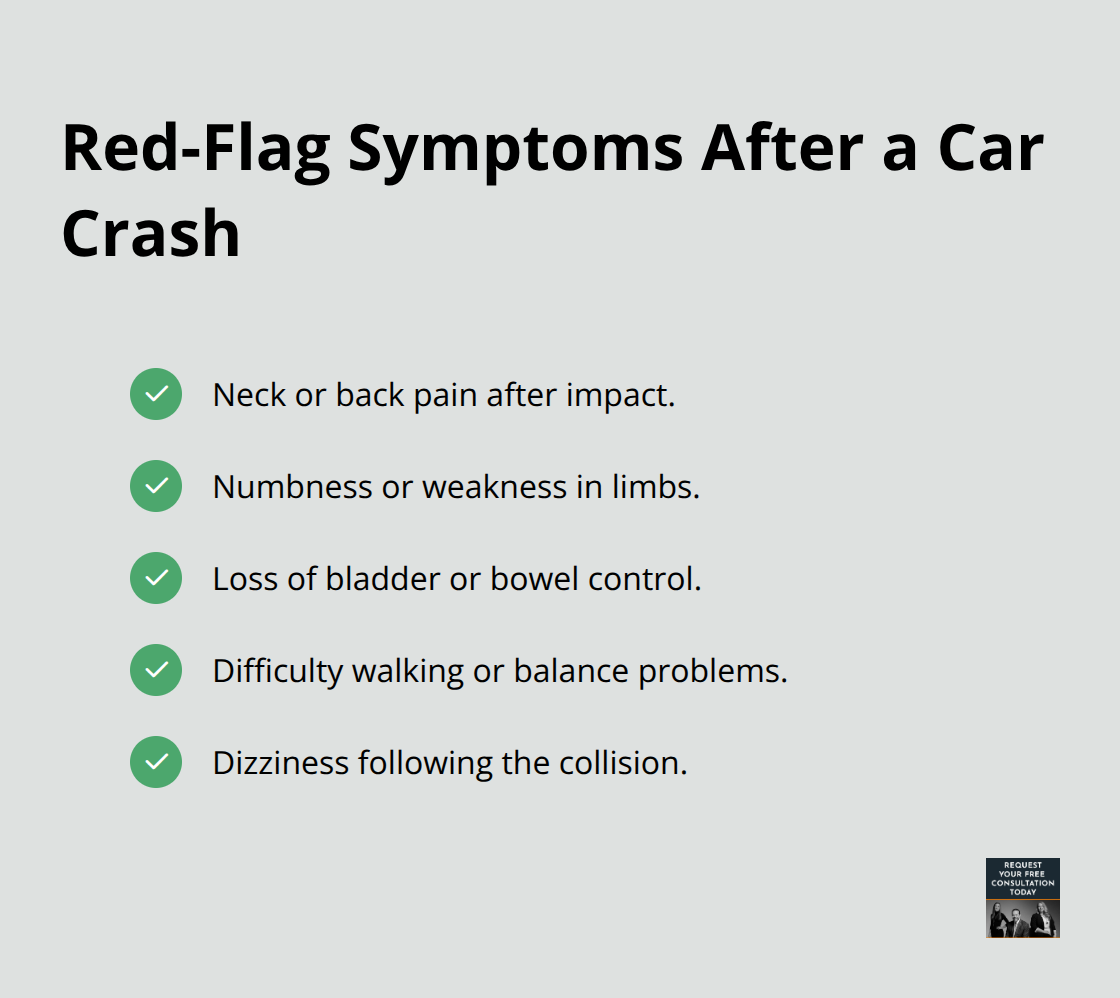
The first 24 to 48 hours after a spinal injury determine much of what comes next. Swelling around the spinal cord peaks during this window, which is why immediate emergency care matters more than most people realize. In California, first-year medical costs for a spinal cord injury can reach up to $1,000,000, according to state injury data. This staggering figure covers emergency stabilization, imaging, surgery if needed, and initial rehabilitation. If you experience neck or back pain, numbness, weakness, loss of bladder or bowel control, difficulty walking, or dizziness after a crash, seek medical attention immediately. Doctors use X-rays, CT scans, MRI, and physical examinations to diagnose spinal injuries and assess the damage to bones, nerves, and the spinal cord itself.
Treatment depends on severity and may involve emergency stabilization through bracing or surgery, medications to reduce swelling, rehabilitation, and assistive devices. The recovery timeline varies dramatically based on injury location and severity. A whiplash injury might improve in weeks, while a thoracic or lumbar spine injury often requires months of physical therapy. Spinal cord damage and paralysis introduce lifelong complications that reshape your entire existence.
The Real Cost of Long-Term Care
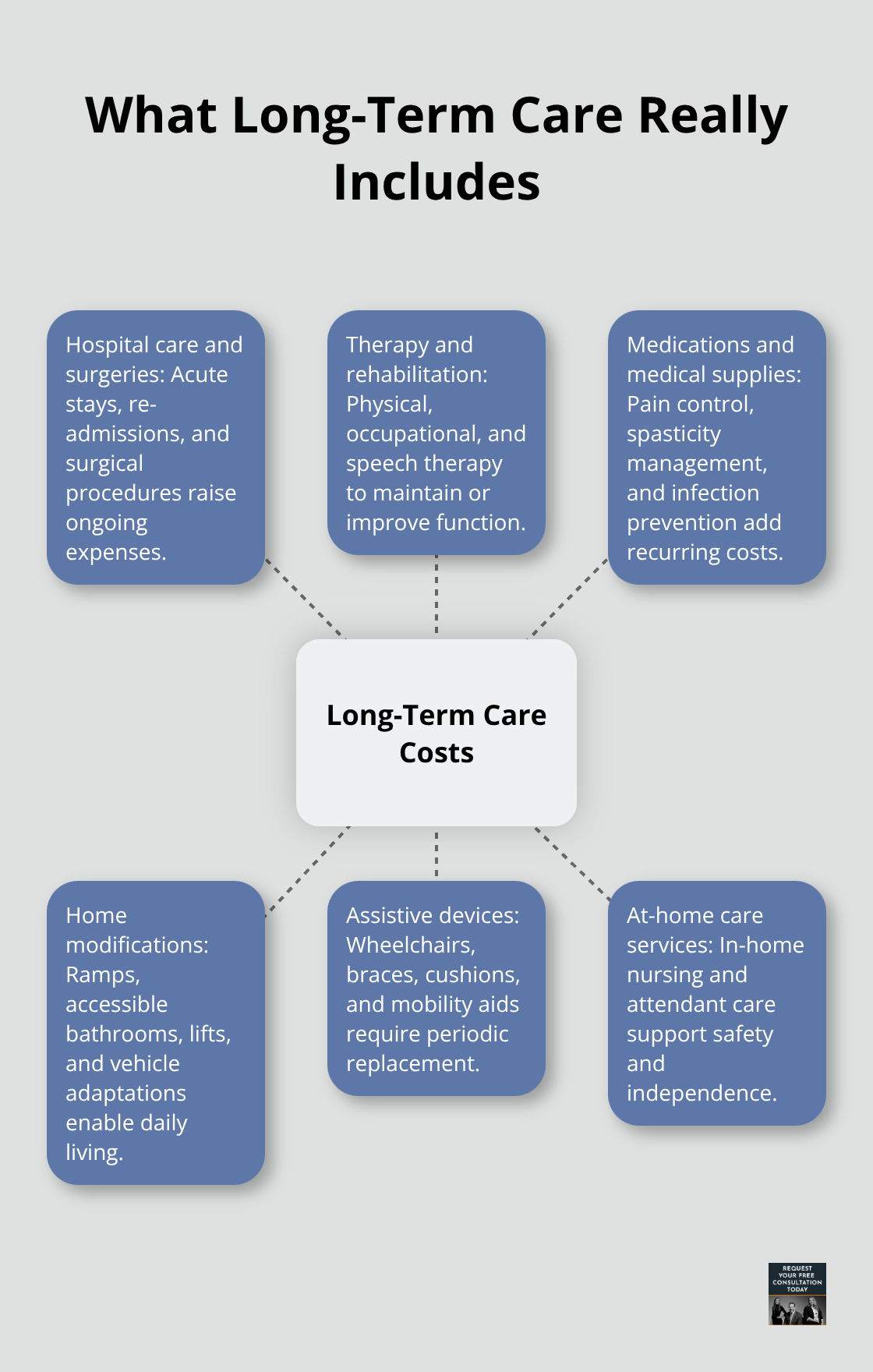
After the first year, ongoing annual care costs around $100,000, with lifetime costs reaching approximately $4,000,000 for severe injuries like tetraplegia. This covers hospital stays, surgeries, therapy, medications, home modifications, assistive devices like wheelchairs or braces, and at-home care services.
The emotional weight compounds the financial burden. Depression, anxiety, and post-traumatic stress develop after spinal injuries, and many people struggle with loss of independence, changed relationships, and grief over activities they can no longer do.
Documenting Pain and Suffering
Pain and suffering in these cases refers to physical pain, emotional distress, and loss of enjoyment of life. A daily pain diary helps document how symptoms fluctuate and how your injury affects work, relationships, and daily routines. Insurance companies review medical records, treatment timelines, physician notes, prescriptions, diaries, witness statements, and even social media when evaluating pain and suffering claims. Present a full picture of your injury’s impact rather than relying solely on medical charts.
Why Specialized Care Matters
Specialized rehabilitation centers produce fewer secondary conditions and better outcomes than standard care facilities. Access to quality in-hospital and post-discharge care strongly influences both recovery and long-term survival. These costs and challenges demand comprehensive legal support to secure fair compensation that accounts for your lifetime needs. Understanding the types of spinal injuries you might face helps clarify what compensation should cover and why working with legal representation becomes essential to your recovery plan.
Spinal Injuries from Car Crashes: What You Need to Know
Cervical Spine Damage and Whiplash
Whiplash occurs when your neck snaps forward and backward in rapid succession, tearing soft tissues and ligaments in the cervical spine. The injury often feels minor at first, which is why many people delay medical care and regret it months later when chronic pain sets in. Cervical spine damage ranges from mild ligament tears to herniated discs that press on nerves, causing radiating pain down your arms, numbness in your fingers, and weakness that makes gripping objects difficult.
Some people develop cervical myelopathy, where the spinal cord itself becomes compressed, leading to loss of fine motor control and balance problems. An MRI catches these injuries that X-rays miss, so demand imaging beyond basic radiographs. The damage to your cervical spine can persist for months or years, affecting your ability to work and enjoy daily activities.
Thoracic and Lumbar Spine Injuries
Thoracic spine injuries are less common in car crashes but more serious when they occur, since this region stabilizes your rib cage and protects vital organs. Lumbar spine injuries, by contrast, happen frequently because your lower back absorbs tremendous force during rear-end and rollover collisions.
Herniated discs in the lumbar region pinch the sciatic nerve, creating shooting pain that radiates from your lower back through your buttocks and down your leg. This condition, called sciatica, can last months or years and severely limit your ability to sit, stand, or work. Physical therapy helps some people, but others require epidural injections or surgical intervention. Document every treatment attempt and its results, since insurers use gaps in care to undervalue claims.
Spinal Cord Damage and Paralysis
Spinal cord damage represents the most catastrophic outcome of car crashes. Complete spinal cord injuries sever the nerve fibers entirely, resulting in permanent paralysis below the injury site. Incomplete injuries leave some nerve function intact, meaning recovery potential exists but remains unpredictable and often limited.
A person with a C5 cervical injury loses control of their legs and has limited arm function, requiring lifelong assistance with basic activities. A C1 to C3 injury often requires mechanical ventilation to breathe. Paraplegia from thoracic or lumbar cord damage eliminates leg function but preserves upper body strength and independence in some daily tasks.
Life Expectancy and Survival Rates After Spinal Cord Injury
Research in the European Journal of Physical Rehabilitation Medicine shows that life expectancy after traumatic spinal cord injury is shorter than the general population, with higher cervical injuries showing the most significant reduction. Survival rates show 79 to 100 percent at one year, 85 to 96 percent at five years, and 81 to 93 percent at ten years, but these figures vary based on injury level and access to specialized care.
Pneumonia, heart disease, and infections are leading causes of death in spinal cord injury populations. The difference between specialized rehabilitation centers and standard hospitals is dramatic: specialized centers produce fewer secondary conditions and measurably better long-term outcomes. This reality shapes your legal claim, because compensation must account for lifetime care at appropriate facilities, not just basic hospital services.
The type and severity of your spinal injury determine both your recovery path and the legal damages you can pursue. Understanding these distinctions helps clarify what compensation should cover and why working with legal representation becomes essential to your recovery plan.
How Much Can You Recover From a Spinal Injury Claim
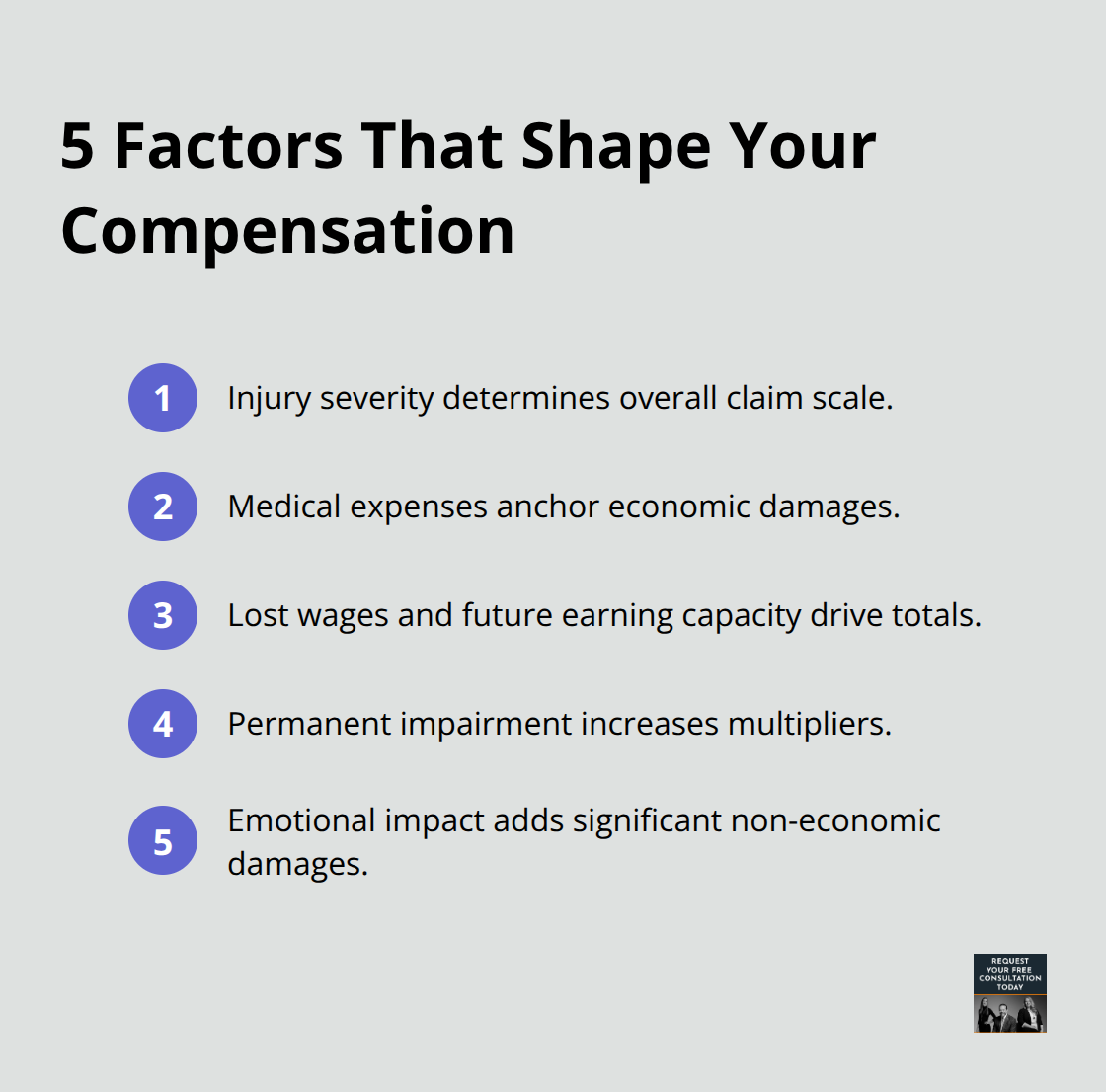
California law holds the at-fault driver responsible for all damages from a crash, and spinal injury claims typically produce the highest settlements because of long-term care requirements. Five key factors shape compensation: injury severity, medical expenses, lost wages, permanent impairment, and emotional impact. Severe spinal cord injuries frequently settle for $3,000,000 or more, while moderately severe injuries range around $1,000,000, depending on whether paralysis occurred and what level of ongoing care your condition demands.
Medical expenses form the foundation of these calculations. First-year costs reach $1,000,000 in California for spinal cord injuries, then drop to approximately $100,000 annually for ongoing treatment, rehabilitation, medications, and home modifications. Lifetime costs for tetraplegia approach $4,000,000 according to state injury data, and this figure becomes the baseline for your claim before adding any pain and suffering damages.
Lost Wages and Earning Capacity
Lost wages matter enormously, especially if your injury prevents you from returning to work. Economists calculate both current lost income and future earning capacity reduction over your remaining lifespan, a process that becomes more complex for self-employed individuals who lack steady paycheck documentation. Permanent impairment multiplies your compensation significantly. A spinal cord injury that leaves you paralyzed or with lasting neurological deficits commands higher settlement multipliers than soft tissue injuries that resolve within months.
Pain and suffering damages cover the physical pain, emotional distress, and loss of enjoyment of life that accompany spinal trauma, and these non-economic damages often equal or exceed medical bills in total value.
Settlement Timing and Insurance Pressure
Insurance companies routinely push for early settlements before the full extent of your spinal injury becomes clear, particularly when you lack legal representation. Many victims accept lowball offers within weeks of a crash, only to face $100,000 annual care costs for decades without adequate compensation. Accepting an early settlement eliminates your right to pursue additional damages later, making this decision critical to your financial future.
Once you reach a settlement agreement and sign release documents, funds typically arrive within weeks, though liens from medical providers or government agencies can delay payment. The statute of limitations in California gives you two years from the crash date to file a personal injury lawsuit, but waiting that long weakens your claim as evidence deteriorates and witnesses’ memories fade.
Documentation That Strengthens Your Claim
Document everything immediately: medical records showing your diagnosis and treatment timeline, provider notes describing your pain and limitations, daily symptom journals tracking how your condition fluctuates, and photographs of any visible injuries or home modifications you needed. Insurance adjusters review medical records, treatment gaps, physician notes, prescriptions, your pain diary, witness statements, and even social media posts when determining settlement value.
A clear medical diagnosis from imaging like MRI or CT scans strengthens your claim considerably, which is why demanding advanced imaging beyond basic X-rays matters during your initial emergency care. Life care planners estimate your future medical, rehabilitation, equipment, and income needs, providing the economic foundation that transforms a medical bill total into a comprehensive lifetime damage calculation. These planners project costs for ongoing therapy, assistive devices, home accessibility modifications, and at-home care services based on your injury level and prognosis.
Pre-Existing Conditions and Claim Complexity
Without detailed planning, your claim reflects only past expenses, not the reality that a C5 spinal cord injury requires decades of specialized care. Pre-existing conditions can complicate claims and potentially reduce settlement amounts, which is why full transparency with your attorney about prior injuries or health conditions prevents surprises during negotiations. An experienced attorney helps you gather complete medical documentation, coordinate with economists and life care planners, and present comprehensive evidence to insurers, pushing back against undervaluation with concrete data about your lifetime needs and losses.
Final Thoughts
A spinal injury car crash reshapes your life in ways that extend far beyond the initial impact. Medical costs, lost income, and emotional toll demand compensation that reflects your actual lifetime needs, not what insurance companies initially offer. Specialized rehabilitation centers produce measurably better outcomes than standard facilities, yet these programs cost significantly more, making your settlement critical to accessing quality care.
Insurance companies push for quick settlements before you understand the full scope of your injury’s impact, and accepting an early offer eliminates your right to pursue additional damages later. Life care planners project your future medical expenses, assistive devices, home modifications, and ongoing therapy costs, transforming your claim from a simple medical bill total into a comprehensive lifetime damage calculation. An experienced attorney prevents financial vulnerability by gathering complete medical documentation, coordinating with economists, and presenting evidence that reflects your actual needs.
We at Schaar & Silva LLP serve Sacramento and surrounding areas, helping people recover from spinal injury car crashes by handling legal complexities while you focus on medical treatment. Contact us for a free case evaluation to understand what your claim is truly worth and what compensation you can realistically pursue.
