

After a car accident, one of your first questions is likely about timing. How long until you receive your settlement check?
The settlement timeline for an auto crash varies significantly depending on your case. We at Schaar & Silva LLP have helped countless clients navigate this process, and we know the answer depends on several factors specific to your situation.
This guide walks you through what to expect at each stage, from the initial claim to final resolution.
How Long Your Settlement Takes
The timeline for your auto accident settlement hinges on several concrete factors, and understanding them helps you plan ahead. Minor injuries with clear liability often resolve within 3–6 months, while moderate injuries typically take 6–12 months. Severe injuries, disputed liability, or cases requiring litigation stretch 12–24 months or longer. Catastrophic injuries sometimes take 2–4 years or more. Maximum Medical Improvement (MMI) drives your timeline more than anything else-settling before you reach MMI risks leaving money on the table if you need additional treatment later. Clear liability accelerates everything; a straightforward rear-end collision settles faster than a multi-party accident where fault remains contested. If damages exceed the at-fault driver’s policy limits, you may pursue underinsured motorist coverage or additional defendants, which adds months to resolution. Commercial vehicle or rideshare crashes introduce extra defendants and complexity that slow the process.
Medical treatment sets your calendar
Soft tissue injuries often stabilize in 2–4 months, but spinal injuries, brain injuries, or fractures requiring surgery extend timelines significantly. Insurance adjusters frequently pressure quick settlements before your medical picture becomes clear; strong representation protects your case value and prevents premature compromises. The typical timeline follows predictable phases: investigation and documentation in the first 30 days, ongoing treatment and damages documentation for months 2–6, then negotiation after treatment concludes. A detailed demand package with medical records, bills, wage loss documentation, and a precise settlement figure usually generates an insurer response within 30 days. Straightforward cases often settle 60–90 days after submission of the demand. The Insurance Research Council found that represented claimants recover about 3.5 times more than unrepresented ones, even after legal fees. After settlement agreement, expect 2–6 weeks to receive payment; checks typically issue within 10–21 business days after you sign the release form.
What slows cases down most
Repeated medical record requests, new adjusters resetting their review, and liability questions requiring investigation or expert testimony create the most common delays. California’s two-year statute of limitations provides your filing window, but insurers can use delays within that period to pressure lower offers. Evidence proving liability-such as dashcam footage, police reports, and credible witness statements-accelerates settlement and reduces protracted disputes. If liability remains contested, filing a lawsuit can push momentum forward; most cases settle during litigation rather than proceed to trial. Organized documentation of medical bills, prescriptions, wage loss, and accident-related expenses speeds up your demand package and strengthens your settlement position.
Moving forward with representation
Strong legal representation changes the settlement equation significantly. When you work with an attorney early (ideally within the first week), you prevent evidence loss and avoid common settlement-killing mistakes. Your attorney handles negotiations with insurance companies, protects you from pressure tactics, and maximizes your recovery. The next phase of your case involves understanding what happens immediately after the accident and how to preserve your claim from day one.
What Happens Right After Your Accident
The first 30 days after a crash determine whether you maximize your settlement or leave money on the table. Stop immediately if safe to do so, move only if traffic poses danger, and call 911 if anyone is injured. Notify police and request a report number; California requires DMV reporting within 10 days if there are injuries or vehicle damage exceeding $750. Collect names, addresses, driver licenses, license plates, VINs, and contact information from all drivers, passengers, and witnesses. Take photos of vehicle damage, the accident scene, road conditions, and traffic signals. Contact your insurance agent or company right away and provide them with documentation for medical payments or uninsured motorist claims. Do not sign fault statements or promises to pay at the scene. Insurance adjusters often contact you within 15 days; if you don’t hear back, contact your agent or the California Department of Insurance for guidance.
Protect your claim from day one
Within this critical window, hire an attorney if your injuries are moderate or severe. An early attorney prevents evidence loss, stops you from making settlement-killing mistakes, and positions your case for maximum recovery from day one. If you’re in Santa Cruz County, the legal team at Schaar & Silva LLP offers dedicated client service and in-depth legal knowledge to guide you through this process. Your attorney handles negotiations with insurance companies, protects you from pressure tactics, and maximizes your recovery.
Build your damages file systematically
Your medical treatment directly funds your settlement amount, so attend every appointment and maintain thorough documentation. Collect medical bills, prescriptions, wage loss statements from your employer, and receipts for accident-related expenses like transportation to appointments or childcare while recovering. Insurance adjusters request medical records repeatedly; having them organized and ready accelerates the process. If you disagree with your vehicle’s settlement amount, most policies include an appraisal provision where each side selects an appraiser, they choose a neutral umpire, and the final amount is decided by the two appraisers and umpire. Payment typically goes to you and any lienholder; if repairs are needed, the repair facility can be named as a payee. Expect to remain responsible for any remaining loan balance unless you have gap insurance.
Submit a strong demand package
A detailed demand package submitted after you reach maximum medical improvement includes organized medical records, bills, wage loss documentation, and a precise settlement figure. Insurers typically respond within 30 days. Straightforward cases often settle 60–90 days after the demand is submitted. The Insurance Research Council found that represented claimants recover approximately 3.5 times more than unrepresented ones, even after legal fees. This substantial difference underscores why early legal representation transforms your case outcome. Understanding what happens during the negotiation phase helps you prepare for the conversations ahead.
What Causes Delays in Settlement Negotiations
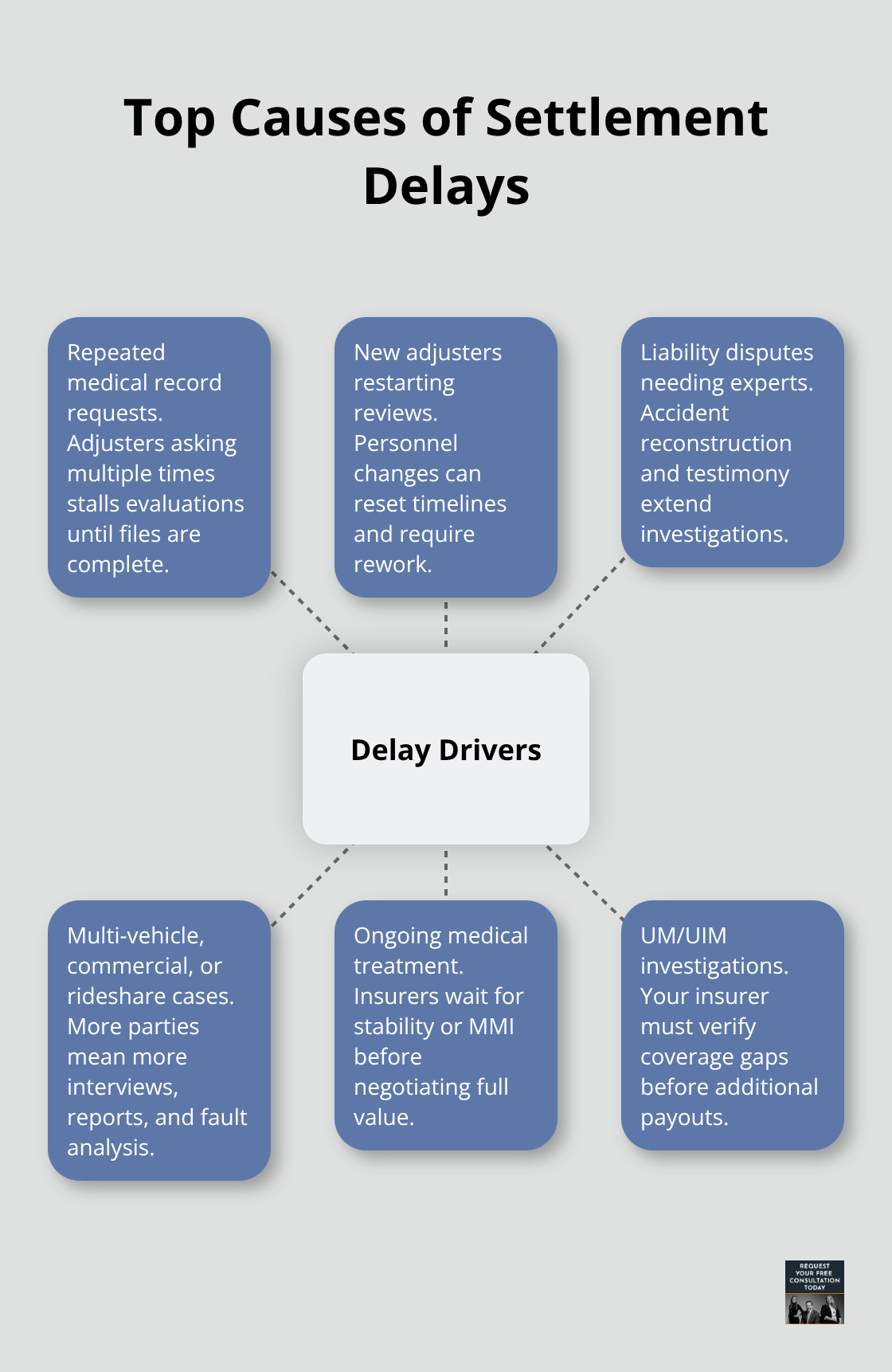
Insurance company investigations extend timelines when adjusters request medical records repeatedly, assign new adjusters who restart their entire review, or demand expert testimony to establish liability. You cannot control these delays, but you can anticipate them. If your case involves multiple vehicles, commercial defendants, or rideshare companies, expect additional time for investigators to interview witnesses, obtain police reports, and determine fault percentages.
Liability disputes and medical treatment
Liability disputes consume months-multi-party accidents where each driver claims the other caused the crash require accident reconstruction experts, which pushes timelines to 12–24 months or longer. Medical treatment that continues beyond six months creates the most predictable delays because insurers refuse to settle while your condition remains unstable. Traumatic brain injuries and surgeries routinely extend treatment to 12–18 months, and settling before you reach maximum medical improvement leaves you vulnerable to unexpected medical bills later. The California Department of Insurance requires insurers to acknowledge claims within 15 days and respond to communications within 15 days, but these rules do not prevent legitimate investigation delays when liability or damages remain genuinely disputed.
Underinsured motorist coverage complications
Uninsured or underinsured motorist cases add complexity because your own insurer must investigate whether the at-fault driver carried adequate coverage, and if not, whether you qualify for additional recovery under your policy. This investigation phase alone can extend your timeline by several months. Document every communication with your insurer-keep emails, record call dates and names of adjusters, and note what they request. This creates a paper trail that protects you if you later need to file a complaint with the California Department of Insurance or pursue legal action.
Settlement pressure and negotiation tactics
The pressure to settle quickly intensifies when medical treatment concludes, but accepting an offer before your attorney reviews the full damages picture costs money. Medical liens from hospitals or doctors must be negotiated down, and health insurance reimbursements are routinely reduced through proper negotiation-your attorney handles this, not the insurer. If you represent yourself, you lose leverage on these reductions. Dashcam footage, police reports, and credible witness statements accelerate settlements dramatically because they eliminate liability disputes. If you lack this evidence, the investigation takes longer.
Litigation and discovery deadlines
Filing a lawsuit does not guarantee faster resolution, but it often motivates settlement discussions because trial preparation costs both sides money and time. Most cases settle during litigation rather than proceed to trial, and the lawsuit process forces discovery deadlines that push negotiations forward. Organized medical documentation-bills, prescriptions, wage loss statements, receipts for accident-related expenses-speeds demand package submission and reduces adjuster requests for missing records. Hiring legal representation within the first week after your accident prevents evidence loss and stops common mistakes that delay resolution.
Final Thoughts
Your settlement timeline for an auto crash depends largely on decisions you make in the first week after your accident. Organizing medical records, collecting evidence, and hiring legal representation immediately accelerate resolution and prevent costly delays. Insurance adjusters count on unrepresented claimants to accept low offers quickly; when you have an attorney handling negotiations, you recover substantially more-the Insurance Research Council data shows represented claimants recover approximately 3.5 times more than those without legal help, even after accounting for attorney fees.
Speed comes from preparation. Attend every medical appointment, maintain detailed documentation of bills and wage loss, and preserve evidence like dashcam footage or witness contact information. These actions eliminate the repeated record requests and liability disputes that stretch timelines to 12–24 months. If your injuries are moderate or severe, legal representation within the first week prevents evidence loss and stops settlement-killing mistakes that cost thousands.
Contact Schaar & Silva LLP for a free consultation to understand your rights and outline a path forward. We assist with medical bill navigation through lien services, property damage evaluation, and connecting you with psychological support when emotional trauma affects your recovery. Most cases settle within 3–12 months when representation starts early and documentation is thorough.
