

After a car accident, most people focus on medical treatment and insurance calls. What they overlook is that injury documentation Santa Cruz becomes your strongest asset when filing a claim.
We at Schaar & Silva LLP have seen firsthand how detailed records transform weak cases into strong ones. The photos, medical notes, and receipts you gather now directly determine how much compensation you receive.
Why Your Documentation Becomes Your Evidence
Medical records are not just pieces of paper filed away in a doctor’s office. They form the foundation of your compensation claim. Insurance adjusters and judges rely on medical documentation to determine what happened to your body and how much your injuries cost. The American Journal of Public Health found that documenting medical treatment within 72 hours strengthens injury claims significantly. Waiting weeks or months to gather your records puts you at a disadvantage. The sooner you collect discharge summaries, physician notes, imaging reports, and lab results, the clearer the picture becomes for your case. Insurance companies scrutinize claims without solid medical evidence and often offer lower settlements when documentation is incomplete or delayed.
How Documentation Shifts the Power in Your Favor
Insurance adjusters handle hundreds of claims annually and know which ones have weak documentation. The National Association of Insurance Commissioners reports that organized financial documentation can increase claim settlements by approximately 23 percent. This represents the difference between recovering what you actually lost and settling for far less. When you present organized medical records, receipts, and a clear timeline of your treatment, the adjuster recognizes you are serious and prepared. They understand that taking your case to trial would cost them money and carry risk. Claimants without solid records typically accept whatever first offer arrives because they cannot prove their damages.
Building Your Timeline with Real Evidence
Photos and written notes create an undeniable timeline of your injuries from day one. Photograph visible injuries immediately after the accident and then again as you heal or as new symptoms emerge. These images document the progression of your condition in ways that words alone cannot capture. Daily symptom tracking matters more than most people realize. Record your pain level on a simple 1 to 10 scale each day, noting what triggered flare-ups, whether you slept poorly, and which activities became impossible. If you missed work because of your injuries, write down those dates and the reason. Track prescription medications with pharmacy receipts showing dates and dosages. Include mental health treatment records if you received counseling or therapy related to the accident (psychological injuries can significantly affect your settlement). The Bureau of Labor Statistics found that accident victims lose an average of 11 workdays in the first month alone, and this lost income is recoverable if documented properly.
Organizing Your Documentation for Maximum Impact
Every receipt, appointment note, and written communication with insurance adjusters becomes evidence that supports your claim’s value. Create a dedicated folder or binder where you store all medical bills, imaging reports, and correspondence (keeping everything in one place prevents critical documents from getting lost). Save every email and text message with insurance adjusters and other drivers’ insurers; screenshots in a dedicated digital folder work well for this. A complete, organized documentation package signals to insurers that you are prepared and serious, often leading to stronger settlements. The next step involves understanding how to present this evidence effectively when you file your claim.
Start Recording Your Injuries Now
The moment you leave the accident scene, your injury documentation begins. Most people wait days or even weeks before photographing visible injuries, and this delay costs them thousands in settlements. Photograph any visible marks, bruising, swelling, or wounds on the day of the accident and then again every few days as your injuries evolve. Use your smartphone camera in natural light whenever possible, and take multiple angles of each injury-close-ups show detail while wider shots show location on your body. If you develop injuries that weren’t immediately obvious, photograph those as well. Many soft tissue injuries worsen over days, so consistent visual documentation proves the progression of your condition to insurance adjusters who otherwise might claim your injuries were minor.
Schedule Medical Appointments Within 72 Hours
Medical appointments require immediate attention after any accident. Schedule your first doctor visit within 72 hours if possible, as early documentation strengthens injury claims significantly. Request copies of every medical record before you leave each appointment-discharge summaries, imaging reports, lab results, and physician notes all matter. Create a dedicated medical folder and store these records chronologically so you can show the timeline of treatment to your insurer.
Track Your Symptoms Daily
Start a daily symptom log using a simple pain scale from 1 to 10, noting what triggered flare-ups, how well you slept, and which activities became difficult or impossible. Write down missed work dates and reasons. If you received mental health treatment or counseling related to the accident, include those records as well since psychological injuries significantly impact settlement amounts. Keep every prescription bottle with its label showing dates and dosages, along with pharmacy receipts.
Organize Medical Expenses and Lost Wages
Medical expenses add up quickly, so save every receipt from hospitals, clinics, physical therapy, chiropractors, and pharmacies with the date, provider name, service type, and amount clearly visible. Track lost wages by obtaining employer documentation of days missed and your earnings; self-employed individuals should use bank statements, tax returns, or client invoices to prove typical income. Accident victims lose significant income in the first month after a crash, and this lost income is fully recoverable when documented properly.
Preserve All Communications with Insurers
Store every email, text message, and written communication with insurance adjusters in a dedicated digital folder with screenshots included. A complete documentation package signals to insurers that you are organized and serious, typically resulting in stronger settlements than disorganized claims. When you have gathered all this evidence, the next step involves understanding how to present it effectively and navigate the claims process with confidence.
What Tools Help You Document Everything in Santa Cruz
Your smartphone serves as your most reliable documentation tool after a car accident in Santa Cruz County. Most modern phones capture high-quality images in natural light, and you should photograph visible injuries immediately after the accident and then every few days as they change. Take close-ups to show detail, wider shots to show location on your body, and vary angles to capture how bruising or swelling evolves. Store these photos in a dedicated phone folder or cloud backup (Google Photos, iCloud, or Dropbox all work) so they remain accessible even if your device is damaged or lost. When photographing injuries, avoid using filters or editing apps that alter appearance, as insurance adjusters will question modified images.
Getting Medical Records from Santa Cruz Hospitals and Clinics
After your first medical appointment, request copies of every document before leaving the facility. Hospitals and clinics in Santa Cruz County must provide medical records within 30 days of your request, though many provide them immediately if you ask at discharge. Specifically request discharge summaries, imaging reports (X-rays, MRI, CT scans), lab results, and physician notes. If you visit multiple providers (emergency room, primary care doctor, physical therapist, chiropractor), contact each one separately to gather their records.
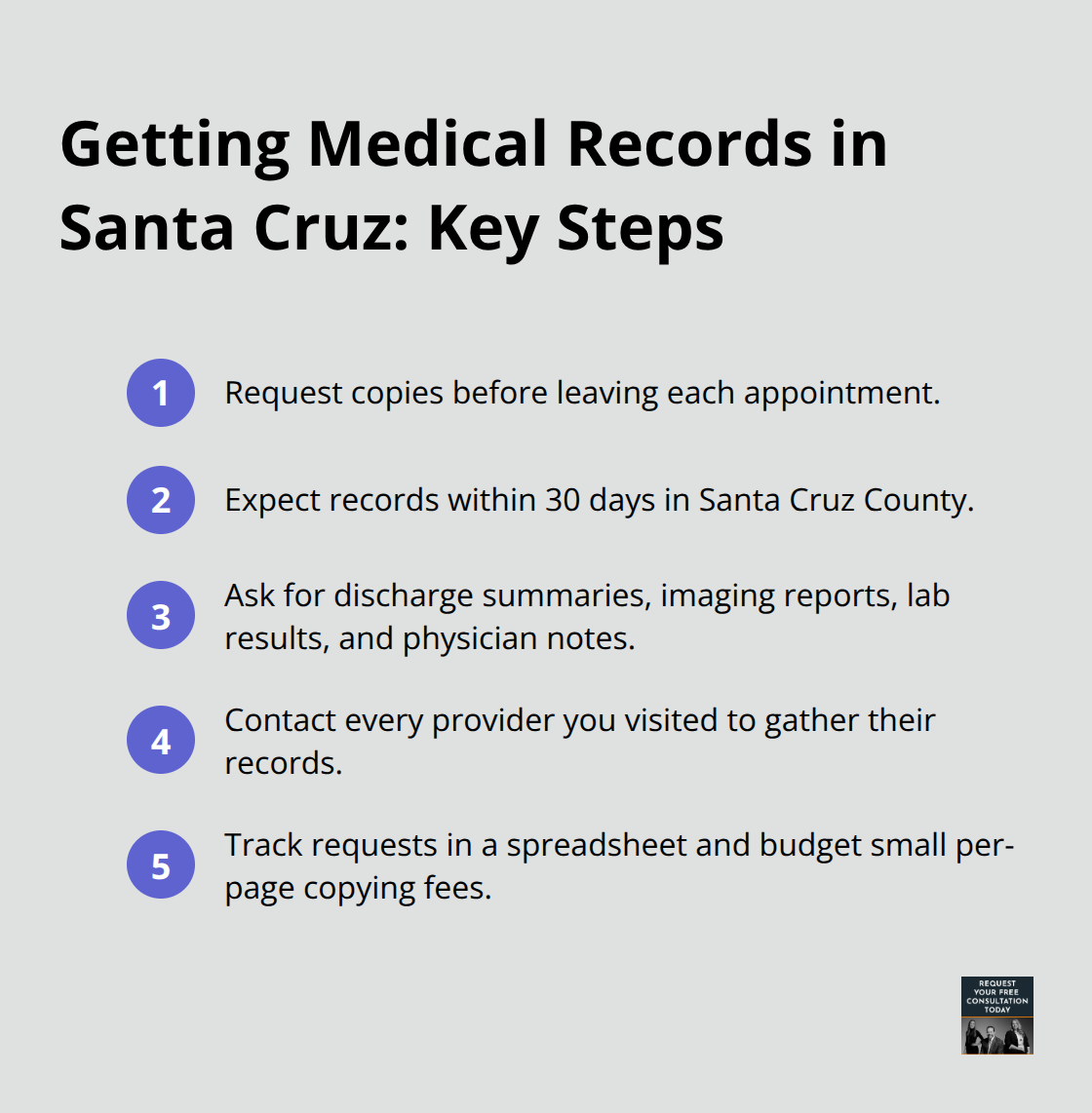
Keep a spreadsheet with provider names, phone numbers, dates of service, and record request dates so you track what you’ve collected and what still needs to arrive. Some providers charge copying fees (typically between five and fifteen cents per page), so budget accordingly.
Obtaining Your Official Accident Report from Law Enforcement
The Santa Cruz Police Department and California Highway Patrol both file accident reports, and you can obtain yours within days of the crash. Contact the police department or highway patrol office that responded to your accident and request the report by case or report number. You can also request reports online through the California Highway Patrol website if the accident occurred on a state highway. The official report includes the officer’s assessment of fault, witness statements, citations issued, and environmental conditions at the time of the crash. This document carries significant weight with insurance adjusters and strengthens your claim substantially. Request multiple copies since you will need them for your insurer, any legal representation, and your personal records.
Organizing Your Documentation System
Create a dedicated folder on your phone and a physical binder to store all injury photos, medical records, receipts, and correspondence. Label each section clearly so you locate documents quickly when your insurer requests them. A well-organized system demonstrates to adjusters that you take your claim seriously and have prepared thoroughly. This preparation often results in stronger settlement offers than disorganized claims receive.
Final Thoughts
The documentation you gather after a car accident in Santa Cruz directly determines your settlement amount. Insurance adjusters make decisions based on evidence, not promises or estimates. When you present organized medical records, dated photos of injuries, receipts for expenses, and proof of lost wages, adjusters recognize that your claim is solid and backed by facts.
Start recording details immediately after the accident. Photograph visible injuries on day one, schedule your first medical appointment within 72 hours, and begin your daily symptom log before memories fade. Request medical records from every provider and obtain your official accident report from law enforcement.
We at Schaar & Silva LLP understand that injury documentation Santa Cruz requires attention to detail and persistence. Our team guides you through this entire process, from gathering initial evidence to presenting your complete documentation package to insurers, and we help you recover what you deserve by contacting us today.
