

After a car accident, one of your first questions is probably how long the settlement process will take. The answer depends on several factors, from how clear liability is to whether your medical treatment is still ongoing.
At Schaar & Silva LLP, we’ve guided hundreds of clients through settlement timelines in Santa Cruz County, Sacramento, and Oakland. This guide walks you through what to expect at each stage and what can slow things down.
How Long Your Settlement Takes
Most California car accident settlements resolve within three to nine months, though this timeline shifts dramatically based on injury severity and how cooperatively insurers negotiate. The single biggest factor controlling your timeline is reaching Maximum Medical Improvement before settling, because accepting money too early can cost you tens of thousands in future medical expenses. If you settle while still undergoing treatment, you forfeit the right to claim additional medical costs later, which is why patience matters more than speed.
What Determines Your Timeline
Clear liability accelerates settlements significantly. Rear-end collisions with dashcam footage resolve faster than multi-car accidents where fault remains disputed. If the police report clearly identifies the at-fault driver and witnesses corroborate the narrative, you can move through negotiations within 60 to 90 days after your demand package is sent. Conversely, disputed liability cases require accident reconstruction, depositions, and extensive investigation, pushing timelines to 12 months or longer. The Insurance Research Council found that represented claimants recover about 3.5 times more than unrepresented claimants even after attorney fees, partly because experienced representation cuts through stalling tactics and builds stronger cases faster. Your injury type also matters. Minor soft-tissue injuries like whiplash typically stabilize in two to four months, while surgeries, spinal cord injuries, or traumatic brain injuries can extend medical treatment well beyond six months. You cannot credibly demand final settlement until your medical team documents that you’ve reached maximum improvement, because future medical costs and functional limitations must be proven for accurate valuation.
Straightforward Cases Move Predictably
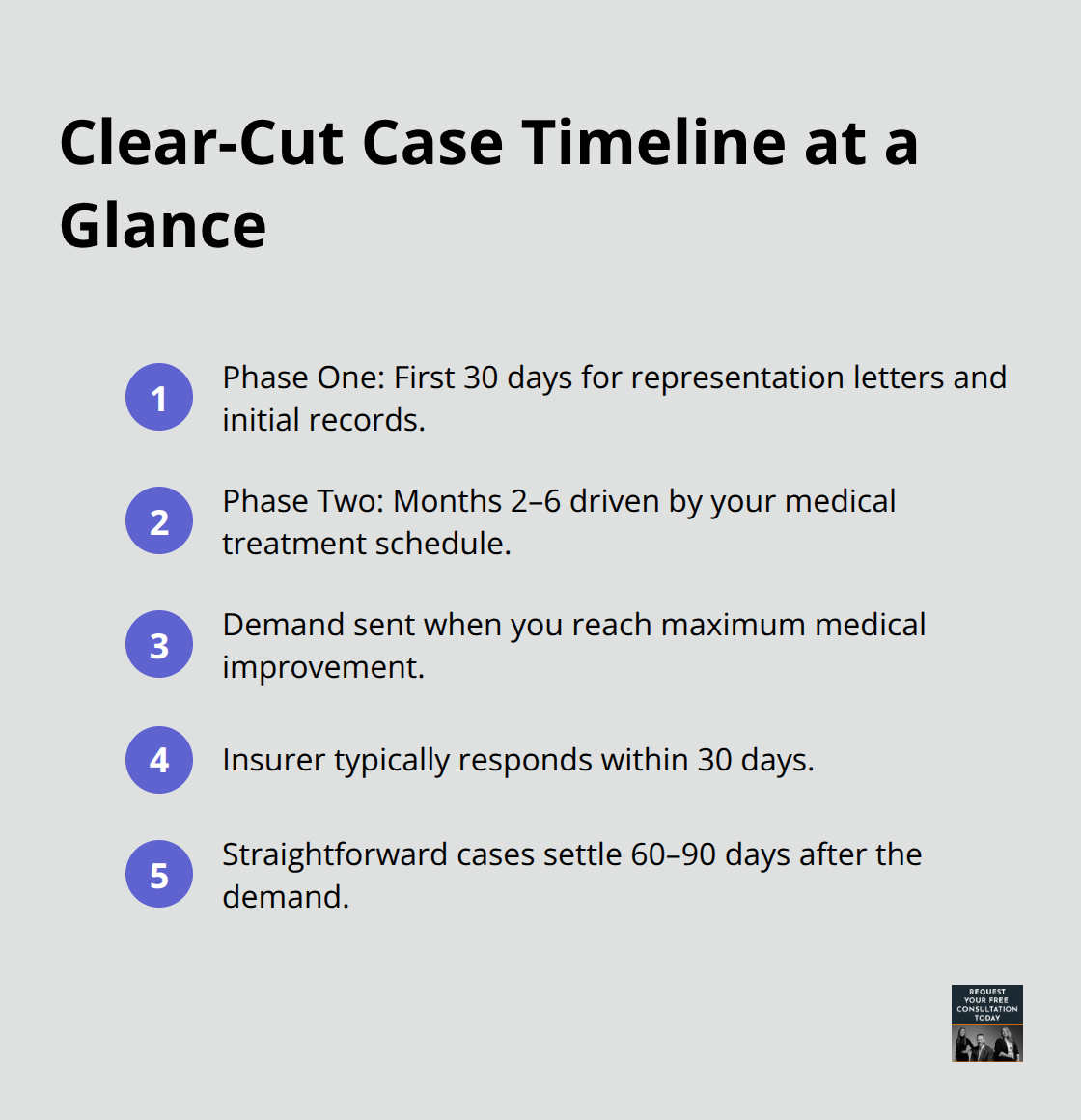
When liability is clear and injuries are moderate, expect this timeline: Phase One spans the first 30 days, when your attorney sends representation letters, collects the police report, witness statements, and initial medical records. Phase Two covers months two through six, driven entirely by your medical treatment schedule. Phase Three begins once treatment concludes, when your attorney sends a detailed demand package; insurers typically respond within 30 days, and most straightforward cases settle within 60 to 90 days after the demand. Total: three to six months for clear-cut cases. Commercial vehicle accidents often settle faster because commercial drivers typically carry $750,000 to $1,000,000 or more in coverage, reducing disputes over policy limits.
Complex Cases Require Longer Paths
When multiple parties share liability or damages exceed policy limits, timelines extend substantially. You may need to pursue underinsured motorist coverage or claims against multiple defendants, each adding investigation and negotiation phases. Catastrophic injuries requiring lifetime care demand comprehensive life-care planning and forensic economic testimony to document future medical and wage-loss costs, pushing resolution to two to four years or beyond. Insurance stall tactics also delay complex cases: repeated requests for the same medical records, new adjusters restarting their review, or deliberate slowdowns knowing California’s two-year personal injury statute of limitations gives them room to push for lower offers. If settlement negotiations stall, filing a lawsuit often accelerates resolution because most filed cases ultimately settle after litigation begins, shifting the leverage and timeline dynamics significantly.
How Insurance Company Tactics Affect Your Wait
Insurers employ specific delay strategies that extend your timeline unnecessarily. They request the same medical records multiple times, assign new adjusters who restart their entire review from scratch, or manufacture liability disputes to justify lower offers. These tactics work because California’s two-year statute of limitations creates pressure on claimants to accept unfavorable settlements rather than risk missing the filing deadline. Your attorney recognizes these patterns and counters them by maintaining organized documentation, responding promptly to all requests, and preparing to file suit when negotiations stall. Filing a lawsuit shifts the dynamic significantly-most cases that enter litigation ultimately settle, but the threat of trial often motivates insurers to negotiate more seriously and move faster toward resolution.
The settlement process itself follows a structured path, with each phase presenting specific opportunities to strengthen your position and move toward fair compensation.
The Settlement Process Step by Step
Phase One: Initial Claim Filing and Documentation
Within the first 30 days after your accident, your attorney sends a representation letter to the insurance company, requests the police report and witness statements, and gathers your initial medical records. This phase establishes the foundation of your claim. The insurer must acknowledge receipt and assign an adjuster, but movement beyond that acknowledgment rarely happens immediately. You control what happens next through consistent medical treatment and meticulous documentation. Keep copies of all medical bills, prescription receipts, wage-loss statements, and accident-related photos in a single, accessible file. Dashcam footage and police reports become your leverage; video evidence weakens the insurer’s liability position immediately, which accelerates negotiations later.
Phase Two: Investigation and Evidence Gathering
The investigation phase spans months two through six and is entirely controlled by your medical treatment schedule. While you recover, your attorney builds the demand package by collecting updated medical records, imaging reports, and treatment notes from your doctors. This is where patience matters most. Settling during active treatment creates a critical mistake because you cannot predict future medical costs or complications. Once your medical team documents that you’ve reached maximum medical improvement, the real negotiation begins.
Your attorney sends a detailed demand package outlining all economic damages (medical expenses, lost wages, property damage) and non-economic damages (pain and suffering, lost earning capacity). Insurers typically respond within 30 days. Straightforward cases with clear liability often settle within 60 to 90 days after the demand is sent.
Phase Three: Negotiation and Settlement Offers
When the insurer makes an offer, your attorney evaluates whether it covers documented medical costs plus reasonable compensation for your suffering. Most offers come in lower than your demand, which triggers counteroffer negotiations. This back-and-forth typically takes two to four weeks. Once both sides agree on a number, you receive a settlement release document that your attorney reviews before you sign.
Phase Four: Final Agreement and Payment
Payment arrives within two to six weeks after execution. Your attorney deducts medical liens, health insurance reimbursement claims, and case costs before distributing your net settlement to you. Understanding what reduces your final check matters because these deductions (liens from healthcare providers, outstanding case expenses, and attorney fees) can significantly impact the amount you actually receive.
Once payment clears and you understand your net recovery, the question shifts to whether that settlement truly reflects your damages or whether you should have pursued litigation instead.
What Slows Down Your Settlement
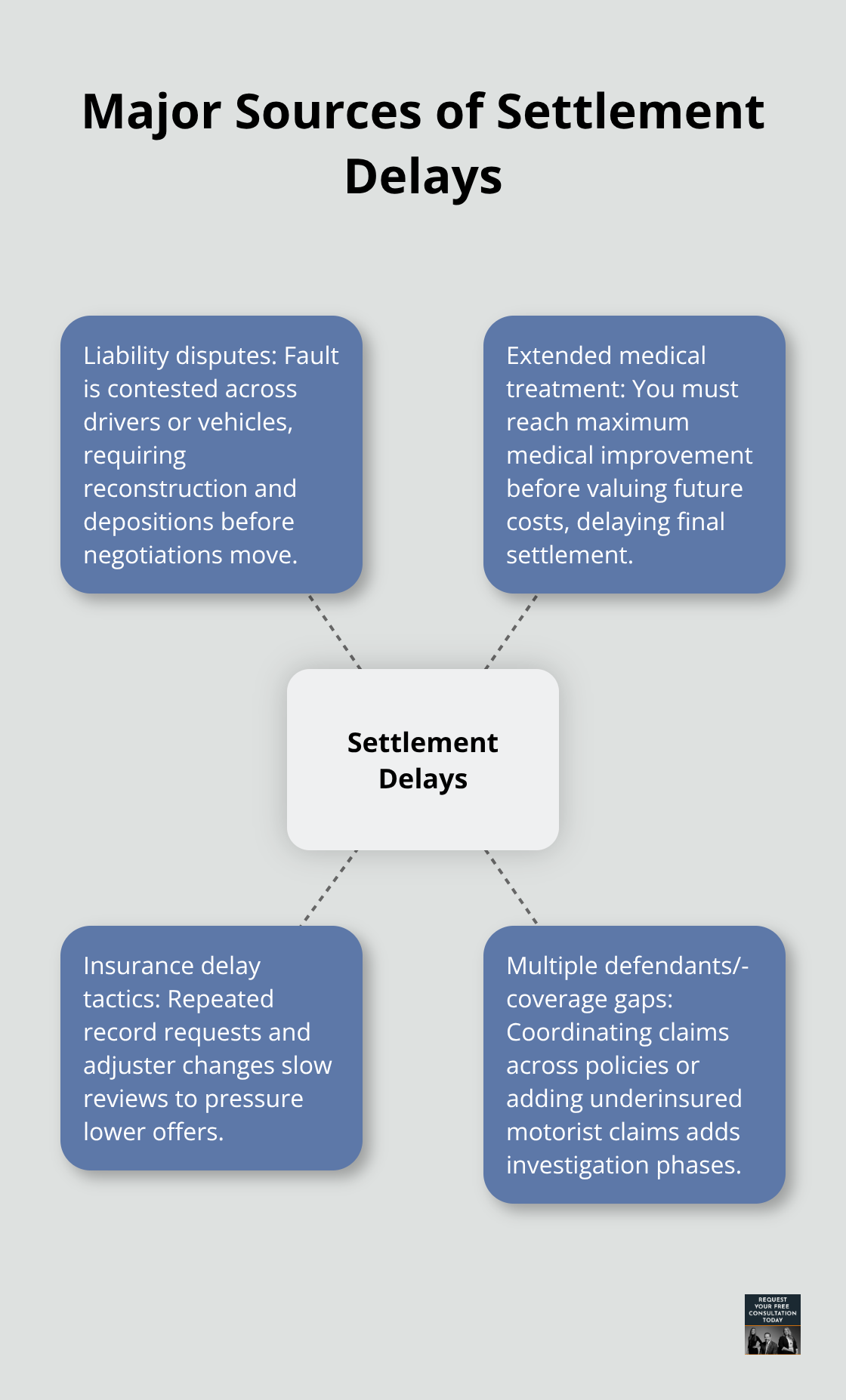
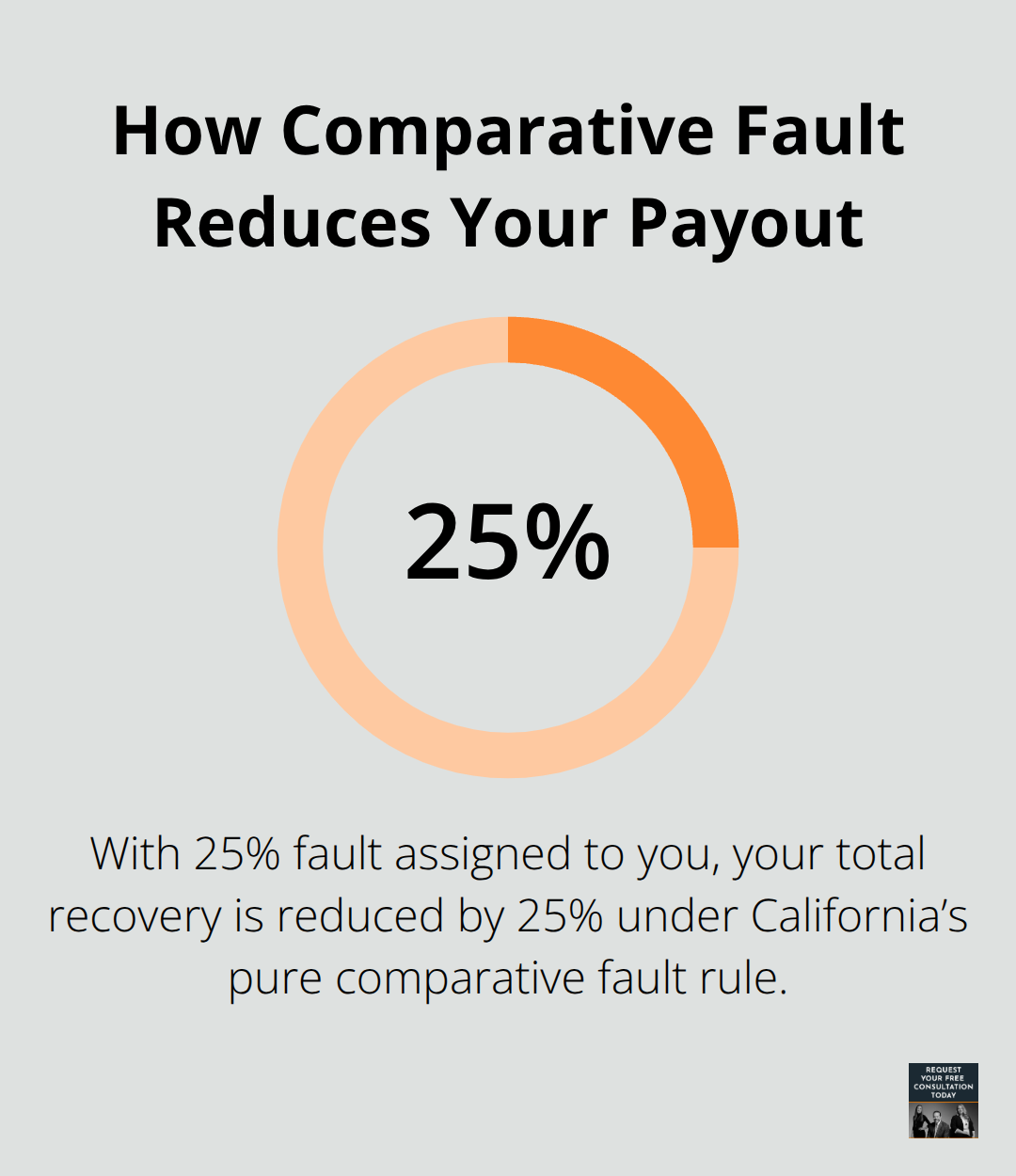
Liability disputes rank as the single most destructive delay in auto crash settlements. When the police report clearly identifies fault or dashcam footage shows a rear-end collision, settlement moves forward within weeks. Disputed liability cases are entirely different. Multi-car accidents, intersection collisions where both drivers claim the other ran a red light, or scenarios involving partial fault for both parties trigger extended investigations. Your attorney must obtain accident reconstruction reports, depose witnesses, and sometimes hire engineers to establish fault percentages. California’s pure comparative fault standard means even 25% fault on your side reduces your recovery by 25%, so insurers have strong financial incentive to drag out these disputes. A case where liability remains contested can easily add six to twelve months to your timeline because insurers know that extended delays pressure claimants toward accepting lower offers.
Medical Treatment That Extends Beyond Expectations
Medical treatment that extends beyond what the insurer anticipated creates a second category of delays. If you initially report minor whiplash but then require MRI imaging that reveals a herniated disc, treatment timelines shift dramatically. You cannot settle credibly until your doctor documents maximum medical improvement, which means you remain locked into waiting for treatment to complete before negotiations can conclude. Insurers sometimes dispute whether ongoing treatment is medically necessary or simply padding the claim, which triggers requests for peer reviews or independent medical examinations. These disputes can add two to four months while medical evidence is evaluated.
Insurance Company Tactics That Create Artificial Pressure
Insurance company tactics represent the third major delay source, and understanding these patterns protects you from accepting unfavorable settlements under artificial time pressure. Insurers request identical medical records multiple times, knowing that gathering and resubmitting documents consumes your attorney’s time and your own. New adjusters are assigned mid-claim, forcing your attorney to restart conversations and re-explain your case from scratch. California’s two-year statute of limitations creates deliberate pressure because insurers understand that claimants grow anxious as the filing deadline approaches, making lower settlement offers more tempting. Your attorney counters these tactics by maintaining meticulous records, responding to requests within 48 hours, and preparing to file suit when negotiations stall beyond reasonable timeframes. Filing a lawsuit fundamentally changes the dynamic because most cases that enter litigation ultimately settle, but the formal court filing signals serious intent and motivates insurers to negotiate genuinely rather than stall indefinitely.
Multiple Defendants and Coverage Gaps
Legal complications such as multiple defendants, policy limit coverage gaps, or underinsured motorist claims extend resolution substantially. When damages exceed one defendant’s policy limits, pursuing additional defendants or underinsured motorist coverage adds separate negotiation tracks and investigation phases. A truck accident where the trucking company, truck manufacturer, and at-fault driver all bear potential liability requires coordinating claims across multiple insurance policies and defendants, easily extending timelines to eighteen months or longer. Catastrophic injuries requiring lifetime care demand life care planners and forensic economists to project future medical and wage-loss costs, which means your settlement cannot be finalized until comprehensive future-damages documentation is complete.
Final Thoughts
Your settlement timeline for an auto crash depends far more on your preparation and legal representation than on luck or timing. The three to nine month range applies to straightforward cases with clear liability and moderate injuries, but your actual timeline hinges on decisions you make immediately after the accident. Organizing medical records, avoiding social media posts about your case, and refusing to give recorded statements to insurers protects your claim while it moves through the system.
Speed up your case by maintaining consistent medical treatment, keeping detailed records of all expenses, and hiring experienced legal representation immediately. The Insurance Research Council found that represented claimants recover about 3.5 times more than unrepresented claimants even after attorney fees, partly because attorneys recognize and counter insurance company stalling tactics. When negotiations stall, filing a lawsuit often accelerates settlement because most cases that enter litigation ultimately resolve through negotiation rather than trial.
We at Schaar & Silva LLP guide accident victims through settlement timelines in Santa Cruz County, Sacramento, and Oakland. Our team handles the legal intricacies while you focus on recovery, and we connect you with medical lien services to manage bills until your case resolves. Contact us for a free case evaluation to understand your specific settlement timeline auto crash case and next steps.
