
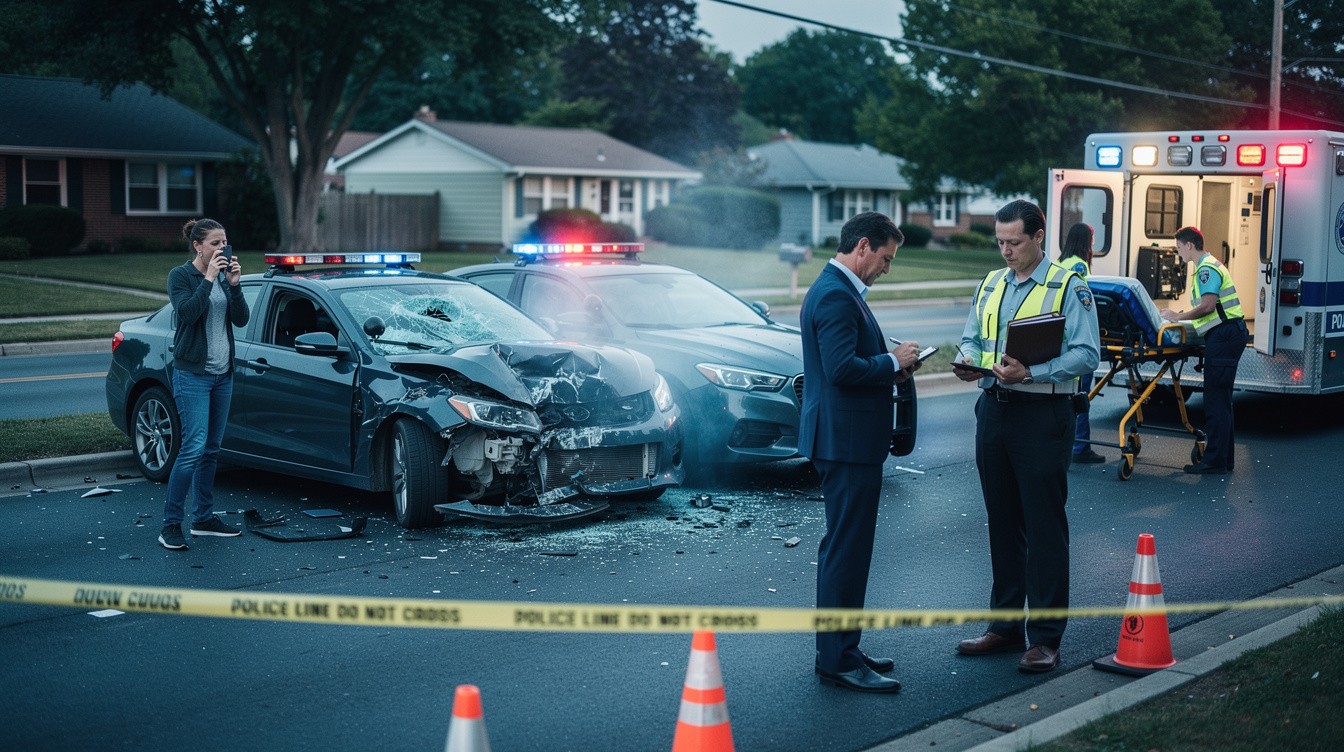
A Santa Cruz car crash can turn your life upside down in seconds. Between managing injuries, dealing with insurance companies, and worrying about vehicle repairs, the stress can feel overwhelming.
We at Schaar & Silva LLP know that protecting your rights after an accident requires immediate action and clear understanding of what comes next. This guide walks you through the essential steps to take control of your recovery.
What to Do Immediately After Your Santa Cruz Car Crash
Prioritize Safety and Call for Help
The first minutes after a collision determine how strong your claim becomes. Your priority is safety, then documentation. Move your vehicle to the shoulder if it’s safe to do so and turn on your hazard lights to warn other drivers. If you’re in a busy area near Highway 1 or one of Santa Cruz’s high-traffic intersections like Highway 1 and Highway 9 (which saw 11 crashes over five years), stay inside your vehicle with the seatbelt fastened. Call 911 immediately if anyone is injured or if the crash blocks traffic. The California Department of Insurance emphasizes that reporting to local police is mandatory if there are injuries or property damage exceeding $750, and you must file a report with the California DMV within 10 days or risk license consequences.
Document Everything at the Scene
While waiting for police, photograph the damage to all vehicles, road conditions, traffic signs, and any visible injuries with your phone. These images protect you if the other driver later changes their story or if the insurer disputes the severity of damage. Get the names, phone numbers, email addresses, driver’s license numbers, and insurance information from every driver involved. If witnesses are present, collect their contact details immediately because they often disappear and become impossible to locate later. Do not admit fault at the scene, even if you think you caused the crash. Fault determination in California is complex, and statements you make can be used against you later. When police arrive, provide factual information about what happened but avoid speculating about blame.
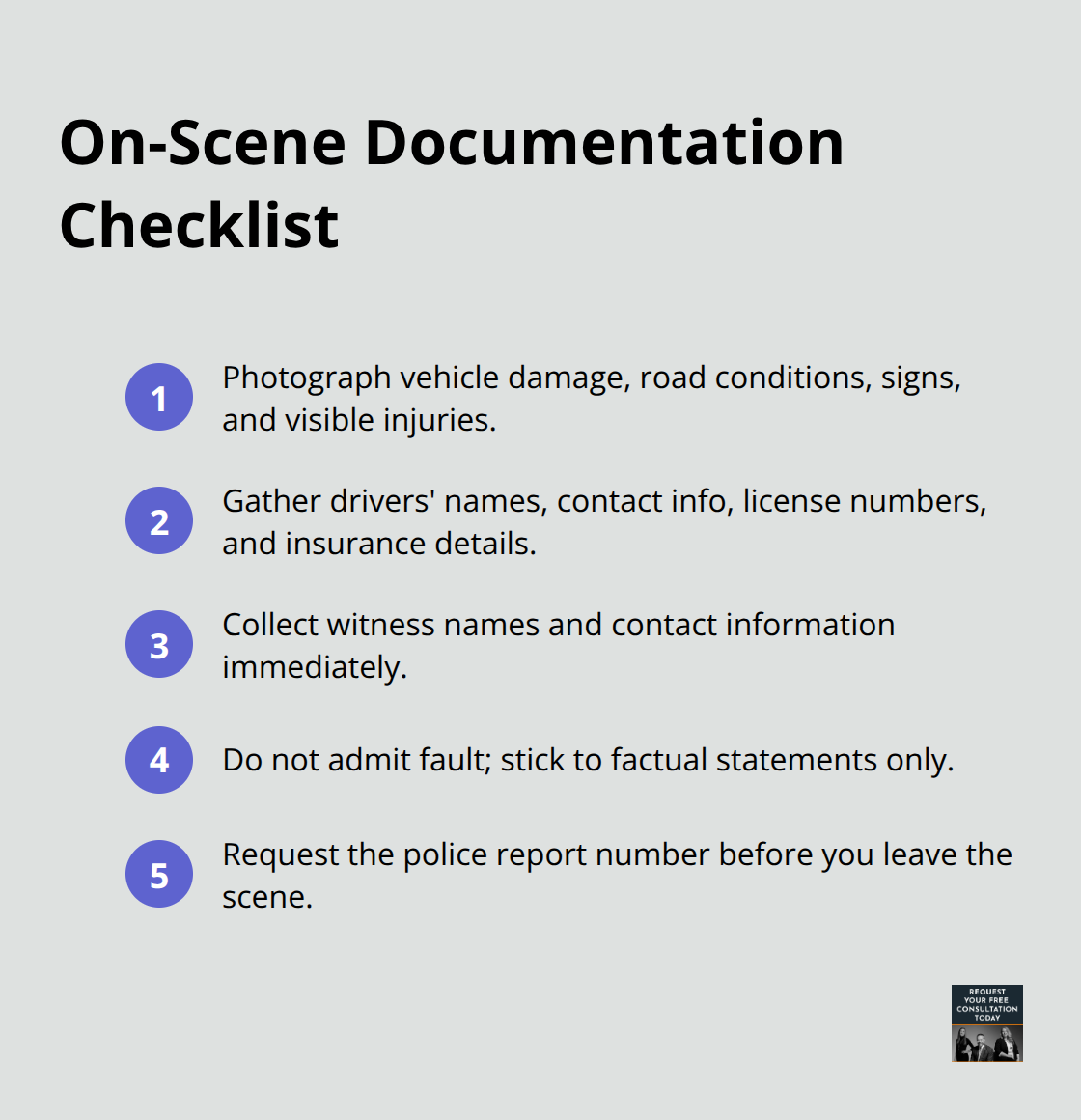
Request the police report number so you can obtain a copy for your records.
Notify Your Insurer and Seek Medical Care
Notify your insurance company within 24 hours with the details you gathered. The insurer may request a recorded statement, and while you’re required to cooperate, you have the right to take time and provide a written statement instead of speaking immediately. Seek medical attention within the first few days even if you feel fine, because some injuries like whiplash or internal injuries appear hours or days after impact. A medical record created promptly strengthens your claim and documents the connection between the crash and your injuries. Keep all receipts, medical records, repair estimates, and communications with insurers in one organized file. This documentation becomes your foundation for fair compensation and prepares you for the next phase of your recovery.
Understanding Your Insurance Coverage and Rights After a Crash
What Your Policy Actually Covers
Your insurance policy is a contract, and most people never read the sections that matter most. The California Department of Insurance states that standard auto policies pay out the lesser of repair costs or your vehicle’s actual cash value at the time of loss. If your car was worth $12,000 before the crash and repairs cost $15,000, you receive $12,000 maximum.
Actual cash value represents what a knowledgeable buyer would pay a willing seller, not what you paid five years ago.
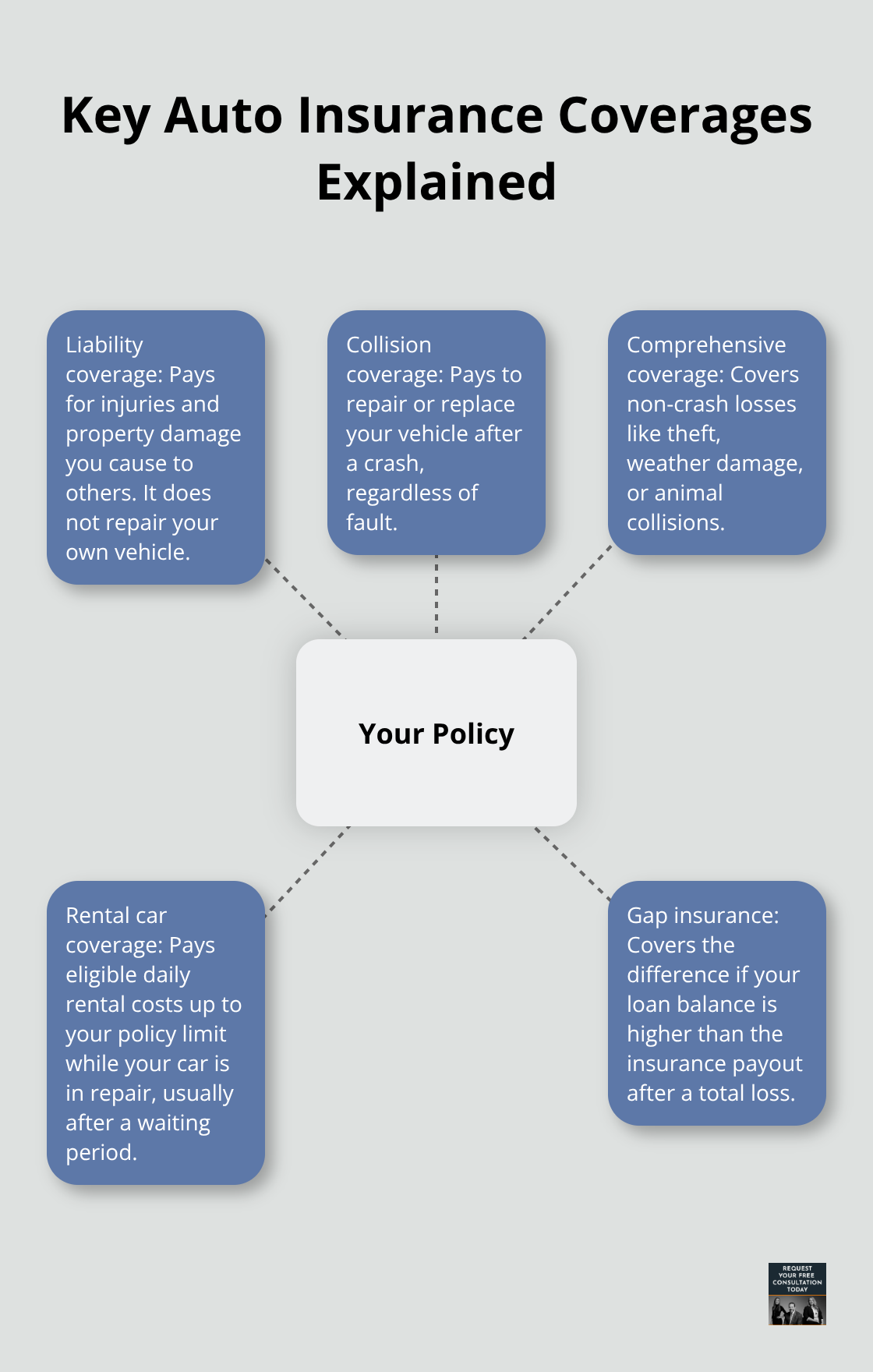
Read your declaration page carefully because it lists your coverage limits, deductibles, and what’s actually included. Many Santa Cruz drivers carry only liability coverage, which pays for damage you cause to others but nothing for your own vehicle. If you financed your car, your lender requires collision coverage, which protects your vehicle regardless of fault. Comprehensive coverage handles theft, weather, and animal collisions. Rental car coverage kicks in after a waiting period and pays eligible daily rental costs up to your policy limit while your vehicle undergoes repairs. If your loan balance exceeds the insurance payout, gap insurance protects you from owing the difference-a situation that occurs more often than people realize.
How Fault Determination Works in California
Fault determination in California follows pure comparative negligence rules, meaning you can recover compensation even if you’re partially at fault. Your percentage of fault simply reduces your recovery proportionally. The other driver’s insurer will investigate the crash using police reports, photos, witness statements, and accident reconstruction if needed. Insurance adjusters may push for statements at the scene or demand recorded statements early, but you have the right to provide written statements instead and take time to gather facts.
If you disagree with a settlement offer or damage assessment, California law provides an appraisal process where two appraisers evaluate the dispute, and if they can’t agree, a neutral umpire makes the final binding decision. Each side pays its own appraisal costs. For property damage claims, the insurer typically sends an adjuster to inspect your vehicle and provide repair estimates. Insurance checks are often issued to you and any lienholder, and if repairs are needed, the repair shop may be named on the check as well.
Why Time Matters for Your Claim
California’s statute of limitations gives you four years to file a personal injury lawsuit from the date of the crash, but waiting that long weakens your position significantly. Evidence degrades, witnesses move away, and memories fade within months. If you’re served with a lawsuit from the other driver, notify your insurer immediately and let them provide legal defense if the claim is covered. The decisions you make in the weeks following your crash-about medical treatment, documentation, and legal representation-shape the strength of your claim far more than the four-year deadline suggests.
Consulting with a legal team before accepting any settlement offer protects your interests, especially if injuries are involved or fault is disputed. A lawyer reviews proposed offers carefully and explains the pros and cons so your decisions align with your long-term recovery, not pressure from insurers. The team at Schaar & Silva LLP can assist in evaluating the extent of property damage and help ensure you receive fair valuation for your loss while you focus on healing.
Healing and Recovery After Your Crash
Seek Medical Attention Immediately
Medical attention after your crash cannot wait, even if you feel fine. Many injuries appear hours or days later, and treatment delays weaken both your health outcome and your legal claim. The California Department of Insurance emphasizes that a medical record created promptly documents the direct connection between the crash and your injuries, which becomes essential if you pursue compensation. Whiplash, internal bleeding, and soft tissue damage often feel minor at first but develop into serious conditions.
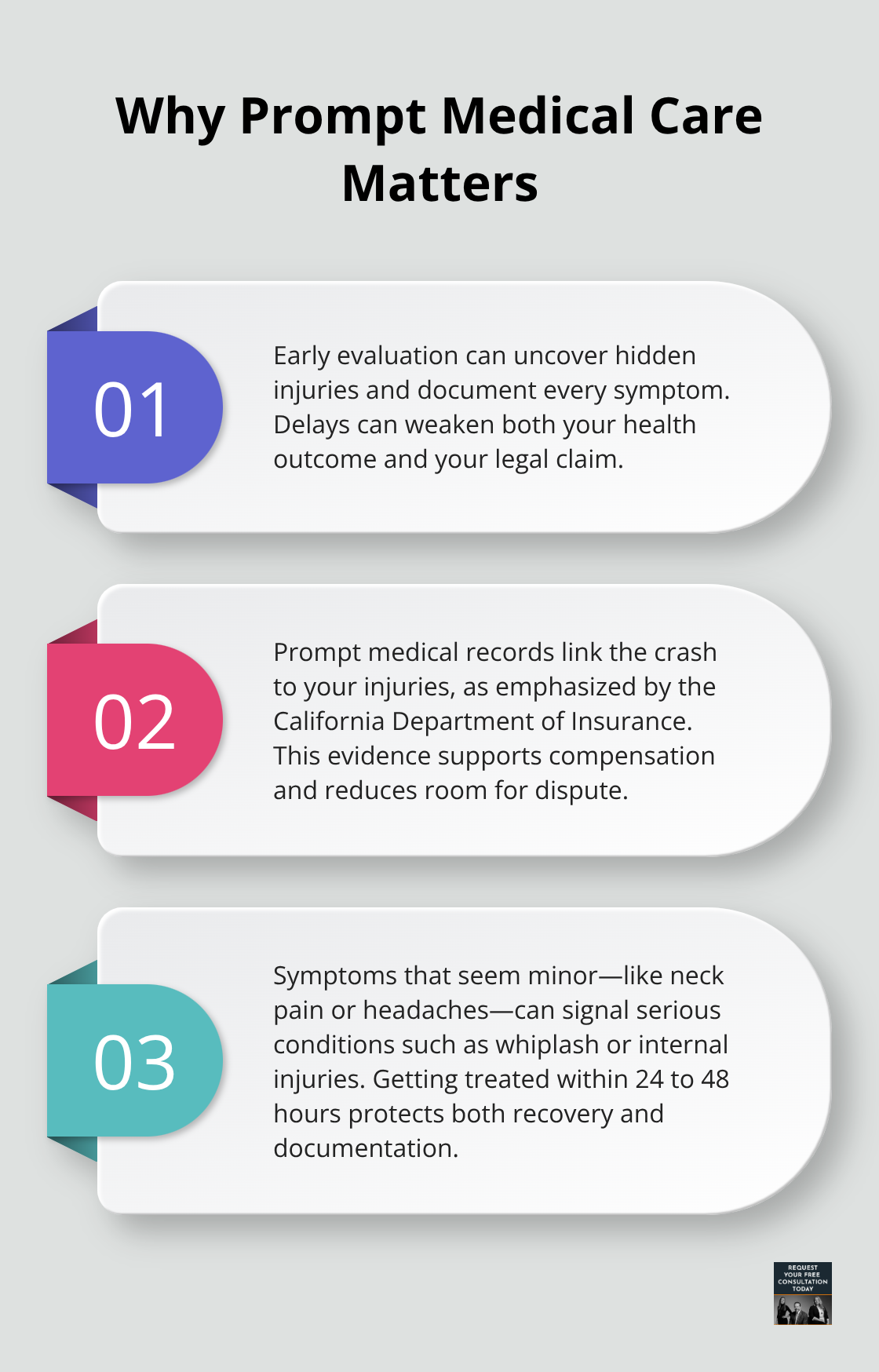
Visit an urgent care clinic or emergency room within 24 to 48 hours of the crash, and tell your doctor about every symptom you experienced, no matter how small. Your doctor’s notes create the foundation for your claim, so mention pain, numbness, headaches, or difficulty sleeping. Keep every receipt, medical report, and prescription record in your organized file. If medical bills create financial pressure while your case is pending, Schaar & Silva LLP can direct you to medical lien services that facilitate payment of your bills until your case resolves, allowing you to focus on healing rather than immediate payment pressure.
Document Property Damage with Professional Estimates
Request written repair estimates from at least two independent repair shops in Santa Cruz, not just the insurer’s preferred vendor. The California Department of Insurance states that insurance checks go to you, any lienholder, and potentially the repair shop itself, but understanding the valuation process protects you from accepting lowball offers. If the insurer’s damage assessment seems inaccurate or incomplete, request a second inspection and document any hidden damage a professional mechanic finds.
Track every expense related to the crash: rental car costs, transportation to medical appointments, wages lost while recovering, and even childcare expenses if injuries prevented you from working. Insurance adjusters often push for quick settlements before you fully understand your losses, so compile a complete accounting of both current and anticipated future expenses before accepting any offer.
Understand Vehicle Valuation and Appraisal Rights
If your vehicle is totaled, the insurer calculates actual cash value based on comparable vehicles sold recently in your area, not what you originally paid. Disagreeing with the valuation triggers California’s appraisal process, where each side presents evidence and a neutral umpire makes the binding decision if the two appraisers cannot agree. Each side pays its own appraisal costs, and this process protects you from accepting unfair valuations without recourse.
Schaar & Silva LLP assists in evaluating the extent of property damage and helps you receive fair valuation for your loss while you focus on healing.
Taking Control of Your Recovery
Insurance companies operate with financial incentives that don’t always align with your best interests after a Santa Cruz car crash. Adjusters trained to minimize payouts contact you early, settlement offers arrive before you understand your full losses, and complex legal questions about fault and coverage create confusion. When you work with Schaar & Silva LLP, you gain advocates who handle communications with insurers so you can focus on healing instead of navigating the claims process alone.
Settlement negotiations require knowing your claim’s true value, and medical bills, lost wages, vehicle repairs, and pain and suffering add up quickly. Many people accept first offers without realizing they’ve left thousands on the table, but we at Schaar & Silva LLP review proposed offers carefully and explain the pros and cons so your decisions align with your long-term recovery. If the insurer’s valuation of your vehicle seems unfair, we guide you through California’s appraisal process where a neutral umpire makes binding decisions.
Beyond property damage, a legal team connects you with medical lien services that facilitate payment of your bills until your case resolves, removing financial pressure while you recover. The decisions you make in the weeks following your Santa Cruz car crash determine whether you receive fair compensation or settle for less than you deserve. Taking control of your recovery means getting professional guidance before accepting any settlement offer.
