
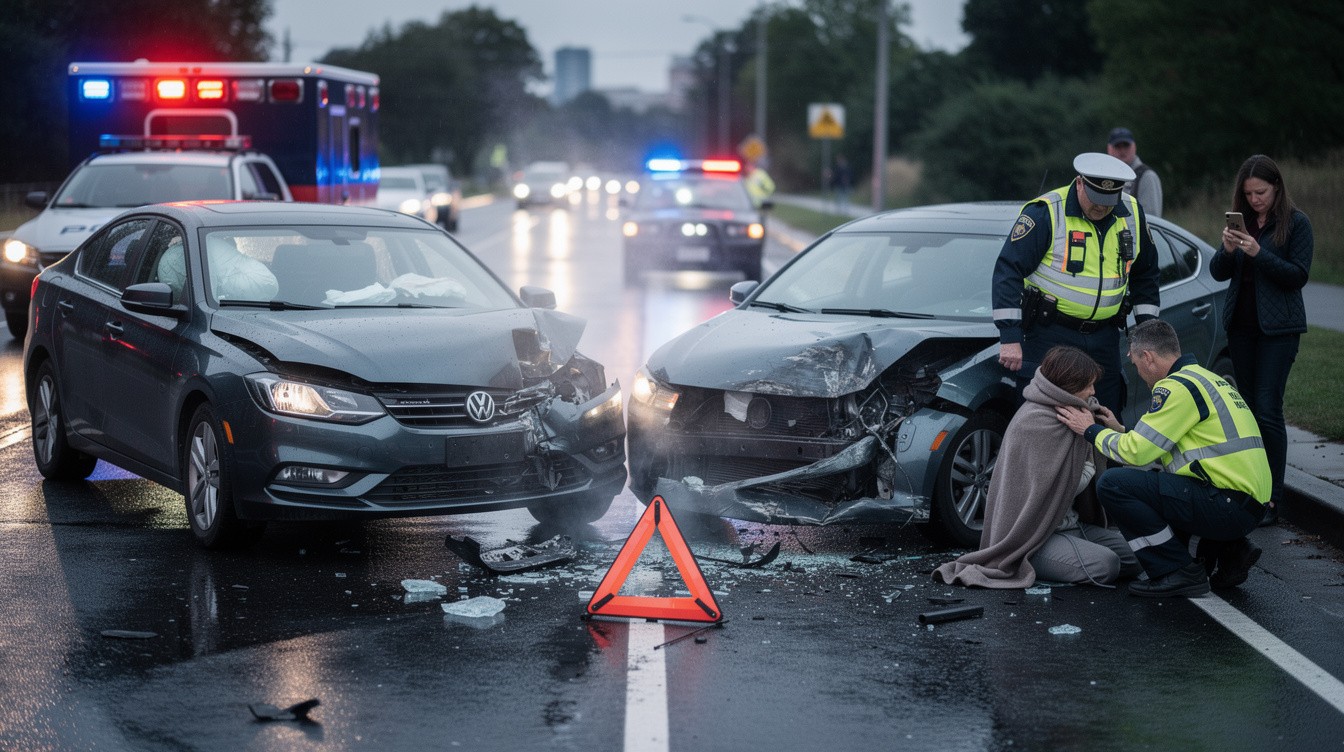
A motor vehicle collision can happen in seconds, but the decisions you make immediately after can affect your health, finances, and legal standing for months or years.
We at Schaar & Silva LLP have helped hundreds of people in California navigate the aftermath of crashes, and we know that most people don’t know where to start. This guide walks you through the essential steps to protect yourself right after impact and beyond.
What To Do Immediately After Impact
Verify Safety and Call for Help
Your first 15 minutes at the crash scene determine whether you protect yourself legally and physically. The National Safety Council reports that in 2024, fatal crashes peaked between 4 p.m. and midnight, with Saturday showing the highest frequency. After impact, verify that you and all passengers are uninjured, then check on others involved. If anyone shows signs of injury-neck pain, dizziness, chest discomfort, or loss of consciousness-call 911 immediately. Do not move an injured person unless the vehicle is on fire or in immediate danger from traffic. Police will arrive and file an official report, which you’ll need for your insurance claim and any future legal action.
Move Vehicles Out of Traffic
If the crash is minor, no injuries occurred, and both vehicles are drivable, move them out of traffic and turn on hazard lights to warn oncoming drivers. Position your vehicle away from the roadway if possible. If you cannot move the vehicles safely, stay inside with seatbelts fastened and wait for emergency responders.
Document the Scene Thoroughly
Take pictures from multiple angles showing vehicle damage, the accident location, road conditions, traffic signals, and any visible injuries. Photograph the other driver’s license plate, driver’s license, and insurance card directly. This visual record protects your claim later.
Collect Critical Information
Get the other driver’s full name, address, phone number, email, vehicle make and model, license plate number, driver’s license number, and insurance policy number exactly as it appears on their proof of insurance card. Ask for their insurer’s name and policy number-this information is critical when filing your claim. If witnesses are present, collect their full names, phone numbers, and email addresses immediately; witnesses often disappear, and their statements can prove invaluable later. Avoid admitting fault or signing any statements at the scene.
Report to Your Insurer and the DMV
Contact your insurance company within 24 hours. California law requires you to report accidents causing injury or damage exceeding $750 to the DMV within 10 days, according to the California Department of Motor Vehicles. Failure to report can result in license suspension. Provide your insurer with the police report number, photos, witness contacts, and a clear account of what happened.
Once you’ve secured the scene and gathered evidence, understanding what happens next with your insurance claim and potential legal obligations becomes your focus.
Securing Your Evidence Before It Disappears
Record Insurance Details Accurately
The window to gather solid evidence closes fast. Within hours of a crash, skid marks fade, witnesses scatter, and memories become unreliable. Your job is to act methodically during those critical first moments when details are fresh and accessible. Record the other driver’s insurance information word-for-word from their physical insurance card, not from what they tell you verbally. Write down their policy number, insurer name, coverage limits if visible, and expiration date. Many claims get delayed or denied because drivers misremember policy numbers or insurer names. Take a photo of their driver’s license showing their full name, address, and license number. Photograph their vehicle registration as well. Ask directly if they have medical coverage and uninsured motorist protection, as this affects how claims proceed.
Collect Contact Information Thoroughly
Get their cell phone number and email address, not just their home phone, since cell contact is faster and more reliable. If the other driver becomes hostile or refuses to provide information, do not escalate the situation. Instead, wait for police and let them extract the details for the official report. The California Department of Insurance emphasizes that complete contact information prevents delays when your insurer needs to reach the other party during the investigation process.
Gather Witness Statements While They’re Present
Witness statements carry enormous weight in determining fault, yet most accident victims never collect them. Approach witnesses while they are still at the scene and ask if they saw what happened. Get their full name, phone number, email, and home address. Ask what they observed about vehicle speeds, traffic signals, and how the collision occurred. Do not coach them or suggest what you think happened; let them describe events in their own words.
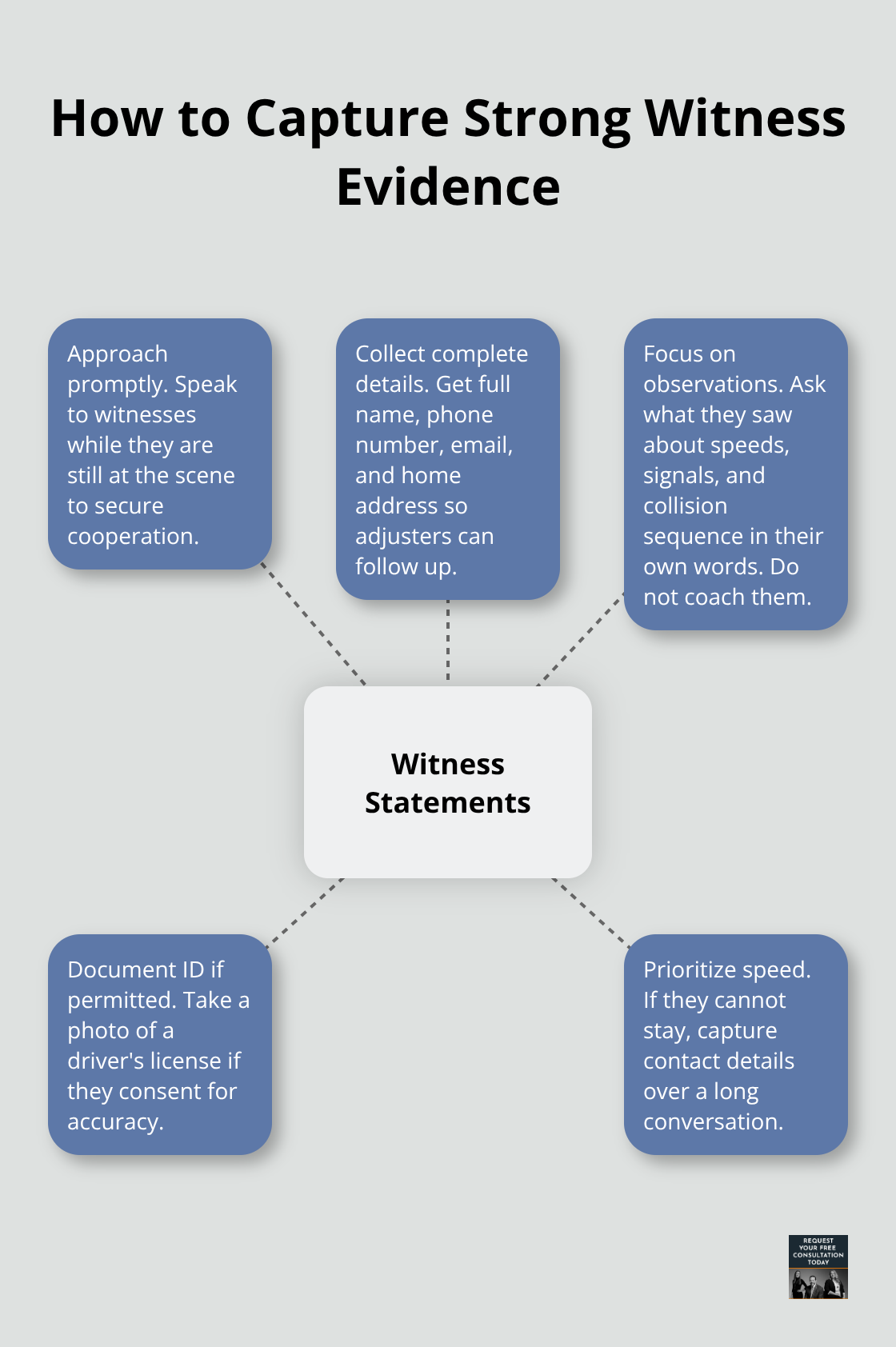
Take a photo of their driver’s license if they consent. Many witnesses feel uncomfortable staying at the scene, so prioritize getting their contact details over a lengthy conversation.
Report Witness Information to Your Insurer
After you leave the scene, call your insurance company within 24 hours with all witness names and numbers so their adjuster can contact them while memories remain sharp. Your insurer will assign a claims representative who will guide you through the next steps and may conduct recorded statements or request an examination under oath as part of their investigation, according to the California Department of Insurance. The speed at which you provide this information directly impacts how thoroughly your claim gets investigated and how quickly your case moves forward.
When You Need a Lawyer and How to Protect Your Rights
Recognize When Legal Help Becomes Essential
After a crash, many people assume their insurance company will handle everything fairly. That assumption often costs them thousands of dollars. The California Department of Insurance reports that insurers must acknowledge claims within 15 days, investigate within 15 days, decide within 40 days, and pay within 30 days of settlement. But speed doesn’t equal fairness. Your insurer’s goal is to minimize payouts, not maximize your recovery. Contact an attorney immediately if the other driver was clearly at fault, injuries appeared days or weeks after impact, medical bills exceed $5,000, or the insurer denies your claim.
Understand How Liability Gets Determined
Liability determination happens through several channels: police reports establish initial fault findings, witness statements corroborate your version of events, and damage patterns reveal impact direction and vehicle speeds. Don’t rely solely on the police report’s fault determination; it’s not binding on insurance companies or courts. Photograph vehicle damage patterns carefully, as insurance adjusters use these images to reconstruct how the collision occurred. The California Department of Insurance allows for an appraisal process if you and your insurer disagree on the vehicle’s actual cash value or repair costs. Both parties select appraisers, and if they disagree, an umpire makes a binding decision. Each side pays its own appraiser, and umpire costs are split equally. This process typically takes 30 to 60 days.
Document Medical Treatment and Expenses Meticulously
Document every medical visit, prescription, therapy session, and expense related to the crash from day one. Insurance companies scrutinize gaps in treatment; if you stop seeing doctors for two months then suddenly resume, adjusters will argue your injuries weren’t serious. Keep receipts for medications, medical equipment, transportation to appointments, and any lost wages. Your medical records become your strongest evidence of injury severity and ongoing treatment necessity. When injuries mount or claims face denial, legal representation can help Santa Cruz County residents navigate property damage claims and connect them with medical lien services so you can receive treatment without waiting for your case to settle.
Final Thoughts
The steps you take in the first hours after a motor vehicle collision determine whether your recovery stays on track or derails into months of frustration. Verify safety, call 911 if needed, move vehicles to safety, photograph everything, and collect detailed information from the other driver and witnesses. Report to your insurer within 24 hours to establish your claim foundation.
Beyond the immediate scene, you must maintain meticulous records of every medical appointment, prescription, and expense tied to the crash. Insurance companies pay close attention to consistency; gaps in treatment weaken your position and give adjusters reasons to question injury severity. Track lost wages and transportation costs with the same care you document medical visits.
If injuries are significant, the other driver was clearly at fault, or your insurer denies your claim, legal guidance becomes essential rather than optional. We at Schaar & Silva LLP help Santa Cruz County residents evaluate property damage claims and connect with medical lien services so treatment doesn’t wait for settlement. Contact us today to discuss your situation and learn how we can handle the legal complexities while you focus on healing.
