

A car accident changes more than just your body. The emotional aftermath can linger long after physical injuries heal, affecting your sleep, relationships, and daily life.
We at Schaar & Silva LLP understand that emotional recovery after a crash is just as real as any broken bone. This guide walks you through recognizing what you’re feeling, building a recovery mindset, and finding the right support in Santa Cruz County.
Recognizing Emotional Trauma After a Car Accident
Physical Injuries Often Overshadow Psychological Impact
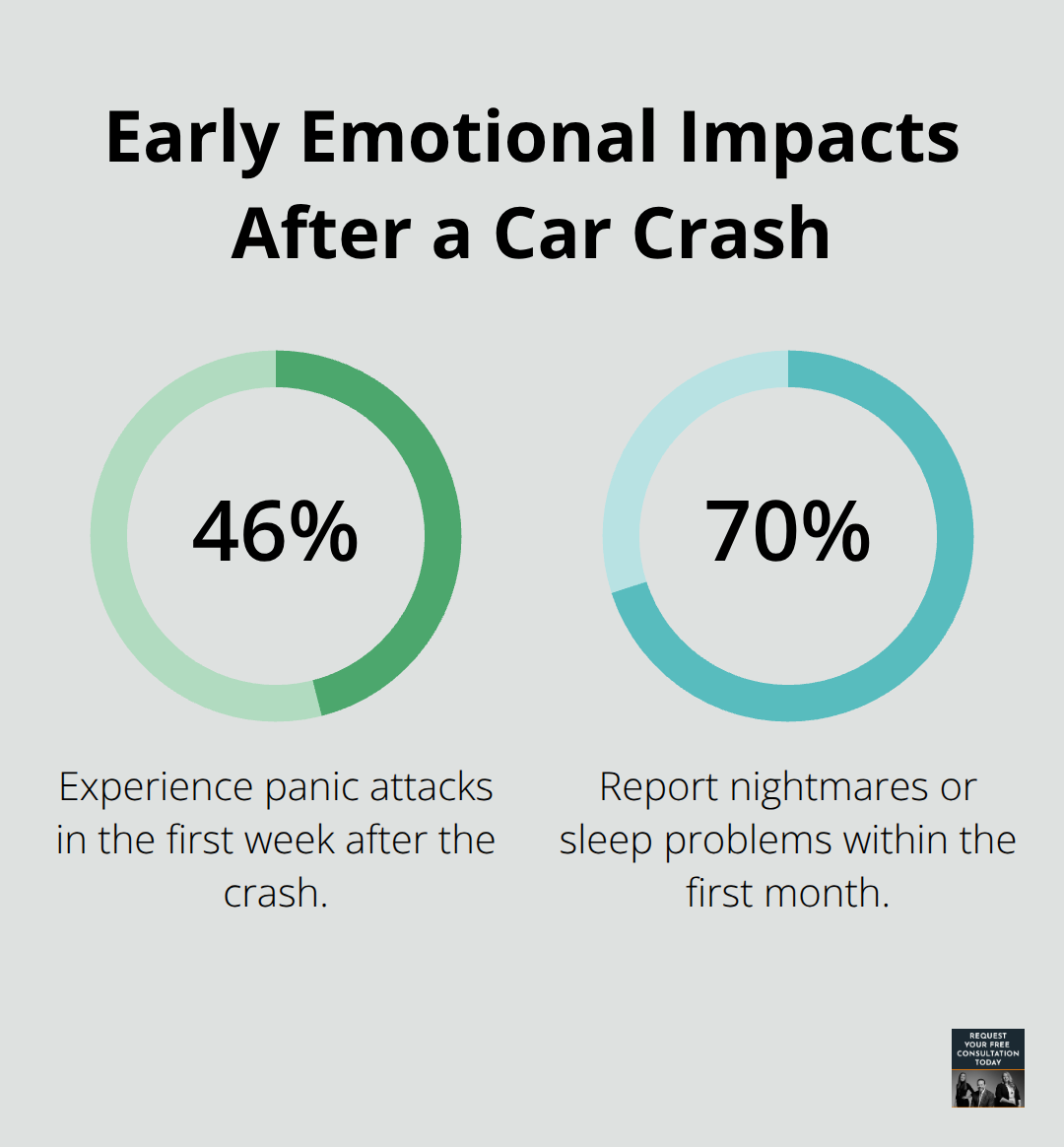
Your body floods with adrenaline and cortisol within seconds of impact, triggering immediate physical and emotional reactions according to the National Institute of Mental Health. This stress response is normal, but what follows often surprises people. While broken bones and lacerations demand attention in the emergency room, your nervous system continues firing distress signals long after you leave the hospital. About 46% of crash survivors experience panic attacks in the first week, according to the American Psychological Association. Within the first month, roughly 70% report nightmares or sleep problems.
Yet most people focus entirely on physical recovery, missing the emotional warning signs that need treatment just as much as any fracture. The truth is that emotional trauma after a crash isn’t weakness or oversensitivity-it’s a measurable physiological response that derails healing when left untouched. Persistent physical pain six to eight weeks after a crash strongly predicts greater depression severity about two months later, per research in the Journal of Clinical Medicine. Longer hospital stays beyond seven days correlate with higher depression at the two-month mark. Your mind and body are connected; neglecting one sabotages the other.
Common Emotional Responses in the Weeks Following a Crash
Emotional symptoms often arrive on a delayed timeline, which catches most people off guard. You might feel numb or emotionally disconnected for days or weeks as your brain protects itself from overwhelm. Then, without warning, intrusive memories, flashbacks, or panic responses emerge. Within six months, about 39.2% of survivors develop anxiety disorders and 17.4% develop depression. About 32.3% develop PTSD, with women at roughly 2.5 times higher risk than men.
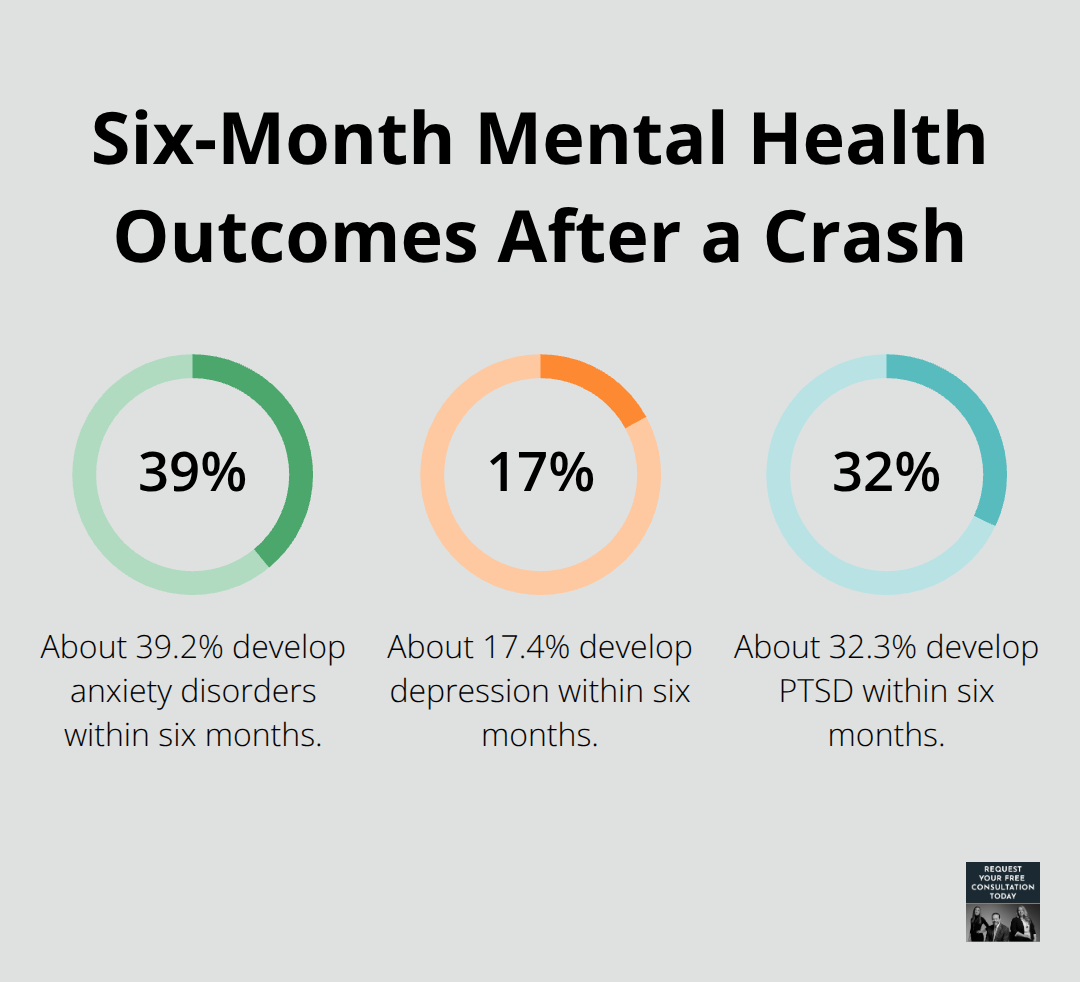
These numbers matter because they tell you that what you’re experiencing is common, measurable, and treatable. Avoidance behaviors emerge in about 39.2% of survivors within six months-steering clear of driving certain routes, avoiding highways, or refusing to sit in a passenger seat. Concentration problems plague roughly 70% of those who develop depression.
Why Delayed Emotional Symptoms Are More Common Than You Think
The longer you wait to address these symptoms, the harder they become to reverse. Early intervention is the difference between a few months of struggle and years of ongoing distress. Starting treatment within four to six weeks of a crash dramatically improves outcomes and helps prevent chronic emotional distress from taking root. This is why recognizing what’s happening to you right now matters so much-your next step determines whether recovery takes months or years. Understanding your emotional response is the foundation for building the mindset that supports healing.
Building a Recovery Mindset After Your Accident
Accepting Your Experience Without Judgment
Your emotional response after a crash is not a character flaw that you need to overcome through willpower alone. The research is clear: accepting what happened to you without shame or judgment is the first step toward actual healing. Many crash survivors spend weeks or months fighting their own feelings, telling themselves they should be over it by now or that they’re overreacting. This internal resistance prolongs recovery.
Instead, treat your emotional symptoms with the same seriousness you’d give a physical injury. Your nervous system responded exactly as it was designed to respond-by activating survival mode. That response kept you alive. Now your job is to help your system return to baseline, not to punish yourself for having normal reactions to an abnormal event.
Setting Realistic Goals for Your Healing Journey
Concrete goals for recovery work better than vague hopes of feeling better someday. Rather than saying you want to get your life back to normal, identify specific behaviors you want to reclaim. If you stopped driving on highways, your first goal might be driving on a familiar highway with a trusted passenger within six weeks. If sleep problems plague you, the goal is seven consecutive nights of six hours or more within two months.
These measurable targets give your brain something to work toward and let you celebrate actual progress. Cognitive behavioral therapy delivered over twelve sessions produces about 85% improvement for travel-related phobias-not because the therapy erases fear, but because it teaches your nervous system that the feared situation is actually safe. Your goals should follow this pattern: specific, time-bound, and progressively challenging. Write them down. Share them with someone you trust. When you hit one, move to the next. This structure replaces the chaos of unpredictable symptoms with a pathway forward.
Creating Daily Routines That Support Mental Stability
Daily routines anchor mental stability after trauma disrupts everything. Your sleep schedule, meal times, and movement patterns became irregular after the crash because your nervous system is still in alert mode. Reinstating structure signals to your brain that safety has returned.
Set a consistent wake time and bedtime, even on weekends. Eat three meals at regular times. Move your body for at least twenty minutes daily-walking counts, and it costs nothing. These actions might feel mechanical at first, but they directly combat the neurological chaos that trauma creates. If intrusive thoughts or nightmares wake you at night, a short walk or brief breathing exercise helps reset your system better than lying in bed fighting the anxiety.
Schedule therapy or counseling appointments like you would a medical procedure-non-negotiable, on your calendar, and treated as seriously as any other health commitment. Santa Cruz County Behavioral Health Division offers services through their 24-Hour Access Line at 831-454-4170, with locations at 1400 Emeline Ave in Santa Cruz and 1430 Freedom Blvd in Watsonville. If cost is a barrier, they use sliding-scale fees based on income.
Pair this structure with one meaningful activity you actually enjoy-not something you think you should do, but something that genuinely interests you. This becomes your anchor during difficult weeks when recovery feels stalled. The combination of routine, professional support, and personal connection creates the foundation you need to move into the next phase of your recovery, where you’ll learn what resources and support networks exist specifically for accident survivors in Santa Cruz County.
Local Mental Health Support in Santa Cruz County
Accessing Care Through Santa Cruz County Services
The Santa Cruz County Behavioral Health Division operates a 24-Hour Access Line at 831-454-4170 with two physical locations: 1400 Emeline Ave in Santa Cruz and 1430 Freedom Blvd in Watsonville. This service provides direct assessments rather than referrals to other providers. Call during business hours and you’ll receive an appointment within one to two weeks. Crisis situations route to the Mobile Crisis Response Team, which arrives at your location within hours. Hearing-impaired individuals can reach services by dialing 711. The division uses the Adult Needs and Strengths Assessment to match your specific symptoms with appropriate treatment, preventing wasted time in therapy approaches that don’t fit your situation.
Finding Trauma-Informed Therapists
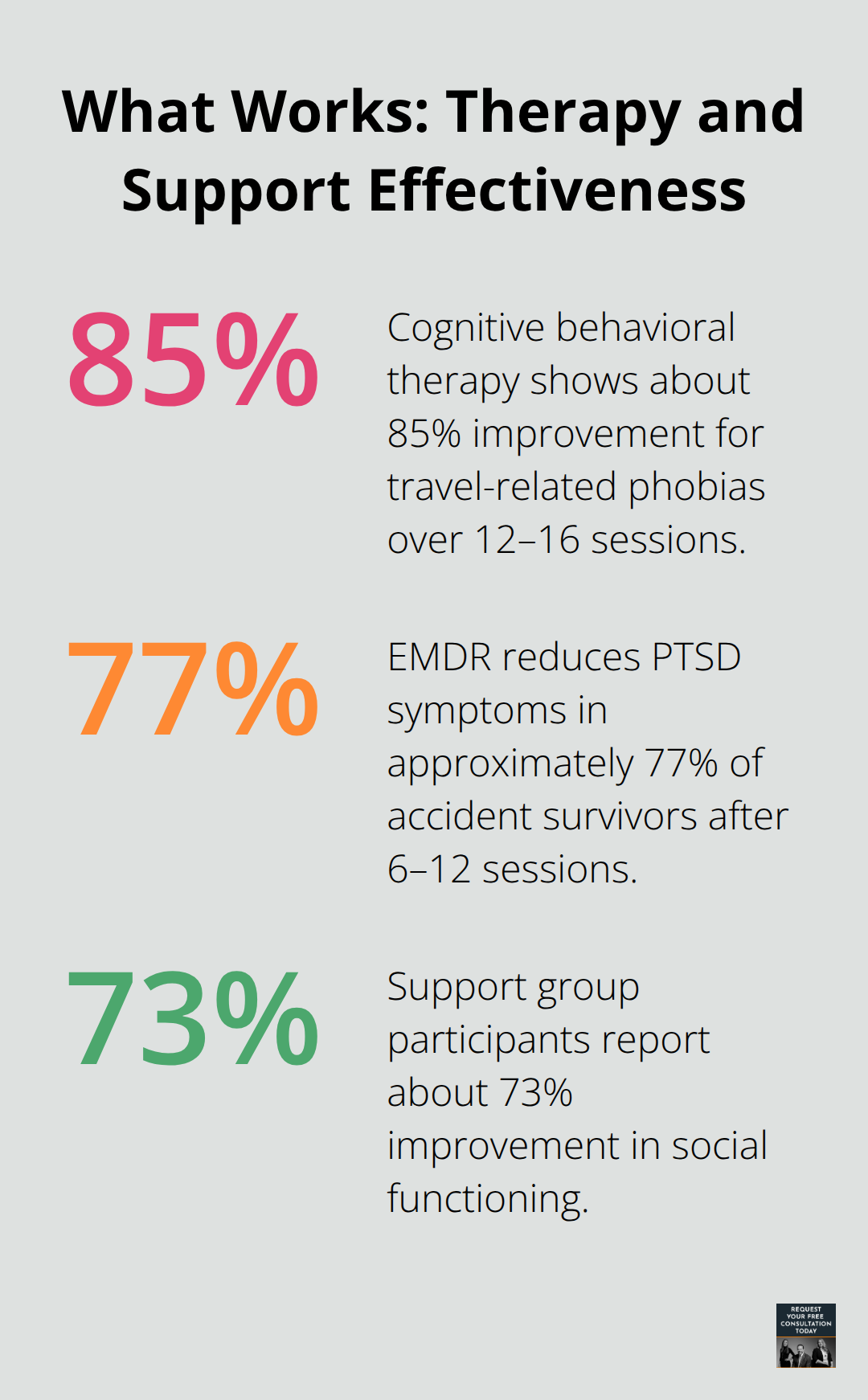
Major insurers in the area-Aetna, Cigna, Anthem, UnitedHealthcare, Blue Shield, and Medi-Cal-cover therapy sessions, typically ranging from six to twenty sessions annually with copays around twenty to fifty dollars per visit. More than five hundred trauma and PTSD therapists practice in Santa Cruz County according to Psychology Today listings. Filter by credentials like LMFT, PsyD, PhD, or LCSW to identify professionals trained specifically in accident-related trauma. Cognitive behavioral therapy produces about eighty-five percent improvement for travel-related phobias over twelve to sixteen sessions, while EMDR therapy reduces PTSD symptoms in approximately seventy-seven percent of accident survivors after six to twelve sessions.
Support Groups That Accelerate Recovery
Support groups often outperform individual therapy alone for sustained recovery. Mothers Against Drunk Driving operates Santa Cruz County chapters offering peer support, with participants reporting about seventy-three percent improvement in social functioning and forty-five percent better treatment compliance compared to isolated recovery. Kaiser Permanente hosts local accident survivor groups, UC Davis Hospice runs six-week trauma programs, and the Brain Injury Association of California provides advocacy and rehabilitation resources if you sustained head injuries. Local hospitals frequently host survivor support groups-contact your hospital’s emergency department to learn about ongoing programs in your area.
Managing Costs and Documentation
If cost becomes a barrier, the Legal Aid Foundation of Los Angeles, Neighborhood Legal Services of LA County, and Santa Cruz County community mental health centers offer sliding-scale fees based on income. Document every therapy session and related expenses because treatment costs are recoverable as damages in your claim. Medical lien services can cover therapy bills during your case, removing the immediate financial pressure that often prevents people from seeking care they desperately need.
Final Thoughts
Emotional recovery after a crash unfolds in small, measurable moments rather than dramatic breakthroughs. You’ll notice improvement when you sleep through the night without nightmares, drive past the accident location without panic, or sit in traffic without your chest tightening. Track these shifts in a journal so you can see the pattern when doubt creeps in during harder weeks.
Your experience becomes part of your story, not the entirety of it. Many survivors find that integrating what happened-rather than trying to erase it-allows them to move forward with genuine peace. Therapy approaches like cognitive processing therapy help you reframe the crash’s meaning over about twelve sessions, shifting from victim narrative to survivor narrative, and we at Schaar & Silva LLP can connect you with trauma-informed professionals who understand accident recovery in Santa Cruz County.
Taking control of your recovery means making decisions that serve your healing, not decisions based on what others expect. If group support feels right, join a local group through Kaiser Permanente or the Brain Injury Association of California. If individual therapy works better, commit to that instead, and if you need legal support to remove financial stress blocking your healing, that’s a legitimate part of recovery too-call us for a free consultation to discuss how we can support both your emotional and legal recovery.
