
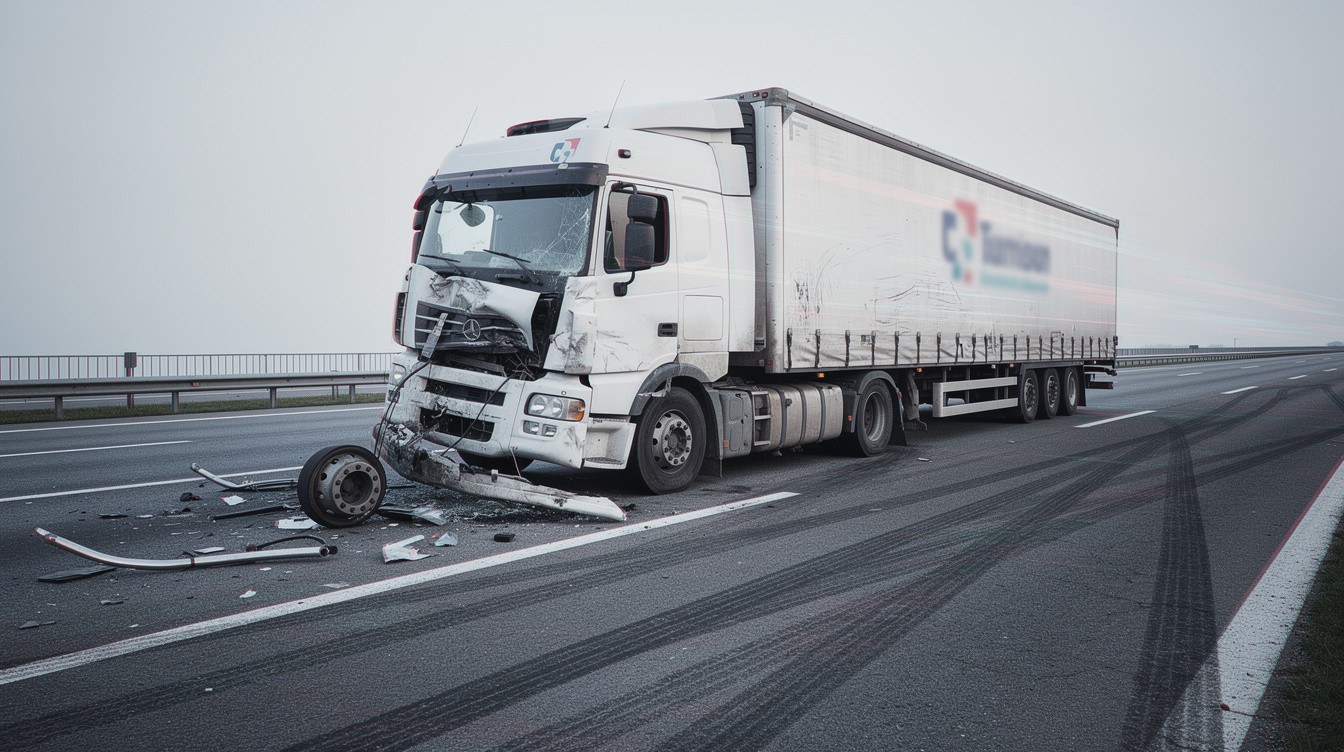
A commercial truck accident can leave you facing serious injuries, mounting medical bills, and uncertainty about what comes next. The stakes are high when large trucks are involved, and the legal process can feel overwhelming.
We at Schaar & Silva LLP have helped countless people in Santa Cruz County, Sacramento, and Oakland navigate these complex cases. This guide walks you through what to expect, from the immediate aftermath to settlement negotiations.
What to Do Right After a Truck Accident
Secure the Scene and Collect Evidence
The first hours after a commercial truck accident are critical. Your actions during this window directly affect the strength of your case and your ability to recover damages. Move to safety if possible, then prioritize evidence collection before the scene changes. Photograph the truck from multiple angles, capturing license plates, company markings, and any visible damage. Take photos of the road conditions, traffic signals, and your vehicle’s damage.
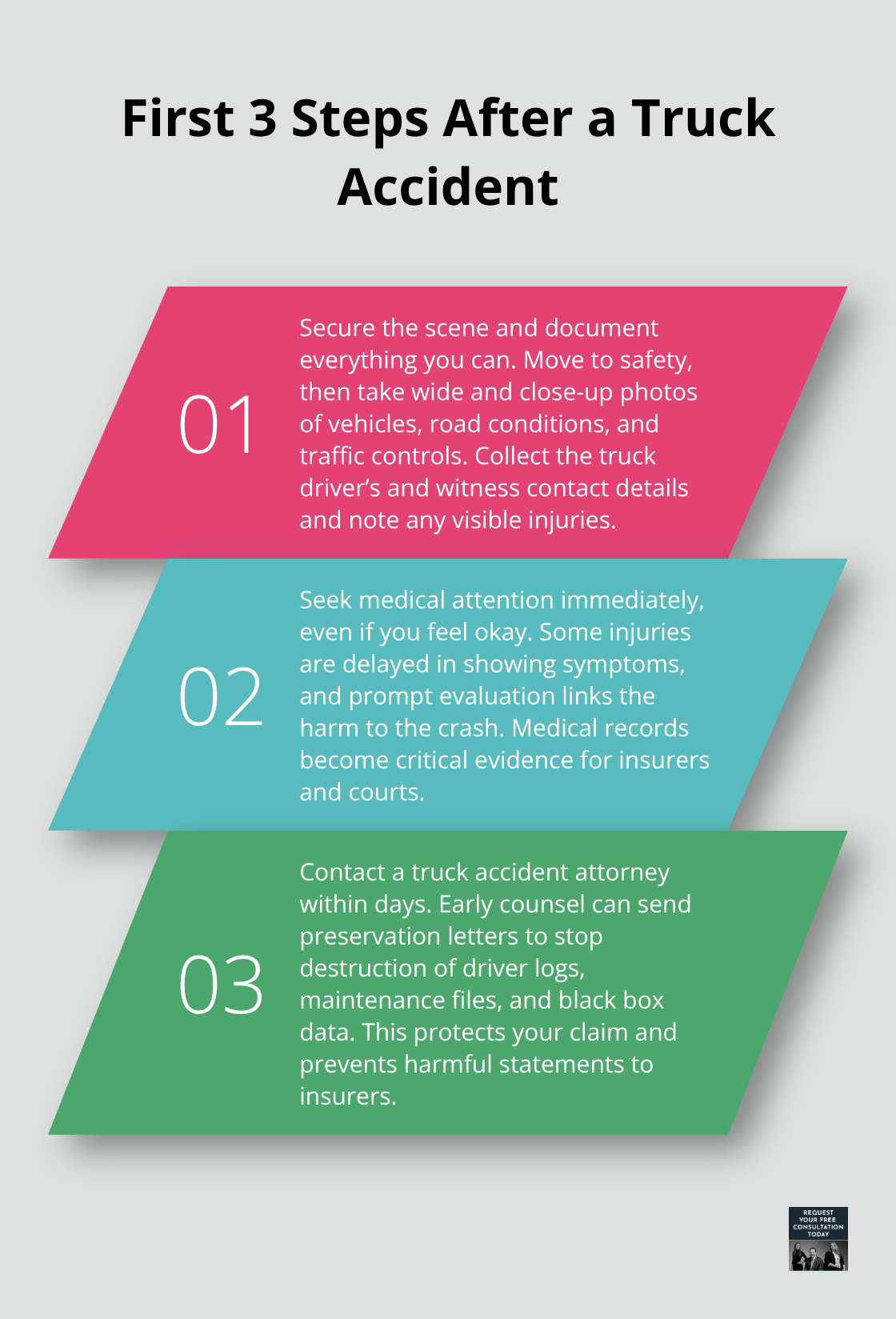
Obtain the truck driver’s name, phone number, and company information. Ask witnesses for their contact details and what they saw. If police arrive, obtain the report number and officer’s name. Request the truck’s Electronic Logging Device data, which records hours of service violations that often contribute to crashes. This data deteriorates quickly, so early preservation matters.
Seek Medical Attention Immediately
Medical attention must come next, even if you feel fine initially. Head injuries and spinal trauma from truck collisions may not show symptoms immediately. A medical evaluation creates documentation linking your injuries to the accident, which insurers and courts require. Report the accident to the police if you haven’t already. In California, accidents involving commercial trucks should be reported to local law enforcement. Request a copy of the accident report for your records.
Contact an Attorney Within Days
Contact a truck accident attorney within days, not weeks. Early legal representation allows your attorney to send preservation notices to the trucking company, preventing destruction of critical evidence like maintenance records, driver logs, and black box data. The Federal Motor Carrier Safety Administration sets strict maintenance standards that trucking companies often violate, and violations are easier to prove when evidence is fresh.
Your attorney can coordinate with medical providers to establish medical liens, reducing upfront costs while your case proceeds. Insurance adjusters work fast; their goal is settlement at the lowest possible amount. Having legal representation from the start protects your interests and prevents statements that could harm your claim. Insurance companies attempt to minimize payouts or deny claims based on incomplete information gathered immediately after the crash.
Understanding how liability is determined in truck accidents requires knowledge of federal regulations and industry practices that your attorney will investigate next.
Who Holds Responsibility for Your Truck Accident
Driver Negligence and Hours-of-Service Violations
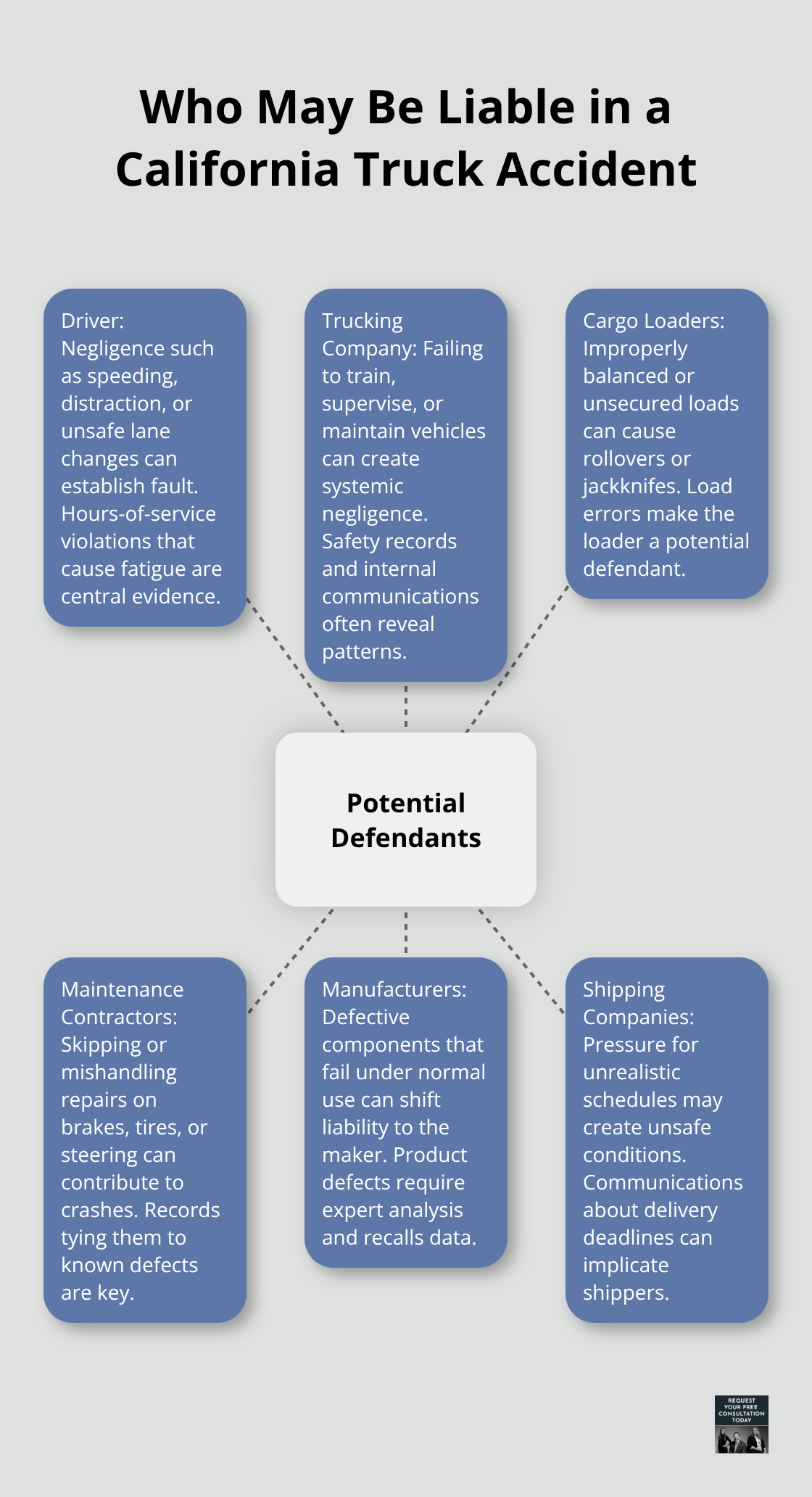
Truck accidents involve multiple parties, and determining who bears liability requires understanding federal regulations and industry practices that often reveal patterns of negligence. The Federal Motor Carrier Safety Administration sets strict standards for driver qualifications, hours of service, vehicle maintenance, and cargo securement, yet violations remain common. When a truck crashes, liability investigation typically examines whether the driver exceeded the 11-hour daily driving limit or the 60-hour weekly limit set by FMCSA rules, since hours-of-service violations directly correlate with fatigue-related accidents. Electronic logging device data, black box recordings, and maintenance records form the foundation of your case.
Driver negligence includes speeding, distracted driving, improper lane changes, and failure to adjust for weather or road conditions. Many crashes occur when drivers face pressure to meet unrealistic delivery schedules, which can indicate the trucking company created unsafe conditions.
Trucking Company Liability and Systemic Failures
Trucking companies bear responsibility when they fail to properly screen, train, or supervise drivers; skip required vehicle inspections; ignore maintenance issues with brakes, tires, or steering; or knowingly allow overloaded or improperly secured cargo. Company safety records, driver complaint logs, and internal communications often reveal systemic failures that courts consider when assigning liability and calculating damages. These patterns demonstrate negligence at the organizational level rather than isolated driver error.
Third-Party Defendants and Multiple Sources of Liability
Beyond the driver and trucking company, third parties frequently share responsibility. Cargo loaders who improperly balance or secure freight can cause rollovers or jackknifes, making them liable for damages. Maintenance contractors who fail to repair known defects, manufacturers of defective truck components, and shipping companies that pressure carriers to cut corners can all be named defendants.
Proving Negligence Under California Law
In California, negligence requires proving four elements: the defendant owed you a duty of care, they breached that duty through violation of FMCSA standards or other unsafe practices, the breach directly caused your accident, and you suffered measurable damages. Multiple liable parties mean multiple sources of compensation. Insurance adjusters typically argue that only the driver bears fault, but thorough investigation often uncovers company-level negligence that substantially increases case value and your recovery.
Understanding liability sets the stage for the next critical phase: how investigators and attorneys collect the evidence needed to prove fault and build your claim.
How Your Truck Accident Claim Moves Forward
Preserving Evidence and Starting Your Investigation
Your case begins the moment your attorney sends preservation notices to the trucking company, cargo loaders, and maintenance contractors. These notices legally require them to retain all evidence, including maintenance records, driver logs, black box data, GPS records, and communications about delivery schedules. Without preservation notices, companies routinely destroy records within weeks. Your attorney coordinates this immediately while investigators photograph the accident scene in detail, interview witnesses while memories remain fresh, and obtain police reports. The investigation phase typically takes two to four months as your legal team requests Electronic Logging Device records from the trucking company, reviews maintenance history to identify whether the truck had known defects in brakes or tires, and analyzes black box data showing speed, braking force, and throttle position before impact. This evidence directly contradicts insurance company claims that driver error alone caused the crash.
When Settlement Discussions Begin
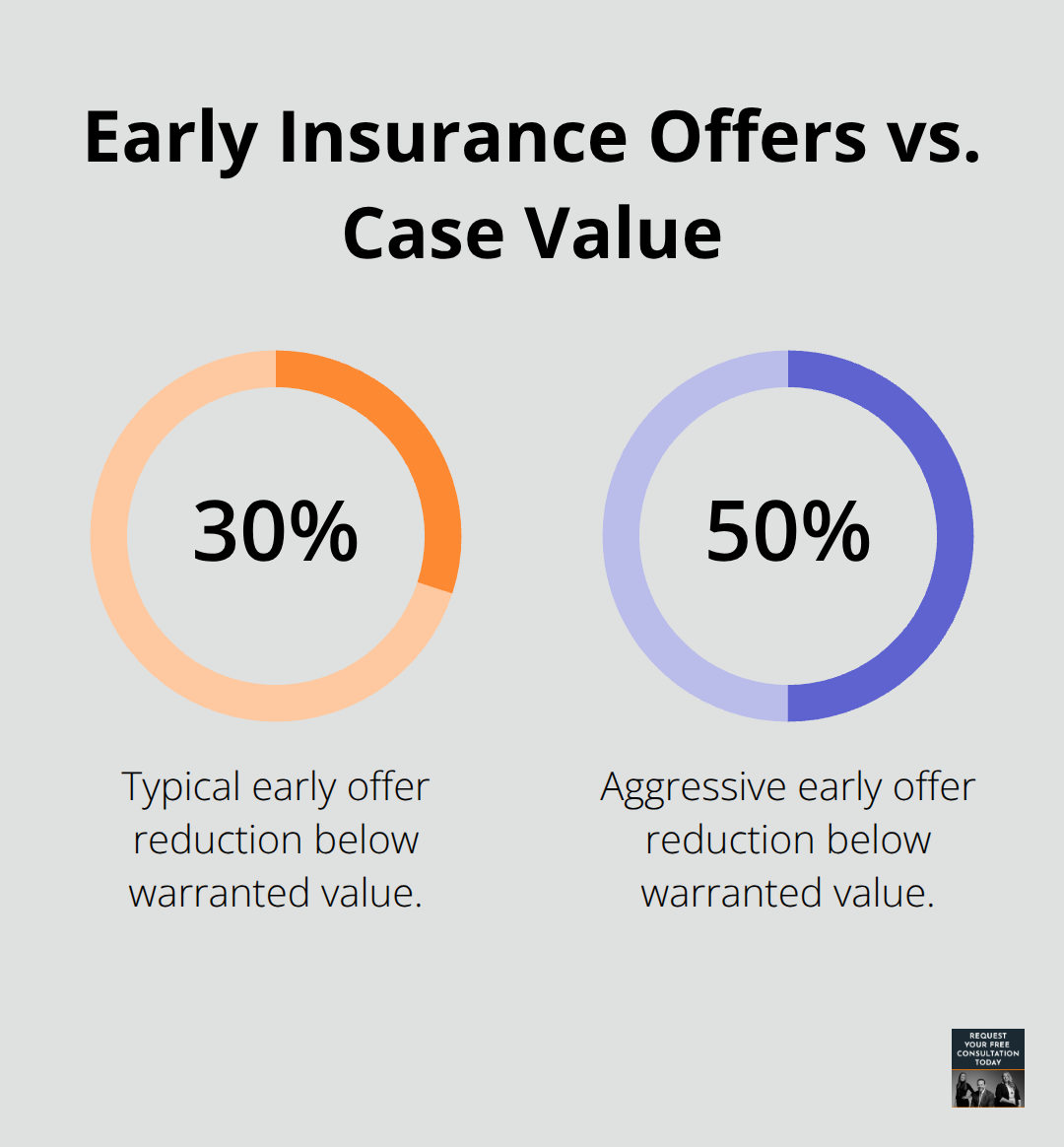
Settlement discussions usually begin once your medical treatment reaches maximum medical improvement, meaning your doctors have determined your condition has stabilized. Insurance adjusters will contact you early with lowball offers, often 30 to 50 percent below what your case actually warrants. Reject early offers without attorney guidance.
California cases involving fully loaded tractor-trailers weighing up to 80,000 pounds typically settle between 200,000 and 2 million dollars depending on injury severity, lost wages, and whether multiple liable parties exist.
Building Your Demand Package
Your attorney presents a demand package showing medical records, wage loss documentation, expert reports on causation, and evidence of regulatory violations. Negotiations usually span two to six months as both sides exchange settlement proposals. If the insurance company refuses reasonable offers, your case proceeds to litigation, adding twelve to thirty-six additional months but often resulting in substantially higher jury awards. Court cases allow juries to hear testimony about the trucking company’s safety failures and systemic negligence that settlement discussions sometimes overlook.
Timeline and Cost Management
The entire process from accident to final resolution typically takes eighteen months to three years, with cases involving catastrophic injuries or multiple defendants extending longer. Your attorney handles all communication with insurance adjusters, meaning you avoid statements that adjusters later use to minimize your claim. Costs are managed through medical liens where providers agree to wait for payment until your case resolves, reducing your out-of-pocket expenses during recovery. Medical lien services (which we at Schaar & Silva LLP can direct you toward) facilitate the payment of your bills until your case reaches resolution, allowing you to focus on healing rather than immediate financial pressure.
Final Thoughts
A commercial truck accident disrupts your life in ways that extend far beyond the initial impact. Medical bills pile up, lost wages accumulate, and the legal process feels distant and complicated. What matters most is understanding that you don’t face this alone, and the decisions you make in the first days after your accident directly shape your recovery and compensation.
Evidence deteriorates quickly, and early action preserves your strongest claims. Photographs fade from memory, witnesses become unreachable, and trucking companies destroy records unless your attorney sends preservation notices to stop this destruction. Federal Motor Carrier Safety Administration violations, maintenance failures, hours-of-service breaches, and improper cargo loading all become provable facts when evidence is secured early. Insurance companies count on victims acting alone and accepting inadequate settlements.
Three concrete steps move you forward. First, gather and organize all medical records, accident reports, photographs, and witness information you’ve collected. Second, stop communicating directly with insurance adjusters and let your attorney handle all negotiations. Third, focus your energy on medical recovery while your legal team investigates liability and builds your case.
