
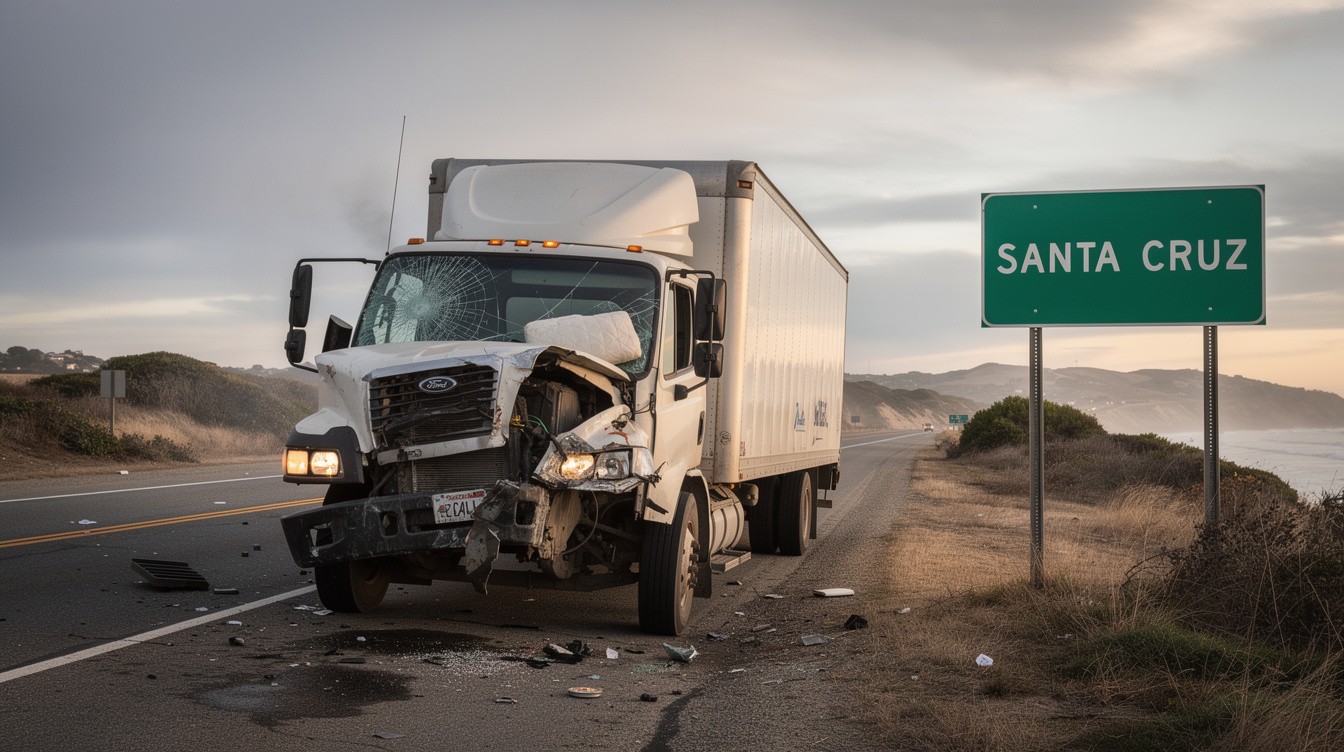
A Santa Cruz truck crash can leave you facing medical bills, lost wages, and uncertainty about what comes next. The aftermath of a truck accident is more complex than a typical car collision because of the size, weight, and commercial regulations involved.
We at Schaar & Silva LLP have helped many victims in Santa Cruz County navigate these situations. This guide walks you through the immediate actions to take, your legal rights, and how to handle the financial side of your recovery.
What to Do Immediately After a Truck Crash
Photograph and Document the Scene
The first hours after a truck crash determine how strong your claim becomes. Most victims make critical mistakes during this window that undermine their case later. Your priority is to gather evidence that proves what happened, not to figure out fault or negotiate with anyone at the scene.
Start by photographing everything from multiple angles. Capture vehicle damage, road conditions, skid marks, traffic signals, and the overall accident scene. If you can safely do so, film a short video walking around the area to capture context. The National Highway Traffic Safety Administration reports that nearly 71% of truck accident claims succeed when documented with scene photos, compared to 38% without visual evidence. Your phone camera is sufficient-you need timestamps and clarity, not professional photography.
If you’re injured and cannot document the scene yourself, ask a passenger, bystander, or arriving paramedic to take photos for you. Request their contact information immediately so you can follow up for the images later. Do not wait until you’re home from the hospital to gather this evidence; the scene changes rapidly with traffic, weather, and cleanup crews.
Record Details While They’re Fresh
Write down the date, time, weather conditions, and any observations about road hazards or visibility while details are fresh. If the truck driver admits fault or explains what happened, note their exact words in your phone notes or voice memo-not paraphrased versions. This contemporaneous record carries significant weight in later negotiations and legal proceedings.
Collect Witness Information
Witness statements carry enormous weight in truck accident claims. Approach people at the scene and ask what they saw. Get their full names, phone numbers, email addresses, and home addresses. Ask specific questions: What was the truck doing before impact? How fast did it appear to be traveling? Did the driver seem distracted or impaired? Write down their answers verbatim.
Police reports cite witness accounts in approximately 62% of documented truck cases in California, according to accident reconstruction data. If witnesses hesitate to stay, take a photo of their driver’s license and vehicle license plate as backup identification.
File a Police Report
Call 911 immediately if there are injuries-this creates an official record with the Santa Cruz Police Department. California law requires reporting any injury accident to local authorities. The police report becomes essential evidence for your claim and insurance negotiations. Request the report number and ask when you can obtain a copy-typically within 10 business days.
Do not discuss fault, liability, or settlement amounts with anyone at the scene except police. Once you’ve completed these immediate steps, understanding how truck accident claims differ from standard car accidents becomes your next focus.
How Truck Accident Claims Differ from Car Accidents
Federal Regulations Create Negligence Per Se
Truck accident claims operate under fundamentally different rules than car collisions, and understanding these distinctions directly impacts how much compensation you receive. The Federal Motor Carrier Safety Administration enforces strict regulations on commercial trucks that don’t apply to passenger vehicles, which means liability investigations become far more complex. Trucks must comply with hours-of-service rules, weight restrictions, maintenance standards, and driver qualification requirements. When a truck driver violates these regulations and causes a crash, it constitutes negligence per se in California, meaning the violation itself proves negligence without requiring additional evidence. This shifts the burden to the trucking company to prove they weren’t negligent, rather than you proving they were. Insurance companies know this, which is why they fight truck accident claims harder and offer lower initial settlements than car accident claims.
Higher Insurance Limits Mean Greater Compensation Access
The financial exposure in truck cases differs dramatically from standard car accidents. Trucking companies carry commercial liability insurance with policy limits often reaching 1 million dollars or higher, compared to standard auto policies capped at 100,000 dollars. This means you have access to substantially more compensation, but only if you pursue your claim aggressively. The National Transportation Safety Board reports that commercial trucks are involved in approximately 11% of fatal vehicle crashes despite representing only 5% of registered vehicles, yet these cases settle for significantly less than their actual value when victims lack proper representation.
Medical Costs and Lost Wages Escalate Quickly
Medical expenses in truck accidents average 14,900 dollars compared to 3,200 dollars for car accidents according to insurance industry data, making the financial stakes significantly higher. California law gives you two years from the accident date to file a lawsuit, though acting within six months proves far more advantageous because witness memories fade and evidence degrades quickly. Trucking companies employ aggressive defense teams and immediately begin gathering evidence to minimize liability, so waiting puts you at a disadvantage. Your recovery timeline matters because California allows you to recover lost wages for the entire period you’re unable to work, plus pain and suffering damages that car accident victims often underestimate.
Why Speed Matters in Your Investigation
The trucking company will argue their driver followed all regulations and that road conditions or your vehicle caused the crash, so having documented evidence from the scene becomes even more critical than in standard car accidents. The evidence you gathered immediately after the crash-photos, witness statements, and the police report-now serves as your foundation for proving liability. These early actions directly determine whether you can access the full compensation available through commercial insurance policies or whether the trucking company successfully minimizes their responsibility. Understanding liability and negligence in truck crashes requires examining specific factors that courts and insurance adjusters evaluate when determining fault.
How Truck Accident Medical Bills Actually Get Paid
Medical Expenses Create Immediate Financial Pressure
Medical expenses after a truck crash don’t follow the same timeline as your personal injury claim. You need immediate treatment, but your settlement won’t arrive for months or years, creating a financial crisis that catches most victims unprepared. The American Journal of Public Health reports that medical debt is the leading cause of personal bankruptcy in the United States, and truck accident victims face particularly steep bills because injuries are more severe.
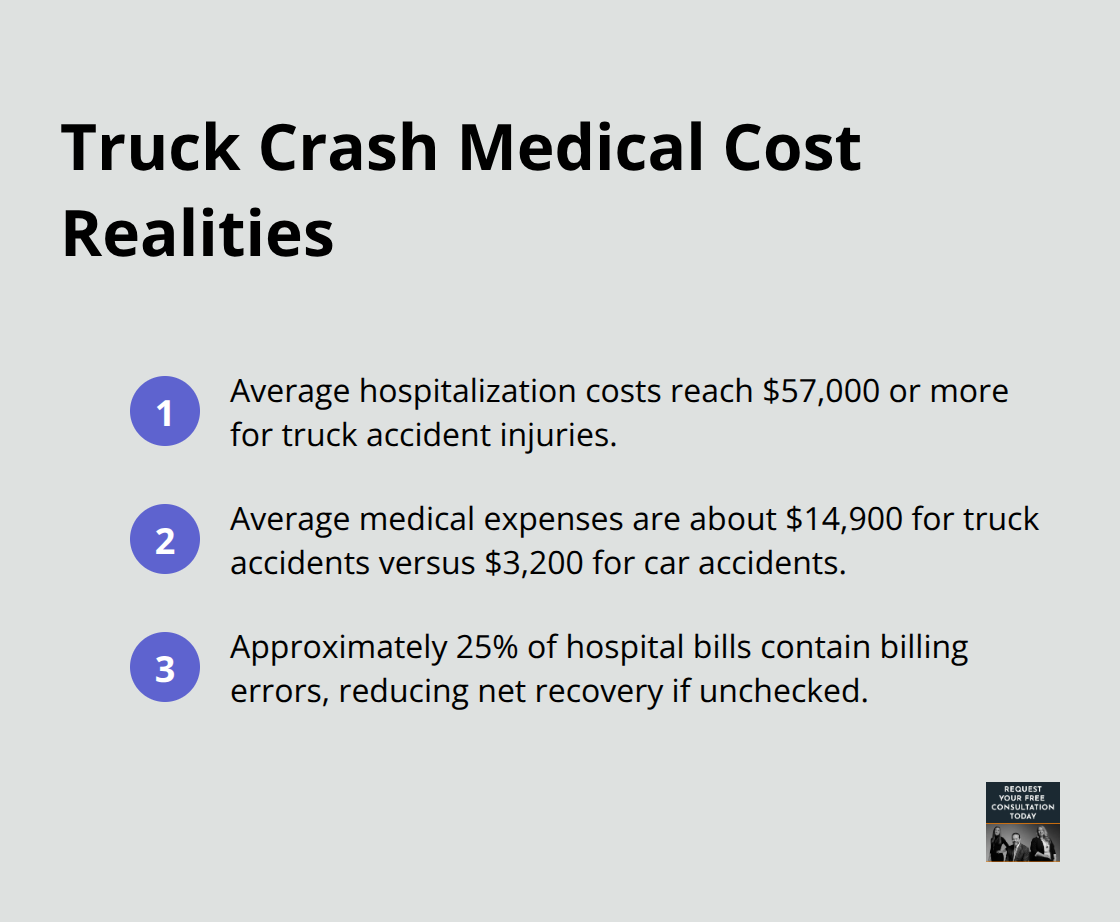
Average hospitalization costs for truck accident injuries reach $57,000 or more according to the National Highway Traffic Safety Administration, yet most victims have no way to pay these bills while their case progresses.
Medical Liens Extend Your Payment Timeline
A medical lien is a legal agreement where your healthcare provider agrees to wait for payment until your settlement is resolved, then receives their fees directly from your settlement proceeds. The provider essentially extends credit to you based on the strength of your claim. This arrangement removes the immediate pressure to pay bills out of pocket and prevents collection agencies from pursuing you during recovery. Most hospitals and treatment facilities in Santa Cruz County accept medical liens when you have strong liability evidence from the scene documentation and police report you gathered immediately after the crash.
Insurance Claims Require Careful Navigation
Insurance claim navigation determines how much of your settlement actually reaches you after medical bills are paid. Trucking companies carry commercial liability insurance, but their insurers employ adjusters specifically trained to minimize payouts by arguing pre-existing conditions, disputing treatment necessity, or claiming your injuries weren’t as severe as documented. Request an itemized medical bill from every provider and review each charge for accuracy, as studies show approximately 25 percent of hospital bills contain billing errors according to the Patient Advocate Foundation. When the insurance adjuster contacts you, provide only factual information about the accident and your injuries, never speculation or detailed descriptions of pain levels that could be used against you.
Separate Claims Maximize Your Recovery
California allows you to pursue both property damage and personal injury claims separately, meaning you can recover for vehicle repairs, lost wages during recovery, and pain and suffering damages. The legal team at Schaar & Silva LLP helps victims navigate these claims by coordinating with medical providers, managing lien agreements, and negotiating with insurance adjusters to maximize the portion of your settlement that reaches you rather than going to medical creditors.
Treatment Specialists Strengthen Your Claim
Treatment specialists including orthopedic surgeons, physical therapists, and mental health professionals are critical for both your recovery and your claim strength, since documented ongoing treatment proves the severity of your injuries to insurance companies and strengthens settlement negotiations.
Final Thoughts
A Santa Cruz truck crash leaves you facing decisions that directly impact your financial recovery and health outcomes. The evidence you gather in the first hours after the crash becomes your strongest negotiating tool, shifting the burden to the trucking company to prove they weren’t negligent rather than forcing you to prove they were. This advantage disappears quickly as memories fade and scenes change, which is why acting within days rather than weeks matters significantly.
Medical expenses in truck accidents average nearly five times higher than car accidents, creating immediate financial pressure that most victims underestimate. Medical lien services remove the burden of paying bills out of pocket while your case progresses, but only if you understand how these agreements work and navigate insurance claims strategically. Treatment specialists strengthen both your recovery and your claim by documenting the ongoing impact of your injuries.
Contact Schaar & Silva LLP to discuss your specific circumstances and understand what compensation you can realistically pursue. The sooner you act, the stronger your position becomes.
