

Car accidents happen fast in Santa Cruz County, and the aftermath can feel overwhelming. Medical bills pile up, insurance companies push back, and you’re left wondering what your rights actually are.
A Santa Cruz car attorney can guide you through the process and fight for the compensation you deserve. We at Schaar & Silva LLP have helped countless accident victims navigate these situations and recover what they’ve lost.
What Causes Most Car Accidents in Santa Cruz
Distracted Driving Remains the Top Threat
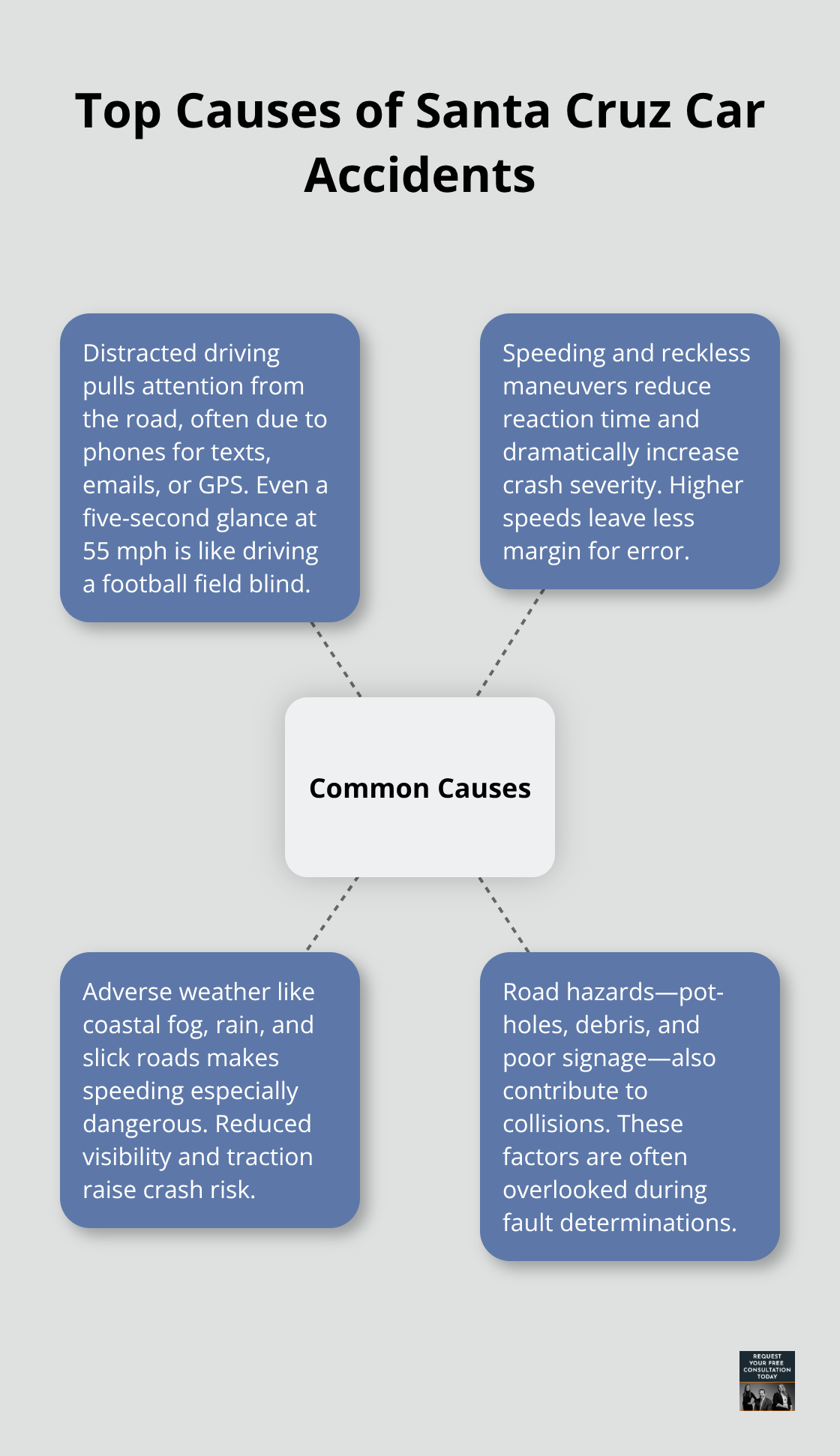
Distracted driving sits at the top of the list when it comes to preventable accidents in Santa Cruz County. Phones cause the most damage-drivers checking texts, emails, or GPS pull their attention from the road for an average of 5 seconds at a time, which at 55 mph means traveling the length of a football field blind. California law prohibits handheld phone use while driving, yet enforcement remains inconsistent. If another driver hits you while distracted, document their phone activity if possible during the accident scene. Witness statements about phone use strengthen liability claims significantly.
Speeding and Reckless Driving Increase Crash Severity
Speeding and reckless driving follow closely as major accident triggers in our region. Speed-related crashes account for a substantial portion of serious collisions because higher speeds reduce reaction time and increase crash severity. Adverse weather conditions amplify these risks-Santa Cruz’s coastal fog, rain, and occasional slick roads create conditions where speed becomes especially dangerous. Road hazards like potholes, debris, or poor signage contribute to crashes, though they’re often overlooked when determining fault.
How Accident Causes Affect Your Claim
When you’re injured in a Santa Cruz accident, the cause matters tremendously for your claim. Insurance adjusters investigate accident causes to assign fault percentages. California follows pure comparative negligence, meaning you can recover damages even if you’re partially at fault, but your recovery gets reduced by your percentage of responsibility. This is where documentation becomes critical. Photos showing road conditions, weather, traffic signals, and vehicle damage help establish what actually happened. If the other driver caused the accident through distracted driving, speeding, or reckless behavior, that strengthens your position significantly. Medical records showing your injuries and treatment timelines also support your claim’s value. Understanding these cause-and-effect relationships prepares you for the next critical step: knowing exactly what actions to take immediately after an accident occurs.
What to Do Right After Your Accident
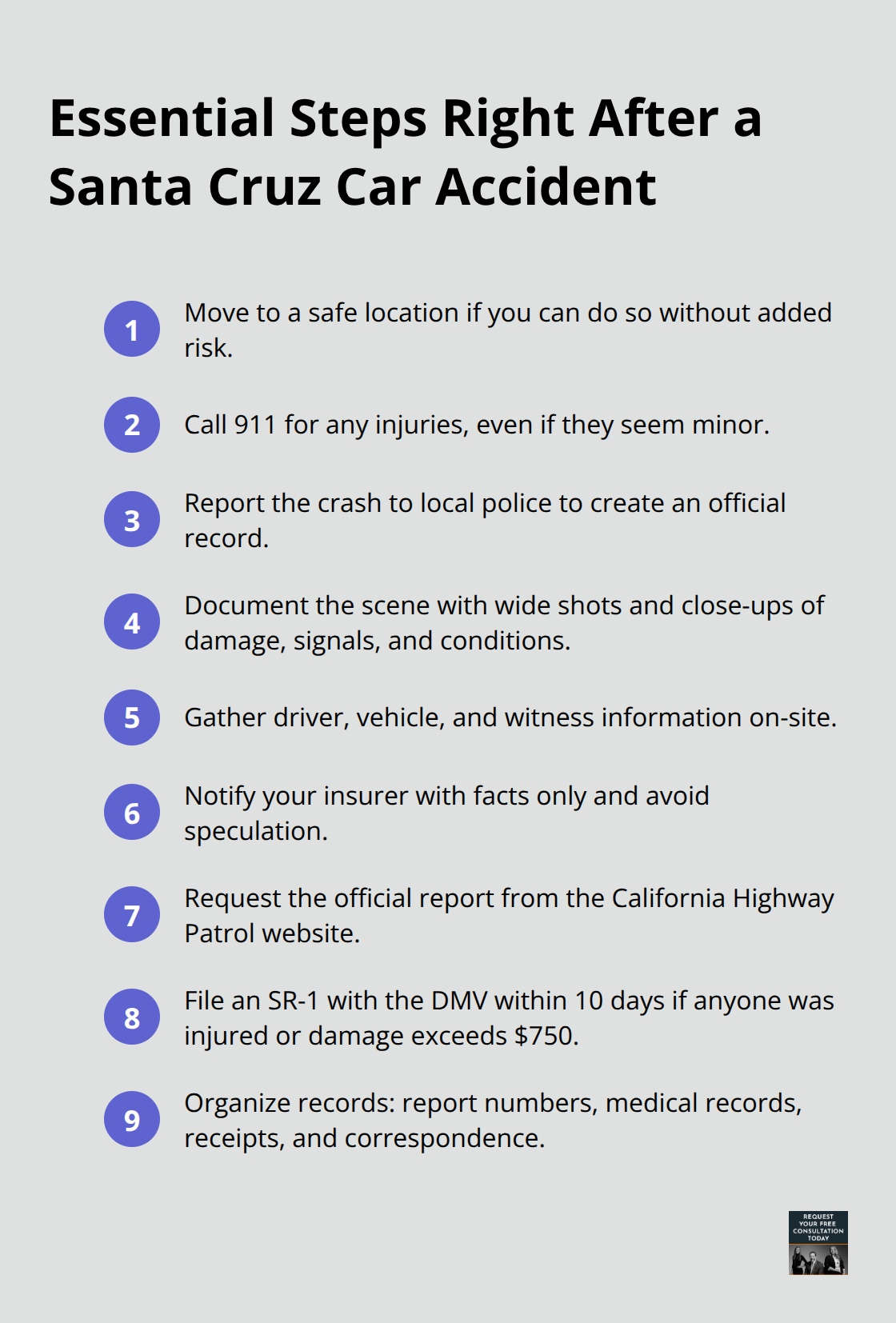
The minutes following a Santa Cruz car accident determine how strong your claim becomes. Stop your vehicle in a safe location if possible, and move to safety only if you can do so without additional risk. Call 911 immediately if anyone is injured, regardless of how minor the injury seems. California law requires you to report accidents to local police within a reasonable timeframe, and police reports create official documentation that insurers and attorneys rely on heavily.
Document the Scene Thoroughly
Once you’re safe and police are en route, start documenting everything around you. Photograph the entire accident scene from multiple angles, capturing vehicle positions, traffic signals, road conditions, weather, and any visible damage. Take close-up photos of all vehicle damage, license plates, and the surrounding area. If you’re injured, photograph your injuries as they appear immediately after the accident. Video footage works even better than still photos because it shows context and movement. Write down the date, time, weather conditions, and road surface details while they’re fresh in your mind.
Collect Critical Information from Other Parties
Collect the names, phone numbers, addresses, driver’s license numbers, license plate numbers, and Vehicle Identification Numbers from all other drivers involved. Get contact information from every witness at the scene, including their relationship to either party. Ask witnesses to describe what they saw, and write down their statements word-for-word if possible. Don’t discuss fault with the other driver or admit responsibility for anything. California’s pure comparative negligence system means your words at the scene can be used against you later.
Handle Insurance and Police Reports Correctly
Notify your insurance company as soon as possible, but provide only factual information about what happened. Don’t speculate about injuries or damages, and don’t accept settlement offers from the other driver’s insurer without consulting an attorney first. The California Highway Patrol website allows you to request your official accident report for a fee. Within 10 days of the accident, you must report it to the California Department of Motor Vehicles if anyone was injured or vehicle damage exceeds $750, or your license faces suspension.
Organize Your Documentation
Keep copies of everything, including the police report number, insurance claim numbers, medical records, receipts, and all correspondence. This documentation package becomes the foundation of your claim, and the more thorough you are in those first hours, the stronger your position becomes. The stronger your evidence, the better prepared you’ll be to navigate the next critical phase: understanding your legal rights and what compensation you can actually recover.
Why You Need an Attorney After Your Accident
Insurance companies field teams of adjusters, lawyers, and investigators to minimize what they pay you. Without representation, you face this alone. An attorney levels the playing field because insurers treat claimants with legal counsel differently than those without it. They recognize you understand your rights and won’t accept lowball offers. When you contact an insurer without an attorney, adjusters request recorded statements, written documentation, and detailed medical histories. Anything you say can reduce your claim’s value. They’ll challenge whether treatments were necessary, argue that injuries aren’t as severe as you claim, and delay payments indefinitely. California law requires insurers to act in good faith, but that doesn’t mean they’ll voluntarily offer fair compensation.
Medical Bills and Payment Pressure
Medical bills don’t wait for settlement negotiations. Hospitals and doctors demand payment, and many patients face collection actions while their cases drag on. At Schaar & Silva LLP, we direct you to medical lien services that delay bill collection until your case resolves, giving you breathing room while we fight for compensation. This approach removes the pressure to accept inadequate settlement offers quickly just to pay mounting medical debt.
Property Damage and Vehicle Valuation
Property damage claims follow similar patterns. Insurers will offer the lesser of repair costs or your vehicle’s actual cash value at the time of loss. If you disagree with their valuation, the appraisal process involves two appraisers selecting a neutral umpire, and their decision becomes binding. Without understanding how actual cash value works or knowing comparable vehicle sales data, you’ll likely accept less than your vehicle was worth.
Liability and Comparative Negligence
Your liability exposure matters tremendously in Santa Cruz accidents. California’s pure comparative negligence system means you can recover even if partially at fault, but your recovery decreases by your fault percentage. If an adjuster determines you were 30 percent responsible, your damages get reduced by 30 percent. Insurance companies push liability percentages higher than they should be to justify lower payouts. An attorney investigates accident scenes, obtains traffic signal timing records, reviews police reports for inaccuracies, and gathers witness statements that counter the insurer’s version of events.
Calculating Damages and Pain and Suffering
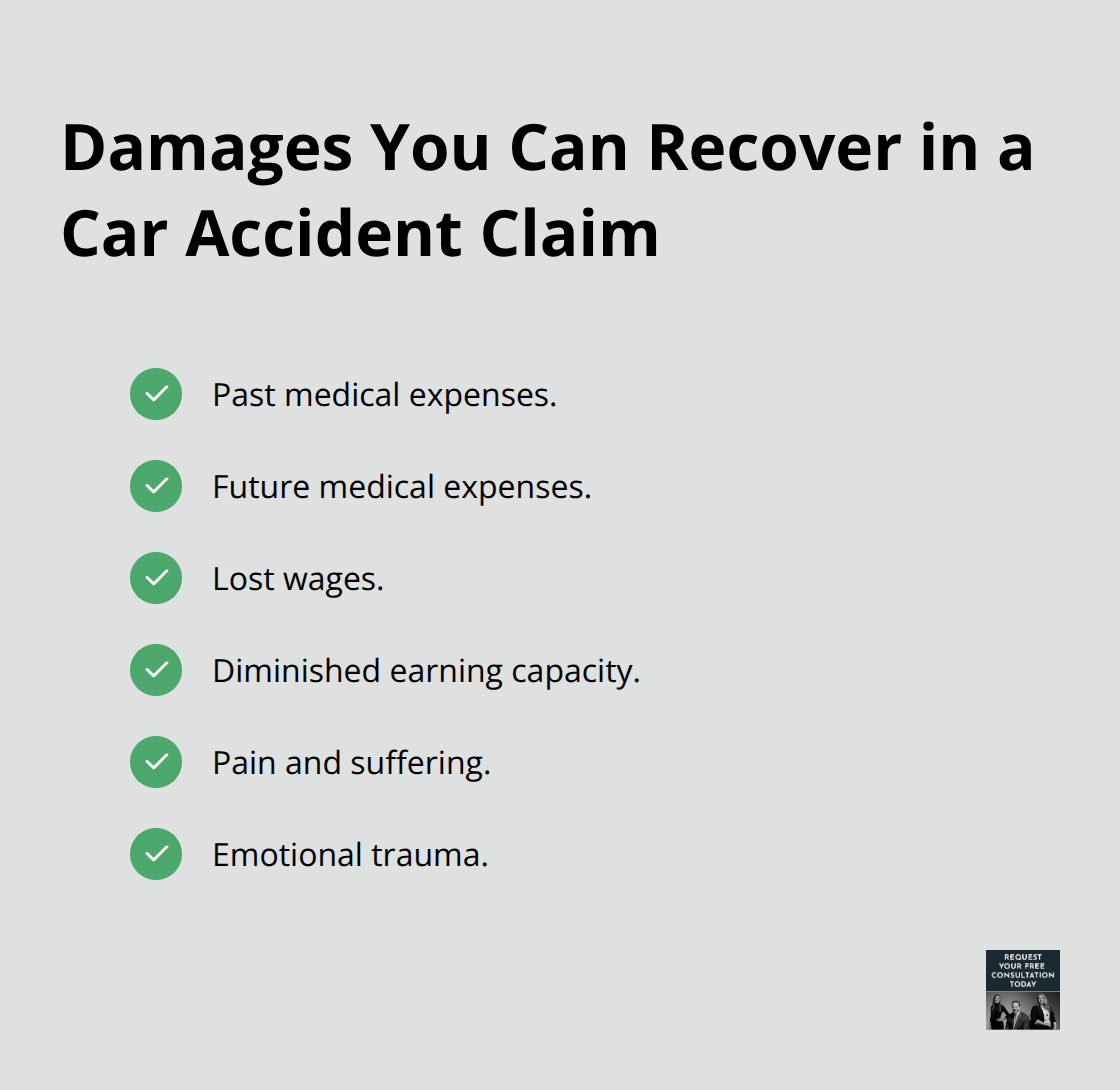
Damages in car accidents include past and future medical expenses, lost wages, diminished earning capacity, pain and suffering, and emotional trauma. Pain and suffering calculations often use multipliers ranging from 1.5 to 5 times your medical expenses, depending on injury severity and case circumstances.
Without legal representation, most people recover only their medical bills and lost wages, missing substantial compensation for pain and suffering that they’re legally entitled to receive. Settlement timelines vary dramatically-some cases resolve in weeks, others take years. You maintain control over whether to accept any settlement offer. Medical providers often cooperate with attorneys by delaying payment demands until settlement, which removes pressure to accept inadequate offers quickly.
Building Your Claim Foundation
The documentation you gathered immediately after the accident becomes vital now. Your photos, police report, witness statements, and medical records form the foundation of your claim’s value. The more thorough your evidence package, the stronger your negotiating position becomes when settlement discussions begin. This comprehensive approach transforms scattered information into a persuasive case that insurers take seriously.
Final Thoughts
Insurance companies field teams of adjusters and lawyers to minimize what they pay you, while you face this alone without representation. A Santa Cruz car attorney levels the playing field because insurers treat claimants with legal counsel far differently than those without it. They recognize you understand your rights and won’t accept lowball offers that shortchange your recovery.
We at Schaar & Silva LLP serve Santa Cruz County with direct experience handling these situations. We work on a no-fee-until-we-win basis, meaning you pay nothing unless we recover compensation for you. We come to you for consultations at home or in the hospital if mobility is difficult, and we review your case to explain your rights under California law.
Contact us today for a free case consultation and outline what compensation you can realistically recover. The sooner you act, the stronger your claim becomes.
