
A concussion from a car crash can change your life in seconds, yet many people don’t realize how serious these injuries are. The symptoms might appear days or weeks after the accident, making it hard to connect them to the collision.
At Schaar & Silva LLP, we help people in Santa Cruz County, Sacramento, and Oakland build strong brain injury claims. This guide walks you through what happens to your brain during impact, how to document your injuries, and how to recover the compensation you deserve.
What Happens to Your Brain in a Car Crash
The Physics of Impact and Brain Injury
When your head experiences sudden deceleration or impact during a car crash, your brain moves inside the skull faster than the skull itself stops. This causes the brain tissue to stretch and twist, damaging nerve fibers and disrupting chemical communication between brain cells. Concussions account for the vast majority of traumatic brain injuries in the U.S., and car crashes rank among the leading causes. The damage often remains invisible on standard imaging like CT scans or MRIs, which explains why many people fail to recognize they have a concussion immediately after the accident. Some victims feel fine for hours or even days before symptoms emerge, making it critical to monitor yourself closely after any collision.
Symptoms That Appear Immediately and Over Time
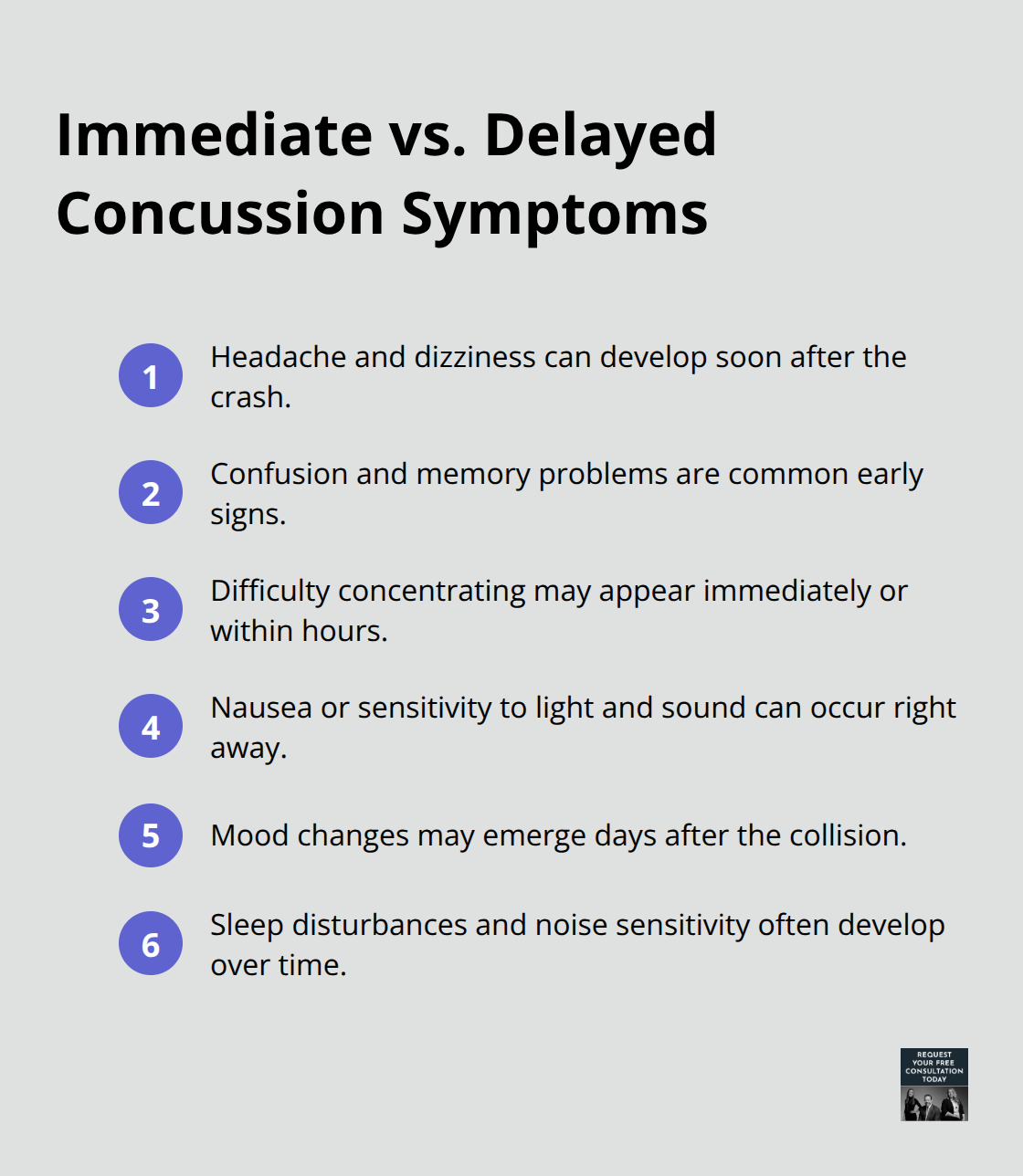
Symptoms can appear suddenly or develop gradually over the following days and weeks. Immediate signs include headache, dizziness, confusion, memory problems, and difficulty concentrating, along with nausea or sensitivity to light and sound. Later, you might experience mood changes, sleep disturbances, or sensitivity to noise that wasn’t present right after the crash. Post-concussion syndrome, which affects a significant portion of concussion victims, can cause these symptoms to persist for months or longer, impacting your ability to work and perform daily tasks.
Why Concussions Get Missed or Underdiagnosed
The tricky part is that concussions are often underdiagnosed because they produce no visible wounds and because people frequently attribute delayed symptoms to stress or other unrelated causes rather than connecting them to the accident. This diagnostic gap is dangerous for your legal claim because insurance companies exploit it, arguing that your injury isn’t serious if you didn’t seek immediate medical attention. Insurance adjusters count on this confusion to minimize what they owe you.
Taking Action to Protect Your Claim
Get a comprehensive medical evaluation within days of the crash, even if you feel okay. Request neuropsychological testing, which measures cognitive function far more accurately than standard scans. Document every symptom in writing, including when it started and how it affects your daily life. This documentation becomes your evidence that the concussion is real and serious, protecting your ability to recover full compensation later. The medical records you collect now will form the foundation of your claim when you move forward with establishing liability and calculating what your injury actually cost you.
Building Your Brain Injury Claim in California
Collect and Organize Your Medical Evidence
Medical records form your foundation. Start collecting everything immediately: hospital discharge summaries, CT and MRI results, neuropsychological test reports, therapy notes, and prescriptions. Insurance companies scrutinize cases where documentation gaps exist, so the more complete your medical file, the stronger your position.
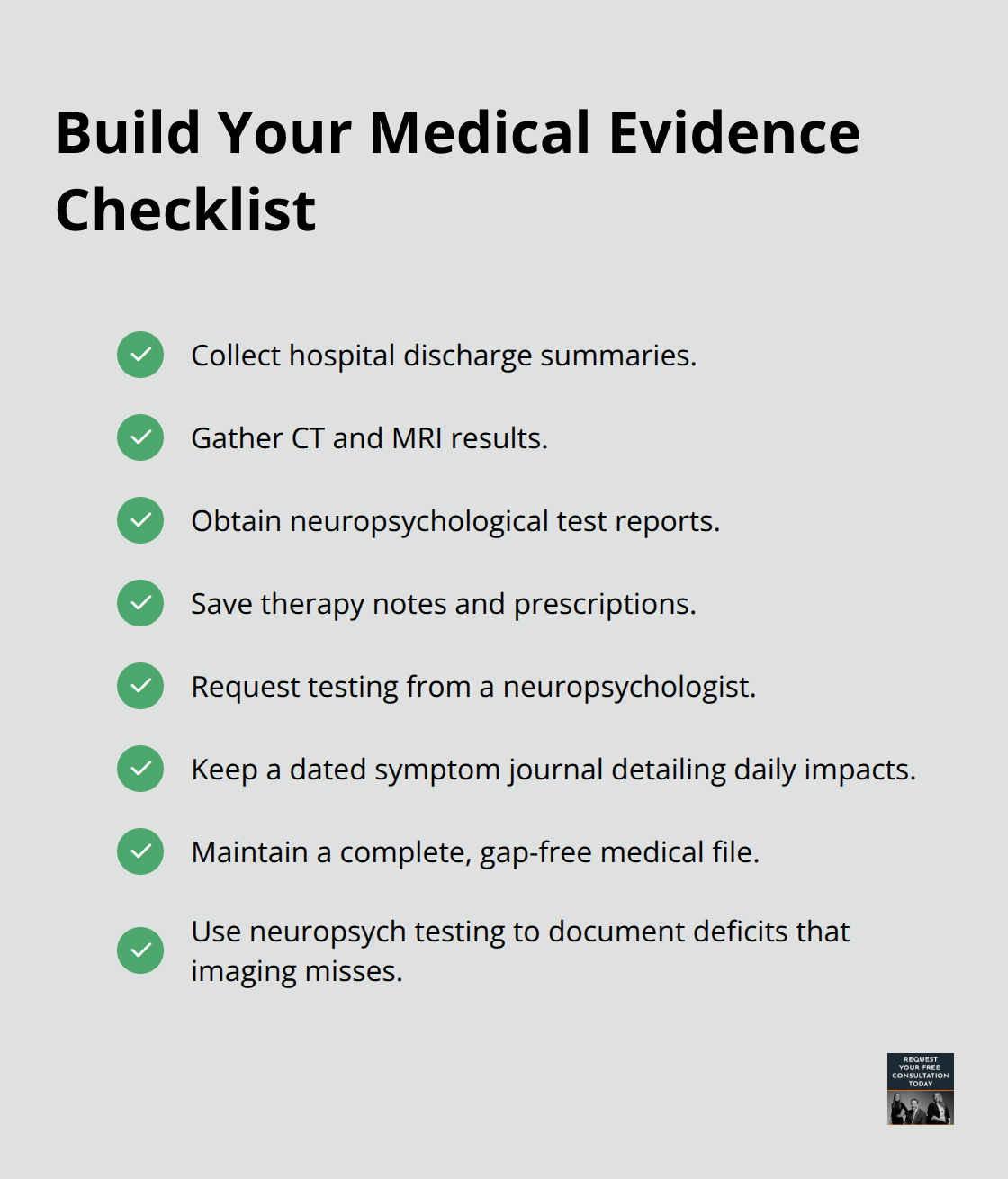
Medical documentation becomes your strongest weapon in establishing injury severity. Neuropsychological testing measures cognitive deficits that standard imaging misses. These tests evaluate memory, attention, processing speed, and executive function-the invisible damage that proves your concussion’s severity. Request testing from a neuropsychologist, not just your primary care doctor. The cost typically runs $2,000 to $4,000, but the resulting report becomes your most powerful evidence. A detailed symptom journal documents headaches, concentration problems, mood changes, and how these affect work and daily activities. Date each entry and be specific about impact. When an insurance adjuster sees a detailed, contemporaneous record of your suffering, settlement discussions shift significantly in your favor.
Establish Liability and Negligence
Liability determines who pays, and negligence determines how much. Obtain the police report immediately because it establishes fault and contains witness contact information. Photograph the accident scene yourself if possible, showing road conditions, traffic signals, and vehicle positions. Collect witness statements while memories are fresh; these often carry more weight than police accounts. Medical causation links your concussion directly to the crash. Your medical records must show you had no prior concussion symptoms and that your current symptoms align with the impact mechanism. California courts use pure comparative fault, meaning if you were 20 percent at fault, your recovery reduces by 20 percent. This makes liability documentation critical.
Calculate Economic Damages
Economic damages include past and future medical expenses, lost wages, and reduced earning capacity. Calculate past medical costs by gathering all bills and receipts. For future costs, life-care planners project ongoing treatment, therapy, and medication expenses-often substantial for post-concussion syndrome cases. Lost wage claims require pay stubs, tax returns, and employer statements confirming time missed. If your earning capacity permanently decreased due to cognitive deficits, vocational experts assess your reduced income potential over your lifetime.
Value Non-Economic Damages and Settlement Range
Non-economic damages cover pain and suffering, emotional distress, and loss of enjoyment of life. California imposes no caps on these damages in standard personal injury cases. The multiplier method values non-economic damages at 1.5 to 2 times economic damages for mild injuries, 3 to 5 times for serious injuries. Typical California brain injury settlements cluster between $250,000 and $500,000 for moderate cases, though serious traumatic brain injuries frequently exceed $1,000,000. Your settlement value depends on injury permanence, treatment costs, income loss, and expert testimony quality. Understanding these valuation methods helps you recognize whether an early insurance offer reflects what your case actually deserves. The next section addresses the specific costs and compensation categories that apply to your long-term recovery.
Recovering Compensation for Long-Term Effects
Medical Costs That Extend Beyond the Emergency Room
Medical bills from a concussion stretch far beyond the initial emergency room visit. Immediate treatment costs include CT scans, MRIs, and emergency department fees, typically ranging from $3,000 to $8,000. Neuropsychological testing adds $2,000 to $4,000 to your expenses. The real financial burden emerges over months and years as you pursue recovery.
Physical therapy sessions run $100 to $200 per visit, with post-concussion syndrome patients often requiring 20 to 40 sessions. Cognitive rehabilitation therapy costs $150 to $250 per hour, and many people need ongoing sessions for 6 to 18 months. Prescription medications for headaches, sleep disturbances, and mood changes accumulate quickly across your recovery timeline.
The National Institutes of Health reports that lifetime care costs for moderate to severe traumatic brain injuries can exceed $100,000 when you factor in all treatment, medication, and adaptive equipment. Life-care planners project these future medical expenses into your claim, calculating what you’ll actually spend on recovery over your lifetime. This projection becomes part of your economic damages, and it’s substantial.
Lost Income and Reduced Earning Capacity
Lost wages hit hard when your concussion prevents you from working. If you earned $60,000 annually and missed three months of work, you’ve lost $15,000 in income. The damage extends further if cognitive deficits prevent you from returning to your previous job.
A construction supervisor with memory and attention problems may no longer qualify for that role, forcing a shift to lower-paying work. Vocational experts calculate this reduced earning capacity by comparing your pre-injury income potential to your post-injury earning ability. For a 35-year-old with 30 years of work ahead, a permanent 20 percent reduction in earning capacity means a loss of hundreds of thousands of dollars over your lifetime.
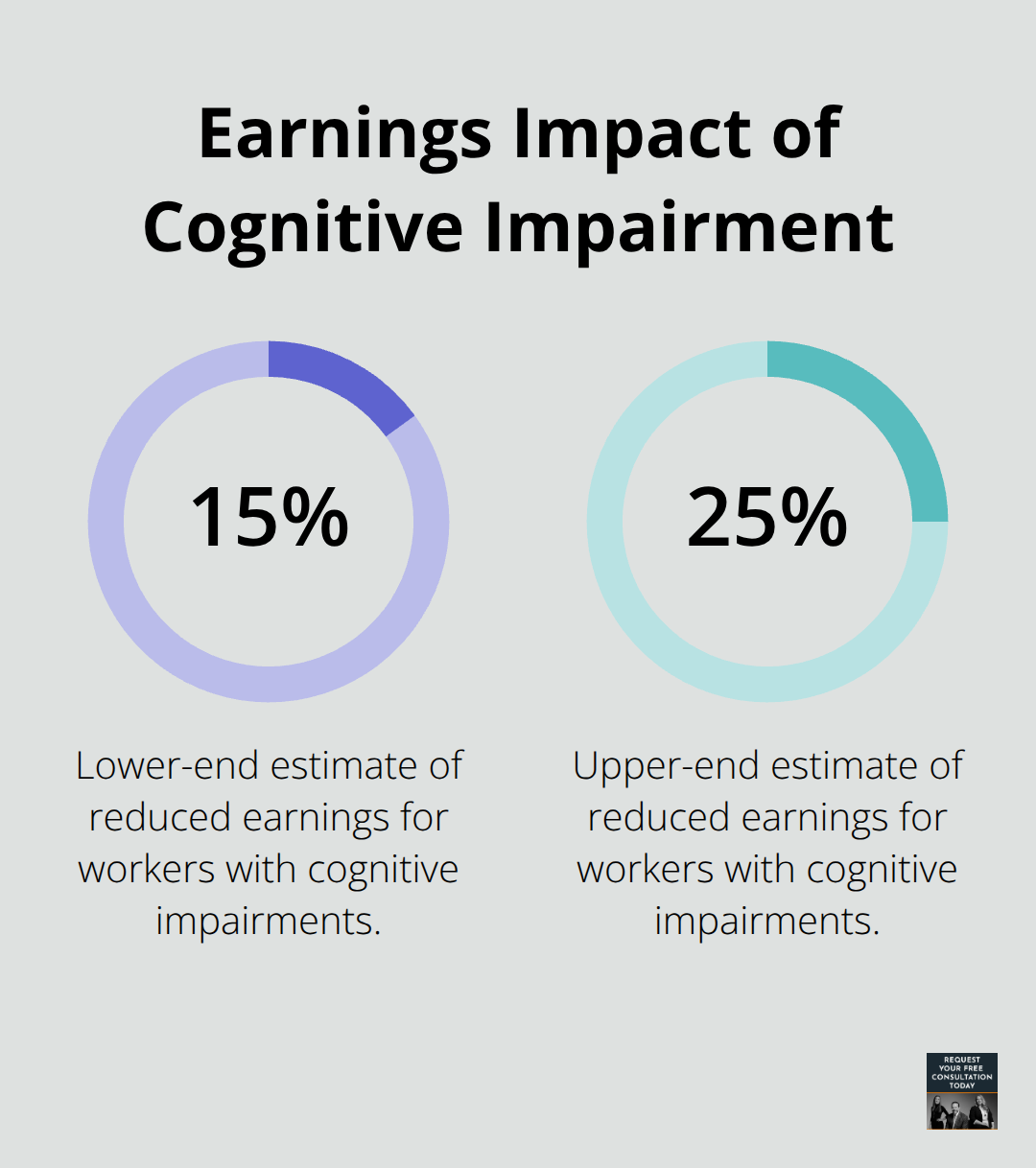
The Bureau of Labor Statistics data shows that workers with cognitive impairments earn approximately 15 to 25 percent less than peers without such limitations. California courts recognize these long-term income losses and factor them into settlements.
Pain and Suffering Damages Without Legal Caps
Pain and suffering damages in California are uncapped, meaning there’s no legal maximum. Insurance companies use the multiplier method to value these damages, multiplying your economic damages by a number between 1.5 and 5 depending on injury severity. A mild concussion with $25,000 in medical bills and lost wages might be multiplied by 2, yielding $50,000 in pain and suffering damages for a total claim value of $75,000.
Moderate brain injuries with cognitive effects typically carry multipliers of 3 to 5, pushing total settlements higher. Serious traumatic brain injuries with permanent deficits frequently settle for $1,000,000 to $3,000,000 or more, with pain and suffering comprising the majority of that value.
Building Your Evidence for Maximum Compensation
The critical factor is proving your suffering through medical records and testimony. Neuropsychological reports documenting cognitive deficits, depression, anxiety, or personality changes carry substantial weight in settlement negotiations. Your own testimony about how the concussion affected your ability to work, enjoy hobbies, or maintain relationships becomes powerful evidence that adjusters cannot ignore.
Insurance adjusters pay attention when you can show specific, measurable impacts on your quality of life. One settlement that illustrates this involved a rear-end collision victim in California who developed post-concussion syndrome with persistent headaches and concentration problems. With documented neuropsych testing, ongoing therapy records, and testimony about lost career advancement opportunities, the case settled for $3.2 million. The medical costs were significant, but the bulk of the recovery reflected the long-term suffering and lost earning potential.
Final Thoughts
A concussion case in California demands immediate action and careful documentation from the moment the crash happens. Seek comprehensive medical evaluation right away, request neuropsychological testing to document cognitive damage, and create a detailed symptom journal that tracks how your concussion affects work and daily life. Collect police reports, witness statements, and medical records before details fade, as this foundation protects your claim when settlement discussions begin.
Insurance adjusters work for the insurance company, not for you, and they count on injured people accepting lowball offers out of desperation or confusion about claim value. An attorney who understands brain injury cases knows how to value your economic damages through life-care planners and vocational experts, recognizes how California courts calculate pain and suffering without legal caps, and identifies when an early settlement offer falls far short of what your case deserves. We at Schaar & Silva LLP help people in Santa Cruz County, Sacramento, and Oakland navigate concussion claims with direct attorney involvement at every stage, connecting you with medical resources and handling insurance negotiations so you can focus on recovery.
Your recovery timeline and your legal timeline must align to maximize compensation. Rushing to settle before reaching maximum medical improvement leaves money on the table, while waiting too long risks missing California’s two-year statute of limitations for personal injury claims. An attorney coordinates these timelines, ensuring your medical treatment supports your claim value while protecting your legal deadline.
