
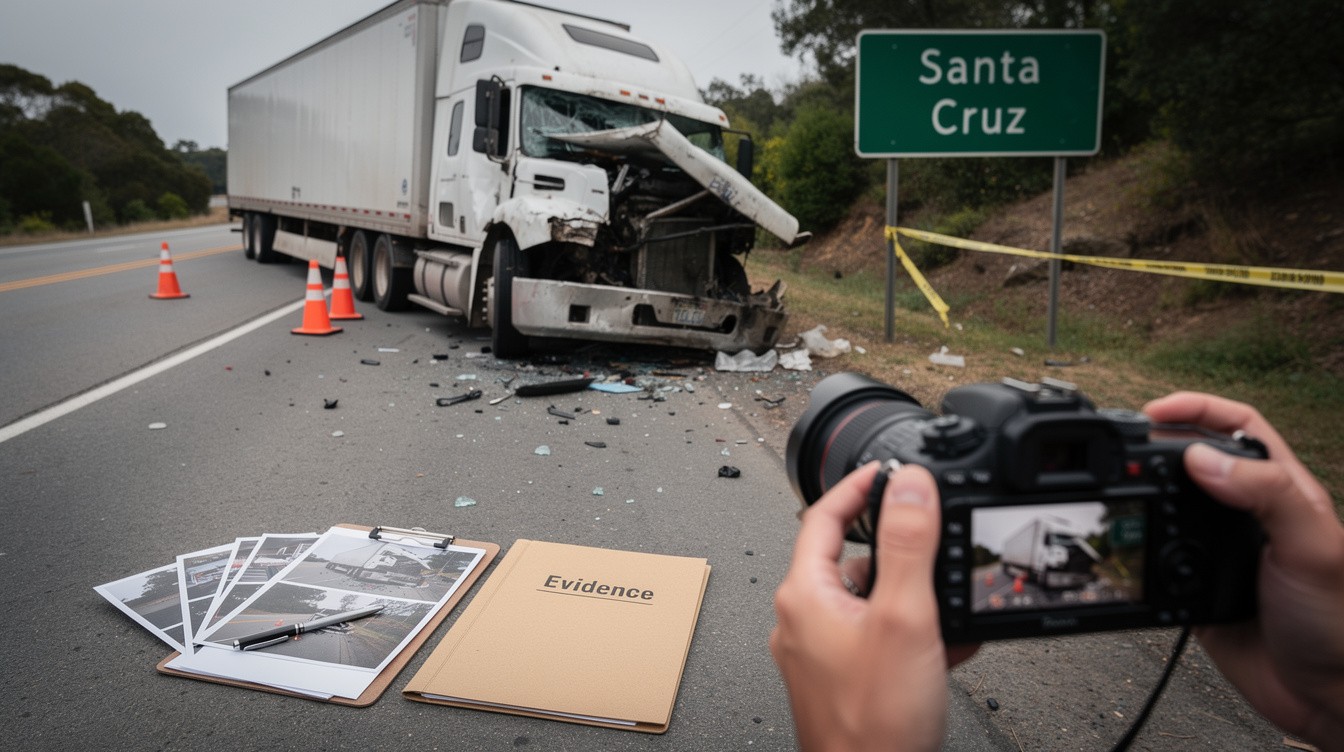
A commercial truck accident in Santa Cruz can leave you facing serious injuries, mounting medical bills, and property damage. The stakes are high, and insurance companies often push back on claims involving large trucks.
We at Schaar & Silva LLP know that building a strong case requires more than just filing a report. You need solid evidence, proper documentation, and a clear understanding of what happened.
What to Do at the Truck Accident Scene
The first minutes after a commercial truck accident are when evidence faces destruction or loss. You need to act decisively. If you can move safely away from traffic, do so immediately. Call 911 right away-this creates an official record and gets emergency responders to document the scene. While waiting for police, start photographing everything from multiple angles: the truck’s position, your vehicle’s damage, cargo visible in or around the truck, road conditions, weather, skid marks, and any debris.
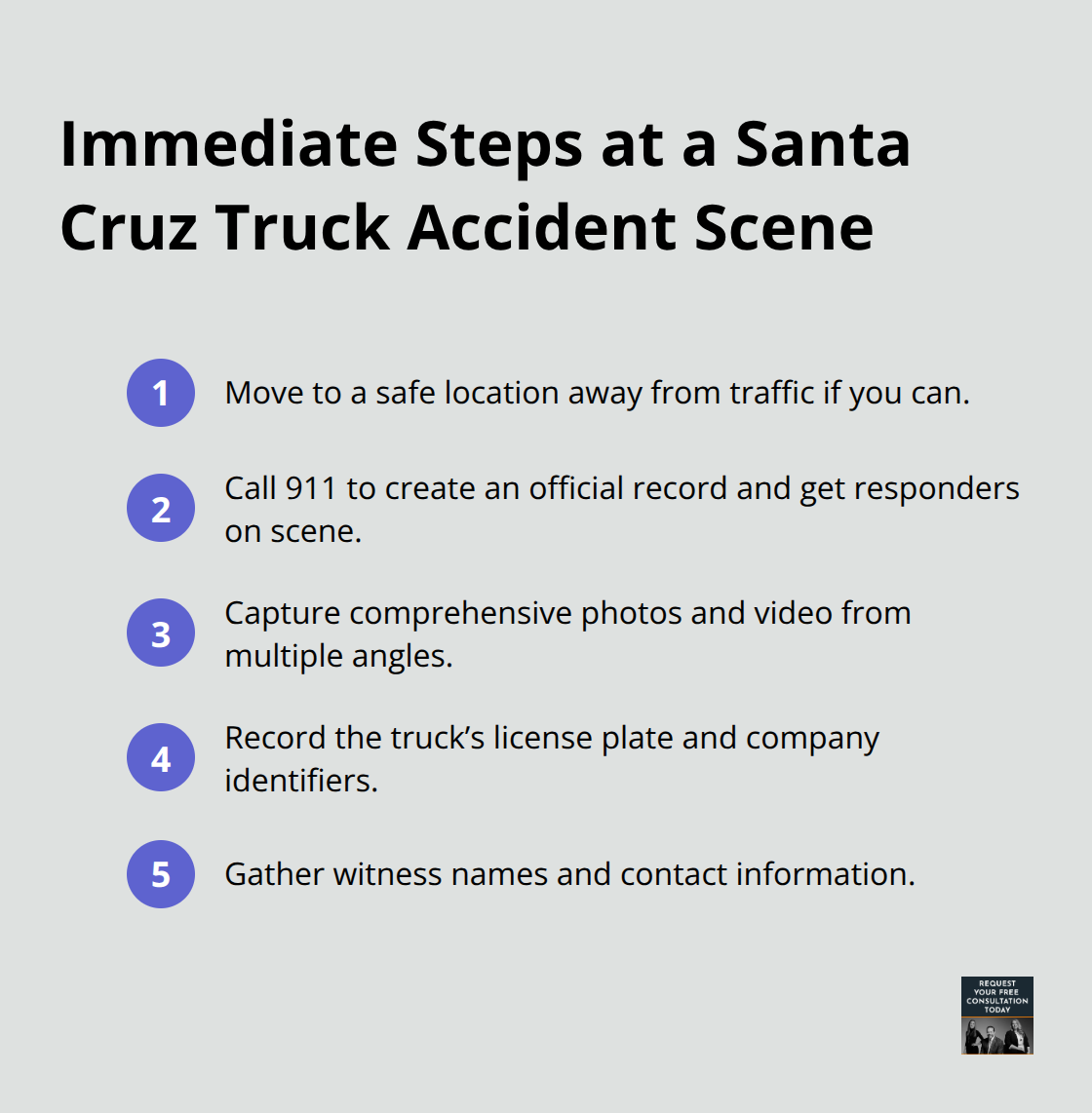
Take photos of the truck’s license plate, company markings, and any visible damage to the truck itself. Capture wide shots showing the overall accident scene and intersection or road layout. Video works even better than photos because it shows perspective and sequence.
Gather Information from the Truck Driver and Witnesses
Get the truck driver’s name, phone number, address, driver’s license number, and commercial license number. Write down the trucking company name and any visible company information on the vehicle. Collect the same details from any other drivers involved. Most importantly, gather contact information from witnesses-get names, phone numbers, and what they saw. Witnesses often disappear, and their statements become critical evidence later when liability is contested. California Vehicle Code 16000 requires you to file an SR-1 Report of Traffic Accident with the Department of Motor Vehicles within 10 days if there are injuries or significant property damage, so file this promptly.
Report to Police and Insurance Immediately
Never leave the scene before police arrive and create an accident report. This official document becomes foundational evidence in your case. When speaking with the officer, stick to facts about what happened-don’t speculate about fault or injuries. Request the accident report number before you leave. Contact your insurance company within 24 hours, but do not accept any settlement offer without reviewing it carefully against your actual damages.
Seek Medical Evaluation and Document Everything
Commercial truck accidents often involve multiple liable parties: the truck driver, the trucking company, cargo loaders, or even the vehicle manufacturer. Seek medical evaluation even if you feel fine-adrenaline masks injuries like traumatic brain injury or internal trauma that emerge hours or days later. Document every medical visit and treatment from the start. Early legal guidance prevents you from settling too quickly and protects your right to full compensation. The evidence you preserve now directly shapes whether you can hold all responsible parties accountable for what happened.
What Evidence Wins Truck Accident Cases
Medical Records and Injury Documentation
Your medical records form the backbone of your claim, and timing matters enormously. Seek evaluation within 24 hours of the accident, even if you feel fine. Insurance adjusters scrutinize gaps between the accident date and your first medical visit, interpreting silence as proof you weren’t seriously injured. Document every symptom in writing immediately after the crash: headaches, dizziness, back pain, numbness, or difficulty sleeping. When you visit your doctor, describe exactly how the accident happened and mention all symptoms, no matter how minor they seem.
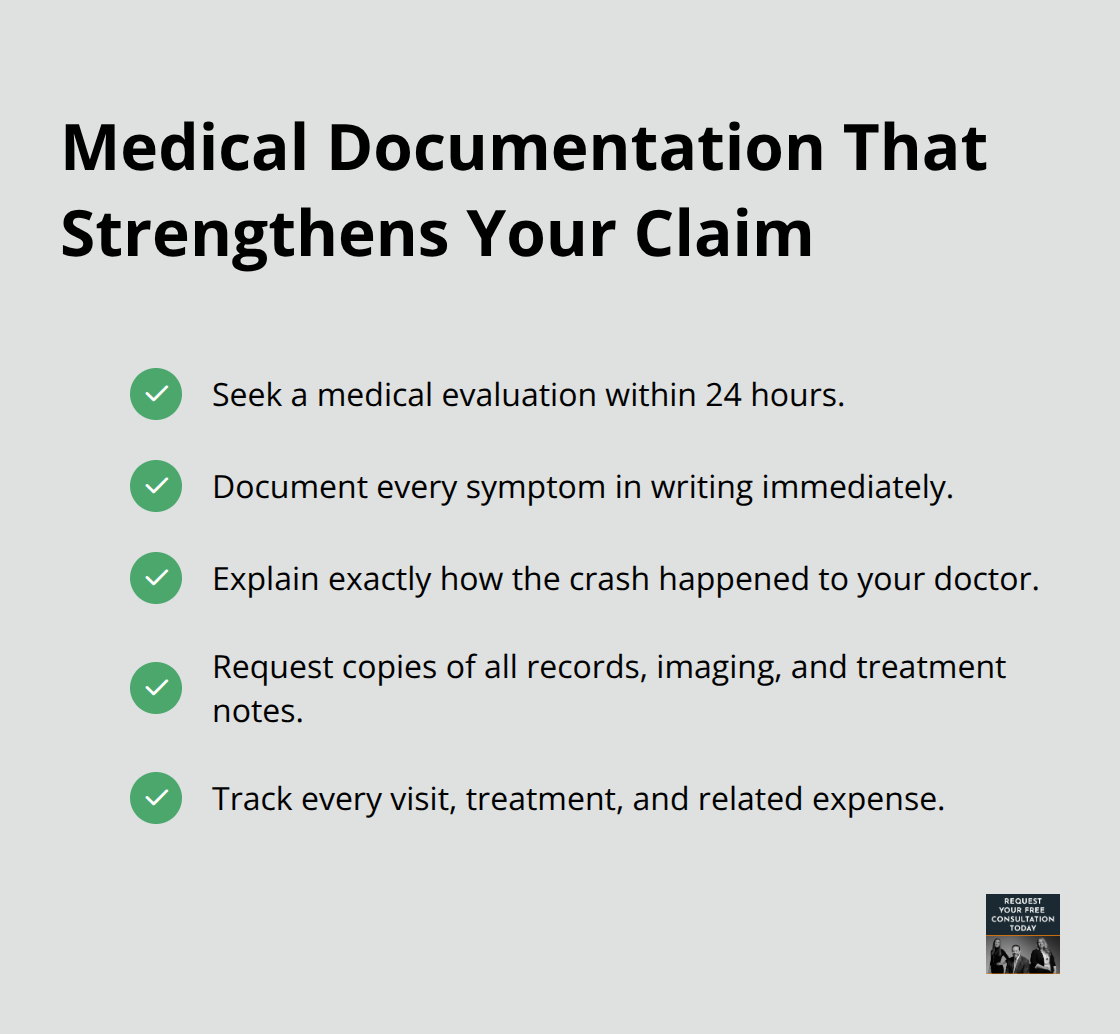
Request copies of all medical records, imaging reports, and treatment notes for your attorney.
Driver Hours-of-Service and Electronic Logging Records
The Federal Motor Carrier Safety Administration enforces hours-of-service rules that limit interstate truck drivers to 11 hours of driving within a 14-hour window after a 10-hour break. If the truck driver violated these rules, it strengthens your negligence claim significantly. Obtain the driver’s electronic logging device data and hours-of-service records immediately through your attorney, as trucking companies often resist releasing this information voluntarily. These records reveal whether fatigue contributed to the crash and establish regulatory violations that support liability.
Maintenance Records and Equipment Failure Evidence
Maintenance records reveal whether the trucking company failed to inspect or repair critical components like brakes, tires, or steering systems. Request pre-crash inspection reports and maintenance logs covering at least 12 months before your accident. Look for patterns of deferred maintenance or ignored safety violations. If the truck’s brakes failed or tires blew out, maintenance negligence becomes a direct cause of your injuries.
Vehicle Damage Documentation and Property Claims
Photograph all vehicle damage from multiple angles before repairs begin, as adjusters use these images to calculate repair costs and injury severity. Wide shots showing the overall damage pattern matter more than close-ups. Preserve the damaged vehicle itself if possible, since defense attorneys may hire investigators to examine it later. Your property damage claim should include repair estimates from at least two independent shops, not just the insurance company’s appraiser.
Local Safety Data and Corridor History
The Santa Cruz County Regional Transportation Commission publishes crash data and traffic volumes on major corridors, information your attorney can reference to show whether the accident location had a history of safety issues. If your accident occurred on Highway 17, the Safe on 17 Task Force and Measure D safety initiatives demonstrate what safety improvements were planned or funded in that area, helping establish whether adequate safety measures existed. This contextual evidence strengthens arguments about whether the roadway itself contributed to the crash and whether responsible parties failed to implement known safety solutions.
What Causes Commercial Truck Accidents in Santa Cruz County
Driver Fatigue and Hours-of-Service Violations
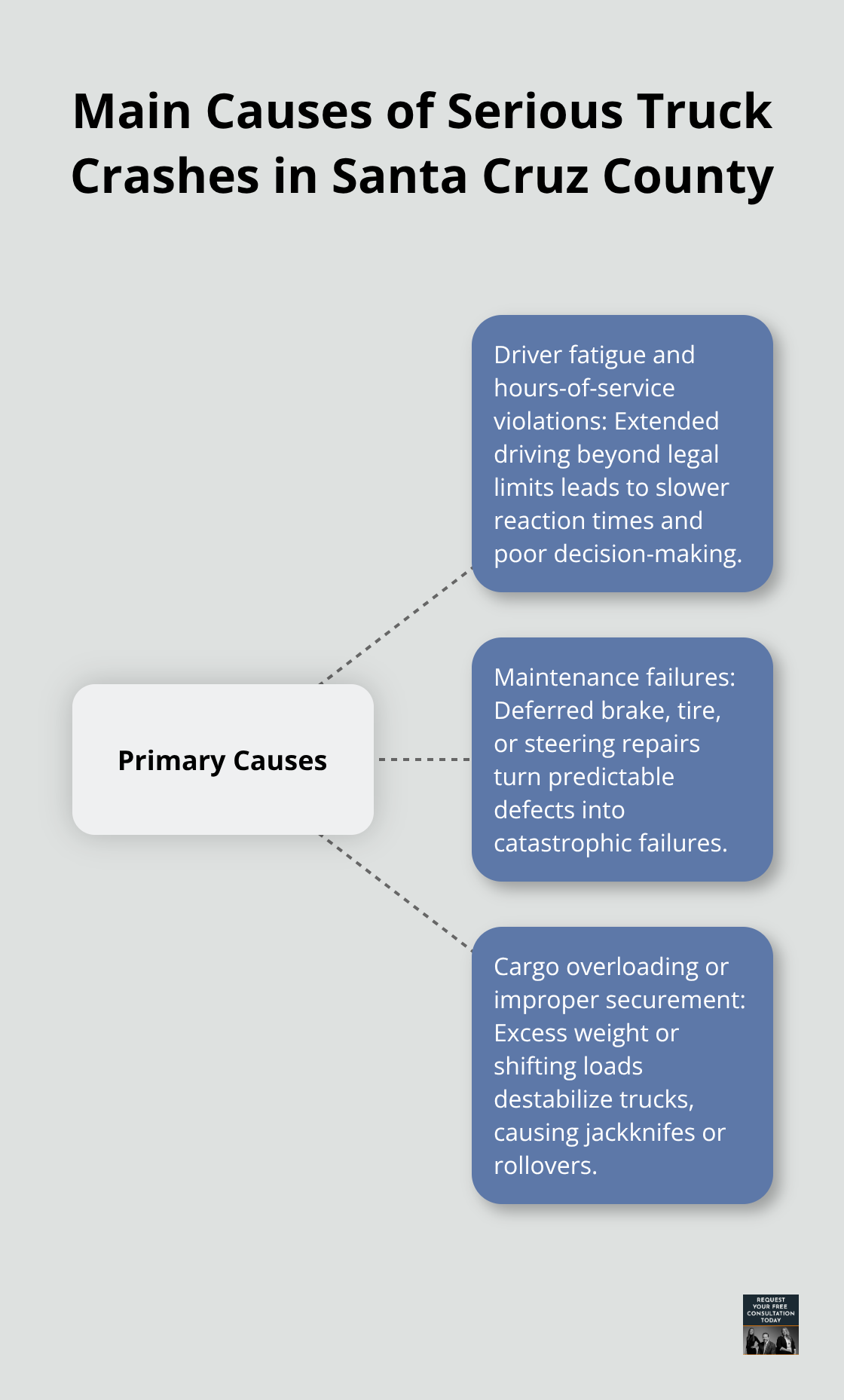
Fatigue remains the leading factor in commercial truck crashes across Santa Cruz County, and federal regulations exist specifically because tired drivers kill people. The Federal Motor Carrier Safety Administration enforces hours-of-service rules limiting interstate drivers to 11 hours of driving within a 14-hour window after a 10-hour break, yet violations happen constantly. When a truck driver crashes after working 16 or 18 hours straight, that violation becomes direct evidence of negligence. The California Highway Patrol enforces intrastate hours-of-service rules that may differ from federal standards, so your attorney needs to examine which rules applied at the time of your crash.
Electronic logging device data shows exactly when the driver was on the road and for how long. The trucking company must preserve this data, and you should request it immediately because it either proves fatigue contributed to the crash or it doesn’t-there’s no middle ground. This information becomes the foundation of your fatigue claim.
Maintenance Failures and Equipment Defects
Maintenance failures rank second in severity among truck accident causes. Trucks require regular brake inspections, tire checks, and steering system maintenance, yet many carriers defer repairs to cut costs. A brake failure on a loaded truck traveling downhill on Highway 17 isn’t an accident-it’s predictable negligence.
Maintenance records covering at least 12 months before your crash reveal whether the company ignored safety violations or postponed critical repairs. If inspection reports documented brake wear or tire damage that went unrepaired, that documentation proves the trucking company knowingly operated an unsafe vehicle. These records transform your case from speculation into provable negligence.
Cargo Overloading and Improper Securement
Cargo overloading and improper securement cause trucks to become unstable, especially on Santa Cruz County’s winding coastal highways where curves demand precise weight distribution. A truck loaded beyond its legal weight limit loses braking power and cornering stability. Cargo that shifts during transport can cause the entire vehicle to jackknife or tip, destroying everything in its path.
Weigh station records and shipping manifests document whether the cargo exceeded legal limits or whether the load was secured according to federal cargo securement standards. These three causes-fatigue, maintenance failure, and cargo negligence-account for the majority of serious truck crashes in this region. Your case strengthens dramatically when evidence shows the trucking company, driver, or cargo handler violated established federal or state safety standards.
Final Thoughts
A commercial truck accident in Santa Cruz leaves you facing complex liability questions and multiple responsible parties. The evidence you collect immediately after the crash determines whether you can hold the driver, trucking company, cargo handlers, or manufacturer accountable for your injuries and losses. Strong cases rest on medical documentation showing injury extent, maintenance records proving the truck was unsafe, driver logs revealing fatigue or hours-of-service violations, and scene evidence establishing how the crash occurred.
Insurance companies know that cases built on federal safety standard violations transform disputes into provable negligence, which is why they pressure you to settle quickly before you understand your full damages. An attorney obtains driver logs and black box data that trucking companies resist releasing, secures maintenance records before they vanish, and calculates your actual damages including future medical costs and lost earning capacity. Contact Schaar & Silva LLP for a free consultation to review your case and understand your options.
California’s two-year statute of limitations means you must act now. Early action preserves evidence, prevents settlement mistakes, and positions your claim for maximum recovery. Your injuries are real, your losses are measurable, and you deserve compensation from those responsible for your commercial truck accident in Santa Cruz.
