
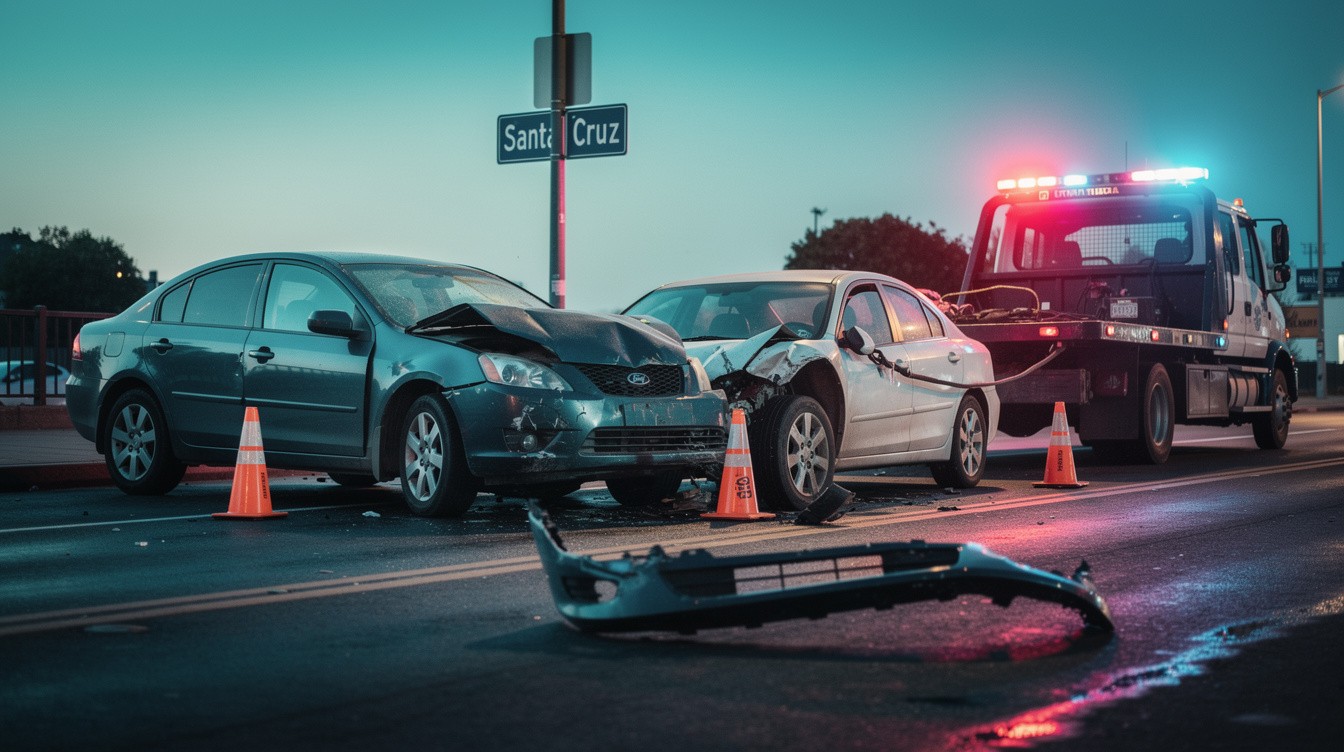
A Santa Cruz auto collision can turn your life upside down in seconds. Between managing injuries, dealing with insurance, and understanding your legal options, the process feels overwhelming.
We at Schaar & Silva LLP created this guide to walk you through each step of recovery. You’ll find practical advice on documenting the scene, handling medical care, filing claims, and getting the legal support you need.
What to Do Right After Your Accident
Prioritize Safety and Call for Help
The first minutes after a Santa Cruz collision determine how smoothly your recovery goes. Your immediate actions protect your safety, strengthen insurance claims, and create evidence that matters later. Stop your vehicle safely and turn on hazard lights. Call 911 if anyone is injured. Move vehicles to a safe location if possible to prevent additional collisions.
Avoid Admitting Fault and Gather Information
Do not admit fault at the scene, no matter how the accident happened. Fault determination happens later through investigation, not through what you say in those chaotic moments. Get the names, phone numbers, addresses, driver’s license numbers, license plate numbers, and vehicle identification numbers from the other driver. Write down their insurance company and policy number. If there are passengers or witnesses, collect their contact information immediately.
Document Everything with Photos and Video
Take comprehensive photos and videos of all vehicle damage, the accident scene, road conditions, weather, traffic signals, and any skid marks. These photos become important evidence if disputes arise about what happened. If either vehicle has a dashcam, preserve that footage. Many insurance companies and attorneys request this video evidence within days of the accident, so do not delete it.
File a Police Report and Notify Authorities
Call the Santa Cruz Police Department to file an official report. The police incident number strengthens your insurance claim and any potential legal action. California Vehicle Code requires you to report the accident to the California Department of Motor Vehicles within 10 days if property damage exceeds $750 or anyone is injured. Contact your auto insurance company within 24 hours and provide them with the police report number, the other driver’s information, and your photos.
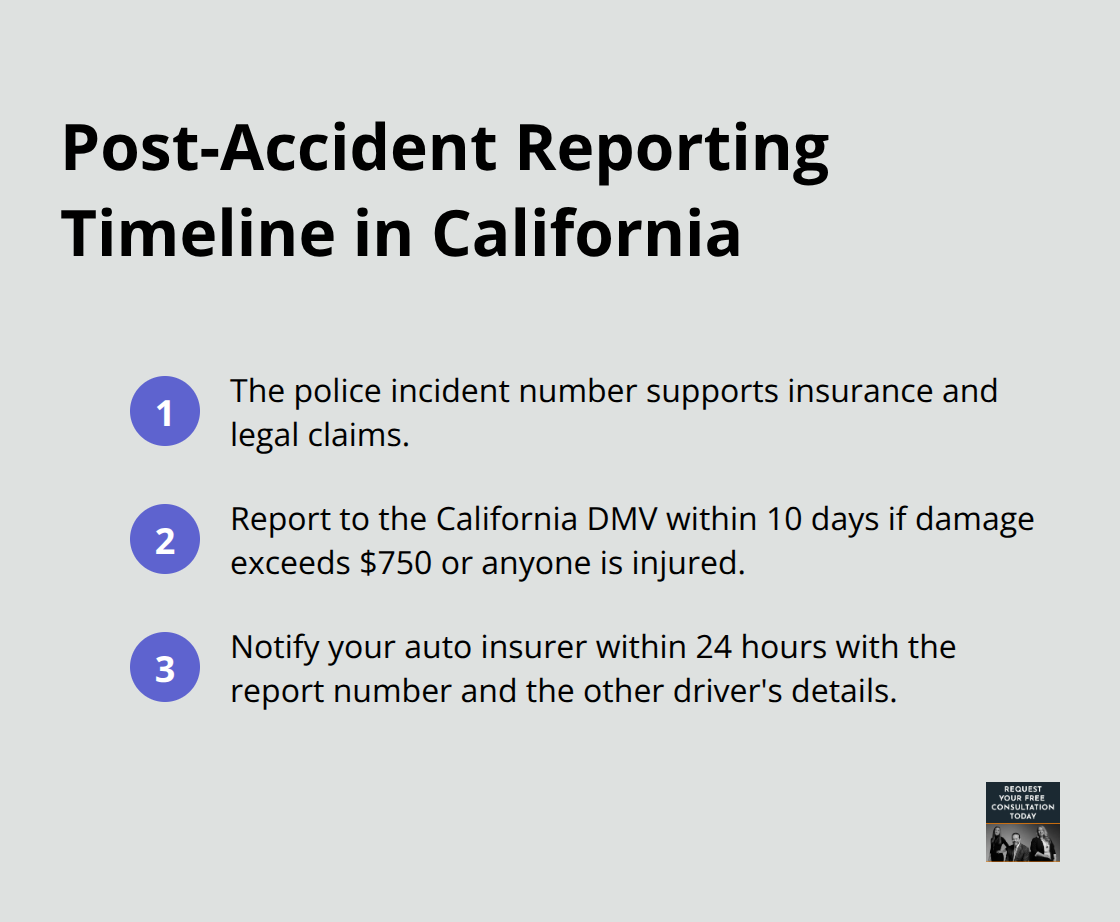
Your insurer will assign a claim number and connect you with an adjuster.
Create a Written Account and Protect Your Rights
Document everything in writing as soon as possible while details are fresh. Note the time of day, weather conditions, traffic flow, and what you were doing before the collision. This written account becomes valuable if your memory gets fuzzy weeks later. Do not sign any documents from the other driver’s insurance company without reviewing them carefully. Some insurers try to settle quickly with lowball offers, and signing early can limit your recovery options. If injuries appear later or damage seems worse than initially thought, contact your insurer again to update your claim. These first steps set the foundation for what comes next-addressing any injuries you sustained.
Medical Care and Managing Accident-Related Injuries
Get Medical Evaluation Within 48 Hours
Getting medical evaluation within 48 hours of your Santa Cruz accident is not optional, even if you feel fine. The National Highway Traffic Safety Administration advises prompt evaluation because many injuries appear days or weeks later. Whiplash, internal bleeding, and concussions frequently show no symptoms in the first hours after a collision. Hospital emergency departments and urgent care clinics in Santa Cruz County, including Watsonville Hospital and Dominican Hospital, operate 24/7 for exactly this reason.
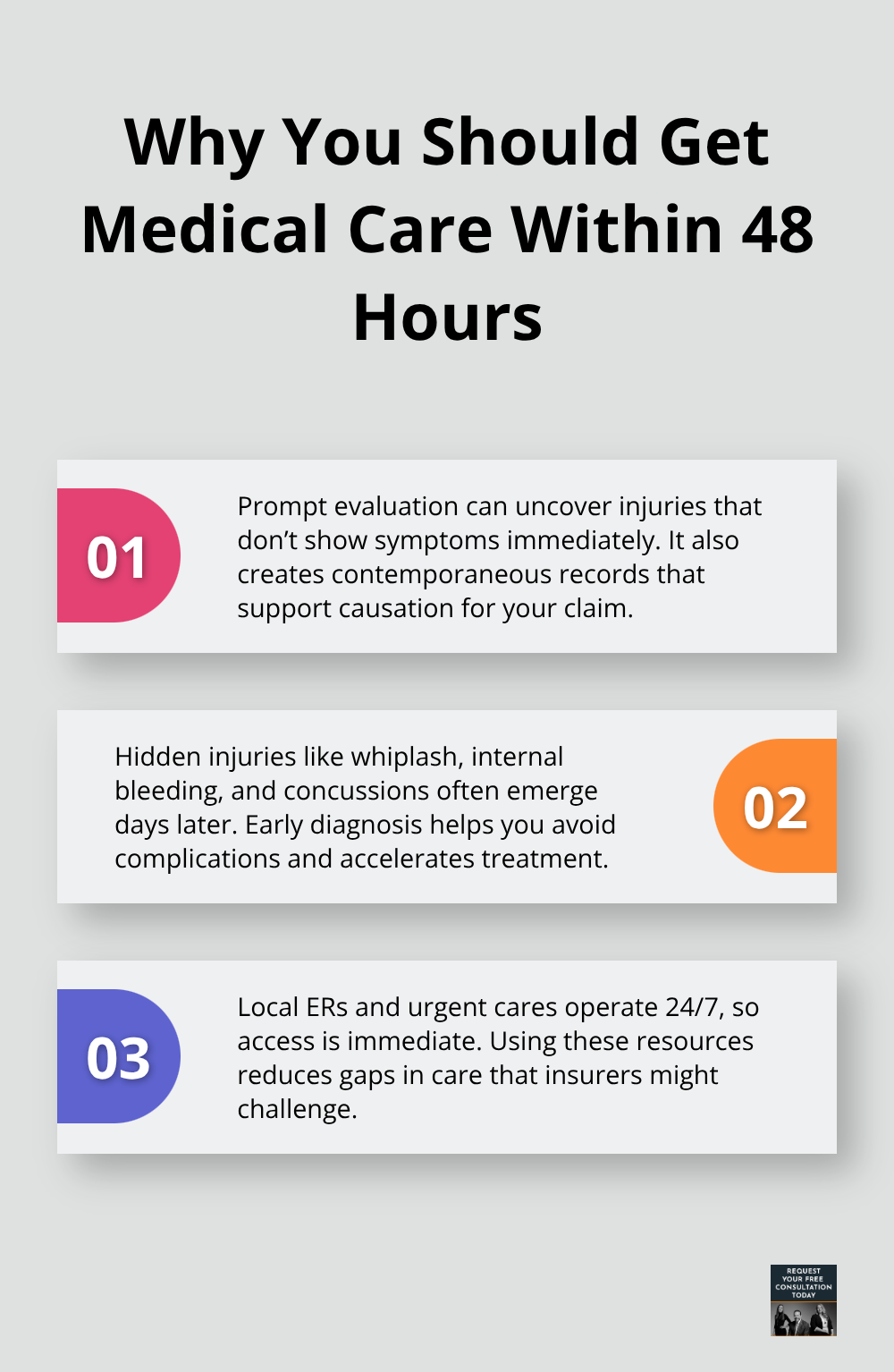
If you delay treatment and injuries surface later, insurance companies may argue your injuries weren’t caused by the accident. This timing matters enormously for your claim.
Document Every Medical Visit and Treatment
Document every medical visit from day one, including the date, time, provider name, and what was examined or treated. Keep copies of all imaging results, test reports, and provider notes. Your medical records form the foundation for calculating damages if your case requires settlement negotiations or legal action.
When you visit a provider, be honest about all symptoms, even minor ones. Tell them about neck pain, headaches, back soreness, numbness, or difficulty sleeping. These details matter for your medical file and your recovery. Ask your provider to document the accident as the cause of your injuries in their notes. This direct connection strengthens your claim significantly.
Track Medical Expenses and Understand Your Coverage
Organizing your medical expenses and understanding your coverage prevents financial chaos during recovery. Create a spreadsheet tracking every medical bill, prescription, therapy session, and transportation cost related to the accident. The California Department of Insurance reports that accident victims often miss documenting smaller expenses like over-the-counter medications, mileage to appointments, or parking fees, which add up quickly.
If your health insurance covers treatment, your insurer may have a right to recover what they paid from any settlement you receive, a process called subrogation. Review your health insurance policy to understand this potential deduction.
Explore Medical Lien Services and Lost Wage Documentation
Some accident victims qualify for medical lien services, where healthcare providers agree to wait for payment until your case settles, removing the burden of immediate bills. Keep all receipts for medications, medical equipment, home care supplies, and any other accident-related expenses.
If you miss work due to injuries, document your lost wages with pay stubs or employer statements showing hours missed. These losses are recoverable in many accident claims and should be tracked separately from medical costs. Your detailed records give you the strongest foundation for fair compensation and prepare you for the next phase-navigating your insurance claim and property damage evaluation.
Navigating Insurance Claims and Property Damage in Santa Cruz County
Contact Your Insurer and Understand the Timeline
Contact your insurance company within 24 hours of the accident and provide your claim number, police report number, and the other driver’s information. Your insurer will assign an adjuster who inspects the damage and gathers details about what happened. California’s Department of Insurance requires insurers to acknowledge your claim within 15 days and make a decision within 40 days after you submit proof of loss. If your insurer delays beyond these timelines, contact the California Department of Insurance Consumer Hotline at 831-219-0200 to file a complaint.
Your insurer will likely request a written or recorded statement about the accident and medical documentation if you reported injuries. Be honest but cautious in these statements, and do not overstate or understate what happened.
Calculate Property Damage Based on Repair Costs or Vehicle Value
The insurer calculates your property damage settlement based on the lesser of repair costs or your vehicle’s actual cash value at the time of loss. This distinction matters significantly. If your car is worth $15,000 and repairs cost $12,000, you receive $12,000. If repairs cost $18,000, you receive $15,000 instead.
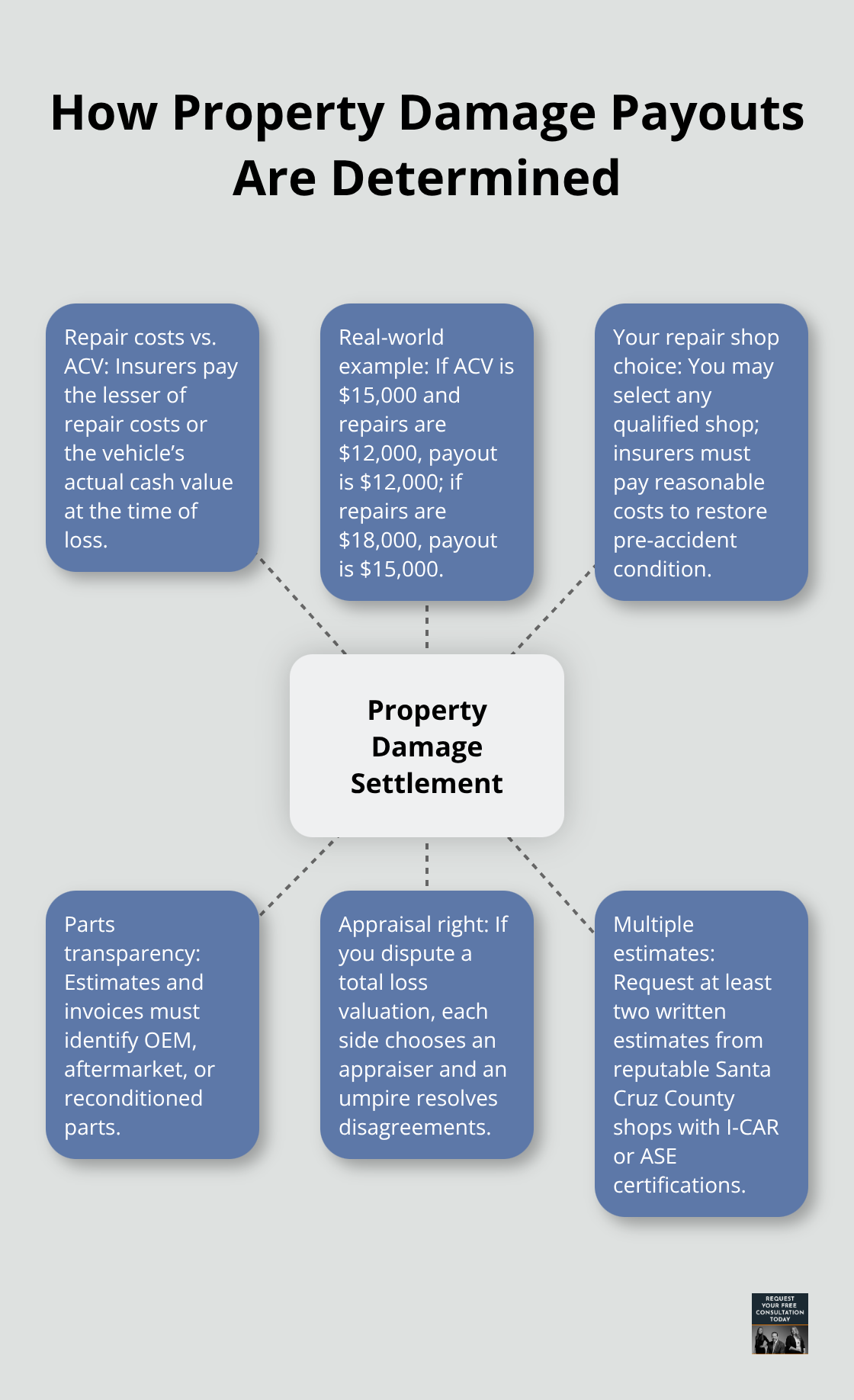
Request written repair estimates from at least two reputable collision repair shops in Santa Cruz County. Choose shops with I-CAR or ASE certifications, which indicate they meet industry standards for quality work. You have the legal right to select any repair shop you prefer, and your insurer must pay reasonable costs for repairs that restore your vehicle to pre-accident condition.
Verify Parts and Review Repair Estimates Carefully
Ensure repair estimates itemize parts as original equipment manufacturer (OEM), aftermarket, or reconditioned components. OEM parts match your vehicle’s original specifications, while aftermarket parts are comparable alternatives. State law requires repair invoices to identify which type was used. Do not accept estimates that lump parts together without this breakdown.
If you disagree with your insurer’s valuation of total loss, you can demand appraisal. Two appraisers are selected (one by you and one by the insurer), and they choose a neutral umpire if they cannot agree. Each side pays its own appraiser, and you split the umpire fee. This process protects you from accepting an unfair settlement offer.
Avoid Rushing Settlement and Understand Coverage Options
Many accident victims accept the first settlement without understanding what costs lie ahead. Medical bills, ongoing therapy, or hidden vehicle damage often emerge after you sign. Do not rush your settlement. If your injuries seem minor now but symptoms worsen, contact your insurer immediately to update your claim before finalizing any agreement.
Your insurer must inform you of your coverage options, limits, and deductibles in writing. Review your policy declaration page carefully. If you have rental car coverage, your insurer pays up to the daily limit while repairs happen, typically for 20 to 30 days depending on your policy. Coverage ends when your vehicle is repaired or the loss is paid. Check whether your credit card offers rental car reimbursement as well, which can extend your coverage if needed.
Organize Documentation for Disputes and Resale Value
Keep all receipts and documentation from repair shops, including post-repair invoices showing what was fixed and which parts were used. This paperwork protects your vehicle’s resale value and documents the work completed. If disputes arise about repair quality or coverage, these records become essential evidence. The settlement process moves faster when you provide organized documentation and respond promptly to your adjuster’s requests.
Final Thoughts on Your Santa Cruz Auto Collision Recovery
After a Santa Cruz auto collision, you face decisions that affect your health, finances, and future. California law gives you two years to file a personal injury claim and three years for property damage claims, but waiting longer weakens your case as evidence fades and witnesses become harder to locate. Your compensation may be reduced if you share responsibility for the crash under California’s pure comparative fault rule, which is why documenting fault carefully from the start matters.
Insurance companies employ adjusters trained to minimize payouts, and they count on you not knowing your rights. When injuries are serious, medical bills mount, or the insurer disputes your claim, professional representation changes the outcome. We at Schaar & Silva LLP help Santa Cruz County residents navigate these situations by handling medical bill coordination, evaluating property damage fairly, and connecting you with psychological support when trauma affects your recovery.
You do not need to figure this out alone. Contact Schaar & Silva LLP to discuss your case and understand your options-many personal injury attorneys in California offer free consultations and work on a contingency basis, meaning you pay nothing unless we recover compensation for you. Focus on healing while professionals handle the legal complexities.
