
![[2026] Guide to Documenting Soft Tissue Injuries for Maximum Compensation](https://schaarsilvalaw.com/wp-content/uploads/emplibot/soft-tissue-damage-hero-1777248354.jpeg)
Soft tissue damage from car accidents often goes underestimated, but it can cause months of pain and disability. Insurance companies know that weak documentation leads to lower settlements, which is why they count on injured people to miss critical details.
We at Schaar & Silva LLP have seen how thorough records transform claims. This guide shows you exactly what to document and how to do it right.
What Soft Tissue Injuries Actually Look Like After a Car Crash
The Hidden Severity of Soft Tissue Damage
Soft tissue injuries from car accidents are deceptively serious. Whiplash, muscle strains, and ligament sprains might not show up on X-rays, but they cause real pain and long recovery periods. The National Highway Traffic Safety Administration reports that whiplash injuries alone result in over 2 million claims annually in the United States. Most people don’t realize that soft tissue damage worsens in the days and weeks following an accident as inflammation builds and movement becomes restricted. Muscle tears in your neck, shoulders, or lower back can take months to heal, and some people experience chronic pain for years.
Why Insurance Companies Undervalue These Injuries
Insurance companies exploit the invisibility of soft tissue damage. Because soft tissue injuries lack obvious external signs, adjusters use this as justification to deny or severely undervalue claims. They’ll argue that without visible bruising or fractures, the injury couldn’t be that severe. This is where documentation becomes your strongest defense against lowball offers.
Common Documentation Mistakes That Hurt Your Claim
People frequently make critical errors that weaken their cases. Many wait days or weeks before seeking medical attention, thinking the pain will fade on its own. This delay gives insurers ammunition to claim the injury wasn’t caused by the accident. Another critical error occurs during initial medical visits-you mention neck pain but forget to tell your doctor about the headaches, numbness in your arms, or difficulty sleeping. Months later, when these symptoms persist, the insurer questions why they weren’t documented immediately after the crash.
Additionally, many accident victims stop treatment too early because they feel slightly better or can’t afford ongoing visits. Insurance companies use these gaps in treatment records to argue that your injuries weren’t serious enough to warrant continued care. The strongest claims include consistent medical documentation from day one, detailed personal records of how the injury affects daily life, and a clear timeline showing ongoing symptoms.
What Happens Without Proper Records
Without thorough evidence, you’re left negotiating against an adjuster who has financial incentive to minimize your compensation. The documentation you gather in the weeks and months after your accident directly determines whether you receive fair payment for your pain, lost wages, and recovery costs. This is why the next section focuses on the specific medical records that carry the most weight in settlement negotiations.
Medical Records That Build Your Case
Your First Medical Visit Sets the Foundation
Your first medical visit after an accident establishes the critical link between the crash and your injuries. When you see a doctor, describe every symptom you experience, not just the obvious ones. If you have neck pain, headaches, tingling in your fingers, sleep disruption, and difficulty concentrating, mention all of them. Many people focus only on their worst symptom and omit the rest, which creates gaps that insurers exploit later. The initial diagnosis document from your doctor becomes critical evidence because it establishes that your injuries started immediately after the accident, not days or weeks later.
Request copies of your medical records within one week of your first visit and verify that your doctor documented the accident as the cause of your injuries. If your records say you injured yourself at home or the cause is listed as unknown, ask your doctor to amend them immediately. This single detail can mean the difference between a fair settlement and a denied claim.
Ongoing Treatment Records Create Undeniable Evidence
Ongoing treatment records matter more than a single doctor visit because consistency is what insurers cannot argue against. If you see a physical therapist twice weekly for eight weeks, that creates a paper trail showing your injury was serious enough to require extended care. The American Physical Therapy Association reports that soft tissue injuries typically require four to eight weeks of treatment, but many people need longer depending on severity.
Each treatment note should document your pain level, range of motion limitations, and functional improvements or setbacks. When your therapist writes that you still cannot lift your arm above shoulder height or that you experience increased pain after sitting for more than thirty minutes, that becomes evidence of ongoing disability. Gaps in treatment hurt your case significantly. If you stop going to appointments for three weeks and then resume treatment, insurers claim your injury improved enough that you didn’t need care, contradicting your later complaints of pain.
If financial constraints force treatment interruptions, document this in writing to your healthcare provider so your records reflect the reason for the gap.
Imaging Studies Provide Objective Evidence
Imaging studies like MRI or CT scans carry substantial weight in settlement negotiations because they provide objective evidence of tissue damage. However, many soft tissue injuries don’t show up on standard X-rays, which is why your doctor may order advanced imaging. Keep all imaging reports and images themselves.
Request a radiologist’s written interpretation, not just the images, because that written report is admissible evidence in negotiations and provides the clinical explanation of what the images show. This documentation (combined with your treatment records) creates a comprehensive medical picture that insurers cannot easily dismiss or undervalue.
The medical foundation you build in these early weeks directly influences what happens next-how you document your daily experience and track your recovery progress outside the doctor’s office.
Building Your Personal Injury Record
Start Documenting Immediately After Your Accident
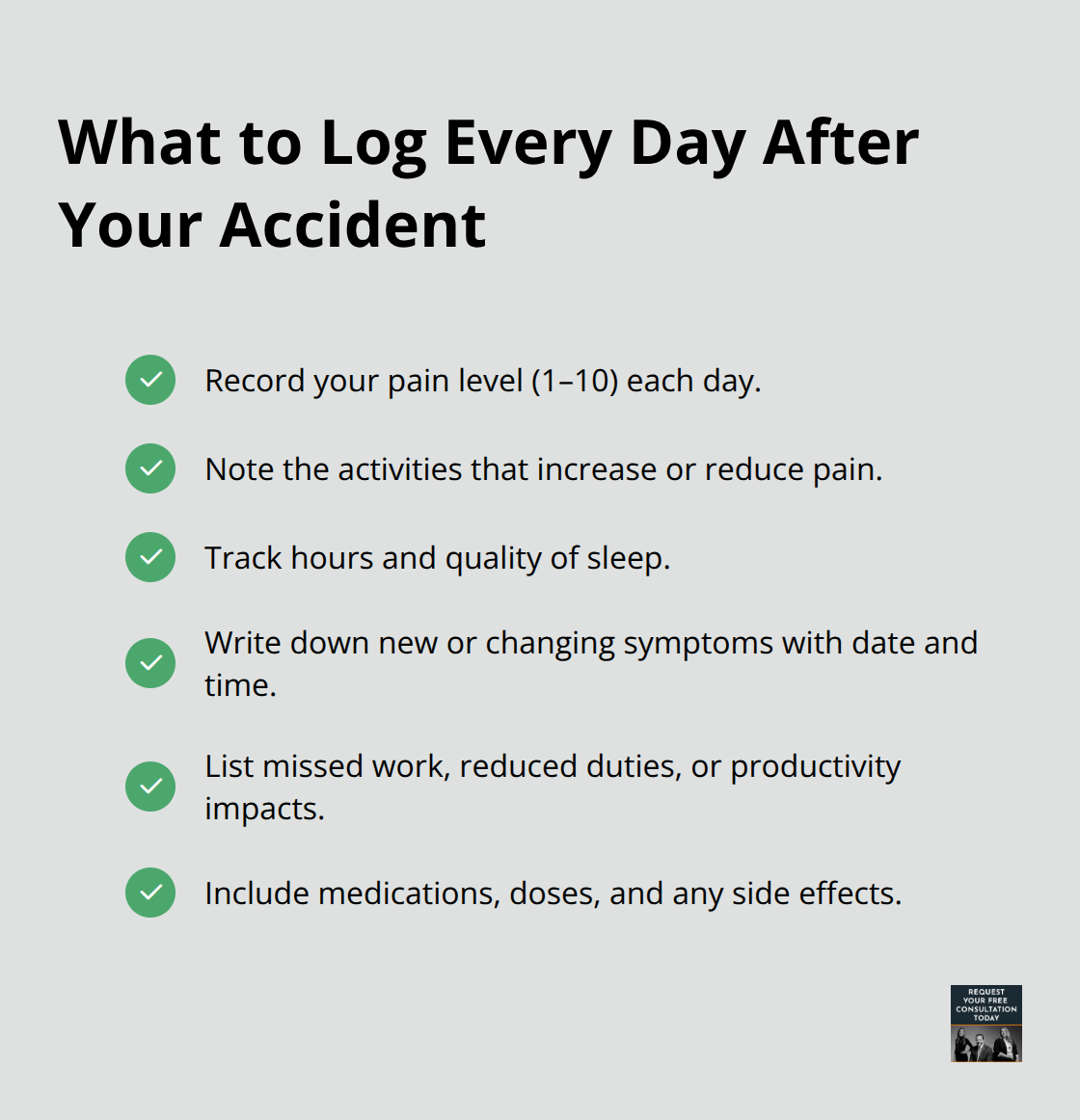
Your medical records alone won’t capture the full impact of your soft tissue injury on daily life. Insurance adjusters need to see how the injury affects your ability to work, sleep, exercise, and function at home. Start documenting your symptoms within 24 hours of the accident, not weeks later when memory fades and details blur. Create a simple daily log noting your pain level on a scale of one to ten, which specific activities trigger increased pain, and how many hours you slept. The Journal of Orthopaedic & Sports Physical Therapy reports that patients who maintain detailed symptom logs show stronger correlation between their reported pain and objective treatment outcomes, making these personal records invaluable during settlement negotiations.
Record Specific Details, Not Vague Complaints
Don’t rely on memory or general statements like “my neck hurts.” Instead, write that lifting your right arm above shoulder height caused sharp pain at 7 out of 10, or that you woke up three times last night due to neck stiffness. This specificity transforms vague complaints into documented evidence of ongoing disability. When you see your doctor on March 15th and report new numbness in your fingers, write that down the same day with the date and time. When you miss work on April 2nd because pain makes typing impossible, document it. When you decline a social invitation because sitting at a restaurant table aggravates your symptoms, note the date and reason.
Photograph Visible Injuries With Proper Documentation
Photograph any visible swelling, bruising, or redness immediately after the accident and continue photographing every few days as injuries evolve. Take photos in natural lighting with a date stamp visible, showing the injury location and surrounding context so adjusters can’t claim the damage came from somewhere else. These images provide objective visual evidence that complements your written records.
Create a Timeline That Tells Your Story
Maintain a separate timeline document listing every medical appointment, treatment session, medication change, and functional limitation. This timeline creates an undeniable narrative of how your injury progressed over time, directly countering any insurer claim that you exaggerated or fabricated symptoms. Your personal records, combined with your medical documentation, form the complete picture that leads to fair compensation rather than the reduced settlements insurance companies prefer when documentation is sparse.
Final Thoughts
The documentation you gather after a soft tissue injury directly determines your settlement amount. Insurance companies count on incomplete records to justify lower offers, but thorough evidence eliminates their ability to undervalue your claim. When your medical records show consistent treatment, your personal logs document daily pain and functional limitations, and your timeline proves ongoing disability, adjusters have no choice but to offer fair compensation.
We at Schaar & Silva LLP help you build a stronger case from the beginning. Our team understands how soft tissue damage affects your life and what documentation carries the most weight in settlement negotiations. We work on a contingency fee basis, which means you won’t owe us anything unless we win your case. If you’ve been injured in a car accident in Santa Cruz County, contact us for a free case review so our team can handle the legal details while you focus on healing.
