

Most car accidents in Santa Cruz aren’t random. They result from specific accident causation factors that often go unnoticed until it’s too late.
At Schaar & Silva LLP, we’ve seen how road conditions, driver behavior, and vehicle maintenance problems combine to cause preventable crashes. Understanding these hidden factors gives you insight into what actually happens on Santa Cruz roads.
Santa Cruz’s Road Hazards
Fog, Rain, and Coastal Weather Threats
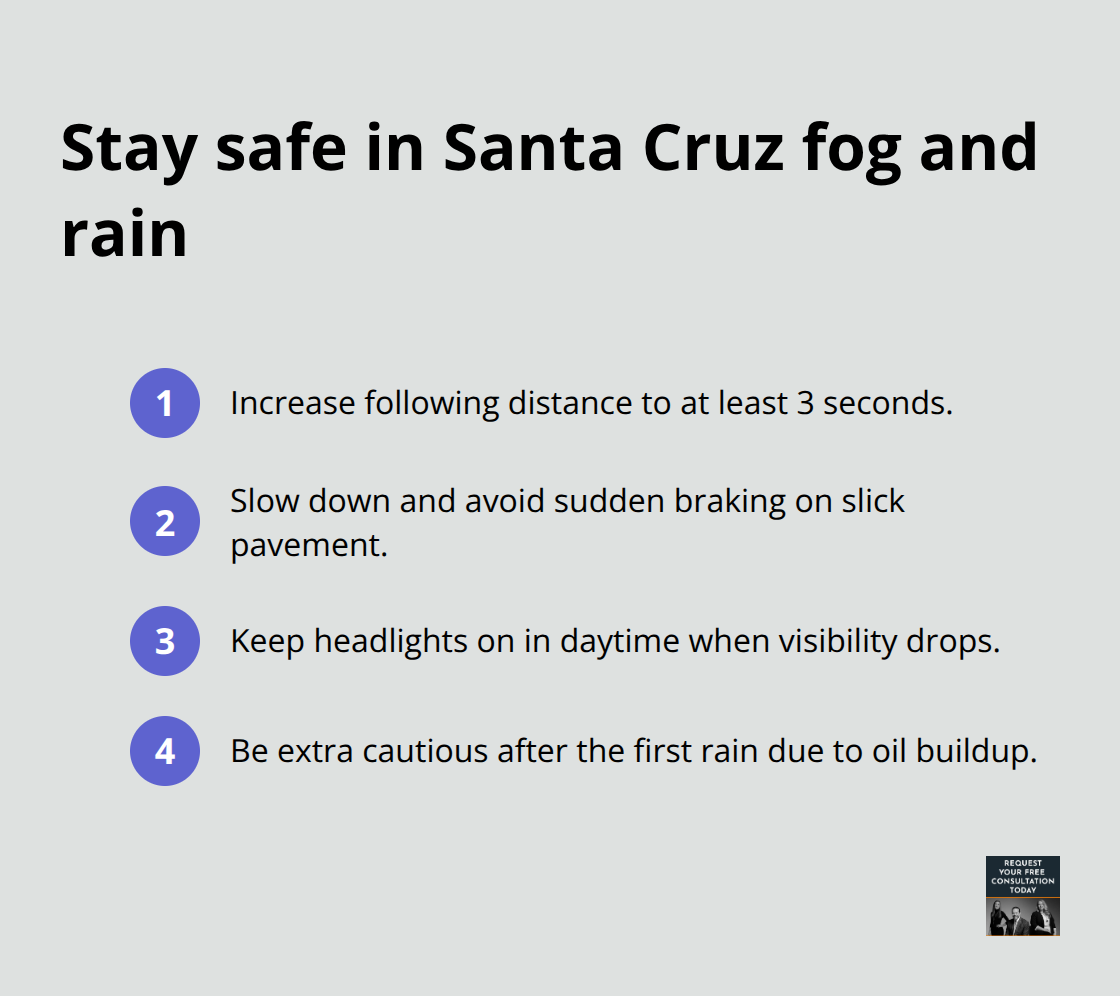
Santa Cruz’s geography creates conditions that catch drivers off guard. Coastal fog rolls in suddenly along Highway 1, reducing visibility to near zero within minutes. The National Safety Council reports that weather-related crashes account for roughly 20% of accidents nationwide, but Santa Cruz sees concentrated danger during California’s rainy season when fog combines with wet pavement. The first rain after dry periods proves especially treacherous because oil buildup on roads hasn’t yet washed away, creating slick surfaces that cause rear-end collisions and loss of control. Dawn and dusk hours amplify this risk because reduced light combines with fog, making it harder to spot stopped vehicles or obstacles ahead. Increase your following distance to at least 3 seconds or more during fog and rain, adjust your speed downward, and keep your headlights on even during daylight when visibility drops.
Mountain Routes and Mechanical Hazards
Highway 9 and Highway 17 present different but equally serious hazards. These mountain routes feature tight curves and steep descents where brake failure becomes deadly and tire blowouts send vehicles off cliffs. The NHTSA notes that lane departure crashes account for over 50% of fatal highway crashes, especially on winding roads like Santa Cruz’s mountain corridors. Vehicle maintenance failures contribute to roughly 22% of all crashes, with faulty brakes and worn tires as common culprits. Check your tire tread depth, test your brakes, and verify your wipers function properly before driving these routes. Plan extra travel time to avoid speed-related mistakes on descents.
Intersection Dangers and Construction Zones
On Ocean Street, construction zone rear-end collisions increased by about 40% due to aggressive driving and reduced visibility from lane reductions. Poor road design, narrow residential lanes with blocked sight lines, and congestion during peak hours create intersections where yield violations and red-light running flourish. Highway 1 at Highway 9 saw 11 crashes between 2020 and 2024, while Pacific Avenue at Beach Street recorded 8 crashes in the same period. These high-risk corridors demand your full attention and defensive driving strategies. Understanding what makes these locations dangerous prepares you for the driver behavior patterns that turn Santa Cruz roads into crash hotspots.
How Driver Choices Create Santa Cruz’s Deadliest Crashes
Distracted Driving Transforms Routine Routes Into Danger Zones
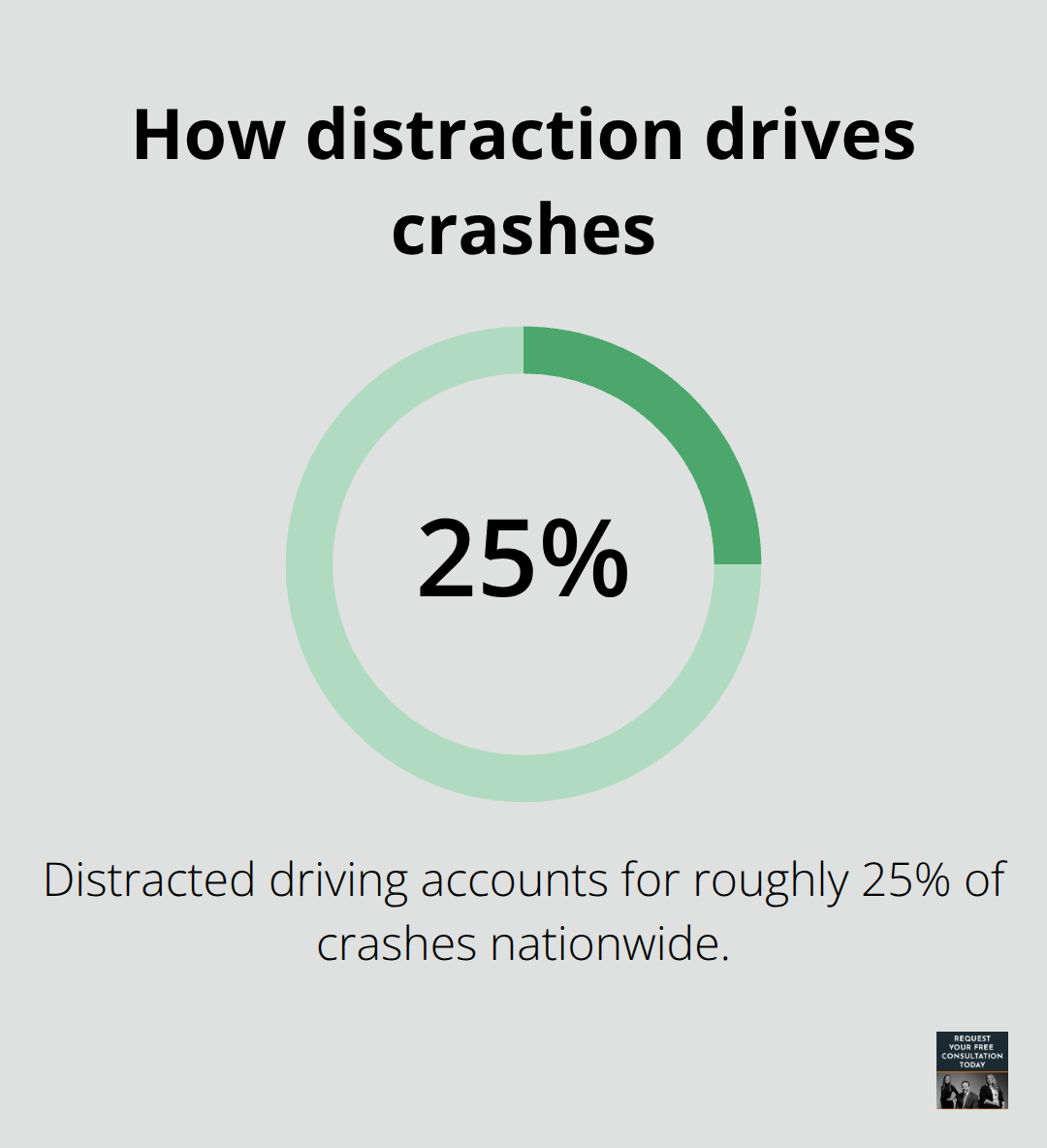
Driver behavior causes the majority of accidents in Santa Cruz, and the numbers prove it. The National Highway Traffic Safety Administration reports that distracted driving accounts for roughly 25% of crashes nationwide, with texting increasing crash risk by six times. Over 50% of drivers admit to checking their phones while driving, and hands-free devices still pose significant risks because your attention leaves the road. On Santa Cruz’s winding roads, even a two-second glance at your phone means traveling 60 feet blind.
During peak hours on Pacific Avenue and Beach Street, where intersection crashes cluster, phone use transforms routine driving into roulette. Put your phone in the back seat or glove compartment before driving, not just on silent.
Speeding Amplifies Every Risk Factor on Mountain Roads
Speeding amplifies every other risk factor on the road. More than 30% of traffic fatalities involve speeding, according to the NHTSA, and Santa Cruz’s mountain terrain makes this worse because stopping distance at 50 mph requires about 125 feet, yet most drivers follow only 2 to 3 seconds behind the vehicle ahead. On Highway 9 and Highway 17, excessive speed on curves causes lane departures that account for over 50% of fatal highway crashes. Reduce your speed on descents where brake failure becomes catastrophic, and increase it only when the road straightens and visibility improves.
Impairment and Fatigue Peak During High-Risk Hours
Impaired driving and drowsy driving represent Santa Cruz’s third major behavioral killer. Over 35% of fatal crashes involve alcohol, and since California legalized cannabis, impairment from that source has risen about 25% statewide. The CDC notes that staying awake for 18 hours impairs you like a 0.08% blood alcohol level, and Highway 17 sees higher drowsy-crash rates during early morning and late evening hours. Peak incidents occur between 9 PM and 3 AM on weekends when impairment and aggressive driving converge. If you feel drowsy, stop and rest or switch drivers immediately. Designate a sober driver before going out, particularly on weekend nights when the danger multiplies.
Aggressive Driving Behaviors Trigger Multi-Vehicle Collisions
Aggressive driving behaviors like tailgating and weaving contribute to multi-vehicle crashes, with about 60% of drivers engaging in aggressive acts according to the AAA Foundation. Saturday ranks among the deadliest days because impairment, aggression, and fatigue all peak simultaneously. These aren’t abstract problems; they’re the specific behaviors that turn Santa Cruz’s challenging roads into crash scenes that change lives. Understanding how driver choices create these collisions reveals why vehicle maintenance failures compound the danger even further.
When Maintenance Fails, Santa Cruz Roads Become Deadly
Brake System Failures on Mountain Descents
Vehicle maintenance failures contribute to roughly 22% of all crashes, according to the NHTSA, and Santa Cruz’s mountain terrain amplifies this danger exponentially. On Highway 17 and Highway 9, a single mechanical failure transforms a manageable descent into a catastrophe. Brake failures on steep slopes cause vehicles to lose control, and tire blowouts at high speed send cars off cliffs. These aren’t rare occurrences-they’re preventable disasters that happen when drivers ignore warning signs.
Your brakes require testing before mountain drives. If the pedal feels soft or sinks toward the floor, stop driving immediately and have a mechanic inspect the system. Check your brakes every 15,000 miles, not just when warning lights appear, because early deterioration happens silently. Coastal weather accelerates mechanical wear in Santa Cruz-salt air corrodes brake components and suspension parts, while constant moisture from fog and rain creates rust that weakens critical systems.
Tire Tread and Blowout Prevention
Tire tread depth matters more than most drivers realize. At 50 mph on wet pavement, worn tires lose grip within seconds, and the NHTSA reports that lane departure crashes account for over 50% of fatal highway crashes on winding roads. Measure your tire tread with a penny-insert it upside down into the groove, and if you see the top of Lincoln’s head, your tires are too worn. Replace them before driving Santa Cruz’s mountain routes.
Steering, Suspension, and Visibility Systems
Steering and suspension problems often go unnoticed until they cause a loss of control on curves, particularly dangerous where Highway 9 twists through forested terrain and Highway 17 descends toward the valley. Listen for clunking sounds when turning or hitting bumps, feel for unusual vibration in the steering wheel, and have a mechanic inspect your suspension annually if you drive these routes regularly.
Inspect your wipers monthly-visibility during fog and rain depends entirely on them working perfectly. Test your headlights and taillights before dawn and dusk drives when Highway 17 and Highway 1 see increased crashes from reduced visibility combined with mechanical failure. The combination of poor weather and failing equipment creates the exact conditions that turn multi-vehicle collisions into life-altering events.
Preventive Maintenance as Your Safety Foundation
Preventive maintenance isn’t optional in Santa Cruz; it’s the difference between arriving safely and becoming a statistic on one of the county’s most dangerous roads. The convergence of coastal weather, challenging terrain, and mechanical wear means that drivers who stay ahead of maintenance problems protect themselves and their families far more effectively than those who wait for warning signs to appear.
Final Thoughts
Santa Cruz’s hidden accident causation factors stem from three interconnected sources: challenging road conditions combined with coastal weather, driver behaviors that ignore risk, and vehicle maintenance failures that compound danger. Fog rolling across Highway 1, aggressive driving on weekend nights, and brake systems deteriorating from salt air create a perfect storm where preventable crashes become inevitable. Understanding these factors matters because knowledge shifts responsibility from fate to choice.
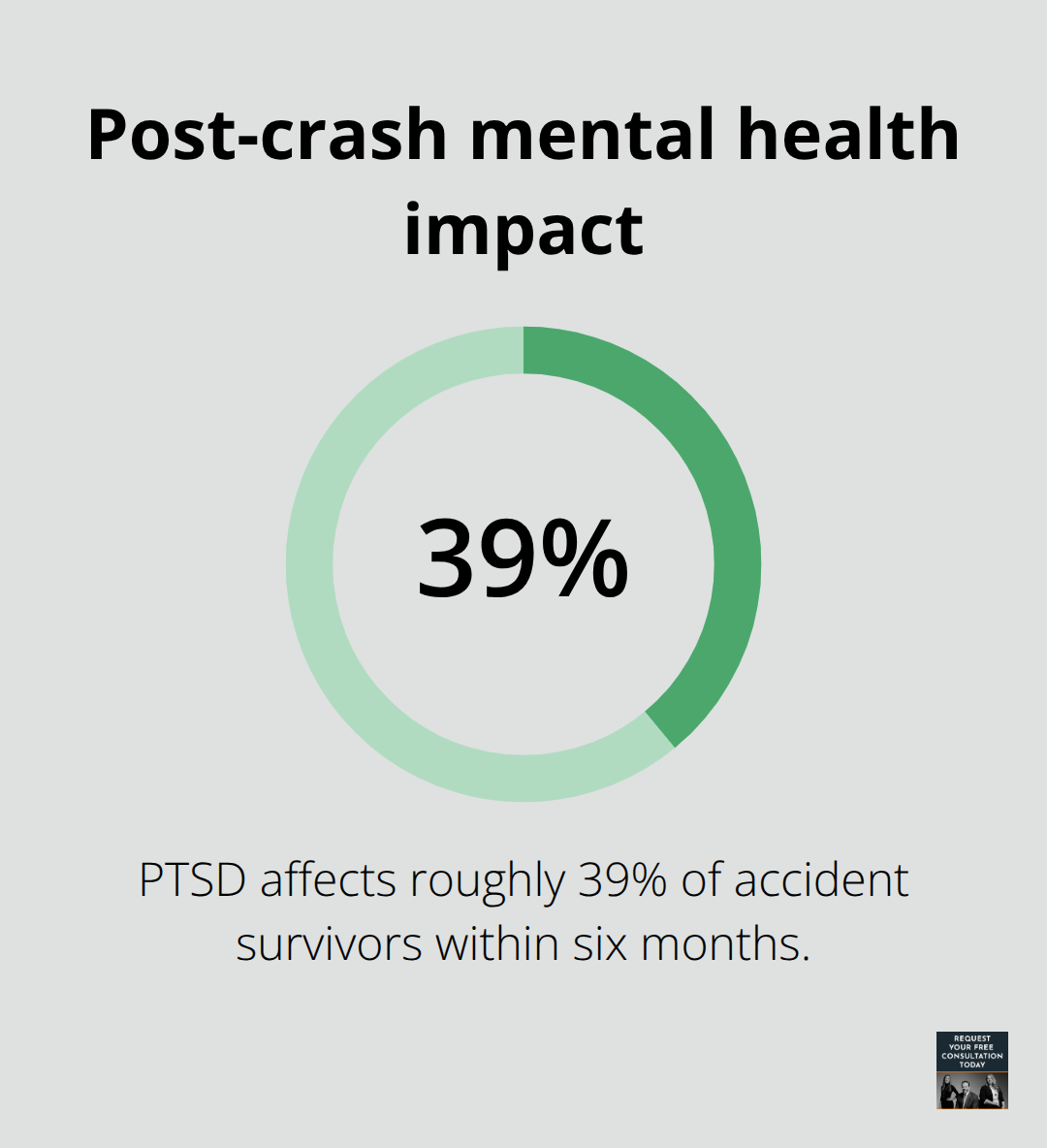
You can adjust your speed on mountain descents, maintain your tires before they fail, and keep your phone away during peak-risk hours. Medical bills from serious injuries reach $100,000 to $200,000 for surgeries alone, and lost income from time away from work compounds the financial damage. Beyond immediate costs, PTSD affects roughly 39% of accident survivors within six months, requiring therapy that costs $200 to $300 per session ($3,600–$5,400 for a typical treatment course).
We at Schaar & Silva LLP help Santa Cruz accident victims navigate medical bill assistance through lien services, evaluate property damage claims fairly, and connect with psychological support specialists who address the emotional impact of crashes. If you’ve been injured in a Santa Cruz accident, contact us to discuss how we can help you recover the compensation you deserve.
