

A car accident can happen in seconds, but a concussion’s effects can last for months or years. If you’ve suffered a head injury in a vehicle crash in Santa Cruz County, you need to understand how concussion claims work and what compensation you might receive.
We at Schaar & Silva LLP help accident victims navigate the claims process and fight for fair settlements. This guide walks you through everything from medical documentation to settlement negotiations.
What Happens to Your Brain After a Car Accident
Understanding Concussions in Legal Terms
A concussion is a type of brain injury caused by a blow or jolt to the head that changes how your brain normally works. In legal terms, a concussion qualifies as a traumatic brain injury, and California courts recognize it as grounds for compensation even when CT or MRI scans appear normal. This distinction matters because insurance companies often push back on claims with normal imaging results, arguing the injury isn’t real. The truth is that a concussion can cause measurable damage to brain function without showing up on standard imaging.
The Mayo Clinic reports that approximately 15 to 20 percent of concussion patients develop post-concussion syndrome, a condition where symptoms persist for weeks or months after the initial injury. The CDC acknowledges that concussion symptoms can appear days or weeks after an accident, which complicates the claims process since you may not realize the full extent of your injury immediately.
How Vehicle Accidents Cause Concussions
In Santa Cruz County vehicle accidents, concussions typically result from impact with the steering wheel, headrest, side window, or the sudden acceleration and deceleration forces that jolt your head. Motorcycle accidents, pedestrian strikes, and multi-vehicle collisions produce particularly severe concussion risks because the forces involved are greater.
Building Your Medical Documentation
Medical documentation becomes your strongest weapon in a concussion claim. You need a concussion clinic evaluation or emergency room records that establish the injury occurred at the time of the accident, creating a clear link between the crash and your symptoms. Neuropsychological testing, balance assessments, and neurocognitive tests translate your invisible symptoms into objective data that courts and insurers take seriously.
Track your daily symptoms in writing, note when you miss work, and save every medical bill and receipt related to your concussion care. Long-term effects like chronic migraines, sleep disruption, memory problems, depression, and light sensitivity all carry financial value in your claim.
Settlement Values Based on Severity
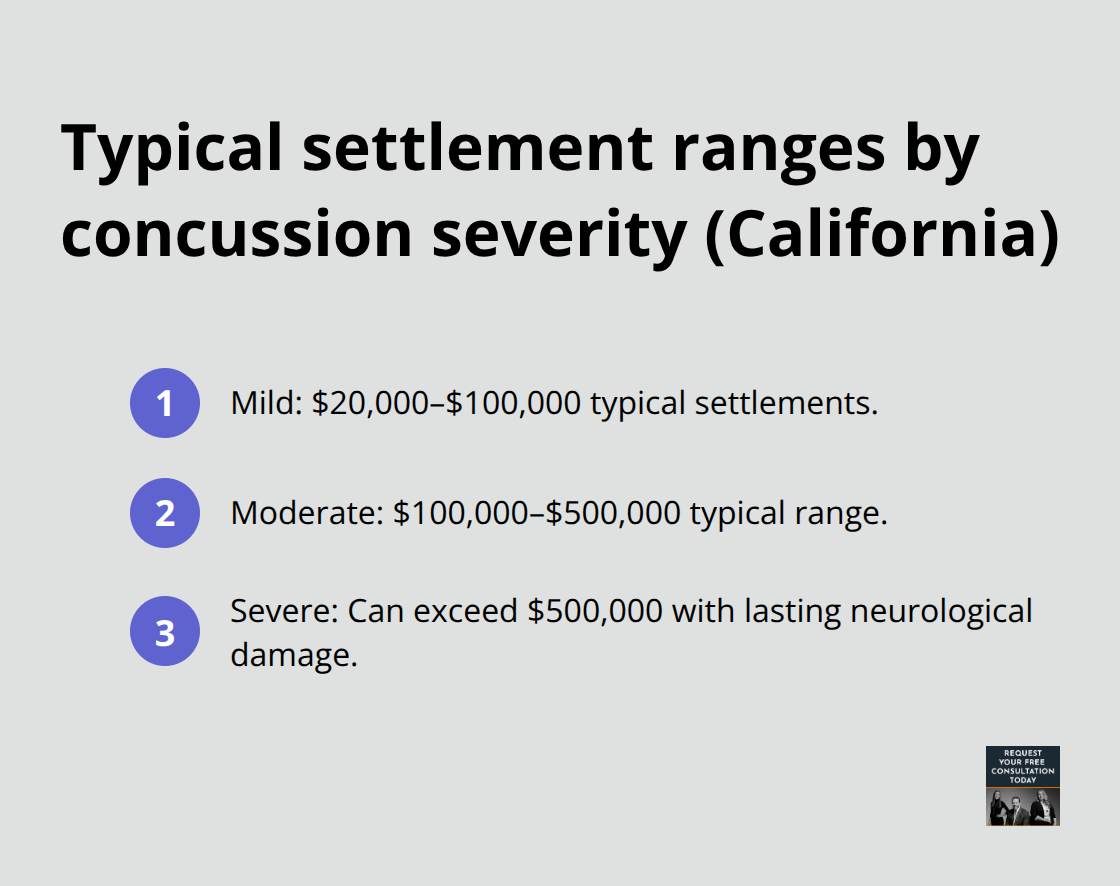
Severity matters significantly in determining your compensation. Mild concussions in California typically settle between $20,000 and $100,000, moderate cases range from $100,000 to $500,000, and severe cases with lasting neurological damage can exceed $500,000 depending on your long-term care needs and lost wages. Your medical records and expert testimony directly influence where your case falls within these ranges, making thorough documentation essential to maximizing your recovery.
Understanding the medical and legal foundations of your concussion claim positions you to evaluate what your case is actually worth. The next section examines how insurance companies assess these claims and what evidence strengthens your position during settlement negotiations.
What Your Concussion Claim Is Actually Worth
How Insurance Companies Value Your Claim
Insurance companies assign value to concussion claims using a formula that combines medical costs, lost wages, and the severity of your symptoms. Economic damages include emergency room visits, diagnostic imaging, neurologist consultations, physical therapy, and lost income from time away from work. Non-economic damages cover pain and suffering, emotional distress, sleep disruption, mood changes, and impacts on your daily life. A 2023 Los Angeles County case illustrates the range: a settlement awarded $40,000 with $10,000 allocated specifically for future medical costs, showing how insurers break down compensation across categories.
Why Documentation Transforms Your Claim
Insurance adjusters will minimize claims labeled as invisible injuries unless you provide solid evidence. Strong medical records and neuropsychological testing transform subjective complaints into objective court-credible evidence that justifies higher settlements. You must document everything meticulously-every symptom, every missed work day, every medical expense-because this documentation directly influences what insurers will pay.
Settlement Ranges Based on Injury Severity
The severity of your concussion determines where your case lands financially. Mild concussions typically settle between $20,000 and $100,000, moderate cases range from $100,000 to $500,000, and severe cases with long-term neurological damage can exceed $500,000. Post-concussion syndrome, which affects 15 to 20 percent of concussion patients according to the Mayo Clinic, pushes settlements upward because symptoms persist for weeks or months, delaying your return to work and normal activities.
Factors That Increase Your Settlement Value
Advanced diagnostic testing including MRIs, neurocognitive assessments, and balance evaluations helps quantify the injury’s impact on your functioning. Repeated concussions significantly increase your claim value because they raise the risk of chronic traumatic encephalopathy, a degenerative brain condition that influences long-term care costs. Life-care planning quantifies future medical expenses and rehabilitation needs, and an economist can project your lost earnings over time, which strengthens your position during negotiations.
How Comparative Fault Affects Your Recovery
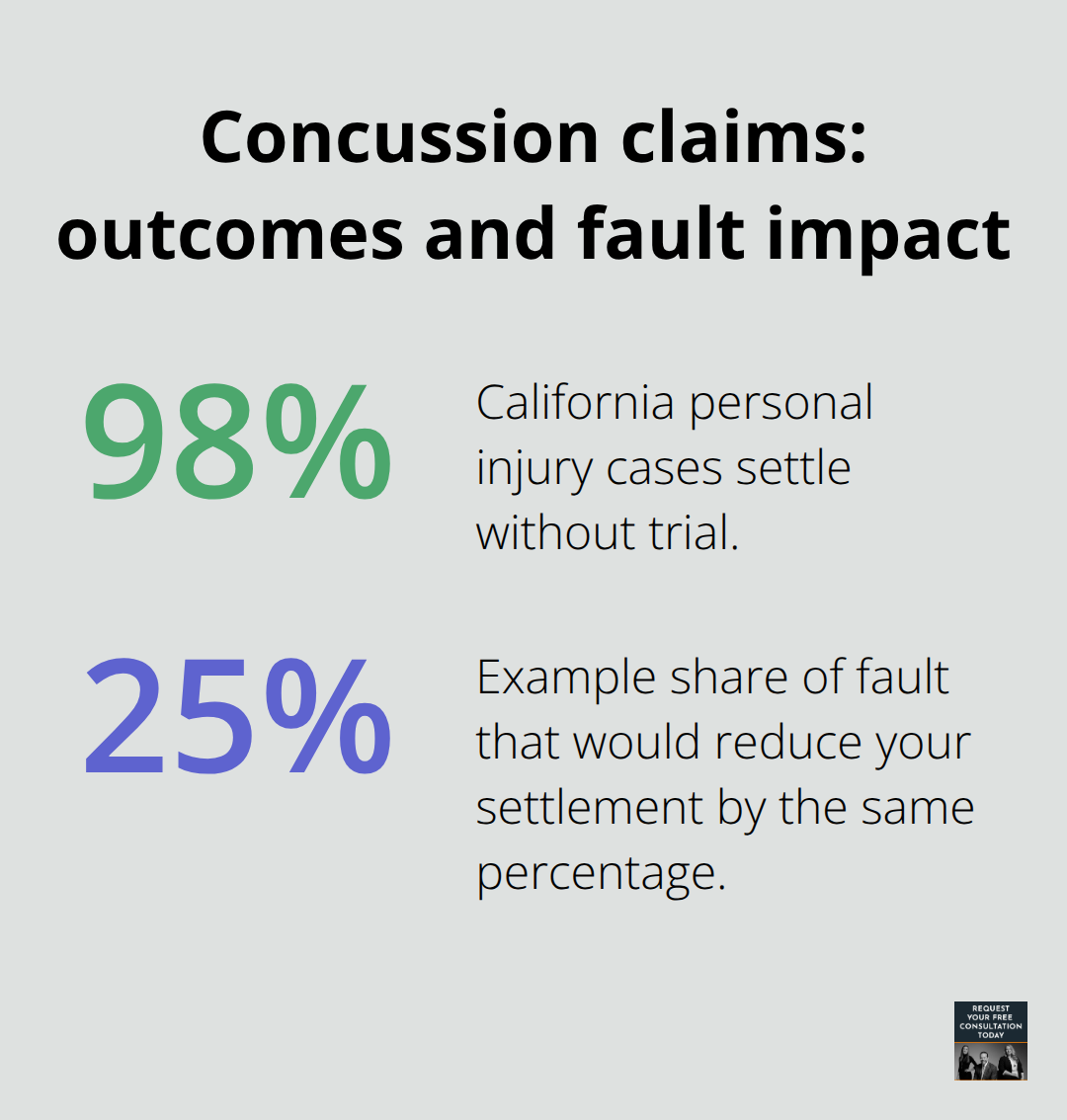
California’s pure comparative negligence rule means your recovery gets reduced by your percentage of fault. If you were 25 percent at fault in a Santa Cruz accident, your settlement drops by that amount. Insurance adjusters often push back hard on concussion claims, so understanding how fault calculations work helps you anticipate their arguments and prepare stronger counterarguments with medical evidence and expert testimony.
The next section walks you through the actual steps you need to take to file your claim and what happens when you work with insurance companies and medical providers.
Filing Your Concussion Claim in Santa Cruz
Act Immediately After Your Accident
The moment your car accident happens, the clock starts ticking on your claim. California gives you two years from the accident date to file a personal injury lawsuit, but waiting that long weakens your position significantly. Insurance adjusters know that delayed claims often lack solid medical documentation, so they use time against you to push settlements down. If a government vehicle or agency caused your accident, you must file an administrative claim within six months before pursuing court action, which means you cannot afford to delay. Start your claim immediately by obtaining a police report, photographing vehicle damage and road conditions, gathering witness contact information, and requesting medical evaluation at an emergency room or concussion clinic. This initial documentation creates the paper trail that insurers cannot ignore later.
Navigate Your First Contact with Insurance
Your first conversation with an insurance adjuster sets the tone for everything that follows, and most accident victims make critical mistakes during this call. Do not accept a quick settlement offer, do not sign medical authorization forms without understanding what you authorize, and do not record statements about fault or injury severity without thinking through your words carefully. Insurance companies employ adjusters trained to minimize concussion claims by arguing that normal imaging results mean no real injury occurred, so you need medical records from a neurologist or neuropsychologist establishing objective findings that support your symptoms.
Build Your Evidence Foundation
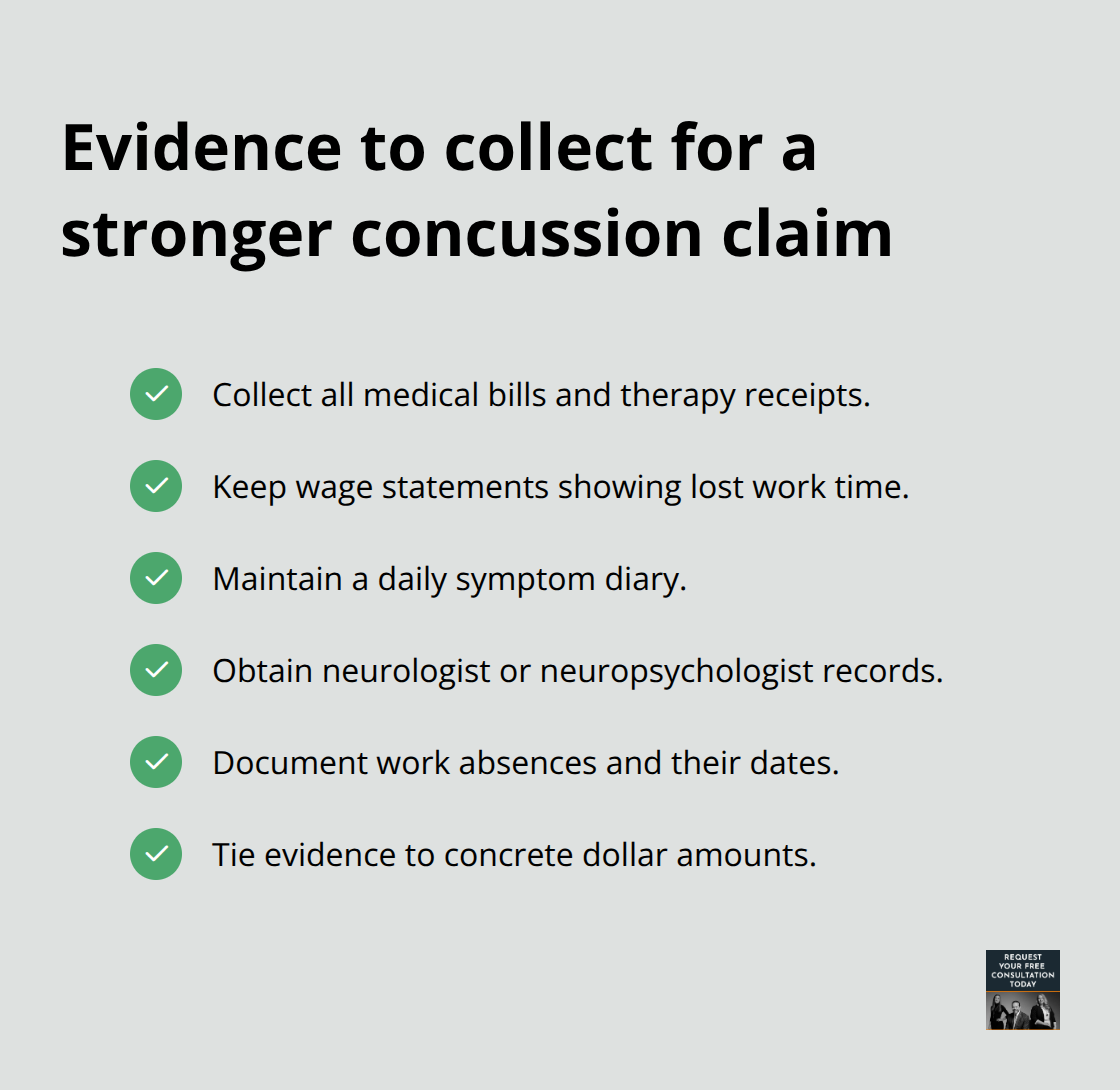
Collect every medical bill, every therapy receipt, every wage statement showing lost work time, and every diary entry documenting daily symptoms because this evidence quantifies damages in concrete dollars that force insurers to take your claim seriously. Medical records from a neurologist or neuropsychologist establish objective findings that counter insurer arguments about normal imaging results. Wage statements and work absence documentation translate lost income into measurable economic damages. Symptom diaries create a timeline that demonstrates how your concussion affected your daily functioning over weeks or months.
Understand the Claims Workflow
The typical claim workflow moves from initial consultation through evidence collection, medical evaluation, demand submission to the insurer, negotiation, and potentially mediation or arbitration if settlement discussions stall. About 98 percent of California personal injury cases settle without trial, which means your organized documentation and strong medical evidence will likely determine your settlement amount during negotiation rather than in a courtroom. Insurance adjusters respond to solid evidence, not emotional appeals, so every medical record and financial document you preserve strengthens your negotiating position.
Get Professional Support for Your Claim
We at Schaar & Silva LLP handle the coordination between medical providers, insurers, and any economists or life-care planners your case requires, removing the burden from you while you focus on recovery. Our team can help direct you to medical lien services that facilitate payment of your bills until your case is resolved, and we assist in evaluating property damage to ensure you receive fair valuation for your loss. We also connect you with psychological support specialists when emotional trauma requires professional attention.
Final Thoughts
A concussion from a car accident in Santa Cruz County changes your life in ways that extend far beyond the initial impact. Your symptoms may be invisible to others, but the financial and emotional costs are very real. Understanding how concussion claims Santa Cruz residents file, what evidence matters, and how insurance companies calculate settlements puts you in control of your recovery process rather than leaving you at the mercy of adjusters trained to minimize your claim.
The path forward requires three concrete actions: document everything immediately after your accident through medical records, symptom diaries, wage statements, and receipts; obtain professional medical evaluation from a neurologist or neuropsychologist who translates your symptoms into objective findings that insurers cannot dismiss; and recognize that California’s two-year filing deadline and the six-month administrative claim requirement for government vehicles mean delay weakens your position significantly. Insurance companies respond to facts and figures, not emotional appeals, so your neuropsychological testing results, documented lost wages, and medical bills create the foundation for fair compensation. About 98 percent of California personal injury cases settle without trial, which means your preparation during the evidence-gathering phase directly determines your settlement amount.
We at Schaar & Silva LLP handle the coordination between medical providers, insurers, and any specialists your case requires, removing the burden of managing these details while you focus on healing. Contact Schaar & Silva LLP today for a free consultation and discover how we work on a no-win, no-fee basis, which means you pay nothing unless we recover compensation for you.
