
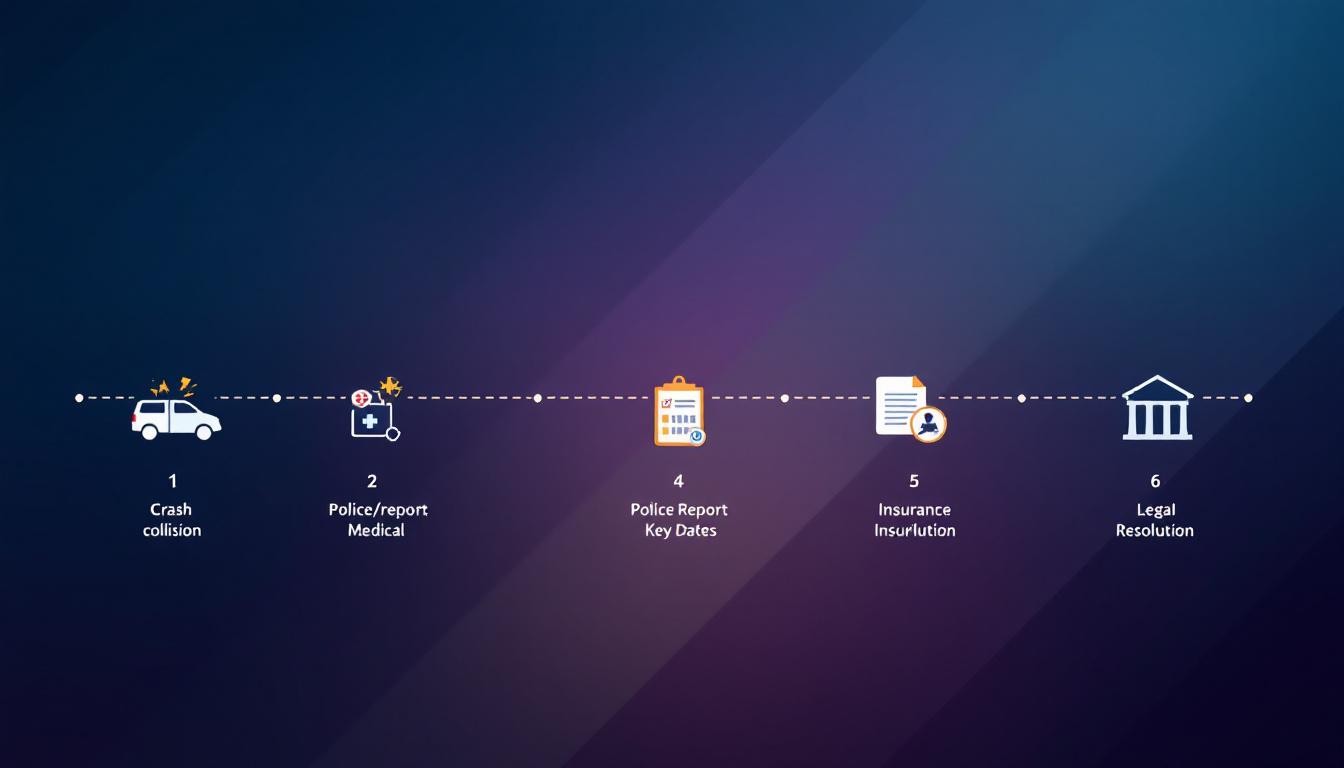
After a car accident, the path forward can feel overwhelming. At Schaar & Silva LLP, we know victims need clarity about what comes next.
This guide walks you through the auto accident case timeline from the moment of impact through final resolution. You’ll learn what happens at each stage and how long to expect the process to take.
What Should You Do Right After a Crash
Document Everything at the Scene
The first hours after an accident determine how strong your case becomes. Most accident victims make critical mistakes in those initial moments that weaken their legal position later. Your actions immediately after impact can mean the difference between recovering full compensation and accepting a low settlement offer.
Start by documenting everything at the scene. Take photos of vehicle damage from multiple angles, road conditions, traffic signals, and street signs. Photograph skid marks, debris, and the overall accident layout. Get the names, phone numbers, and addresses of all witnesses before they leave. Ask witnesses to describe what they saw, and write down their exact words.
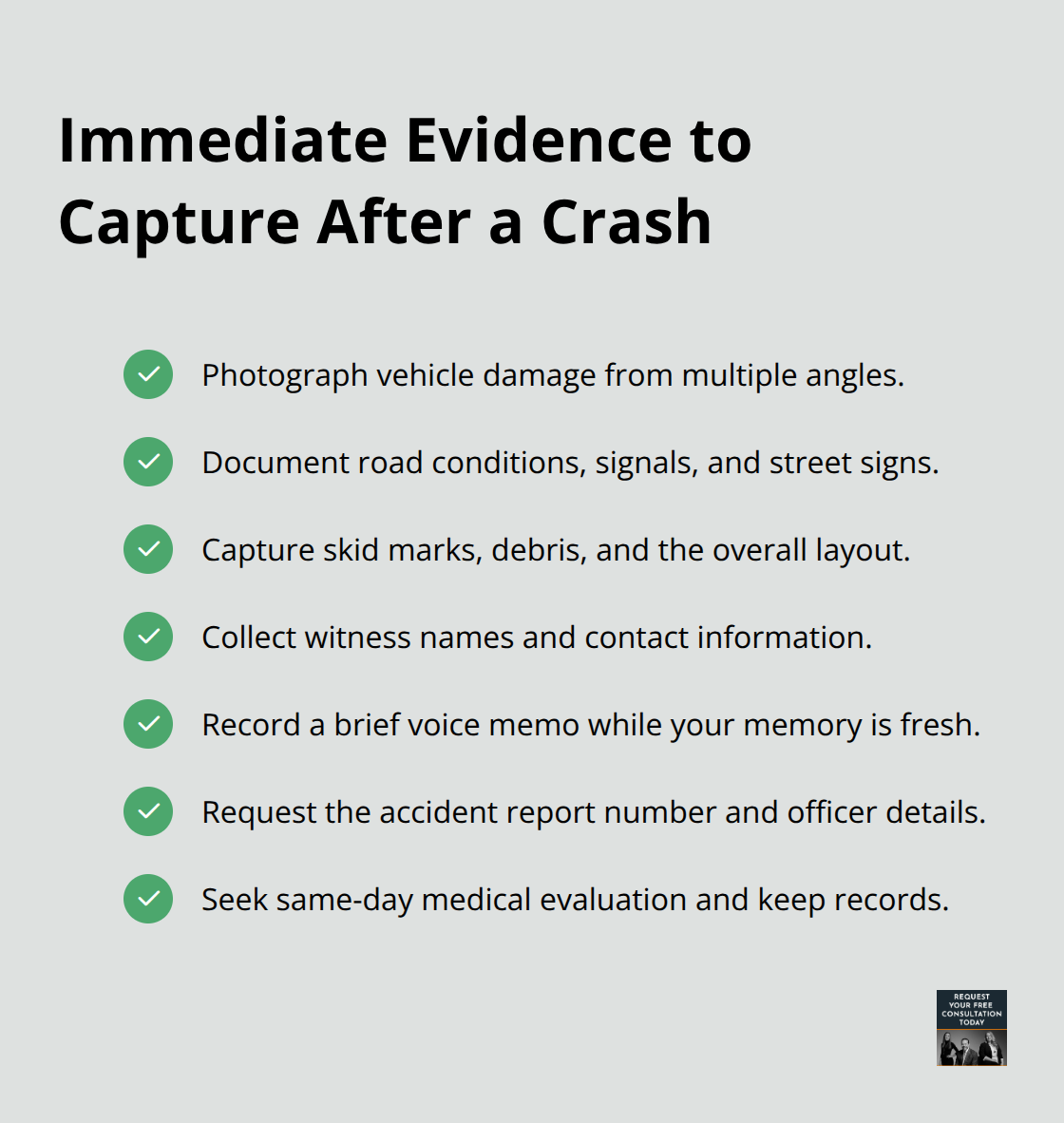
Police reports often contain inaccurate details or miss important facts, so your photos and witness statements become your evidence. If you’re injured but able to do so, record a voice memo on your phone describing the accident while your memory is fresh. Many accident victims forget critical details within days.
Gather Critical Information from the Other Driver
Collect the other driver’s name, address, phone number, insurance company, policy number, and vehicle information. Do not apologize or admit fault at the scene, as anything you say can be used against you later. Insurance companies scrutinize every statement to reduce what they owe.
Seek Medical Care and Report the Accident
Seek medical attention immediately, even if you feel fine. Some injuries like whiplash, internal bleeding, and traumatic brain injury don’t show symptoms for hours or days. A medical report created on the day of the accident establishes that your injuries came from the crash, not something else. Report the accident to police and request the accident report number. Get the officer’s name and badge number.
Notify Your Insurance Company Carefully
Notify your insurance company promptly, but provide only basic facts. Don’t discuss fault, injuries, or give a detailed statement without legal guidance. Insurance adjusters are trained to minimize claims, and early statements often hurt your case. Preserve all evidence including medical records, repair estimates, receipts, and communications with the other driver or their insurer. These documents form the foundation of your claim and will be needed throughout the legal process.
Once you’ve taken these immediate steps, the next phase begins: understanding how the investigation unfolds and what happens when you contact an attorney.
What Happens When You Contact an Attorney
Start Your Investigation Early
The moment you call an attorney after an accident, the investigation into your claim begins in earnest. We recommend contacting a lawyer within days of your accident, not weeks or months later. During your initial consultation, you’ll walk through the accident details, injuries, and damages with your attorney. This conversation isn’t just formality-it’s where your attorney identifies weaknesses in your case early and determines how much your claim is actually worth.
Many victims accept the first settlement offer from an insurance company without understanding their claim’s true value. An attorney will gather your medical records, police reports, and photos from the accident scene. Your attorney interviews witnesses while their memories remain sharp and requests the other driver’s insurance information and prior claims history.
The Investigation Phase Takes Time
This investigation phase typically takes two to four weeks, depending on how quickly records arrive. Insurance companies know that victims often settle too early out of financial desperation, and they count on this pressure. Your attorney’s job is to ensure you understand what your case is worth before any negotiations begin.
The insurance company will launch its own investigation simultaneously, sending adjusters to inspect vehicle damage and review medical records. They’re looking for reasons to deny or minimize your claim-not to help you.
Demand Letters and Settlement Negotiations
When the investigation concludes, your attorney sends a demand letter to the insurance company outlining liability, injuries, damages, and the compensation amount you’re seeking. This demand isn’t a final number; it’s the opening move in settlement negotiations. Insurance companies almost always respond with a lowball counteroffer, typically 20 to 40 percent below what they’ll eventually pay.
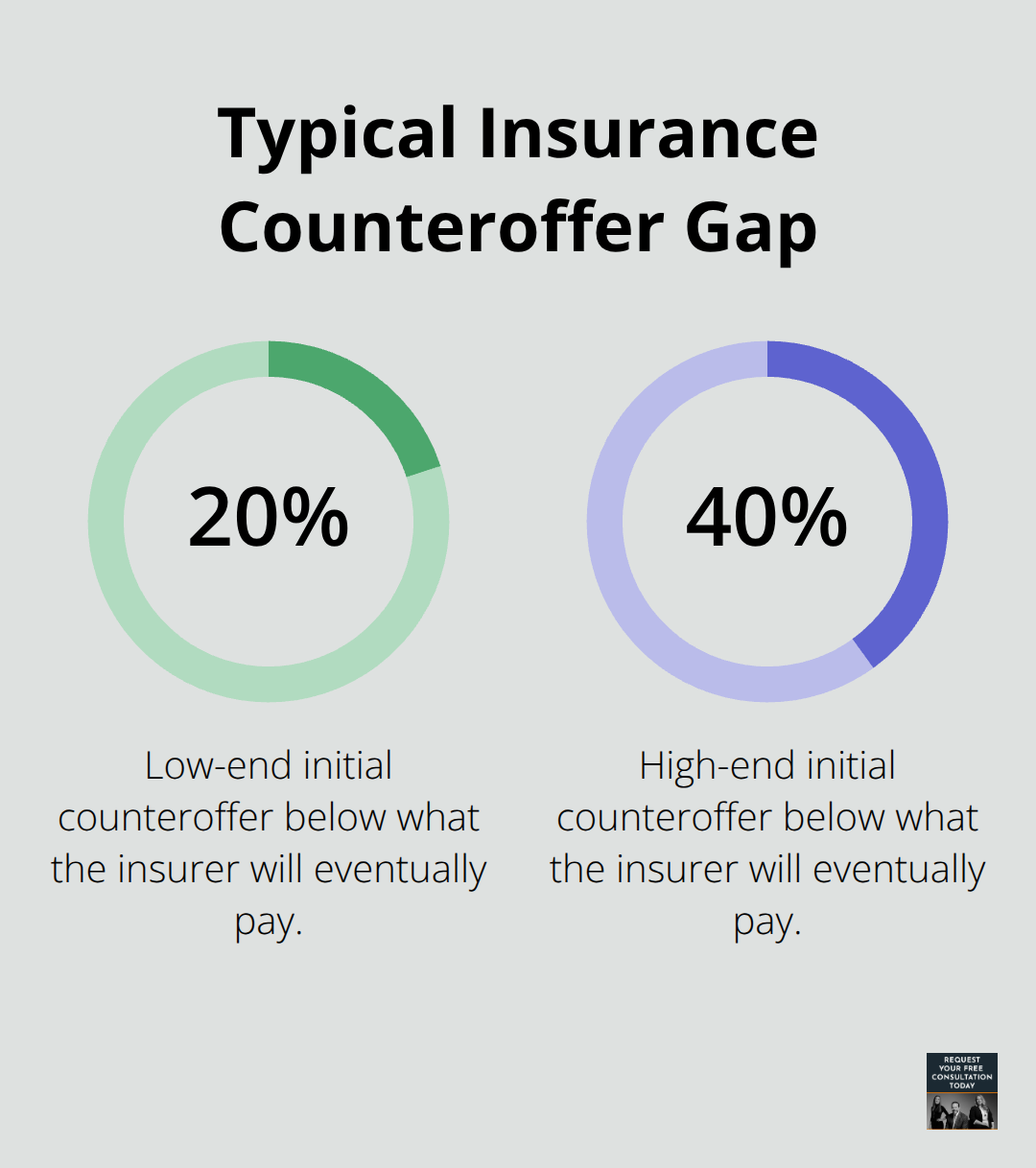
This back-and-forth can last weeks or months. Some claims settle after one or two exchanges; others require multiple rounds of negotiation. Your attorney handles all communications with the insurance company, preventing you from making statements that could hurt your case.
When Settlement Talks Fail
If the insurance company refuses to offer fair compensation, your attorney will file a lawsuit and move toward litigation. The decision to sue depends on the gap between what they’re offering and what your case is worth, not on how frustrated you feel. Once your attorney files suit, the discovery phase begins-a critical stage where both sides exchange evidence and build their cases for court.
When Does Your Case Go to Court
Once settlement negotiations stall, your attorney files a lawsuit and the case enters the litigation phase. This is where the real work begins. The timeline from filing to trial resolution typically spans one to three years, though some cases move faster and others take longer. Filing itself takes one to several weeks after your attorney submits the complaint and serves the defendant. The defendant then has roughly 30 days to file their answer, depending on local court rules in Santa Cruz County, Sacramento, or Oakland. This initial phase feels slow, but it’s when both sides start building their formal case.
Discovery Exchanges Evidence Between Both Sides
After the defendant answers, discovery begins. Both your attorney and the opposing counsel exchange evidence: medical records, police reports, witness statements, property damage documentation, and communications between parties. Discovery typically lasts several months and represents the longest stretch of the litigation timeline. The scope of discovery depends on case complexity and how aggressively both sides pursue evidence.
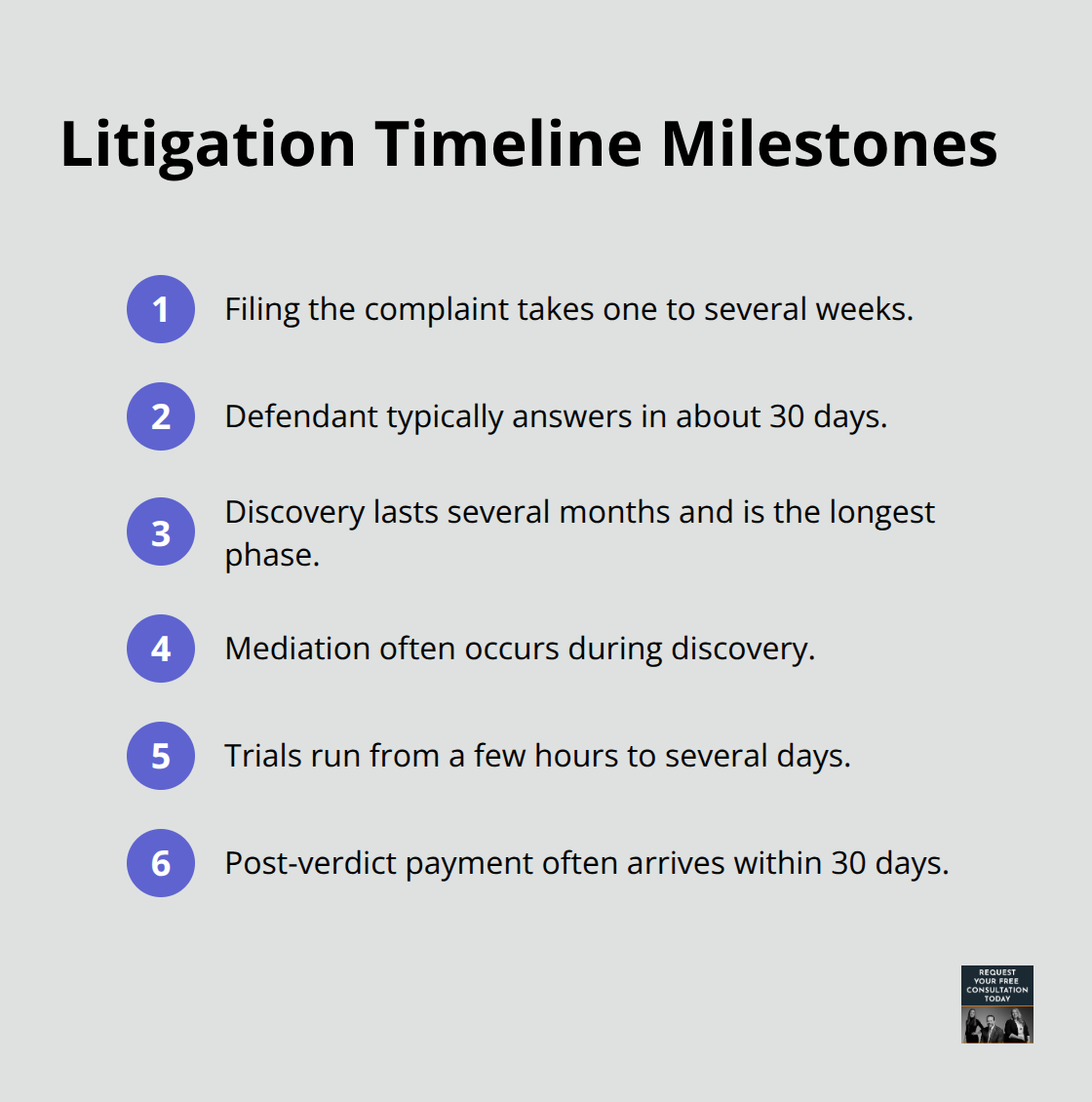
Serious injuries involving permanent impairment or long-term disability extend discovery because your attorney needs medical expert evaluations, future care cost projections, and vocational assessments to establish damages. Insurance companies often drag out discovery intentionally, sending incomplete document batches, requesting extensions, and submitting voluminous records designed to overwhelm. Your attorney must push back against these delays, meet all court deadlines, and prevent nothing from getting lost in the process. Mediation frequently occurs during discovery, sometimes leading to settlement and sometimes continuing the litigation path forward.
Trial Preparation Intensifies Before Court
Trial preparation intensifies in the months before your case goes before a judge or jury. Your attorney coaches you on testimony, coordinates with expert witnesses, files pretrial motions, and builds the narrative that establishes liability and quantifies your damages. Trials in auto accident cases typically last a few hours to several days, depending on injury severity and liability complexity. Once the verdict comes, you could receive compensation within 30 days, though some cases extend longer if appeals follow. Many cases settle even after litigation begins, sometimes right before trial starts. This happens because both sides gain clarity through discovery about case strength and actual damages. The pressure of approaching trial often motivates insurance companies to offer reasonable settlements rather than risk a jury verdict.
Final Thoughts
The auto accident case timeline varies significantly based on your specific situation. Some claims settle within weeks or months, while others take a year or longer to reach resolution. The medical treatment phase typically drives timing more than anything else-until doctors determine the full extent of your injuries and you reach maximum medical improvement, settlement value remains uncertain. Liability disputes also extend timelines considerably when fault is contested or multiple parties are involved.
Throughout this journey, legal representation makes a measurable difference. Insurance companies count on victims accepting lowball offers out of financial pressure, but an attorney prevents this from happening. We at Schaar & Silva LLP manage all deadlines, gather evidence while it’s fresh, and negotiate aggressively on your behalf. Contact us for a free consultation to discuss your specific situation and understand what your claim is actually worth.
After your case resolves through settlement or verdict, compensation typically arrives within 30 days. Many victims then focus on long-term recovery and rebuilding their lives. The accident may have changed your circumstances, but you don’t have to navigate the legal process alone.
