

A car crash in Santa Cruz County leaves more than physical injuries. Emotional trauma after a crash often goes unrecognized, yet it affects your recovery just as much as broken bones or whiplash.
At Schaar & Silva LLP, we’ve seen how many accident victims focus only on healing their bodies while their minds struggle silently. This guide walks you through recognizing emotional trauma, finding local support, and protecting your legal rights while you heal.
Physical Recovery vs. Emotional Recovery
Why Your Mind Struggles While Your Body Heals
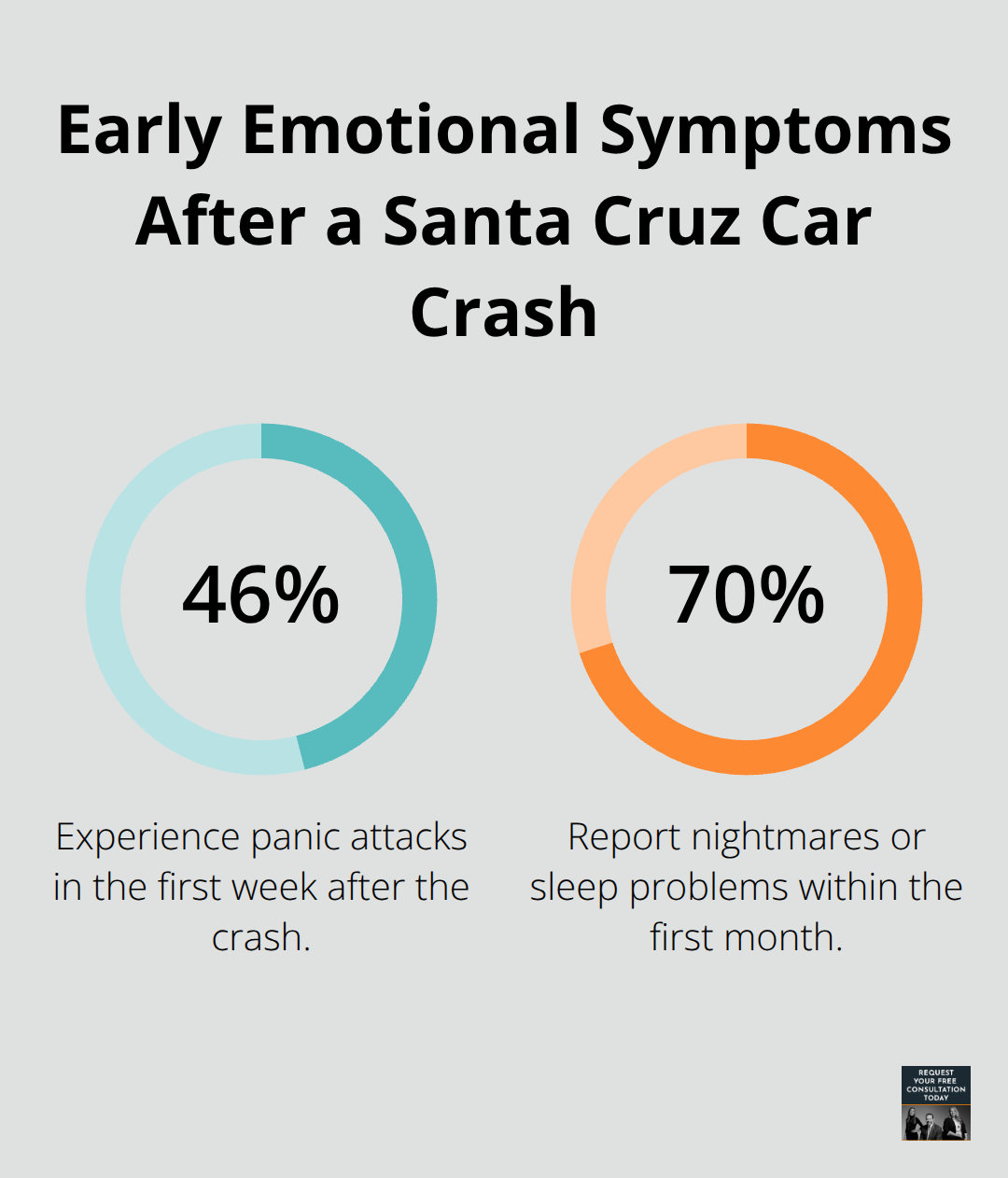
Your body sends obvious signals after a crash-pain, bruising, restricted movement. Your mind does not. Within the first week after a Santa Cruz car crash, about 46% of survivors experience panic attacks, and up to 70% report nightmares or sleep problems in the first month, according to the American Psychological Association and the National Institute of Mental Health.
Yet most accident victims focus entirely on physical recovery, leaving emotional trauma unaddressed and often worsening over time. Hospital visits, X-rays, and physical therapy are visible and measurable, while psychological symptoms feel invisible and easier to dismiss as normal stress. Insurance companies and medical providers rarely ask about your emotional state the way they assess broken bones, so emotional injuries remain untreated while the window for effective intervention closes.
The First Month Determines Your Recovery Path
The timeline matters enormously. Immediately after impact, your body floods with adrenaline and cortisol, triggering fight-or-flight responses that feel overwhelming and uncontrollable. Within two days to one month, you may experience acute stress reactions including intrusive thoughts, flashbacks, avoidance of driving, mood swings, concentration problems, sleep disturbances, and hypervigilance. If these symptoms persist beyond one month, they often become PTSD, which affects approximately 32.3% of car accident survivors according to the Journal of Clinical Medicine. Women face roughly 2.5 times higher PTSD risk than men.
Why Early Treatment Changes Everything
Starting treatment within the first weeks after your crash dramatically improves outcomes and prevents chronic conditions compared to delaying care. Emotional numbness or dissociation may occur as your brain’s protective mechanism and can persist for days or weeks, making it feel like nothing happened-a dangerous false signal that you don’t need help. Santa Cruz County residents who waited longer than six weeks before seeking therapy consistently reported worse long-term outcomes, with depression rates around 17.4% and anxiety disorders in roughly 39.2% of delayed-treatment cases. The sooner you connect with mental health support, the sooner you interrupt the trauma cycle and begin genuine healing.
Getting Professional Support for Trauma
Finding the Right Therapist in Santa Cruz County
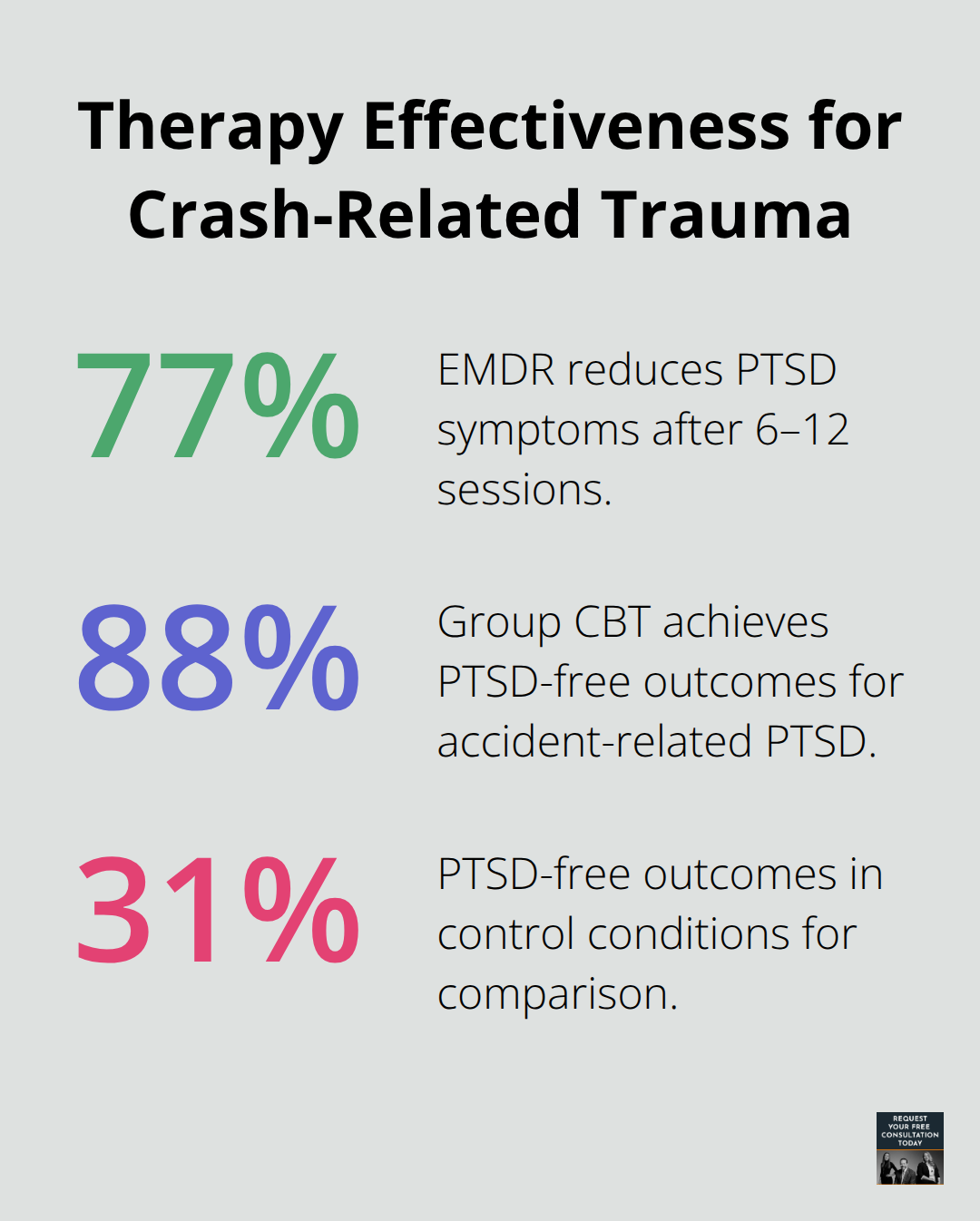
Santa Cruz County has over 500 trauma and PTSD therapists available, but finding the right one matters far more than finding any one. Filter for credentials like LMFT, PsyD, PhD, or LCSW, then verify they use evidence-based approaches such as Cognitive Behavioral Therapy, Cognitive Processing Therapy, EMDR, or exposure therapy. EMDR therapy reduces PTSD symptoms in about 77% of accident survivors after 6–12 sessions according to EMDR research, while group CBT designed for accident-related PTSD achieves around 88% PTSD-free outcomes versus about 31% in control conditions. Call your insurance provider first-Aetna, Cigna, Anthem, UnitedHealthcare, Blue Shield, and Medi-Cal all cover trauma therapy in the county-and ask which therapists accept your plan.
Hospital-Backed and Community Groups Outperform Standalone Options
Hospital-backed and community support groups consistently outperform standalone options. Kaiser Permanente runs established groups, and UC Davis Hospice offers six-week grief and trauma programs specifically for crash survivors.
The First Responder Processing & Resilience group offers an 8-week therapist-led program available online or in-person, focusing on exposure processing and emotional regulation, though pre-group screening is required. Survivors Healing Center, operated through the Family Service Agency of the Central Coast, provides confidential groups for women, men, youth, mothers of survivors, and partners across Santa Cruz, Watsonville, and Soquel, with English and Spanish options. Contact providers immediately; exposure-based CBT yields substantial improvement for travel-related fears after just 12–16 sessions, but only if you start soon.
How Insurance Covers Trauma Therapy
Insurance companies classify trauma therapy as medically necessary after a car crash, not optional. Check your policy’s mental health coverage limits and deductibles, then request pre-authorization from your insurer before your first session. Some plans cap annual therapy sessions at 20–30, while others offer unlimited sessions; knowing your limit helps you plan treatment length. If your insurance denies a claim for therapy, request a detailed explanation and appeal it immediately-denials after accidents are often overturned when a therapist documents crash-related onset and symptom severity.
Addressing Financial Barriers to Treatment
Medical lien services exist specifically for accident victims. These providers delay payment until your case resolves, eliminating the burden of upfront costs while you heal. Ask your therapist about sliding-scale fees or community mental health centers if insurance gaps exist. The 988 Suicide & Crisis Lifeline operates 24/7 at no cost and connects you with trained counselors immediately if suicidal thoughts arise. When financial obstacles block your path to therapy, these resources remove them so you can focus on healing rather than bills.
Legal Protection While Healing
Document Your Emotional Injury From Day One
Your emotional trauma has real legal value, but only if you document it properly from the moment the crash happens. California law allows you to recover both economic damages like medical bills and lost wages, and non-economic damages for emotional distress and loss of enjoyment of life. The problem is that emotional injuries are invisible, so insurance adjusters dismiss them unless you build an airtight record.
Tell your therapist about your car crash during your first session so clinical notes capture the crash context, onset of symptoms, and impact on daily functioning. Request copies of these notes after each session and store them safely. Your therapist’s observations about your emotional state, panic attacks, avoidance behaviors, and concentration problems become the foundation of your claim.
Gather Objective Medical Evidence
Objective medical records from emergency room visits strengthen your case tremendously because ER physicians document vital signs, emotional distress, and physical trauma at the moment of impact, before you have time to minimize or exaggerate symptoms. Collect these records within two weeks of your crash.
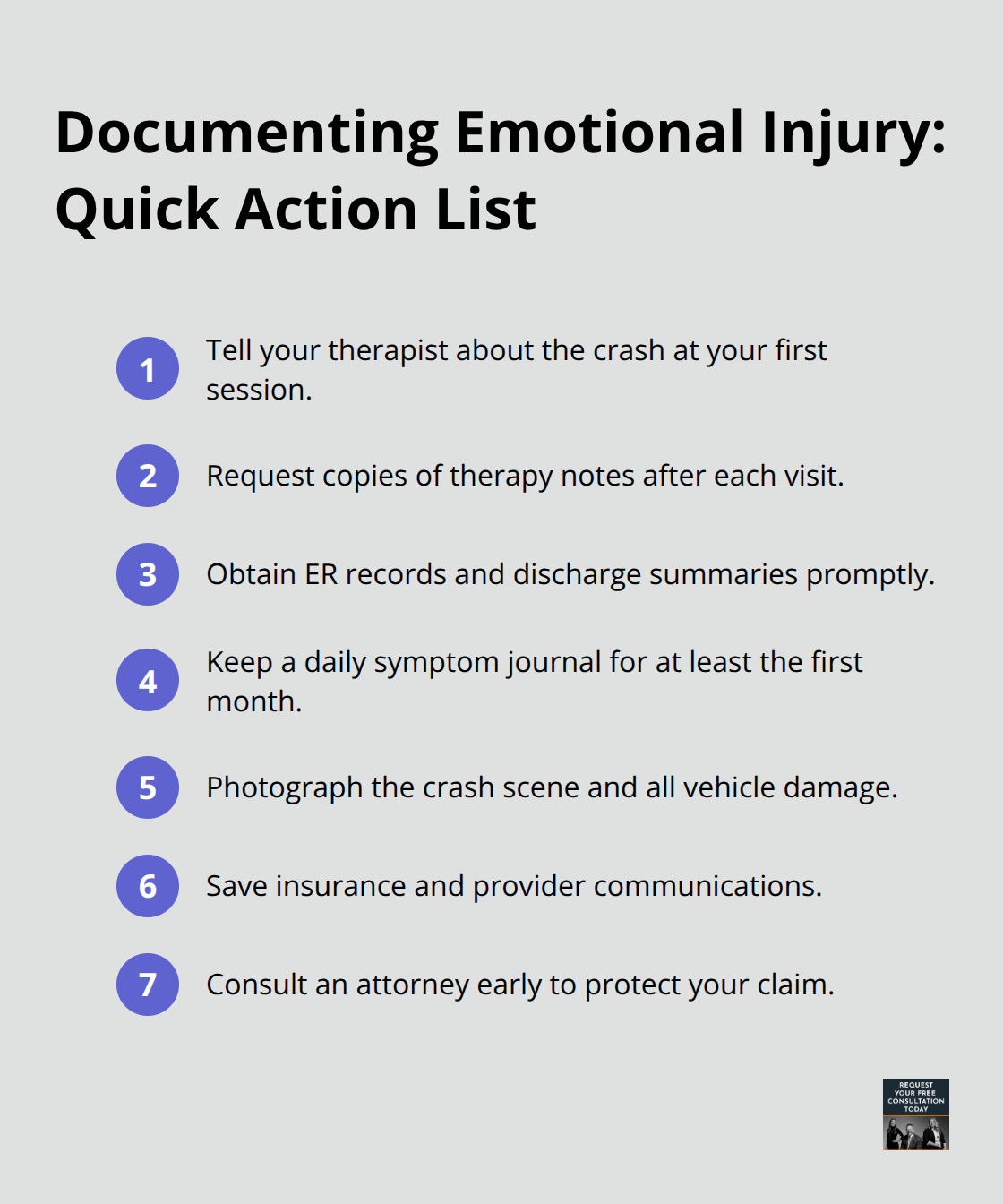
Build a personal symptom journal for at least the first month, noting the date, time, and specific details of panic attacks, driving triggers, social withdrawal, nightmares, and how symptoms affected your work performance or relationships.
Take photos of the crash scene and vehicle damage to document severity and support your claim that the impact was significant enough to cause lasting psychological injury. Insurance companies scrutinize emotional trauma claims far more aggressively than physical injury claims, so this documentation becomes your shield against denial or lowball offers.
Why Legal Representation Protects Your Recovery
An experienced attorney eliminates the stress of negotiating with insurance companies while you manage PTSD symptoms, flashbacks, and depression. We at Schaar & Silva LLP connect you with mental health specialists who understand car crash trauma and help coordinate your recovery plan so medical bills and property damage claims don’t derail your healing. We also direct you to medical lien services that delay payment until your case resolves, removing the financial pressure to settle quickly before you’ve fully recovered.
Many accident victims accept inadequate settlements because they cannot afford ongoing therapy, and insurance companies know this. An attorney prevents this trap by ensuring medical costs are covered during your case and by fighting for damages that reflect your actual emotional injury. If your insurance company denies therapy coverage or claims your emotional trauma is unrelated to the crash, we appeal those decisions and provide the clinical documentation that proves causation.
Act Within Critical Timeframes
Early legal consultation within the first weeks after your crash matters enormously because statutes of limitations apply, evidence deteriorates, and witness memories fade. The sooner you protect your legal rights, the sooner you can focus entirely on healing without worrying whether you missed a deadline or failed to preserve evidence.
Final Thoughts
Emotional trauma Santa Cruz survivors face after a car crash demands the same medical attention as physical injuries. Your broken bones will heal within weeks, but untreated PTSD, depression, and anxiety can persist for years, affecting your relationships, work, and quality of life. The 32.3% of accident survivors who develop PTSD did not choose that outcome-they simply delayed seeking help or lacked access to it.
Recovery requires three parallel actions working together. Connect with a trauma-informed therapist immediately, as EMDR and CBT deliver measurable results within weeks, not months. Document everything from day one so your emotional injury becomes legally visible and financially recoverable. Protect your legal rights by consulting an attorney who understands how emotional trauma claims work and how insurance companies undervalue them.
Santa Cruz County residents have access to over 500 trauma therapists, hospital-backed support groups through Kaiser Permanente and UC Davis Hospice, and community programs like Survivors Healing Center with bilingual options (the 988 Suicide & Crisis Lifeline also operates 24/7 at no cost). Contact us today to protect your recovery while you focus on healing, and we will connect you with the mental health support and legal protection needed to heal properly.
