

A car accident can leave you facing medical bills that pile up faster than you can manage. Healthcare providers often place liens on your settlement to recover what they’re owed, which complicates your recovery process.
We at Schaar & Silva LLP help accident victims understand their options for handling these medical debts and liens. This guide walks you through the strategies that actually work.
What Happens When a Hospital Places a Lien on Your Settlement
A medical lien is a legal claim that a healthcare provider files against your personal injury settlement to recover unpaid medical bills. In California, hospitals and medical providers file liens under California Civil Code 3045.2, and they have only 20 days from learning about your injury to file-miss that window and the lien becomes invalid. When you receive treatment after a car accident, the provider sends you a bill. If that bill remains unpaid, the provider files a lien notice that attaches to your settlement proceeds. When your case settles, the provider gets paid directly from your settlement before you see any money. The lien amount reflects actual medical costs, so if you received emergency care and surgery totaling $15,000, that’s what the provider will pursue. A $100,000 settlement with a $30,000 medical lien leaves you with roughly $70,000 before attorney fees and other liens are deducted. Lien notices typically arrive 30 to 90 days after treatment and remain active throughout your entire case, with payment made before settlement funds are released to you.
When Liens Arrive and How They Stay Active
Most providers send lien notices within 30 to 90 days after you receive treatment, though timing varies by provider and state rules. Once filed, the lien stays in place until your case resolves or you negotiate a reduction. Healthcare providers file liens because they know accident victims often have liability insurance that will eventually pay the claim-the lien simply guarantees they get paid from that source. California Civil Code 3045.3 actually works in your favor by capping hospital liens at what the hospital would reasonably accept, effectively aligning with Medicare pricing and giving you bargaining leverage.
How Chargemaster Rates Create Negotiation Opportunities
Hospitals typically bill chargemaster rates that run 2.5 to 10 times higher than Medicare payments for identical services, according to CMS data. This gap creates real negotiation power. Many providers will cut 20 to 40 percent off the lien if you present a clear settlement structure that reduces their litigation risk. Without coordinated negotiation, you’ll pay inflated chargemaster rates. With proper strategy, you align lien amounts closer to Medicare rates and keep more of your settlement.
Why Speed Matters for Your Recovery
The longer your case takes, the longer the lien remains active, which is another reason working with experienced legal counsel matters-faster resolution means faster lien payoff and faster access to your money. Understanding how liens work and what options you have puts you in a stronger position to negotiate. The next section covers the specific strategies that help you reduce what you owe and protect your settlement.
How to Reduce What You Owe on Medical Liens
Start with Written Payoff Statements
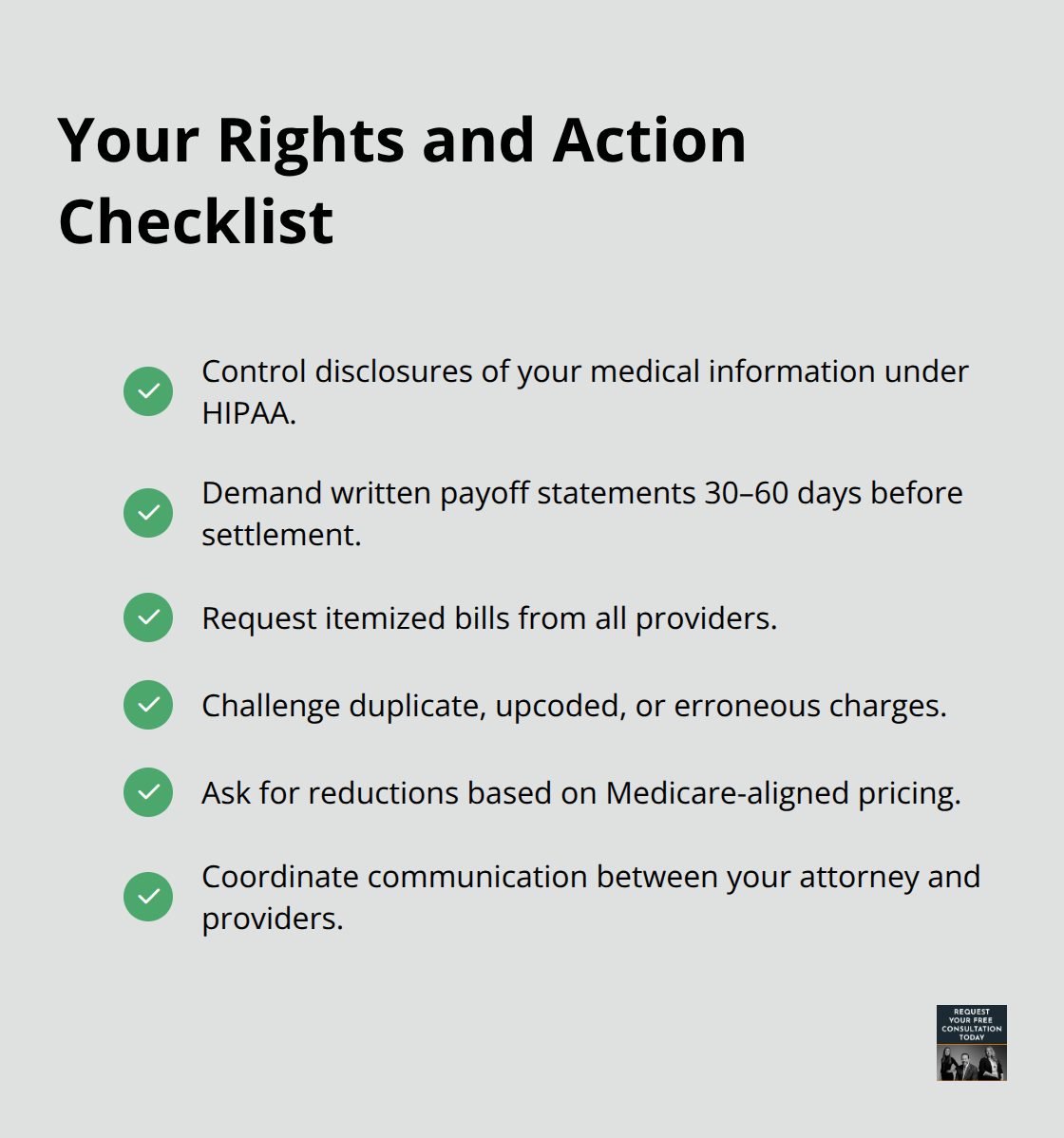
Negotiating medical liens is not optional if you want to keep more of your settlement. Obtain written payoff statements from every healthcare provider at least 30 to 60 days before settlement discussions begin. These statements show the exact amount owed and prevent last-minute surprises that delay your recovery. Request itemized bills for every service and cross-reference them against your medical records to catch duplicates, upcoding, or charges for services you never received.
Audit Bills and Leverage Medicare Pricing
Auditing medical bills commonly yields 20 to 40 percent reductions when you show settlement math to providers. Hospitals bill chargemaster rates that can be 2.5 to 10 times higher than Medicare rates for the same procedures, according to CMS data. This gap is your leverage. Present Medicare pricing data to hospitals and ask them to align their lien to Medicare rates instead of chargemaster rates. Many providers will negotiate down 20 to 40 percent if you demonstrate that reducing the lien protects them from litigation costs and accelerates payment.
Apply the Common Fund Doctrine to Private Insurers
Private health insurers that place liens on your settlement are required under the Common Fund Doctrine to contribute toward your attorney fees and costs, which typically reduces their lien by 30 to 50 percent. Medicare and Medi-Cal liens follow tighter federal and state rules, but reductions of 15 to 25 percent are often possible, especially when hardship arguments apply. Complex liens involving multiple providers, ERISA plans, or amounts exceeding your settlement value require professional negotiation to secure meaningful reductions.
Consider Lien Funding for Continuous Care
Lien funding services offer a practical option if you need medical care but lack upfront funds to pay for treatment. These services advance money directly to healthcare providers, and repayment comes only from your settlement proceeds. Pre-qualification typically takes about five minutes, and funds reach providers within days. This approach keeps treatment continuous during your case, which strengthens your claim because gaps in medical care can be exploited to argue your injuries aren’t serious. When your settlement arrives, the lien funding service is repaid first, and you keep the remaining amount.
Coordinate Your Strategy for Maximum Protection
Without coordinated strategy, a six-figure settlement can shrink dramatically once liens are deducted. With proper documentation, negotiation, and professional support, you protect what you’ve earned. The next section covers how to safeguard yourself from excessive medical debt and understand your rights as an accident victim.
Protecting Yourself from Excessive Medical Debt
Spot Billing Errors That Inflate Your Lien
Medical bills after a car accident contain errors far more often than you’d expect. Studies show that auditing medical bills yields 20 to 40 percent reductions when you identify duplicates, upcoding, or charges for services you never received. Start by requesting itemized bills from every provider-not summary statements, but detailed line-by-line records showing dates, procedures, provider names, and costs. Cross-reference these against your medical records to spot inconsistencies. Hospitals frequently bill for services twice, charge for consultations that never happened, or apply chargemaster rates that exceed Medicare pricing by 2.5 to 10 times for identical procedures, according to CMS data. Build a single spreadsheet tracking every provider, service date, bill amount, and payment status from day one. This documentation becomes your negotiation tool when settlement discussions begin. Without it, you’re vulnerable to inflated lien amounts that reduce your net recovery substantially.
Know Your Rights as an Accident Victim
Your rights as an accident victim include controlling what medical information is shared through HIPAA, demanding written payoff statements from lien holders, and requesting reductions based on settlement math and Medicare pricing standards. Obtain these payoff statements at least 30 to 60 days before settlement to prevent last-minute surprises that delay your recovery. HIPAA gives you the power to limit disclosures and demand transparency from providers about what they’re billing and why. You can challenge charges that don’t match your medical records or that appear duplicated across multiple bills.
Coordinate Between Your Attorney and Providers
Coordination between your attorney, medical providers, and any lien funding services prevents billing errors from compounding. For complex liens involving multiple providers or ERISA plans, professional negotiation is essential because the difference between accepting a lien as filed versus negotiating reductions can mean tens of thousands of dollars in your pocket. When you work with experienced legal counsel, providers often become more willing to negotiate because they know litigation costs and delays will be avoided.
Maintain Documentation Throughout Your Recovery
Documentation gaps-missing records for who treated you and what was charged-create exposure that lien holders exploit to justify higher amounts. Maintain thorough records throughout your recovery to protect your settlement from unnecessary deductions. Track every provider interaction, every bill received, and every payment made (whether from insurance, out-of-pocket, or lien funding services). This complete picture prevents providers from inflating their lien claims and gives you concrete evidence if you need to challenge amounts during settlement negotiations.
Final Thoughts
Medical liens reduce your settlement substantially unless you act strategically. Obtain written payoff statements from every provider 30 to 60 days before settlement, audit bills for duplicates and overcharges that commonly yield 20 to 40 percent reductions, and present Medicare pricing data to negotiate chargemaster rates down to reasonable amounts. Private insurer liens drop 30 to 50 percent through the Common Fund Doctrine, while Medicare and Medi-Cal liens typically reduce 15 to 25 percent with proper documentation and hardship arguments.
Car accident medical bills and liens are negotiable, and providers often accept 20 to 40 percent cuts when you present settlement math that reduces their litigation risk. Medical lien funding services advance money for treatment while your case resolves, which keeps your care continuous and strengthens your claim. Without coordinated strategy, even substantial settlements shrink dramatically once liens are deducted.
We at Schaar & Silva LLP help accident victims in Santa Cruz County navigate medical debt and lien negotiations so you keep more of what you’ve earned. Contact us for a free consultation to review your situation, identify negotiation opportunities, and coordinate with providers to reduce what you owe. The difference between handling liens alone and working with experienced legal counsel often amounts to tens of thousands of dollars in your settlement.
